Keoladeo National Park Bharatpur
About Keoladeo National Park
Keoladeo National Park, also known as Keoladeo Ghana National Park or Bharatpur Bird Sanctuary, is one of India's most important wetland bird habitats. The compact protected area contains wetlands, grasslands, woodland swamps and dry woodland that support resident birds, migratory waterfowl, mammals, reptiles and aquatic life.
The park is recognised as a UNESCO World Heritage Site and is especially rewarding for birdwatchers, wildlife photographers and families who prefer a quiet nature experience that can be explored at a slow pace.
Keoladeo National Park Quick Facts
| Popular Names | Keoladeo Ghana National Park and Bharatpur Bird Sanctuary |
|---|---|
| Location | Bharatpur, Rajasthan |
| Protected Area | Approximately 28.7 square kilometres |
| Known For | Wetland birds, winter migrants, breeding colonies and bird photography |
| Best Season | October to March for migratory birds |
| Recommended Duration | 3–6 hours; a full day suits serious birdwatchers |
| Ideal For | Birdwatchers, families, photographers and nature travellers |
Why Visit Keoladeo National Park?
- Explore a UNESCO World Heritage wetland in Bharatpur.
- Observe resident and migratory birds across multiple habitats.
- Travel quietly by foot, bicycle, cycle rickshaw or authorised electric vehicle.
- Enjoy bird photography from roads, trails and wetland viewpoints.
- Combine the park with Bharatpur, Deeg, Fatehpur Sikri and Agra.
UNESCO Status and Conservation Importance
Keoladeo is internationally recognised for its importance as a breeding, feeding and wintering ground for birds. UNESCO describes it as a green wildlife oasis containing a mosaic of grasslands, woodlands, woodland swamps and wetlands.
The park developed from a managed wetland associated with Bharatpur's former royal landscape. It was declared a national park in the early 1980s and was inscribed on the UNESCO World Heritage List in 1985.
Careful water management remains central to the park's ecology because wetland depth and seasonal flooding influence feeding areas, nesting habitat and the movement of waterbirds.
Birds You May See at Keoladeo
Bird presence changes with season, rainfall, water availability and migration. The park is known for waterfowl, storks, herons, cranes, raptors, waders and woodland birds.
| Bird Group | Examples | Viewing Pattern |
|---|---|---|
| Storks and Herons | Painted Stork, Openbill Stork, herons, egrets and ibises | Wetlands, nesting trees and shallow water |
| Ducks and Waterfowl | Resident and migratory ducks, geese and coots | Most diverse during the cooler months |
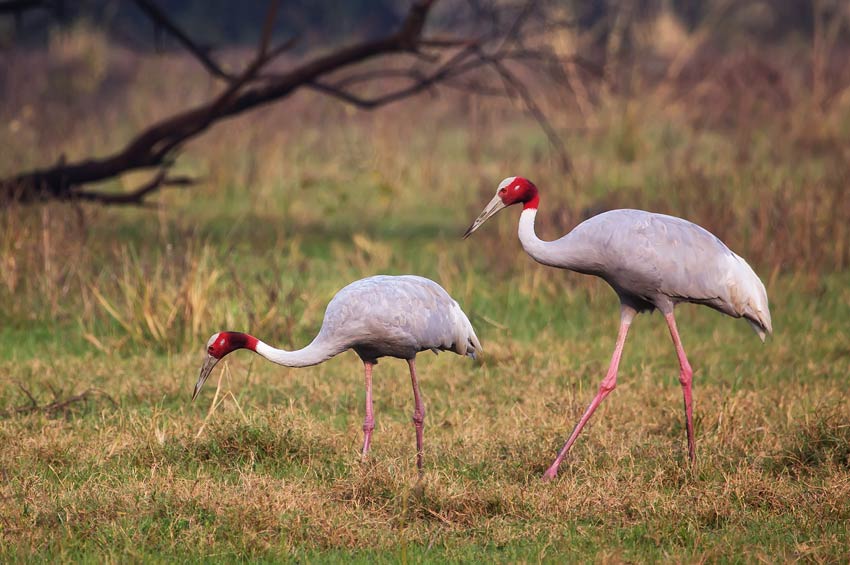
| Cranes | Sarus Crane and occasional other crane species | Open wetlands, grasslands and fields |
| Raptors | Eagles, harriers, kites, falcons and owls | Winter and seasonal activity varies |
| Waders | Sandpipers, stilts, lapwings and other shorebirds | Shallow wetland edges and exposed mud |
| Woodland Birds | Kingfishers, woodpeckers, flycatchers, drongos and parakeets | Wooded tracks and drier sections |
Birdwatching note: No species or bird count is guaranteed. Sightings depend on natural movement, habitat conditions and the time of visit.
Does the Siberian Crane Still Visit Keoladeo?
The Siberian Crane is historically linked with Keoladeo, but it should not be presented as a regular current attraction. UNESCO records show that the western population that once wintered at the park stopped returning decades ago.
Visitors should plan their trip for the park's broad diversity of resident and migratory birds rather than expecting a Siberian Crane sighting.
Animals and Other Wildlife
Keoladeo is primarily famous for birds, but its grasslands, woodland and wetlands also support mammals, reptiles, amphibians and aquatic species.
| Wildlife Group | Species You May Encounter |
|---|---|
| Mammals | Nilgai, sambar, chital, wild boar, golden jackal and small mammals |
| Reptiles | Pythons, monitor lizards, turtles and other reptiles |
| Aquatic Life | Fish, frogs, insects and wetland organisms supporting the food chain |
How to Explore Keoladeo National Park
Keoladeo is different from a conventional jeep safari park. Visitors usually explore at a slow pace, which allows more time to hear bird calls, watch feeding behaviour and photograph wildlife without rushing.
| Option | Best For | Planning Advice |
|---|---|---|
| Walking | Slow birdwatching and short visits | Wear comfortable footwear and carry water |
| Bicycle | Independent travellers covering more distance | Confirm current rental availability at the entrance |
| Cycle Rickshaw | Families, first-time visitors and relaxed birdwatching | Agree on duration and charges before starting |
| Authorised Electric Vehicle | Visitors needing easier mobility | Availability and permitted routes may vary |
| Bird Guide | Species identification and serious photography | Confirm guide fee, duration and language in advance |
Keoladeo National Park Timings
Park opening and closing times may change by season, daylight and Forest Department instructions. Early morning is usually preferred for active birds, cooler weather and softer photography light.
| Visit Period | General Experience | Advice |
|---|---|---|
| Early Morning | Active birds, cooler temperatures and soft light | Recommended for birdwatchers and photographers |
| Late Morning | Good visibility but increasing visitor activity | Suitable for families and shorter visits |
| Afternoon | Warmer conditions with changing bird movement | Carry water and sun protection |
| Late Afternoon | Warm light, returning birds and quieter trails | Leave enough time to return before closing |
Important: Verify the exact opening time, last entry time and seasonal closing time before your visit.
Booking and Entry Information
- Check the Rajasthan Forest Department's current safari and zoo ticket booking service before travel.
- Carry a valid government-issued photo ID for every visitor.
- Confirm whether entry tickets are available online, at the gate or through both methods.
- Confirm cycle, rickshaw, electric vehicle and guide availability before entering the park.
- Reach early during weekends, public holidays and peak birdwatching months.
- Keep the digital or printed booking confirmation accessible during entry.
Best Time to Visit Keoladeo National Park
| Season | Birdwatching Conditions | Travel Advice |
|---|---|---|
| October–November | Arrival of winter migrants and pleasant weather | Good for a balanced birdwatching visit |
| December–February | Strong migratory bird diversity and cool mornings | Popular peak period; arrive early |
| March | Some migrants remain while temperatures begin rising | Visit during the morning |
| April–June | Hot weather with resident birds around available water | Plan a short early-morning visit |
| July–September | Monsoon greenery, breeding activity and changing water levels | Check rain, paths and current access conditions |
Bird Photography Tips
- Arrive early for soft light and active bird movement.
- Carry binoculars and a telephoto lens where possible.
- Use quiet movement and avoid blocking narrow trails.
- Do not use flash around nesting, feeding or resting birds.
- Protect cameras from dust, mist and changing weather.
- Keep a respectful distance and follow guide instructions.
How to Reach Keoladeo National Park
| Transport | Route Guidance |
|---|---|
| By Train | Bharatpur Junction is the main railway station for the city. Arrange a taxi, auto-rickshaw or hotel transfer for the onward journey. |
| By Road | Bharatpur is connected by road with Agra, Fatehpur Sikri, Mathura, Jaipur and Delhi. |
| By Air | Travellers generally use airports serving Agra, Jaipur or Delhi and continue to Bharatpur by road. |
| From Bharatpur City | The park is close to the city, making local taxis, auto-rickshaws and hotel transfers practical. |
Places to Visit Near Keoladeo
| Attraction | Why Visit? |
|---|---|
| Lohagarh Fort | Historic Bharatpur fort known for its strong defensive design. |
| Bharatpur Palace and Museum | Local royal history, architecture and museum collections. |
| Deeg Palace | Palaces, gardens, fountains and Bharatpur's royal heritage. |
| Fatehpur Sikri | UNESCO-listed Mughal city convenient for a road combination. |
| Agra | Taj Mahal, Agra Fort and other Mughal monuments. |
| Bandh Baretha Wildlife Sanctuary | Reservoir landscape, birdwatching and a quieter nature excursion. |
Practical Travel Tips
- Carry water, sunscreen, a hat and comfortable walking shoes.
- Bring binoculars even when travelling with a bird guide.
- Wear neutral clothing and keep voices low near bird habitats.
- Do not feed birds or leave plastic and food waste inside the park.
- Confirm current entry rules and service availability before starting.
- Allow more time than expected because birdwatching is best enjoyed slowly.
- Respect closed trails, nesting areas and Forest Department instructions.
Bharatpur Taxi and Car Rental for Keoladeo
A private car is useful when combining Keoladeo National Park with Agra, Fatehpur Sikri, Deeg, Jaipur or Delhi. The vehicle normally drops visitors near the authorised entrance because sightseeing inside the park follows its own permitted transport system.
- Bharatpur railway station pickup and hotel transfer
- Agra to Bharatpur day trip
- Jaipur to Keoladeo private car
- Delhi–Agra–Bharatpur travel route
- Keoladeo and Deeg sightseeing combination
- Multi-day Rajasthan wildlife itinerary
Booking advice: Confirm the vehicle type, pickup time, parking arrangements, waiting period and journey inclusions before travel.
Frequently Asked Questions
Is Keoladeo National Park the same as Bharatpur Bird Sanctuary?
Yes. Bharatpur Bird Sanctuary is the widely used former name, while Keoladeo Ghana National Park is the official and commonly accepted name.
Is Keoladeo a UNESCO World Heritage Site?
Yes. Keoladeo National Park was inscribed on the UNESCO World Heritage List in 1985.
How much time is needed at Keoladeo?
Allow at least three hours for a useful first visit. Serious birdwatchers and photographers may prefer five to six hours or a full day.
Can visitors take a jeep safari inside Keoladeo?
Keoladeo is generally explored on foot, by bicycle, cycle rickshaw or authorised electric vehicle rather than a conventional wildlife jeep safari.
Are bird guides available?
Bird guides and knowledgeable cycle-rickshaw operators may be available near the entrance. Confirm their current fee, duration and language before starting.
Is a Siberian Crane sighting likely?
No. The Siberian Crane is historically connected with Keoladeo but is not a regular present-day sighting.
Can Keoladeo be visited with children?
Yes. The quiet routes and flexible transport options can suit families, provided children remain supervised and follow park rules.
Can Keoladeo and the Taj Mahal be visited together?
Yes. Bharatpur is close enough to Agra for a combined itinerary, although an early start and private transport make the schedule easier.
Plan a Responsible Keoladeo Visit
Keoladeo National Park offers a slower and more detailed wildlife experience than a conventional safari. Its wetlands, woodland paths and open grasslands reward patient observation, quiet movement and responsible photography.
Check current entry rules, opening hours and activity charges before travelling. Bird sightings remain natural and seasonal, so treat every species list as guidance rather than a guarantee.