India in October and November: Weather, Festivals and Best Places to Visit
The Direct Answer
October and November are among the most rewarding months to travel in India, especially for heritage routes, festivals, wildlife, food and private road journeys. October brings post-monsoon colour, a lively festive calendar and generally warmer days. November is usually cooler and more settled across north and west India, making it ideal for Rajasthan, the Golden Triangle, Varanasi and longer multi-city journeys. The best route depends on the climate you enjoy, the festivals you hope to experience and how much time you have.
Who Is This Guide For?
Travellers: First-time visitors to India, returning guests, couples, families, solo travellers, photographers and small groups planning an October or November holiday.
What it covers: Weather by region, festival planning, the best places to visit, realistic route ideas, packing, transport, accommodation and respectful festival travel.
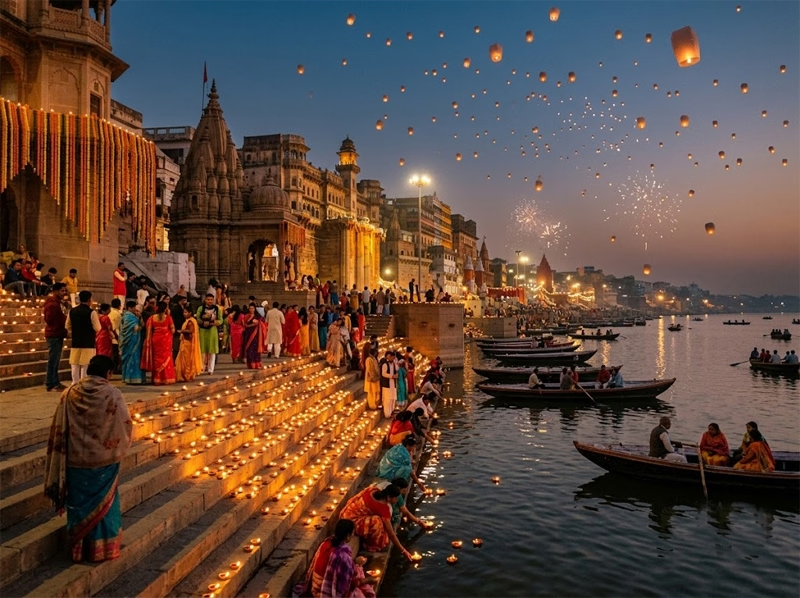
India does not have one October or November. It has many. In Jaipur, the afternoons become gentler and evenings invite rooftop dinners. In Kerala, backwaters and tea hills are still green from the rains. In Varanasi, the ghats prepare for ceremonies that turn the riverfront into a theatre of lamps and sound. In the Himalayas, mornings can feel sharp, trails become quieter and snow may already touch the higher passes. A journey can include dry desert, tropical coast, misty tea country and ancient temple cities within one trip.
That range is precisely why this is one of the best planning windows for India. It is not a month to choose a destination solely from a weather icon. It is a month to decide what kind of travel memory you want: palaces and markets, wildlife and open roads, a festival with a family host, a beach break after a cultural tour, or a slow itinerary shaped around food, crafts and walks. The most satisfying routes have room for both the famous landmarks and the quiet hours between them.
This guide has been written for travellers who want an informed, comfortable and culturally sensitive plan. It avoids the idea that every city must be rushed through in one day. Instead, it explains where October and November work best, how the months differ, what to book first and how to build a journey that feels unhurried. Festival dates, rainfall and opening times can change from year to year, so use this guide as the planning framework and confirm the live details for your exact travel dates before booking.
What's in This Guide
- 1. Is October or November Better for India?
- 2. India Weather in October and November
- 3. Regional Weather and What It Means for Your Route
- 4. Festivals to Plan Around
- 5. Best Places to Visit in India
- 6. Rajasthan in October and November
- 7. Golden Triangle and North India
- 8. Wildlife, Nature and Slow Travel
- 9. South India, Beaches and Wellness
- 10. Practical Itinerary Ideas
- 11. What to Book and When
- 12. What to Pack
- 13. Festival Etiquette and Responsible Travel
- Frequently Asked Questions
- Final Planning Advice
1. Is October or November Better for India Travel?
The simple answer is that both are excellent, but they create different trips. Choose October if you enjoy a festive atmosphere, want to see the country looking fresh after the monsoon and do not mind occasional warm afternoons or regional rain. Choose November if your priority is more comfortable temperatures in Rajasthan and north India, desert and wildlife outings, long days of sightseeing or a classic first India itinerary.
October is a transition month. In much of Rajasthan, Delhi, Agra, Madhya Pradesh and the western Himalayas, the heat begins to release its hold. Light changes, fields turn green after the rains and many towns begin the long festival season. In southern and southeastern India, however, the weather story is more complicated. Tamil Nadu and the Coromandel Coast can receive northeast monsoon rain, while Kerala, coastal Karnataka and Goa may still see showers even as the landscape remains richly green. That does not make the south a poor choice; it simply means a flexible plan and a realistic expectation about rain are useful.
November feels more conventionally wintry in the north. It is not cold in the European sense in most cities, but evenings and early mornings can be cool, particularly in desert Rajasthan, Delhi, Agra, Varanasi and the foothills. Days are often very pleasant for forts, bazaars, gardens and open-air restaurants. For a honeymoon, family holiday or private driver route through Rajasthan, November is often the easiest month to recommend because it balances warm daytime sightseeing with comfortable nights.
Do not treat the choice as a competition. A well-designed October trip can be more colourful than a November one, especially if it includes a regional festival, autumn landscapes or a coastal stay. A November trip can feel calmer, crisper and better suited to a longer overland circuit. The right month is the one that fits your route. If you have only one week, concentrate on one climate zone instead of attempting a desert, a Himalayan hill station and a rainy southeast coast in the same itinerary.
At a glance: which month suits which travel style?
| Travel priority | Usually better choice | Why |
|---|---|---|
| Festivals, colour and cultural energy | October or festival-period November | Navratri, Durga Puja, Dussehra, Diwali and regional fairs often fall in this period. |
| Rajasthan, Delhi, Agra and Varanasi | Late October to November | Days become more comfortable, with cooler evenings by November. |
| Desert camps and starry evenings | November | Jaisalmer and the Thar feel more comfortable after daytime heat eases. |
| Post-monsoon green landscapes | October | Central India, Kerala and hill regions can look especially fresh after rains. |
| Beach and coastal travel | November, with regional checks | Goa generally settles into season; southeast India may still have rain patterns to consider. |
| Wildlife and outdoor activities | Late October to November | Many parks, trails and road routes become more appealing after the monsoon, subject to local operations. |
2. India Weather in October and November: The Big Picture
India's weather can never be reduced to a single number. The country stretches from high Himalayan valleys to tropical islands, and the transition from monsoon to winter happens at a different pace in every region. The most useful way to plan is to divide India into travel zones: north and northwest; central India; the western coast; the southeast coast; the Himalayan states; the northeast; and the desert. Your choice of clothing, hotel style, transport and activity level follows from that map.
Across much of north and west India, October and November are the beginning of the high travel season. Rainfall usually becomes less frequent, skies can be clear and the harshest summer temperatures are behind you. The atmosphere is often dusty only in the sense of a busy city or an active construction zone, not because the whole region is unpleasant. Cool mornings arrive gradually. By November, a shawl or light jacket is welcome after sunset in Delhi, Agra, Jaipur, Jodhpur, Udaipur and Varanasi.
Central India has a beautiful post-monsoon character. Forests can remain lush, waterfalls may still have flow, roads are often greener than in the dry months and temple cities feel less punishing to explore. The caveat is that a late shower or a humid afternoon can still occur. These conditions are normally manageable when your itinerary is not overpacked and your driver or guide can adjust the day.
The southern peninsula does not move in lockstep with the north. Kerala remains tropical; October can be humid and rain is possible, while November may feel more settled in some areas. Goa begins to wake into its main season as October closes and November advances. Tamil Nadu, Puducherry and parts of coastal Andhra Pradesh can receive rain from the northeast monsoon. This is why a traveller who sees only a national weather summary can make an avoidable mistake. Check the forecast for Kochi, Chennai or Pondicherry, not just for "India".
The Himalayas require another kind of respect. Daytime sun can feel bright and pleasant, but temperatures drop quickly at night. High-altitude roads, treks and passes can be affected by weather, snow or local restrictions. A Himalayan October trip is often excellent for clear views and walking, while November is better for travellers who deliberately want cold air, early snow possibilities or quieter hill towns. Do not put a high pass into a fixed itinerary without allowing a weather buffer.
Typical planning ranges, not promises
The following figures are broad seasonal planning ranges, not a live forecast. A heatwave, a late shower, air quality event or cold spell can make a particular week different. Use them to choose destinations and then check the local forecast close to departure.
| Destination or region | October feel | November feel | Practical note |
|---|---|---|---|
| Delhi and Agra | Warm days, gentler evenings | Comfortable days, cooler mornings and nights | Plan outdoor monuments early and keep a light layer for evening. |
| Jaipur, Jodhpur and Udaipur | Warm, generally dry, festive | Excellent sightseeing weather and cool evenings | One of the strongest months for a private Rajasthan circuit. |
| Jaisalmer and the Thar Desert | Warm days and cooler nights | Pleasant days; cold nights are possible | Pack layers for a desert camp and confirm camp facilities. |
| Varanasi and eastern Uttar Pradesh | Warm, humid spells possible | Cooler and often more comfortable | Early morning boat rides may need a light shawl in November. |
| Madhya Pradesh | Green post-monsoon landscapes, warm days | Comfortable heritage and wildlife travel | Useful for a balanced culture, forest and temple itinerary. |
| Goa and the Konkan Coast | Season begins; showers can linger | Warmer beach weather with a fuller seasonal atmosphere | Book carefully around festival and weekend demand. |
| Kerala | Green, humid, rain possible | Warm and inviting, with conditions varying locally | Great for a flexible itinerary that includes Kochi, hills and backwaters. |
| Chennai, Pondicherry and Tamil Nadu coast | Rain can affect plans | Rain can continue; check locally | Choose good hotels, allow slack time and avoid a rigid beach plan. |
| Himalayas | Clearer views, cool evenings | Colder weather and possible early snow at altitude | Check road conditions, permits and altitude suitability. |
| Northeast India | Green, varied conditions | Often clearer and cooler in many areas | Build in transfer time; distances are longer than maps suggest. |
3. Regional Weather and What It Means for Your Route
North and northwest India: heritage season begins
For most international travellers, October and November create the ideal first impression of north India. Delhi, Agra, Jaipur, Udaipur, Jodhpur, Jaisalmer, Pushkar and Varanasi all become easier to experience on foot. Monument courtyards are no longer oppressive in the middle of the day, outdoor cafés become pleasant and a long car journey feels less tiring when the landscape is not shimmering under peak summer heat.
It is still wise to start major sightseeing early. The Taj Mahal, Amber Fort, Mehrangarh Fort, City Palace and the ghats of Varanasi all reward the first few hours of daylight. Not only is the temperature better, but the atmosphere is calmer and the light is kinder for photographs. Save museums, a spa, a cooking class, a heritage walk or a rooftop dinner for the later part of the day.
South and southeast India: beautiful, but plan locally
Kerala is a strong option for travellers who want a softer, slower India: Kochi's waterfront lanes, Munnar's tea slopes, Thekkady's forest setting, Kumarakom's birdlife, a houseboat or boutique stay around the backwaters, and a relaxed coastal finish. October and November are not identical across the state, and rain may influence the exact experience, but a route with a mixture of culture, hills and water can work beautifully.
Tamil Nadu is a cultural powerhouse in these months, with temple cities, classical arts, Chettinad food, colonial-era Pondicherry and the shore temples of Mahabalipuram. The northeast monsoon means you should respect weather updates on the east coast. Build in an extra night rather than booking tight same-day transfers, choose accommodation with reliable indoor comfort and treat rain as a reason to explore museums, cafés, workshops and temple interiors at a gentler pace.
Mountains and the northeast: plan for distance and changeability
Hill travel in October and November is not only about snow. It can be about clear mountain light, forests, Buddhist monasteries, tea gardens, village walks and the sense of space that is hard to find on a city route. Darjeeling and Sikkim, parts of Uttarakhand and Himachal Pradesh, and selected northeast circuits can be excellent, but travel times require patience. A map may show a modest distance, yet a mountain road can take a full day.
Keep every mountain plan weather-aware. Do not book a last flight home on the morning after a high-altitude transfer. Keep medicines, warm layers and a small amount of cash with you. For travellers not used to altitude, add acclimatisation time rather than trying to reach the highest available point on the first day. India rewards people who leave room for its geography.
4. Festivals to Plan Around in October and November
Festivals are one of the biggest reasons to travel in these months, but they should never be treated as a show arranged only for visitors. They are living religious, family and community occasions. The best visitor experience is usually not the loudest or most crowded one. It comes from knowing what the celebration means, dressing respectfully, giving local people space for worship and accepting that a temple, market or road may be busier than normal.
Dates change each year because many Indian festivals follow lunar calendars. When you have chosen your travel year, verify the dates through reliable local sources, your hotel, the state tourism department or the relevant temple committee. Also check how the holiday affects monument hours, alcohol service, shop opening, transport, road closures and hotel pricing. A festival can make a destination more vivid, but it can also make a last-minute booking much more difficult.
Dussehra: epic stories, fairs and local variation
Dussehra, also called Vijayadashami in many regions, celebrates the victory of good over evil. In north India, it is often associated with Ramleela performances and the burning of Ravana effigies. In Mysuru, Dasara is famous for its royal pageantry, palace illumination, cultural events and procession. In Kota, Rajasthan, the Dussehra fair creates a lively reason to add the Hadoti region to an itinerary. Kullu Dussehra in Himachal Pradesh has its own distinct mountain character.
A visitor does not need to chase the biggest crowd to understand the occasion. A local Ramleela performance, a family invitation, a temple visit or a well-planned fair outing can be more meaningful. If you do attend an effigy-burning event, follow safety barriers, do not stand in restricted areas and leave enough time to return to your hotel after road closures. In popular festival cities, a private driver is helpful but may not be able to take you all the way to the centre; be ready to walk the last section.
Diwali: lights, family gatherings and early planning
Diwali is one of India's most celebrated festivals. Homes, shops, temples and streets are decorated with lamps, flowers and lights. Families exchange sweets, visit relatives, dress for celebrations and perform Lakshmi Puja. For a traveller, Diwali can be joyous and beautiful, but it is not a single spectacle with a universal timetable. Some businesses may close or have limited hours, while hotels and restaurants can be busy with local guests. In some places fireworks may be more visible than in others, and local regulations can affect how they are used.
The most respectful Diwali experience is usually small-scale: a hotel diya-lighting ceremony, a cooking class, a guide explaining the symbolism, a market visit for sweets and decorations, or an invitation to a family celebration through a trusted host. Do not expect a major monument to be illuminated just because it is Diwali; check in advance. Do not promise children that fireworks will happen near your hotel. Instead, focus on light, food, craftsmanship and community.
For a Rajasthan route, Diwali can make Jaipur, Udaipur, Jodhpur and smaller towns feel festive, though high demand is likely. For an India-wide journey, it may be sensible to be in one city for two or three nights over the main festival period rather than spending the day on a long transfer. The best travel luxury during Diwali is not a bigger schedule. It is being in one good place with enough time to absorb the atmosphere.
Dev Deepawali and Chhath Puja: river traditions in north India
In and around Varanasi, the days after Diwali can bring further ceremonial beauty. Dev Deepawali, timed according to the lunar calendar, is associated with lamps along the ghats and a particularly striking evening riverfront. Chhath Puja, especially important in Bihar, eastern Uttar Pradesh and other communities, involves worship of the sun at rivers and water bodies. Both occasions require sensitivity. The riverfront is a sacred space, not simply a photography location.
Book a licensed local guide or a reputable boat operator who understands crowd management and safe viewing. Keep your camera discreet around prayers. Never step in front of worshippers to obtain a shot, and never fly a drone without proper permissions. If you are visiting Varanasi during an important river festival, stay near the old city or the ghats but confirm vehicle access; narrow lanes may require walking with luggage assistance.
Pushkar Fair: Rajasthan's great November gathering
Pushkar Fair is one of the most recognisable cultural events in Rajasthan. It combines a livestock fair, devotional activities around Pushkar Lake, music, crafts, food and a powerful sense of desert-edge Rajasthan. Its exact dates and programme vary by year, and the experience changes depending on whether you want the early livestock atmosphere, the religious days around the full moon or the busier cultural programme.
For a good Pushkar visit, reserve accommodation early and consider staying in or near the town for at least two nights. A day trip from Jaipur is possible, but it is less satisfying during the fair because roads, parking and crowds can take time. Pairing Pushkar with Jaipur and Jodhpur gives a rich Rajasthan route. Keep expectations realistic: it is not an empty pastoral scene staged for a photograph. It is a busy working and devotional gathering. Be patient, ask before taking portraits and buy crafts directly from makers where possible.
5. Best Places to Visit in India in October and November
The best destination is not necessarily the most famous one. It is the place that matches your pace, temperature preference and interests. The following recommendations are designed to help you build a coherent route rather than collect a random list. In most cases, two or three nights in a destination will give you more than one rushed afternoon in five different places.
Jaipur: heritage, crafts and a strong first introduction
Jaipur works beautifully in both months. Amber Fort, City Palace, Hawa Mahal, Jantar Mantar, Albert Hall Museum, Galta Ji and the old bazaars are easier to enjoy when the heat eases. The city also offers a practical airport, a wide range of hotels and many opportunities to connect sightseeing with real crafts: block printing, blue pottery, jewellery, food walks and cooking experiences. It is an excellent start or finish for a private Rajasthan trip.
Stay at least two nights. On the first afternoon, choose a slower activity such as a bazaar walk, a café in the old city or a sunset view. Reserve the next morning for Amber Fort and use the late afternoon for City Palace and Hawa Mahal. If you travel during a festival, keep your plans flexible; Jaipur's celebrations are often most enjoyable when you allow time to see what local streets are doing rather than treating the day as an ordinary museum schedule.
Udaipur: lakes, palaces and a softer Rajasthan
Udaipur is especially lovely once the monsoon has passed. The lake setting, City Palace, old lanes, gardens and surrounding Aravalli hills make it a gentler contrast to Jaipur. October can retain a green, fresh feeling; November often brings more comfortable evenings for lakeside dining and heritage walks. A boat ride on Lake Pichola is a classic experience, but operations always depend on local weather and conditions.
Give Udaipur at least two nights. See the City Palace early, visit Jagdish Temple and walk through the older quarters at a relaxed pace. Include Sajjangarh or a countryside experience only if it suits your energy level. The magic of Udaipur is not in racing from viewpoint to viewpoint. It is in letting the city change pace between the lake at sunrise, the palace after breakfast and a quieter terrace at sunset.
Jodhpur: blue lanes, great food and the desert gateway
Jodhpur has a more dramatic and grounded energy than Udaipur. Mehrangarh Fort rises above the city, the old blue neighbourhoods invite slow walks and the food scene is one of the best reasons to stay longer than one night. October can still be warm at midday, so time your blue-city walk early. November is usually ideal for walking, market browsing and an evening around the fort's illuminated silhouette.
Jodhpur is also a useful hub for Bishnoi village experiences, Osian, Ranakpur, Jawai and onward travel to Jaisalmer. Choose a hotel in the old city if you want atmosphere and can manage narrow lanes, or a more spacious heritage hotel if you prefer vehicle access and a slower pace. Both styles can be good; the right one depends on luggage, mobility and whether you value a view or convenience most.
Jaisalmer: golden stone, desert silence and night skies
Jaisalmer comes into its own as the weather cools. The living fort, Jain temples, havelis, desert tracks and camp experiences need time, not just a hurried overnight. October is warm but workable; November makes the desert much more comfortable in the late afternoon and evening. Even then, nights can be cool, especially in open camps, so carry a warm layer and ask what bedding and bathroom facilities are provided.
Choose a desert experience carefully. A good camp should be transparent about transfers, tents, sanitation, food, noise levels and whether the evening entertainment is optional. Responsible desert travel means avoiding pressure on fragile dunes, respecting local communities and not assuming wildlife or a completely silent landscape can be guaranteed. For many travellers, the best memory is not the biggest camp show; it is a small sunset walk, a simple meal and a sky full of stars.
Delhi and Agra: essential, but not to be rushed
Delhi and Agra are often treated as a checklist, which is a mistake. In October and November, they can form a compelling introduction to layered India. Delhi brings Mughal monuments, colonial avenues, living markets, museums, Sikh hospitality, modern restaurants and neighbourhoods that deserve time. Agra is more than the Taj Mahal: it includes Agra Fort, Mehtab Bagh, craft traditions, food and the possibility of Fatehpur Sikri on a well-paced day.
Visit the Taj Mahal at the earliest practical time and do not schedule a long drive immediately after. Keep an afternoon for Agra Fort or a quieter river-side view, then continue to Jaipur the following day. On the Delhi side, stay at least two nights if possible. A first-time visitor will understand far more from a guided old-city walk and a monument visit than from trying to cross every district in one day.
Varanasi: powerful, intimate and best experienced slowly
Varanasi is one of the world's oldest continually inhabited cities, but it should not be sold as an easy or polished destination. Its intensity is part of its truth. October and November are good months because the heat has softened, early morning boat rides become atmospheric and festival periods can add extraordinary colour. The city rewards travellers who accept narrow lanes, irregular pavements, crowds and the fact that the riverfront is a place of daily life as much as a visitor attraction.
Stay at least two nights. Take a sunrise boat ride, walk with a knowledgeable guide, visit Sarnath if you are interested in Buddhist history and choose a calm hotel where you can rest between experiences. Watch the evening aarti from a respectful distance rather than pushing into the centre. In festival season, book rooms and guides early, and consider an extra night if you want to witness an event without sacrificing the rest of the city.
Kerala: backwaters, tea hills, food and wellbeing
Kerala is a beautiful complement to the drier north. Kochi brings layered history and a strong arts scene; Munnar offers tea landscapes and cooler hill air; Thekkady provides forest-edge stays; Kumarakom and Alleppey offer water, birdlife and boat-based experiences. October and November can be humid and weather-sensitive, but the reward is a very different India from the forts of Rajasthan.
A good Kerala itinerary has breathing room. Spend two nights in Kochi, two or three in Munnar, then move to the backwaters or the coast. Do not assume a houseboat is the only way to see the backwaters; a boutique lakeside hotel or a locally run canoe experience may be calmer and more environmentally considered. If Ayurveda is part of your trip, choose a reputable centre and think of it as a wellness experience rather than a quick cure for a medical condition.
Goa: beyond the beach label
Goa is often used as the post-tour beach break, and November is a strong time to do that. Yet it is worth looking beyond the obvious. Old Goa churches, Panaji's Latin Quarter, village markets, regional cooking, birding, river cruises and small heritage stays can give the coast a deeper context. The sea is only one part of the experience.
Early season is a good time to balance energy and calm. Pick your area based on your travel style: north Goa for more restaurants and activity; south Goa for a quieter, more spacious atmosphere; Panaji or a heritage neighbourhood if you care about culture and food. October may still have a softer, greener character, while November brings a more established seasonal buzz. In either case, avoid filling your beach days with too many road excursions.
6. Rajasthan in October and November: One of India's Best Seasonal Routes
Rajasthan is one of the clearest answers to the question "Where should I go in India in October and November?" It is not only because the temperature improves. It is because the state gives a traveller a remarkably complete experience: royal architecture, living cities, rural landscapes, crafts, food, lakes, desert, wildlife and a network of heritage hotels that can turn transport days into part of the holiday.
October still asks for sensible timing. In Jaipur, Jodhpur and Jaisalmer, visit outdoor monuments in the morning and leave an indoor museum, a cooking session or a hotel rest for the strongest afternoon hours. In November, you gain longer comfortable windows, although desert and lakeside evenings can become cool. A well-balanced itinerary needs no more than one major monument complex in a morning and one cultural or market experience later in the day.
A classic seven-day Rajasthan route
For a first visit, Delhi or Jaipur to Jaipur, Udaipur, Jodhpur and Jaisalmer can be a memorable seven-to-nine-day route. If seven days is all you have, do not try to include every city. Choose Jaipur, Udaipur and Jodhpur for palaces, lakes and forts, or Jaipur, Jodhpur and Jaisalmer for a stronger desert feeling. If you have ten days, add Pushkar, Ranthambore, Jawai or a smaller heritage village stay rather than spending extra time on city transfers.
Wildlife in Rajasthan
Ranthambore, Sariska and Jawai attract travellers who want wildlife alongside heritage. Each has a different rhythm. Ranthambore is known for its tiger landscape and historic fort setting. Sariska can be a convenient nature addition from Jaipur or Delhi. Jawai combines granite hills, rural Rajasthan and leopard habitat. Safari schedules, zone availability and conservation conditions change, and sightings are never guaranteed. Travel with a naturalist, follow rules and judge the experience by more than one animal.
Jawai and the right expectation
Jawai has become popular because its landscape is visually distinctive: granite outcrops, pastoral villages, open skies and leopard territory. It is not a zoo. A good safari operator will explain that the animals move freely, the route follows local and conservation guidelines and the experience may include birds, shepherds, geology and a changing landscape rather than a close encounter on demand. This is exactly what makes the place valuable when visited respectfully.
Food and craft experiences that deserve a place in the itinerary
Do not use Rajasthan only as a backdrop for fort photographs. Jaipur offers block printing, blue pottery, gemstones and cooking traditions. Jodhpur has rich street-food culture and craft communities. Udaipur's old city holds small galleries and workshops. Jaisalmer's artisans work with embroidery, leather and textiles. The best experience is often a guided walk that explains where a craft comes from, why prices vary and how to buy without pressure.
Ask your driver or planner to respect a clear no-shopping preference if that is important to you. A good private journey should never make you feel obligated to enter a showroom. If you want to buy, ask for genuine craft workshops, reputable fixed-price stores or a market guide who explains quality and lets you decide. That single request can make the difference between a relaxing holiday and a tiring one.
7. Golden Triangle and North India in October and November
The Golden Triangle-Delhi, Agra and Jaipur-is one of India's best first-time routes in these months. It works because it presents three different urban worlds in a manageable geography: Delhi's dynastic and modern layers, Agra's Mughal legacy and Jaipur's planned royal city. It also connects easily to Udaipur, Ranthambore, Varanasi, Rishikesh, Jodhpur or Khajuraho depending on how much time you have.
For a six-day trip, use two nights in Delhi, one in Agra and two or three in Jaipur. This avoids the exhausting pattern of arriving in Delhi, driving to Agra the next morning, rushing the Taj Mahal, then racing to Jaipur on the same day. For an eight-day trip, add Ranthambore or Udaipur. For ten to twelve days, add Varanasi or Jodhpur and Udaipur. The quality of a private tour comes from those extra nights, not from a longer list of place names.
October is a strong time for the route if you want Diwali or Dussehra atmosphere, subject to the annual festival calendar. November offers particularly comfortable daytime sightseeing. Air quality can occasionally affect north Indian cities in late autumn; check current local conditions, choose hotels with good indoor spaces and use early starts for outdoor monuments. This is a practical detail, not a reason to avoid the route, but it is part of planning honestly.
8. Wildlife, Nature and Slow Travel in October and November
These months suit travellers who want more than city sightseeing. The landscape can still carry the freshness of the rains, and many routes become inviting for forest stays, birding, village walks, lake visits and gentle outdoor activity. Nature travel in India is at its best when it is not framed as a race to see one charismatic species. The forest, coast, hill or wetland should be the destination in its own right.
Wildlife safaris
Many wildlife regions are considered for travel after the monsoon, but the precise operating calendar depends on the park, zone and year. Always check current official park rules and authorised booking systems. Safaris can start very early, so choose a lodge close to the gate if possible and keep the afternoon before a morning safari free of a long transfer. Carry neutral-coloured layers, binoculars if you enjoy birds and patience.
Ranthambore, Bandhavgarh, Kanha, Pench, Satpura and Tadoba are all well-known names, yet they offer different habitats and travel connections. A naturalist's knowledge can transform the experience, especially for travellers interested in birds, trees, tracks and behaviour. If you are travelling with children, explain in advance that silence matters and sightings cannot be promised. This makes the safari more fun and more ethical.
9. South India, Beaches and Wellness in October and November
South India deserves more than a quick add-on after the Golden Triangle. It is a separate world of architecture, cuisine, landscapes and languages. When planned well, it can be the central focus of a two-week journey or a restorative second half after Rajasthan. The key is to respect the weather variation and to avoid trying to link distant cities by road without enough time.
A Kerala journey with balance
A five-to-eight-day Kerala route can begin in Kochi, move to Munnar, continue to Thekkady or Kumarakom and finish around Alleppey, Marari or Kovalam depending on weather and your preferred style. Each place should serve a different purpose: Kochi for history and art, Munnar for hills, Thekkady for forests, Kumarakom or Alleppey for water, and the coast for rest. A reliable driver is useful for hill transfers, but use the driving days as part of the journey, with tea stops and short walks rather than a race.
Tamil Nadu for culture-led travellers
For temple architecture, music, craft and food, Tamil Nadu is difficult to match. Chennai, Mahabalipuram, Pondicherry, Thanjavur, Madurai and Chettinad each have a distinct character. October and November can be weather-sensitive on the east coast, but they are still worthwhile if your interest is cultural. Build flexibility into the route and choose hotels that you will enjoy during a wet afternoon. A sudden shower should not turn a cultural trip into a disappointment.
Goa for a gentle finish
Goa is a practical finish to a multi-region India holiday because it has good flight connections and a change of pace. Spend time in one area instead of changing hotels every night. Choose a beach stay, an old quarter, a heritage property or a quiet village depending on the experience you want. Add one food-focused day and one unplanned day. This is what makes a beach break actually restorative.
Wellness without overpromising
India has a long wellness tradition, including yoga, meditation, massage and Ayurveda. Travellers should choose experienced, transparent providers and be clear whether they want relaxation, a learning programme or a medically supervised treatment. Do not treat wellness travel as a substitute for medical care. For many guests, the most valuable version is simply a few days of early mornings, nourishing food, bodywork, quiet surroundings and time away from a packed itinerary.
10. Practical India Itinerary Ideas for October and November
Good itineraries are not a contest in how many cities you can name. They are a sequence of days that makes sense in real life. A route should consider flight times, check-in, traffic, festival crowds, recovery after international travel and the fact that a beautiful place becomes less beautiful when you arrive exhausted.
6 days: Classic Golden Triangle
Delhi 2 nights - Agra 1 night - Jaipur 3 nights. This is enough time for Delhi's key monuments and a food or old-city walk, a relaxed Taj Mahal visit with Agra Fort, and Jaipur's Amber Fort, City Palace, Hawa Mahal and a market or craft experience. It is a sensible first India trip for couples and families who do not want long internal flights.
8 days: Golden Triangle with Ranthambore or Udaipur
Delhi 2 nights - Agra 1 night - Ranthambore 2 nights - Jaipur 3 nights suits travellers who want a safari element, with the reminder that wildlife sightings are not guaranteed. Alternatively, Delhi 2 - Agra 1 - Jaipur 2 - Udaipur 3 creates a softer culture-and-lakes route. Do not put both Ranthambore and Udaipur into eight days unless you are happy with multiple long drives.
10 days: Rajasthan heritage and desert
Jaipur 2 nights - Pushkar 1 night - Jodhpur 2 nights - Jaisalmer 2 nights - Udaipur 3 nights is possible with private transport, but it needs realistic drive-day planning. For a more relaxed version, remove Pushkar or Jaisalmer. The best route is the one where you still have time for a slow breakfast, a local walk and an evening with no agenda.
12 days: North India with Varanasi
Delhi 2 nights - Agra 1 night - Jaipur 2 nights - Udaipur 2 nights - Varanasi 3 nights - Delhi 2 nights or onward departure. Use a domestic flight for the longest jump. This route works for travellers interested in Mughal and Rajput heritage, lake cities, food and spiritual culture. Varanasi should not be a single overnight stop; give it enough time to feel its rhythm.
11. What to Book and When
October and November are high-demand travel months, especially around major festivals, school breaks and popular Rajasthan dates. Book the parts of your trip that cannot be easily replaced: international and domestic flights, a good hotel in a heritage city, wildlife permits, a reputable desert camp, a qualified guide for a major festival, and a reliable private vehicle for a multi-day route. Leave restaurants and some minor activities flexible.
Hotels
Choose location before star rating. In Jaipur, an old-city hotel may give you immediate access to morning markets, while a heritage property outside the centre may offer calm and space. In Varanasi, a ghat-side hotel can be atmospheric but may require walking through narrow lanes. In Jaisalmer, a fort-view hotel may be beautiful but have stairs and limited vehicle access. Read the practical details, not only the photographs.
Private car and driver
For Rajasthan and many multi-city routes, a private car and professional driver can make the journey more flexible. Ask for a written quotation that clearly states the vehicle type, fuel, tolls, parking, driver allowance, interstate taxes, working hours, extra kilometre policy and cancellation terms. A driver is not automatically a licensed monument guide, so book guides separately where historical interpretation matters.
Explain your luggage count honestly. A compact sedan can be comfortable for two people with light bags but difficult for four adults and large international suitcases. For small groups, ask for the exact vehicle model and photographs of the luggage space. This simple detail prevents a disappointing start at the airport.
Flights and trains
Use flights where they protect your energy. Delhi to Udaipur, Jaipur to Varanasi, or north India to Kochi are examples where a flight can preserve two valuable holiday days. Trains can be wonderful, but select them intentionally: overnight journeys, premium daytime services or iconic routes can add value; a poorly timed ten-hour transfer can take energy from the destination. Keep a buffer before an international departure, especially in peak festival periods.
Guides and experiences
Book a licensed guide for major monuments, a reputable food walk in a city you do not know, and a naturalist for wildlife. These are the experiences that change a trip from a sequence of photographs into an understanding of place. A good guide adapts to your interests. Tell them if you care more about architecture, photography, religion, food, shopping, modern life or travelling with children.
12. What to Pack for India in October and November
Packing for India is easier when you think in layers rather than outfits. Your route may move from a warm Delhi afternoon to a cool Udaipur night, from an air-conditioned domestic flight to a desert camp, or from humid Kochi to misty Munnar. Lightweight, breathable clothes are useful almost everywhere; a warm outer layer becomes important in north India, the desert and hills after dark.
A practical packing list
- Breathable daytime clothes: cotton, linen or technical fabrics for warm afternoons.
- Light warm layer: a cardigan, fleece, shawl or light jacket for November mornings, flights and desert evenings.
- Comfortable walking shoes: closed shoes with grip for forts, uneven lanes and steps; sandals for hotel and beach use.
- Sun protection: hat, sunglasses and sunscreen remain useful even after the monsoon.
- Modest temple clothing: clothing that covers shoulders and knees is useful for religious sites; carry socks if you prefer not to walk barefoot on warm stone.
- Small rain layer: especially helpful for Kerala, Tamil Nadu, the northeast and October travel generally.
- Reusable water bottle: refill with safe drinking water from your hotel or trusted source rather than buying many small bottles.
- Basic medicines: personal prescriptions, simple first-aid supplies and items recommended by your own doctor.
- Power bank and universal adaptor: useful on long transport days and for active photo use.
- Scarf or shawl: useful for cooler evenings, temple visits, sun protection and air-conditioned transport.
Pack lightly enough to move through stations, hotel steps and narrow old-city lanes without stress. A large hard suitcase is fine for a driver-led itinerary, but keep a smaller day bag with valuables, medicine, water, tissues, an extra layer and any camera equipment. Do not leave passports, cash or essential medication in a vehicle during sightseeing.
What not to overpack
You do not need camouflage clothing for a normal India trip, formal eveningwear for every dinner or a separate costume for each festival. Choose respectful, comfortable clothes that work across destinations. Laundry is available at many hotels, and buying one local textile or scarf can be a better souvenir than carrying an overfilled suitcase from home.
13. Festival Etiquette and Responsible Travel
The more you understand a festival, the more you will enjoy it. Start with the assumption that you are a guest in a meaningful public and private celebration. Observe before photographing. Ask when a person, ritual or artisan is the subject of your image. Give families and worshippers physical space. Follow shoe-removal, dress and queue rules at temples. Do not use flash where it is discouraged. These small choices make travel better for everyone.
Support local businesses thoughtfully. Buy food from busy, clean-looking stalls where locals are eating, rather than treating every vendor as a photo prop. Choose guides, drivers, hotel staff and artisans who are open about rates and payment. If you are invited into a home or a private celebration, accept only through a trusted host and bring your curiosity rather than a demand for access.
India's cultural richness is not an unlimited resource for visitors. Respect quiet zones in wildlife parks, avoid litter in desert and mountain areas, refill water where safe, reduce single-use plastics and choose slower transport or longer stays when practical. This is not about making travel joyless. It is about protecting the very qualities that drew you to the destination.
Frequently Asked Questions
Is October a good time to visit India?
Yes. October is one of the best transition months for a varied India holiday. Much of north and west India becomes more comfortable after summer, and the festival season can add colour and atmosphere. Some southern and eastern coastal areas may still have rain, so choose your route based on regional weather rather than a national average.
Is November better than October for Rajasthan?
For most travellers, yes. November usually offers cooler and more reliable sightseeing conditions in Jaipur, Udaipur, Jodhpur, Jaisalmer and Pushkar. October can still be excellent, especially for festival travel and greener post-monsoon scenery, but afternoon heat is more likely in desert areas.
What is the weather like in Delhi, Agra and Jaipur in November?
Days are usually comfortable for sightseeing, while early mornings and evenings can be cool. Carry a light jacket or shawl. Conditions vary by week and year, so check a local forecast near departure, particularly for air quality, rain or unusual temperature changes.
Is Diwali a good time for foreign tourists to visit India?
It can be wonderful if you plan early and understand that it is primarily a family and religious holiday. Hotels, trains and flights can be busy, and some business hours may change. Stay in one city over the main festival day, arrange a respectful local experience through a reputable hotel or guide, and leave time for transport delays.
Can I visit Kerala in October and November?
Yes, especially if you enjoy lush landscapes, culture, food and slow travel. Expect tropical warmth and the possibility of rain, particularly in October. A route that combines Kochi, Munnar and the backwaters is more resilient than a plan built only around beach time.
Are wildlife safaris good in October and November?
They can be very rewarding, but park seasons, gates, zones and wildlife movement vary. Book only through authorised channels or trusted operators, follow current rules and remember that no sighting can be guaranteed. The best safari includes landscape, birds, tracks and naturalist insight as well as larger animals.
How many days do I need for India in October or November?
Six to eight days are enough for a focused Golden Triangle or Rajasthan trip. Ten to fourteen days allow you to add Udaipur, Jodhpur, Varanasi, a wildlife stay, Kerala or a second region. If you have more time, travel slower rather than adding too many flights and hotels.
Should I hire a private driver for a Rajasthan tour?
For a multi-city Rajasthan route, a private driver can make the journey comfortable and flexible. Ask for a written quote that lists vehicle type, fuel, tolls, parking, driver allowance, state taxes, extra kilometres and working-hour terms. A driver is different from a licensed guide, so book local guides where required.
Do I need to book hotels far in advance?
For Diwali, Pushkar Fair, major festivals, peak Rajasthan weekends, wildlife lodges and special heritage hotels, early booking is wise. For less busy dates, you may have more choice, but booking the core route in advance keeps transport and hotel quality under control.
What is the best first-time India route for October or November?
Delhi, Agra and Jaipur is the most straightforward foundation. Add Udaipur for lakes and a gentler Rajasthan pace, Ranthambore for a forest stay, Varanasi for spiritual culture, or Kerala for a contrasting southern finish. Keep the route focused and do not sacrifice rest days to add another city.
Final Planning Advice: Make the Season Work for You
October and November are not simply "good weather months" in India. They are a period of transition, celebration and possibility. A palatial Rajasthan route, a festival-focused city break, a wildlife stay, a slow Kerala journey or a North India and South India combination can all work. The right plan is not the longest plan; it is the one that gives each place a proper chance.
Choose a climate zone, give yourself enough nights, book the important pieces early and leave a little space around festivals and weather. Start sightseeing early, travel with layers, respect religious spaces and expect the unexpected without treating it as failure. A brief rain shower, a changed temple queue or a road detour can become part of the story when the itinerary has margin.
If you are ready to plan, begin with the question, "What do I want to feel in India?" If the answer is royal, atmospheric, colourful and comfortably paced, a Rajasthan or Golden Triangle itinerary is a strong choice. If the answer is tropical, restorative and food-led, combine Kerala or Goa with a cultural south India route. If the answer is spiritual, consider Varanasi, Haridwar, Pushkar, Ujjain or a festival city. India has enough depth to give every traveller a different October or November.
Research and Editorial Method
This guide is an editorial planning resource, not a live forecast or a festival calendar. Weather information is presented as broad seasonal guidance; exact conditions can change by state, city and week. Festival timings follow lunar calendars and local programmes can change. Before travelling, verify the short-range weather forecast, road access, monument schedules, authorised safari bookings and festival notices for your dates.
- India Meteorological Department for current forecasts and seasonal weather information.
- Incredible India Festivals and Events for official tourism event information.
- Rajasthan Tourism for Rajasthan destination and festival planning.
- Archaeological Survey of India for monument-related visitor information.