Jaipur to Mehandipur Balaji Taxi: Fare, Distance, Darshan Timings & Complete Pilgrimage Guide 2026–27
2026 Quick Answer
Mehandipur Balaji is approximately 130–135 km from Jaipur via NH-21 through Dausa — around 2 to 2.5 hours by private taxi. It is the closest major pilgrimage temple to Jaipur, making same-day return trips very comfortable. A private round-trip taxi starts at ₹5,000–₹5,500 (sedan) and ₹7,000–₹8,500 (Innova Crysta) as of 2026. The temple opens at 6:00 AM daily. Tuesday and Saturday are the most auspicious days. Mehandipur Balaji is unlike any other temple in Rajasthan — it is revered across India for its unique association with spiritual healing, and its rules of conduct are specific and important to know before you visit.
Mehandipur Balaji is not like other pilgrimage temples. Situated between two hills of the Aravalli range in the Dausa district of Rajasthan, this temple is dedicated to Lord Hanuman — worshipped here as Balaji in his child form, Bala Hanuman — and is considered one of the most powerful and mysterious sacred sites in all of India. Along with the main Balaji shrine, the complex includes temples to Pret Raj Sarkar (the divine king of spirits) and Kotwal Bhairav Ji (the divine protector and court overseer). Together, these three deities are believed to form a divine court capable of addressing afflictions that ordinary medicine and counsel cannot resolve.
People come to Mehandipur Balaji from every corner of India — from Rajasthan, Delhi, Haryana, UP, MP, Gujarat and beyond. Some come with conditions doctors have been unable to explain. Some come fulfilling a vow made in a moment of desperate hope. Some come simply because their family has always come, because the tradition of visiting Balaji Ji is woven into the fabric of their lives. And some come out of deep personal faith in Hanuman Ji, seeking his strength and protection at a difficult moment.
Whatever brings you to Mehandipur Balaji, this guide gives you everything you need for the journey from Jaipur. It covers accurate 2026 taxi fares, the exact distance and route, complete darshan and aarti timings, the specific temple rules that are unique to this shrine, what to carry, what not to do, the significance of Tuesdays and Saturdays, how to approach the visit with proper preparation — and a realistic one-day itinerary that gets you there, gives you enough time and brings you back to Jaipur comfortably.
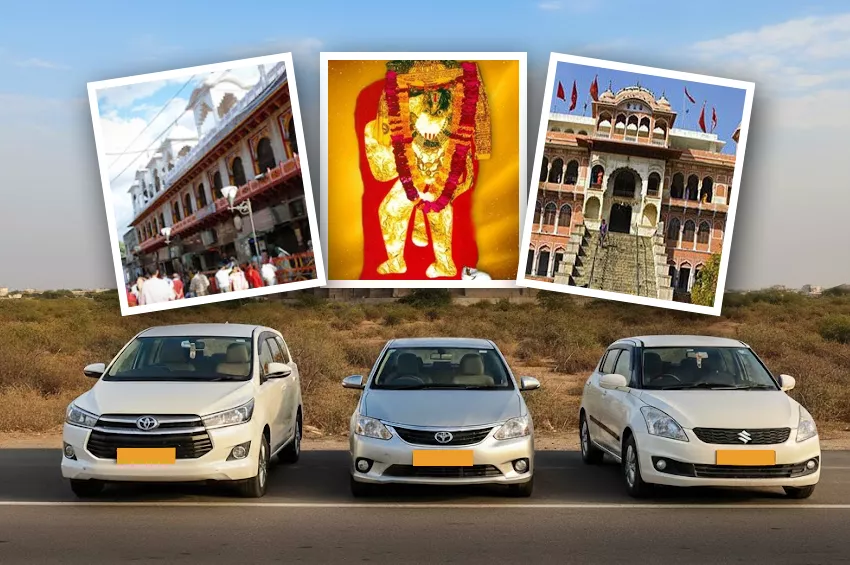
What's in This 2026 Mehandipur Balaji Travel Guide
- The legend and significance of Mehandipur Balaji
- The three deities — Balaji, Pret Raj Sarkar, Kotwal Bhairav Ji
- Distance and route from Jaipur
- 2026 taxi fare and vehicle options
- Darshan timings and aarti schedule
- Why Tuesday and Saturday are special
- Strict temple rules — must read before visiting
- Best time to visit — month-by-month 2026–27
- One-day itinerary from Jaipur
- Nearby places to visit
- What to carry and how to prepare
- Practical 2026 travel tips
- Frequently asked questions
The Legend and Significance of Mehandipur Balaji
The origin of Mehandipur Balaji is rooted in a discovery, not a construction. According to tradition, the self-manifested (swayambhu) idol of Lord Balaji appeared from the rocky terrain of the Aravalli hills at this site. Alongside it appeared the idols of Pret Raj Sarkar and Kotwal Bhairav Ji. These three deities were not brought here by human hands — they were already here, waiting. This swayambhu nature of the idols is central to why the temple carries such extraordinary spiritual authority for its devotees.
Over centuries, the temple became known across India as a place where people could seek relief from afflictions attributed to evil spirits, black magic, negative energies and unexplained mental or physical disturbances. The local people refer to those who come seeking healing as Sankatwala — those carrying a sankath (trouble or burden). The temple does not limit its welcome to any particular kind of visitor or any particular kind of problem. The doors are open to all.
For devotees who approach Mehandipur Balaji with pure faith and the right preparation, the experience of standing before the Balaji idol — hearing the Hanuman Chalisa, breathing the incense-filled air, feeling the concentrated energy of the complex — can be deeply moving and profoundly settling. It is a place where faith has accumulated across generations, and that accumulation is palpable the moment you enter.
The Three Deities: Balaji, Pret Raj Sarkar and Kotwal Bhairav Ji
Understanding the divine structure of Mehandipur Balaji temple helps you approach the visit with the right intention and conduct.
Shri Balaji Maharaj (Lord Hanuman)
The main deity is Lord Hanuman — worshipped here as Balaji, specifically in his child form (Bala Hanuman). He is the presiding authority of the entire temple complex. Hanuman Ji is the source of strength, protection and divine resolution. All other rituals and appeals at the temple are ultimately made in his name. His idol is in the main shrine and is the central point of every darshan.
Pret Raj Sarkar
Pret Raj is the king of spirits — the deity who oversees the divine court of Mehandipur Balaji. Devotees who come with specific afflictions — particularly those attributed to negative spiritual forces — direct their prayers here and to Pret Raj Sarkar's court. The Pret Raj Pooja Griha is where many of the more intense devotional rituals are witnessed. Approaching Pret Raj Sarkar's court requires composure, sincerity and respect — it is not a space for casual observation or photography.
Kotwal Bhairav Ji
Kotwal Bhairav Ji serves as the divine enforcer — the protector who ensures the sanctity of the temple and its devotees. His presence completes the divine triad of Mehandipur Balaji. Many devotees include Bhairav Ji in their prayer circuit during the visit. His temple is part of the same complex and should be visited with equal reverence.
Together, these three deities form a complete spiritual justice system in the devotional imagination of Mehandipur Balaji's visitors — Balaji as the supreme authority and protector, Pret Raj as the court presider, and Kotwal Bhairav Ji as the enforcer of divine order. This unique theological structure is what makes Mehandipur Balaji unlike any other Hanuman temple in India.
Distance and Route from Jaipur to Mehandipur Balaji
Mehandipur Balaji is the most accessible of the three major pilgrimage temples on the Jaipur circuit. Located in the Dausa district of Rajasthan, the temple is approximately 130–135 km from Jaipur by road. The standard route is via NH-21 (Jaipur–Agra Highway) through Dausa. The one-way drive takes 2 to 2.5 hours under normal traffic conditions.
| Route detail | Information (2026) |
|---|---|
| Distance (one way) | Approx. 130–135 km |
| Main highway | NH-21 (Jaipur–Agra Highway) via Dausa |
| Travel time (one way) | 2 to 2.5 hours (normal traffic) |
| Travel time on Tuesday / Saturday | Add 20–40 minutes near Mehandipur due to higher traffic |
| Nearest major town | Dausa — approximately 22 km from Mehandipur Balaji |
| Nearest railway station | Bandikui Junction — approximately 30 km from Mehandipur |
| Road condition | NH-21 is excellent; final stretch into Mehandipur is manageable |
| Total round-trip distance | Approx. 260–270 km |
| Closest major pilgrimage temple to Jaipur | Yes — shorter than both Khatu Shyam Ji and Salasar Balaji |
NH-21 between Jaipur and Dausa is a good quality highway with clear signage. After Dausa, the route to Mehandipur is well known to all local drivers and is straightforward. The final stretch into the temple area can become congested on Tuesdays, Saturdays and during Hanuman Jayanti — the one-way entry system operated by local administration on peak days helps manage the flow, but always plan for extra time near the temple.
Jaipur to Mehandipur Balaji Taxi Fare — Updated 2026 Rates
Mehandipur Balaji is the closest of the three pilgrimage temples (Khatu Shyam Ji, Salasar Balaji, Mehandipur Balaji) to Jaipur, and the fares reflect this shorter distance. The following rates are based on current 2026 market rates from active Jaipur operators.
| Vehicle type | Passengers | One-Way Fare | Round-Trip Fare | Best for |
|---|---|---|---|---|
| Sedan (Swift Dzire / Etios) | Up to 4 | ₹2,800 | ₹5,000 – ₹5,500 | Solo, couples, small groups |
| SUV / Maruti Ertiga | Up to 6 | ₹3,200 – ₹3,800 | ₹5,800 – ₹6,800 | Families of 4–6 |
| Toyota Innova Crysta | Up to 7 | ₹3,800 – ₹4,500 | ₹7,000 – ₹8,500 | Comfortable family travel |
| Tempo Traveller (12–14 seat) | Up to 14 | ₹6,000 – ₹7,000 | ₹11,000 – ₹14,000 | Large groups, pilgrimage parties |
| Luxury (Innova HyCross / Crysta Premium) | Up to 7 | ₹5,000 – ₹5,800 | ₹9,000 – ₹11,000 | Comfort-first travellers |
What a standard round-trip fare includes in 2026:
- Driver charges for the full day
- Fuel for the agreed route (Jaipur → Mehandipur → Jaipur)
- Toll charges both directions on NH-21
- State tax and all permits
- Driver waiting time at the temple (typically 2–4 hours)
- Parking charges at Mehandipur
- Drop back to your Jaipur address
Not included:
- Temple offerings, prasad, chadar, flowers — bought at the bazaar near the temple
- Your meals and tea on the route
- Shoe storage at temple cloakroom (nominal charge)
- Any side visits or extended itinerary additions
Because Mehandipur Balaji is a shorter trip than Salasar Balaji, it can also be combined with a Jaipur sightseeing half-day if you wish — visiting Mehandipur in the morning and spending the afternoon at Amber Fort or City Palace. Discuss this with your operator at the time of booking.
Darshan Timings and Aarti Schedule at Mehandipur Balaji
The temple maintains a consistent daily schedule with a short midday transition. The aarti timings differ between summer and winter seasons.
Daily Darshan Hours
| Session | Timing | Notes |
|---|---|---|
| Morning darshan | 6:00 AM – 11:30 AM | Best window for day-trippers from Jaipur |
| Short midday transition | Approx. 11:30 AM – 12:00 PM | Brief changeover between sessions |
| Afternoon / evening darshan | 12:00 PM – 9:00 PM | Reopens for continuous darshan through evening |
| Temple closing | 9:00 PM | All devotees must exit by closing time |
Aarti Schedule — Summer Season (April to September)
| Aarti | Time | Notes |
|---|---|---|
| Morning Aarti | 6:15 AM – 6:45 AM | First aarti of the day — sets the devotional tone for the morning |
| Evening Aarti | 7:15 PM – 7:45 PM | Beautiful evening aarti as darkness falls; atmospheric and moving |
Aarti Schedule — Winter Season (October to March)
| Aarti | Time | Notes |
|---|---|---|
| Morning Aarti | 6:10 AM – 6:25 AM | Earlier and briefer in winter; arrive before 6:00 AM if you want the full experience |
| Evening Aarti | 6:20 PM – 6:35 PM | Evening aarti comes early in winter as daylight ends sooner |
Best darshan time for Jaipur day-trippers: Arrive between 7:30 AM and 10:00 AM. The morning session is the most peaceful, the queue is manageable, the atmosphere is devotional and you have ample time to visit all three deity shrines — Balaji, Pret Raj Sarkar and Kotwal Bhairav Ji — before the midday transition. On Tuesdays and Saturdays, arrive 30–45 minutes earlier than usual as queues build significantly on these days.
Why Tuesday and Saturday Are Most Auspicious at Mehandipur Balaji
Tuesday (Mangalwar) is sacred to Lord Hanuman throughout the Hindu world — and at Mehandipur Balaji, this significance is strongly felt. Tuesdays see dramatically higher footfall than other weekdays. Devotees who specifically seek Balaji's strength and protection often choose Tuesday as their day of darshan.
Saturday (Shaniwar) carries its own significance at Mehandipur Balaji because of the presence of Bhairav Ji in the complex. Saturday is traditionally associated with Shani Dev and with protective deities who guard against negative energies — making it the natural day for devotees who come seeking relief from afflictions associated with these forces. The combination of Balaji's protection and Bhairav Ji's authority makes Saturday at Mehandipur a particularly significant day for Sankatwala devotees.
Both Tuesdays and Saturdays are considerably busier than regular weekdays. For a peaceful personal darshan without large crowds, a regular weekday (Monday, Wednesday, Thursday or Friday) is preferable. For the full energy and atmosphere of Mehandipur Balaji at its most active, Tuesday or Saturday is the day to choose.
Hanuman Jayanti (Chaitra Purnima — 2 April 2026 this year) is the biggest annual event at the temple. The next Hanuman Jayanti is in March–April 2027. If you plan to visit during Hanuman Jayanti, leave Jaipur before 5:00 AM and expect very large crowds throughout the day.
Strict Temple Rules at Mehandipur Balaji — Must Read Before Visiting
Mehandipur Balaji has specific rules of conduct that are unlike those at any other temple in Rajasthan. These are not optional courtesies — they are considered essential to the sanctity of the visit and the safety of the devotee. Please read these carefully before you go.
The most important rule: Do not carry prasad outside the temple
This is the single most strictly observed rule at Mehandipur Balaji and is unique to this temple. Prasad received at the temple must be consumed inside the temple premises. It must never be taken outside the gate. This rule applies to all prasad from all three shrines — Balaji, Pret Raj Sarkar and Kotwal Bhairav Ji. The belief is that the prasad carries the divine energy of the temple and taking it outside can transfer that energy — and any bound negative forces — beyond the temple boundary. Every devotee must understand and respect this rule before entering.
Do not look back when leaving the temple
When exiting the Mehandipur Balaji complex, devotees are traditionally advised not to look back towards the temple. This practice has deep roots in the devotional culture of the shrine and is observed by the vast majority of regular visitors. Walk forward, eyes ahead, as you leave the complex.
No photography inside the sanctum or Pret Raj court
Photography is strictly prohibited inside the main Balaji sanctum, the Pret Raj Pooja Griha and the Bhairav Ji temple. Follow this rule without exception. The atmosphere in these areas is intense and sacred — photographing it is considered disrespectful and is not permitted by the temple authorities.
Strict vegetarian conduct required
Non-vegetarian food, alcohol and tobacco must not be consumed on the day of the visit — ideally from the previous evening. Many regular devotees maintain this discipline for 24 hours before arriving at the temple. The entire Mehandipur area is vegetarian.
Maintain composure and silence in ritual areas
You may witness devotees displaying unusual behaviour near the Pret Raj Sarkar court — this is understood within the temple's devotional tradition as part of the healing process. Maintain respectful silence and composure. Do not make comments, laugh, film or photograph these situations. This is a place of sincere faith and difficult personal journeys; it must be treated with full respect.
Do not accept prasad or items from strangers
This is a practical safety rule: do not accept food, prasad or any item from an unknown person inside or near the temple complex. Visit the shrine directly and receive prasad only through the official temple priests at the designated points.
Dress code
Dress modestly and respectfully — covered shoulders and legs are expected. Traditional Indian attire is always suitable. Remove footwear before the temple complex entrance as directed.
Best Time to Visit Mehandipur Balaji — Month-by-Month 2026–27
| Month | Weather | Crowd level | Key dates / events | Visit rating |
|---|---|---|---|---|
| January 2027 | Cool to cold (8–22°C) | Moderate | Regular Tuesdays and Saturdays | ✅ Very good — calm and comfortable |
| February 2027 | Pleasant (12–27°C) | Moderate | Maha Shivaratri; Tuesdays and Saturdays | ✅ Very good |
| March 2027 | Warm (18–33°C) | Moderate–high | Chaitra Navratri period | ✅ Excellent |
| April 2027 | Warm (24–38°C) | Very high (Hanuman Jayanti) | Hanuman Jayanti / Chaitra Purnima — biggest annual festival | ✅ Best for full festival experience; leave before 5 AM |
| May–June 2027 | Hot (35–46°C) | Low–moderate | Regular Tuesdays and Saturdays | ⚠️ Manageable with early start; temple is cooler inside |
| July–September 2027 | Warm, humid (28–38°C) | Low–moderate | Shravan Tuesdays — very auspicious for Hanuman | ⚠️ Shravan Tuesdays are excellent; carry extra water |
| October 2026 / 2027 | Comfortable (22–35°C) | Moderate | Navratri; regular auspicious days | ✅ Very good |
| November 2026 / 2027 | Pleasant (14–28°C) | Moderate | Dev Uthani Ekadashi; regular Tuesdays | ✅ Excellent — ideal season |
| December 2026 | Cool (8–24°C) | Moderate | Regular Tuesdays and Saturdays | ✅ Very comfortable and calm |
One-Day Itinerary: Jaipur to Mehandipur Balaji and Back — 2026
Because Mehandipur Balaji is the closest major pilgrimage temple to Jaipur, a same-day return is very comfortable even without an extremely early departure. The following schedule works for a relaxed, complete visit.
| Time | Activity | Practical note |
|---|---|---|
| 6:00 – 6:30 AM | Depart Jaipur by private taxi | 6 AM departure puts you at the temple by 8:30 AM — perfect morning timing |
| 7:30 AM | Optional breakfast stop near Dausa | Dhabas on NH-21 near Dausa serve chai, paratha and puri-sabzi from early morning |
| 8:30 – 9:00 AM | Arrive Mehandipur — park vehicle | Leave shoes at the cloakroom near the entrance; keep small bag for personal items |
| 9:00 – 10:30 AM | Darshan at main Balaji shrine | Morning session is calm; queue moves well between 9–10 AM on regular days |
| 10:30 – 11:00 AM | Pret Raj Sarkar Pooja Griha | Approach with silence and composure; observe quietly and respectfully |
| 11:00 – 11:30 AM | Kotwal Bhairav Ji temple | Complete the full three-deity circuit; purchase and consume prasad inside |
| 11:30 AM – 12:30 PM | Temple bazaar, 151-foot Hanuman Ji nearby, Teen Pahadi | Explore the wider complex; the 151-foot Hanuman statue nearby is worth seeing |
| 12:30 – 1:30 PM | Lunch near the temple | Vegetarian restaurants and dhabas throughout the Mehandipur area |
| 1:30 – 2:00 PM | Depart from Mehandipur | Comfortable midday return journey |
| 4:00 – 4:30 PM | Arrive back in Jaipur | Afternoon free for Jaipur sightseeing, rest or onward travel |
For a Tuesday visit: Leave Jaipur by 5:30 AM, arrive by 8:00 AM, and complete darshan of all three shrines before 11:00 AM when the crowds peak significantly. The rest of the day follows the same schedule as above.
Combined with Jaipur sightseeing: Because you can return from Mehandipur Balaji by early afternoon, this trip combines naturally with a half-day Jaipur visit. Amber Fort, Hawa Mahal or City Palace in the late afternoon is a perfectly manageable addition to a Mehandipur morning trip.
Nearby Places to Visit Near Mehandipur Balaji
151-Foot Hanuman Statue
A massive 151-foot statue of Lord Hanuman stands near the Mehandipur Balaji complex area. It is a striking landmark visible from the main road and is worth a visit on the same trip. Many families include a stop at the statue as part of their overall Mehandipur experience.
Teen Pahadi and Saat Pahadi
The Aravalli hills surrounding Mehandipur have smaller sacred sites within the broader complex area. Teen Pahadi (three hills) and Saat Pahadi (seven hills) are nearby natural features that carry their own local devotional significance. If you have extra time after the main temple visit, these can be explored on foot.
Anjani Mata Mukti Dham
Located within the broader Mehandipur area, the Anjani Mata Mukti Dham honours the mother of Lord Hanuman and is visited by many devotees who come to Mehandipur. It adds a meaningful additional stop to the visit without requiring significant extra travel time.
Ram Darbar Temple
The Ram Darbar temple near the main complex is another devotional stop within the Mehandipur area. It can be included as part of your overall visit if time permits.
Dausa — 22 km away
The town of Dausa, approximately 22 km from Mehandipur on the return route to Jaipur, has a small but decent market area and a few heritage structures. It also has good petrol stations, cash machines and food options for a comfortable stop before continuing to Jaipur. The Neelkanth Mahadev Temple near Dausa is also visited by some travellers on this route.
What to Carry and How to Prepare for Mehandipur Balaji
Essential carry list
- Water — minimum 1.5 litres per person; the temple area can be warm and the visit intense
- Cash — ₹500–₹1,000 in small denominations for prasad, cloakroom, parking, meals
- Government ID (Aadhaar, driving licence)
- Modest, full-coverage clothing — covered shoulders and legs required
- Comfortable slip-on footwear for easy removal at the temple entrance
- Small cloth bag for phone and wallet inside (no large bags; use cloakroom)
- Personal medication — the visit can be emotionally and physically taxing for some people
- Light snacks for the road, especially if travelling with children
Mental and spiritual preparation
Mehandipur Balaji is a unique sacred environment. Even visitors who come without a specific affliction to address should approach the temple with genuine respect and calm intention. The atmosphere — the sounds, the energy, the behaviour of other devotees — can be overwhelming for first-time visitors who have not been prepared. Read about the temple before you go. Understand the three deities and their roles. Come with sincerity and composure, and the experience will be meaningful. Come with curiosity or scepticism, and treat others' sincere faith with full respect regardless of your own beliefs.
Before the visit — dietary preparation
Avoid non-vegetarian food, alcohol and tobacco from at least the previous evening before visiting Mehandipur Balaji. Many regular devotees maintain this discipline for 24 hours or more. The discipline is not merely customary — it is considered part of the preparation that allows you to receive the full benefit of the darshan.
Practical 2026 Travel Tips for Mehandipur Balaji from Jaipur
Book your taxi 1–2 days in advance on regular days; 1 week in advance for Tuesdays, Saturdays and Hanuman Jayanti
Because Mehandipur Balaji is relatively close to Jaipur, taxi availability is generally good for regular weekday visits. On Tuesdays, Saturdays and Hanuman Jayanti, demand is higher. Confirm your booking with a WhatsApp message to the driver the evening before travel.
6:00 AM departure works well for regular days
Unlike Salasar Balaji (which needs a 4:30 AM departure), Mehandipur Balaji is accessible with a 6:00 AM start from Jaipur. This puts you at the temple by 8:30 AM — well within the comfortable morning darshan window. On Tuesdays and Saturdays, leave by 5:30 AM to arrive before the crowd peak.
The prasad rule is absolute — do not forget it
The no-prasad-outside rule at Mehandipur Balaji is the single most important thing for a first-time visitor to remember. Remind everyone in your group before entering. Consume all prasad inside the premises. This is not a suggestion — it is the most fundamental rule of this temple and is observed universally by regular devotees.
Do not rush through the three-deity circuit
Many visitors rush through Mehandipur Balaji without completing the full circuit of all three shrines — Balaji, Pret Raj Sarkar and Kotwal Bhairav Ji. The complete visit includes all three. Each has its own atmosphere and purpose. Allow at least 2–2.5 hours inside the complex to do this properly.
Keep children close and groups together
The Mehandipur Balaji complex can be intense and disorienting for first-time visitors, particularly near the Pret Raj Sarkar court on busy days. Keep young children with a responsible adult at all times. Set a clear meeting point at the temple entrance before entering if your group separates inside.
The experience is unlike other temples — embrace it calmly
First-time visitors sometimes arrive expecting a standard Hanuman temple experience and find Mehandipur Balaji to be something quite different in atmosphere. The intense ritual activity, the sounds, the concentration of devotional energy — all of this is part of what makes this temple extraordinary. Approach it with an open, respectful and calm mind. What you witness here reflects genuine faith in motion, not performance.
Our Jaipur to Mehandipur Balaji Taxi Service — 2026
Rajasthan Tour Trip provides reliable, comfortable private taxi service for the Jaipur to Mehandipur Balaji route. Our drivers are familiar with the route, the temple area parking, the festival-period traffic conditions and the best departure times for different types of visits.
| Service feature | Details |
|---|---|
| Vehicles available | Sedan (Dzire/Etios), Maruti Ertiga, Innova Crysta, Tempo Traveller (12–14 seat) |
| Pick-up | Your hotel, home or any Jaipur address |
| Fare transparency | All-inclusive confirmed fare before travel — toll, parking, driver allowance all included |
| Booking | Phone, WhatsApp or website contact form |
| Payment | Cash and UPI accepted on the day |
| Customisation | Mehandipur + Jaipur sightseeing combo; group pilgrimages; Agra extension trips |
| Driver conduct | Drivers do not enter the temple complex; they wait at the designated parking area |
| No shop stops | We never route you through commercial shops you did not ask for |
Frequently Asked Questions — Jaipur to Mehandipur Balaji 2026–27
How far is Mehandipur Balaji from Jaipur?
Approximately 130–135 km by road via NH-21 through Dausa. The one-way journey takes 2 to 2.5 hours — it is the closest major pilgrimage temple to Jaipur of the three main Rajasthan pilgrimage sites.
What is the taxi fare from Jaipur to Mehandipur Balaji in 2026?
A round-trip sedan costs approximately ₹5,000–₹5,500. A Maruti Ertiga round trip is ₹5,800–₹6,800. An Innova Crysta round trip is ₹7,000–₹8,500. A Tempo Traveller for groups is ₹11,000–₹14,000 round trip. All fares include toll, parking, state tax and driver allowance with no hidden charges.
What are the darshan timings at Mehandipur Balaji?
The temple opens at 6:00 AM. Morning darshan runs from 6:00 AM to 11:30 AM, and afternoon/evening darshan from 12:00 PM to 9:00 PM. Morning Aarti is at 6:10–6:45 AM depending on season; Evening Aarti is at 6:20–7:45 PM. The temple closes at 9:00 PM.
What are the most important rules at Mehandipur Balaji?
The most critical rule: do not carry prasad outside the temple premises — consume all prasad inside. Also: do not look back when leaving; no photography inside the sanctum or Pret Raj court; dress modestly; maintain complete vegetarian discipline before the visit; do not accept food from strangers.
Which days are best for Mehandipur Balaji darshan?
Tuesday (Mangalwar) and Saturday (Shaniwar) are most auspicious but also most crowded. For a peaceful personal darshan, choose a regular weekday. Hanuman Jayanti (Chaitra Purnima — 2 April 2026; March–April 2027) is the biggest annual festival. Shravan Tuesdays in July–August are especially significant.
Can I visit Mehandipur Balaji in one day from Jaipur?
Yes, very comfortably. A 6:00 AM departure from Jaipur gets you there by 8:30 AM. You can visit all three shrines, spend time in the complex and return to Jaipur by 4:00–4:30 PM. It is the easiest same-day pilgrimage trip from Jaipur.
What is the significance of the three deities at Mehandipur Balaji?
Balaji (Lord Hanuman) is the supreme protector. Pret Raj Sarkar oversees the divine court that addresses afflictions from negative forces. Kotwal Bhairav Ji enforces divine order and protects devotees. Together they form a complete spiritual protection system unique to this temple. All three shrines should be visited during your darshan.
Is Mehandipur Balaji safe to visit?
Yes, entirely safe. The temple is well managed, heavily visited and perfectly accessible for families, individuals and the elderly. The unusual ritual activity you may witness (particularly near the Pret Raj court) is part of the temple's devotional culture and is not dangerous. Simply maintain composure and respect, follow the temple rules and your visit will be peaceful and meaningful.
Can I combine Mehandipur Balaji with Jaipur sightseeing?
Yes. Because you can return to Jaipur by early afternoon, a Mehandipur morning followed by Amber Fort or City Palace in the afternoon is an entirely manageable combination. Discuss this with your taxi operator at booking so the schedule can be planned properly.
Is food available near Mehandipur Balaji temple?
Yes. Vegetarian restaurants and small dhabas are available throughout the temple area. The entire Mehandipur complex is vegetarian. A good breakfast stop is available at Dausa town on the route out from Jaipur.
Which vehicle is best for a family visit to Mehandipur Balaji?
For families of 4–6, a Maruti Ertiga or Innova Crysta provides comfortable seating for the 2–2.5 hour drive. Because the trip is shorter than Salasar Balaji, a sedan is also perfectly comfortable for small groups of 3–4 people on this route.
Can I visit Mehandipur Balaji and Agra in one trip?
Yes — Mehandipur Balaji sits on NH-21, the same highway that continues to Agra. Agra is approximately 90–100 km further from Mehandipur. A combined Mehandipur Balaji and Agra day trip is very popular, visiting the temple in the morning and the Taj Mahal and Agra Fort in the afternoon. Discuss this two-destination itinerary with your operator as it will affect the vehicle, departure time and fare.
Final Thought: Strength Is What Balaji Gives — Preparation Is What You Bring
Of the three great pilgrimage temples accessible from Jaipur — Khatu Shyam Ji, Salasar Balaji and Mehandipur Balaji — Mehandipur is perhaps the most distinctive. It asks something more of its visitors than the others do. It asks composure in an atmosphere that is intense. It asks respect in the face of what you may not immediately understand. It asks discipline — no prasad outside, no backward glance, no casual photography, no unprepared entry.
In return, what it offers is equally distinctive. Mehandipur Balaji has been described by millions of visitors — across generations, across regions of India, across every kind of personal circumstance — as a place where something changes. Where a burden that was brought in at the gate somehow feels lighter at the exit. Where Hanuman Ji's strength, which devotees say is always available to those who ask sincerely, becomes something you can actually feel.
Travel prepared. Follow the rules. Visit all three shrines with equal attention. Consume the prasad inside. And walk out of that gate — eyes forward — carrying whatever Balaji has given you for the journey ahead.
🙏 Jai Shri Mehandipur Balaji — Balaji Maharaj ki Jai 🙏
Research and Editorial Note
This guide was updated in September 2026 to reflect current taxi fares from active Jaipur operators, accurate temple darshan timings, complete aarti schedule for both seasons, and the specific temple rules unique to Mehandipur Balaji. Temple timings, taxi rates and road conditions can change. Always verify with the Mehandipur Balaji temple trust and your taxi operator before travel. The temple rules described here — particularly the no-prasad-outside rule — are well established but should also be confirmed on arrival.