Ram Niwas Garden Jaipur & Albert Hall Museum: Latest Tickets, Timings, Night Visit, Mummy & Complete Guide
Ram Niwas Garden & Albert Hall: Quick Answers
- Ram Niwas Garden: Rajasthan Tourism says Maharaja Sawai Ram Singh built it in 1868.
- Albert Hall: stands in the centre of Ram Niwas Garden and is officially known as the Government Central Museum / Central Museum.
- Foundation: Prince of Wales laid Albert Hall's foundation stone in 1876.
- Architect: Sir Samuel Swinton Jacob designed the museum in Indo-Saracenic style.
- Current 2026 Albert Hall tariff: ₹100 Indian adult, ₹50 Indian student, ₹600 foreign adult, ₹300 foreign student under the revised rates reported as effective 1 January 2026.
- Current government timing reference: Incredible India lists 9:00 AM–5:00 PM and 7:00 PM–9:30 PM.
- Famous exhibit: Egyptian mummy, Persian Garden Carpet, miniature paintings, arms, textiles, jewellery, pottery and sculpture.
- Best for: first-time Jaipur visitors, families, museum lovers, photographers and travellers staying near the old city.
- Official booking: use Rajasthan Government OBMS for the live ticket before payment.
There are two ways to experience Albert Hall.
The first is the fast Jaipur version: stop the car, photograph the grand façade, watch pigeons circle the domes, and leave.
The second begins by understanding where the building actually stands.
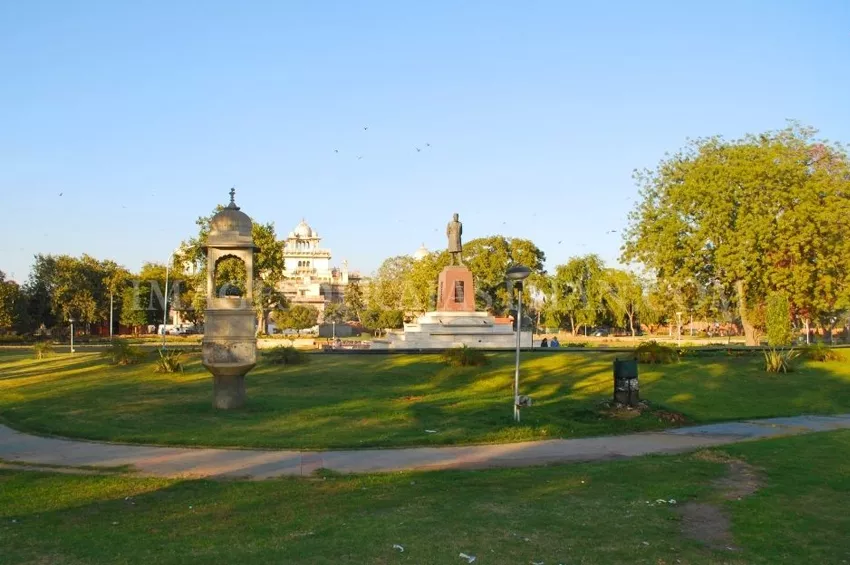
Albert Hall is the centrepiece of Ram Niwas Garden, a historic public landscape created in the nineteenth century just outside Jaipur's old walled city. Rajasthan Tourism's current page says Maharaja Sawai Ram Singh built Ram Niwas Garden in 1868 and describes it as a city-centre garden containing Albert Hall Museum, zoological/bird facilities, Ravindra Rang Manch, an art gallery and exhibition ground.
The museum itself is much more than a pretty night façade. Rajasthan Tourism highlights metalwork, wood craft, carpets, stone and metal sculpture, arms and weapons, natural stones, ivory work and miniature paintings from Jaipur, Bundi, Kota, Kishangarh and Udaipur. Government museum references also identify its Egyptian mummy and Persian Garden Carpet among the collection's standout objects.
Complete Visitor Guide
Albert Hall Museum Ticket Price: Latest 2026 Rates
Rajasthan's state monument and museum entry fees were revised from 1 January 2026. Contemporary reporting of the government-notified rates lists the following Albert Hall tariff:
| Visitor Category | 2026 Albert Hall Entry |
|---|---|
| Indian visitor | ₹100 |
| Indian student | ₹50 — carry valid student ID |
| Foreign / international visitor | ₹600 |
| Foreign student | ₹300 — valid student ID required |
These revised figures are especially important because many museum directories and older travel pages still expose the pre-2026 ₹40/₹20/₹300/₹150 schedule in search results.
Before buying, open Rajasthan Government OBMS — Government Central Museum / Albert Hall. The live official booking screen should take priority over any blog, including this guide, if the government revises the tariff again.
Albert Hall Composite Tickets
Rajasthan also changed its combined-ticket structure around the January 2026 tariff revision. Contemporary reporting describes both Jaipur sightseeing combinations and a wider state-level multi-day pass. Because inclusions, validity and sale channels can change, do not buy a pass based only on an old screenshot.
If you plan Amber Palace, Hawa Mahal, Jantar Mantar, Nahargarh, Albert Hall and other state-managed sites, compare the live OBMS composite option against buying individual tickets. City Palace and independently managed attractions should not automatically be assumed to be included.
Is Ram Niwas Garden Included in the Albert Hall Ticket?
Do not treat the entire Ram Niwas Garden precinct as if it were one museum ticket. Albert Hall is the ticketed museum. Other attractions and facilities within or around the garden can have their own access arrangements, hours or charges.
Albert Hall Museum Timings: Latest Government Reference
The Government of India's Incredible India portal currently lists:
| Session | Current Timing Reference | Best For |
|---|---|---|
| Day museum | 9:00 AM–5:00 PM | Full galleries and collections |
| Night session | 7:00 PM–9:30 PM | Illuminated architecture / evening experience |
Older pages often quote 7:00 PM–10:00 PM for the night museum. Because the current Incredible India listing gives 9:30 PM, use the current official timing rather than assuming the older 10:00 PM closing still applies.
Allow 90 minutes to 2 hours for a satisfying daytime museum visit. Serious art and craft visitors can spend longer.
Ram Niwas Garden: Entry, Timings & What Is Actually Here
Rajasthan Tourism describes Ram Niwas Garden as a historical garden built by Maharaja Sawai Ram Singh in 1868 in the heart of Jaipur. Its official description names Albert Hall/Central Museum, zoological facilities, Ravindra Rang Manch theatre, an art gallery and an exhibition ground within the larger precinct.
There is no reason to invent one universal “Ram Niwas Garden ticket” and apply it to everything in the precinct. Museum admission, food areas, zoological attractions, theatre programmes and public garden areas should be checked separately.
Is Ram Niwas Garden Free?
General public garden access and Albert Hall Museum admission are not the same product. Where a specific enclosed attraction or facility displays a ticket, pay that attraction's authorised rate. Do not mistake the Albert Hall ₹100/₹600 museum tariff for a fee to merely stand outside in the garden precinct.
Ram Niwas Garden Timings
Rajasthan Tourism's current attraction description does not publish one universal opening-and-closing table for every part of the larger Ram Niwas Garden precinct. Individual facilities can operate on different schedules. If Albert Hall is your priority, plan around the museum's official session rather than an unverified “park closes at…” time copied from a blog.
Ram Niwas Garden & Albert Hall History
1868: Ram Niwas Garden
Rajasthan Tourism records 1868 as the year Maharaja Sawai Ram Singh created the historical Ram Niwas Garden.
1876: Albert Hall Foundation Stone
Rajasthan Tourism states that the Prince of Wales laid the foundation stone of Albert Hall in 1876.
Sir Samuel Swinton Jacob
Sir Samuel Swinton Jacob conceptualised and designed Albert Hall. Rajasthan Tourism identifies its style as Indo-Saracenic, while Incredible India describes a broader synthesis of Indian, Islamic and Gothic/Rajput influences.
1887: Museum Opens
Government of India tourism material says Maharaja Sawai Madho Singh II opened the museum to the public in 1887. India's museum directory likewise identifies Albert Hall as a state-government museum dating to the late nineteenth century.
Albert Hall Architecture: Do Not Rush Straight Inside
Albert Hall's exterior is one of the exhibits.
Domes, arches, chhatri-like forms, carved surfaces, balconies and layered arcades create the silhouette that makes the museum instantly recognisable. The architecture belongs to the nineteenth-century Indo-Saracenic vocabulary in which Indian forms were combined with other architectural influences.
Before entering, walk far enough away to see the full composition. After leaving, look again from the garden side. The building reads differently at close range, across the open space and after illumination.
What to See Inside Albert Hall Museum
Rajasthan Tourism's current museum description highlights a broad decorative-arts collection rather than one narrow subject. Government museum references organise the collection across categories including metal art, pottery, jewellery, garments and textiles, arms and armour, miniature paintings, musical instruments, clay art, sculpture, marble art, furniture and woodwork, carpets, international art, ivory and coins.
1. Miniature Paintings
Rajasthan Tourism specifically identifies works representing the Bundi, Kota, Kishangarh, Udaipur and Jaipur schools. Look at the differences in court scenes, landscapes, figures and colour rather than treating “Rajasthani miniature” as one style.
2. Arms & Armour
Weapons tell you as much about craftsmanship as warfare. Look at hilts, metal decoration, shields and ceremonial detail.
3. Textiles, Costumes & Jewellery
These galleries make Rajasthan's material culture easier to understand than a palace room alone: weaving, embroidery, dress, ornament and social identity sit side by side.
4. Pottery & Jaipur Craft
Ceramics and Jaipur craft traditions reveal the museum's original educational purpose—showing high-quality regional manufacture and design, not simply collecting royal curiosities.
5. Sculpture
Stone and metal sculpture broaden the museum beyond nineteenth-century Jaipur and connect visitors with older artistic traditions.
6. Persian Garden Carpet
Government museum material identifies a Persian carpet depicting a Garden of Eden among Albert Hall's most valuable possessions. It is an easy object to walk past too quickly; give it time.
The Egyptian Mummy at Albert Hall
Yes, there is a genuine Egyptian mummy in Albert Hall's collection. Government of India museum and tourism references both identify it as one of the museum's notable objects.
The mummy is often the object that gets families and younger visitors interested in entering, but it should not become the only reason to visit. Albert Hall's strength is the range of its collection—Rajasthani craft, painting, textiles, arms, decorative arts and international material within one nineteenth-century museum.
Albert Hall Museum at Night
Albert Hall changes character after sunset. Incredible India specifically highlights the building's colourful nightly illumination and currently lists an evening session from 7:00 PM to 9:30 PM.
If your priority is the collection, visit in the day. If your priority is architecture and photographs, the illuminated exterior is particularly attractive after dark. If you have enough time, seeing it once in daylight and again after illumination gives the best comparison.
Night Ticket
Older official museum-directory information listed a ₹100 night ticket across visitor categories, but that directory predates Rajasthan's January 2026 tariff revision. Because the live OBMS schedule should now be treated as authoritative, check the current night-session price on OBMS/counter instead of publishing the old ₹100 figure as guaranteed current.
Free Entry & Student Concessions: Verify Before You Go
Older government museum-directory information recorded free admission for children below seven, recommended student groups during a morning education window, and free-entry observances such as Rajasthan Day, World Heritage Day, World Museum Day and World Tourism Day.
Those concessions are useful background but predate the 2026 tariff revision. Schools, families and visitors planning around a free-entry day should confirm the current rule with the museum/OBMS before travelling specifically for that concession.
Albert Hall for Foreign & International Visitors
For an overseas visitor, Albert Hall is one of the most efficient introductions to Rajasthan's visual culture because the building and collection cover different periods, materials and regions in one stop.
| International Visitor | 2026 Planning Figure |
|---|---|
| Foreign adult | ₹600 |
| Foreign student | ₹300 with valid proof |
| Recommended time | 1.5–2 hours |
| Best session | Day for galleries; evening for illumination |
Do not convert the price into USD on the page—the official ticket is charged in INR and exchange rates change.
Albert Hall for Families & Children
Families do not need to force every gallery. Build the visit around a few anchors: the mummy, weapons, colourful textiles, miniature paintings and unusual decorative objects. Once children are engaged, add more rooms.
Keep younger children close around stairs, display cases and busy entrances. Check the current under-seven concession before relying on it for your budget.
Accessibility & Comfort
Albert Hall is a heritage building, not a purpose-built modern museum. Visitors with mobility concerns should ask staff about the easiest current route through the galleries and any lift/ramp access available on the day.
Jaipur summers are hot. Even an indoor museum visit involves walking through large spaces, so carry water where permitted and choose morning hours in May and June.
Photography Tips
- Morning: cleaner architectural light and usually fewer people outside.
- Blue hour: excellent balance between the illuminated building and remaining sky colour.
- Night: best for the iconic glowing façade.
- Inside: follow current museum signage for photography, flash, tripod and professional equipment.
- Commercial shoot: never assume a normal entry ticket grants commercial-production permission.
Masala Chowk & Food Near Ram Niwas Garden
Ram Niwas Garden is also known to visitors for its convenient food stop around Masala Chowk. It can work well after a museum visit because groups can choose different Jaipur snacks and dishes in one place.
Operating hours, vendor mix and entry arrangements can change independently of Albert Hall, so do not attach the museum's ticket or timing to Masala Chowk.
How to Reach Ram Niwas Garden & Albert Hall
From Hawa Mahal / City Palace
Albert Hall is just outside the old walled-city side. Auto-rickshaw or taxi is straightforward; in comfortable weather, travellers already around Bapu Bazaar/New Gate can also structure it as part of an old-city walking-and-auto route.
From Jaipur Railway Station
Taxi, app cab or auto is simplest. Allow extra traffic time during office and market peaks.
From Jaipur Airport
Use a taxi/app cab. Albert Hall is a practical first or last sightseeing stop when your route passes central Jaipur, but keep airport traffic buffer.
By Jaipur Metro
Use the old-city/central network to reduce part of the road journey, then continue by foot or auto depending on your station and comfort. For most first-time visitors carrying bags or travelling with family, a direct cab is easier.
Best Places to Combine with Ram Niwas Garden
| Place | Why Combine It |
|---|---|
| Bapu Bazaar | Easy old-city shopping connection |
| Hawa Mahal | Iconic Jaipur façade and interior monument |
| Jantar Mantar | UNESCO astronomical observatory |
| City Palace | Royal museum and palace complex |
| Govind Dev Ji | Major living Krishna temple |
| Birla Mandir | Good late-afternoon/evening continuation |
Best Half-Day Route
Option A — Museum + Old City: Albert Hall morning → Bapu Bazaar → Hawa Mahal → Jantar Mantar → City Palace.
Option B — Relaxed afternoon: Albert Hall galleries → Ram Niwas Garden → food break → Bapu Bazaar → return to Albert Hall area after dark for the illuminated exterior.
15 Mistakes to Avoid
- Using the old ₹40 Indian ticket as the current 2026 price.
- Using ₹300 as the current foreign-adult rate after the 2026 revision.
- Assuming Ram Niwas Garden and Albert Hall are one universal ticket.
- Relying on an old 10:00 PM night closing when the current Incredible India page lists 9:30 PM.
- Visiting only for a façade photo and skipping the museum if art/history interests you.
- Visiting only for the mummy and rushing the Rajasthan galleries.
- Confusing City Palace admission with state museum tickets.
- Assuming every composite pass has the same inclusions and validity.
- Publishing an old night-ticket rate without checking OBMS.
- Assuming old free-entry concessions survived unchanged after the tariff revision.
- Using flash or professional equipment without checking rules.
- Arriving at closing time expecting a full museum visit.
- Ignoring the building's exterior architecture.
- Planning a summer midday walk without water/heat precautions.
- Buying from an unofficial link when the Rajasthan Government booking portal is available.
Official & Government Sources
- Rajasthan Government OBMS — Albert Hall / Government Central Museum
- Rajasthan Tourism — Jaipur, Albert Hall & Ram Niwas Garden
- Rajasthan Tourism — Museums in Rajasthan
- Incredible India — Albert Hall Museum
Related Jaipur Guides
- Albert Hall Museum Jaipur Complete Guide
- Jaipur Monument Ticket Prices & Timings
- Jaipur Complete Travel Guide
- Jantar Mantar Jaipur Guide
- Govind Dev Ji Temple Guide
Ram Niwas Garden & Albert Hall FAQs
Who built Ram Niwas Garden?
Rajasthan Tourism says Maharaja Sawai Ram Singh built the historical garden in 1868.
Is Albert Hall inside Ram Niwas Garden?
Yes. Rajasthan Tourism describes Albert Hall Museum as standing in the centre of Ram Niwas Garden.
What is Albert Hall's official name?
It is commonly called Albert Hall Museum and is also identified as Government Central Museum / Central Museum, Jaipur.
What is the Albert Hall ticket price in 2026?
Rates reported as effective from 1 January 2026 are ₹100 Indian adult, ₹50 Indian student, ₹600 foreign adult and ₹300 foreign student. Confirm the live Rajasthan OBMS rate before payment.
Why do some websites still show ₹40 or ₹50?
Those figures come from older tariff schedules or pages that were not updated after Rajasthan's January 2026 fee revision.
What are the current museum timings?
Incredible India currently lists 9:00 AM–5:00 PM and an evening session from 7:00 PM–9:30 PM.
Is Albert Hall open at night?
Yes, the current Government of India tourism listing includes a night session. Check OBMS for the current night ticket and any same-day operational changes.
How much is the night ticket?
Older government museum information showed ₹100, but it predates the January 2026 tariff revision. Check the current live OBMS/counter price rather than relying on the old figure.
Is there a mummy inside?
Yes. Government museum and tourism references identify an Egyptian mummy among the notable collections.
Who designed Albert Hall?
Sir Samuel Swinton Jacob designed it; Rajasthan Tourism identifies the architecture as Indo-Saracenic.
When was its foundation stone laid?
Rajasthan Tourism records that the Prince of Wales laid the foundation stone in 1876.
When did the museum open?
Government of India tourism material states that Maharaja Sawai Madho Singh II opened it to the public in 1887.
What else is famous inside?
The Persian Garden Carpet, miniature paintings, arms, textiles, jewellery, pottery, sculpture, woodwork, metalwork and international collections.
How much time is enough?
Allow about 1.5–2 hours for a comfortable first visit.
Is the garden ticket the same as the museum ticket?
No. Do not apply the Albert Hall museum admission price to the entire Ram Niwas Garden precinct.
Can foreign tourists visit?
Yes. The current 2026 planning rate is ₹600 for foreign adults and ₹300 for foreign students, subject to live official confirmation.
Are children free?
Older official museum information offered free admission below age seven, but confirm the current concession after the 2026 tariff revision before relying on it.
Is photography allowed?
Follow the current museum signs for indoor photography, flash and equipment. Exterior tourist photography is common, while commercial shoots can require separate permission.
Is Albert Hall worth visiting if I already saw City Palace?
Yes if you enjoy art, crafts or museums. City Palace focuses on Jaipur's royal setting; Albert Hall has a broader state museum collection and a very different nineteenth-century public-museum architecture.
Where should I book official tickets?
Use the Rajasthan Government OBMS tourist booking portal or the authorised on-site ticket counter.
Final Advice
Do not visit Ram Niwas Garden thinking it is simply the lawn around Albert Hall, and do not visit Albert Hall thinking the building is only a night-photo backdrop.
The garden explains the setting. The museum explains the collections. The architecture explains nineteenth-century Jaipur's ambition to create a major public cultural institution.
For practical planning, the biggest update is the ticket. Pages carrying the old ₹40/₹300 Albert Hall tariff should not be used as the current 2026 reference. Rajasthan's revised rates took effect from 1 January 2026, and the live OBMS page should always be the final check before payment.