Rambagh Palace Jaipur Guide: Rooms, Dining, History & Stay Tips
Rambagh Palace Jaipur at a Glance
- Origins: Taj traces the palace to 1835.
- Setting: a historic palace estate on Bhawani Singh Road in Jaipur.
- Scale: Taj’s fact sheet describes approximately 47 acres of grounds.
- Rooms & suites: 78 in current Taj hotel information.
- Dining highlights: Suvarna Mahal, Rajput Room, Verandah Café, Polo Bar and Steam.
- Wellness: J Wellness Circle with traditional Indian therapies.
- Current check-in: from 2:00 pm; check-out until noon.
- Best for: heritage lovers, couples, milestone trips, luxury Golden Triangle itineraries and travellers who want a palace experience inside Jaipur.
- Recommended stay: two nights minimum; three nights for the best balance of palace time and sightseeing.
Is Rambagh Palace Worth Staying At?
Yes—when the palace itself is part of your Jaipur itinerary. Rambagh is not the right luxury hotel for every traveller, but it is one of Jaipur’s most distinctive choices for guests who value genuine history, extensive gardens, ceremonial atmosphere, destination dining and a central location. The best stay combines early Jaipur sightseeing with slow afternoons and evenings inside the palace.
If your only plan is to sleep here and spend every day outside from dawn until late evening, much of the value disappears. Two or three nights, with at least one heritage experience, spa session or memorable dinner, gives the property time to make sense.
There are luxury hotels you remember for a beautiful room, and there are hotels that change how you experience a city. Rambagh Palace Jaipur belongs to the second group. For international travellers planning a first trip to Rajasthan, the important question is not simply whether Rambagh is famous. It is whether staying here will make your particular Jaipur itinerary better.
This independent guide is written around the decisions real travellers need to make: which room category is worth paying for, how many nights to stay, where to eat, when to book the spa, how to divide Jaipur sightseeing, what to expect during wedding season, how to plan a honeymoon, what senior travellers should ask in advance, and when another Jaipur hotel might actually suit you better.
What This Rambagh Palace Guide Covers
- Why Rambagh Palace Is More Than a Famous Hotel
- Rambagh Palace History: From 1835 to a Living Palace Hotel
- Location: One of Rambagh Palace’s Biggest Advantages
- Rooms and Suites: Which Category Should You Book?
- What the Rambagh Palace Arrival Actually Feels Like
- Dining at Rambagh Palace: Where to Eat and Why
- J Wellness Circle: Spa, Pool and Recovery Time
- Palace Experiences You Should Not Miss
- Best Jaipur Sightseeing Plan from Rambagh Palace
- Shopping from Rambagh Palace: Jewellery, Textiles and Crafts
- Best Time to Visit Rambagh Palace and Jaipur
- How Many Nights at Rambagh Palace?
- A Perfect 3-Night Rambagh Palace Itinerary
- Rambagh Palace for Honeymoons, Proposals and Anniversaries
- Families and Multi-Generational Travel
- Accessibility and Senior-Traveller Planning
- First-Time International Visitors
- Two Nights or Three Nights?
- Booking & Budget Strategy
- Wedding Season Planning
- Rambagh vs an Outside Resort
- Questions Before Booking
- Rambagh Palace FAQs
Why Rambagh Palace Is More Than a Famous Hotel
Rambagh Palace works best when you stop thinking of it as simply a place to sleep in Jaipur. The real attraction is continuity: you can spend the morning exploring Amber Fort, City Palace and the old bazaars, then return to a former royal residence where gardens, marble screens, ceremonial rooms and old-world service keep the historical mood alive. For an international traveller, that continuity can make Jaipur feel less like a checklist of monuments and more like a complete cultural stay.
Taj traces Rambagh Palace to 1835. Its official history describes a journey through several royal roles, including a royal guesthouse and hunting lodge, before becoming the residence associated with Maharaja Sawai Man Singh II and Maharani Gayatri Devi. The palace is now a luxury hotel, but the strongest parts of the experience are those that still feel connected to its residential and ceremonial past rather than to a conventional city hotel.
That distinction matters because Jaipur has many excellent luxury hotels. Some are newer, some more secluded and some easier on the budget. Rambagh is compelling for travellers who specifically want heritage, atmosphere, central-city convenience and the pleasure of spending unhurried time in a palace. If you plan to leave before breakfast and return after dinner every day, you will pay for an experience you barely use. If you give the palace two or three nights, the equation changes.
The most successful Rambagh stay therefore has two itineraries running at once. One is Jaipur outside the gates: forts, observatories, markets, museums and neighbourhoods. The other is the palace itself: breakfast without rushing, a heritage walk, a quiet hour on the lawns, a spa treatment, an evening drink and at least one dinner that feels like an event. This guide is designed around that balance.
Rambagh Palace History: From 1835 to a Living Palace Hotel
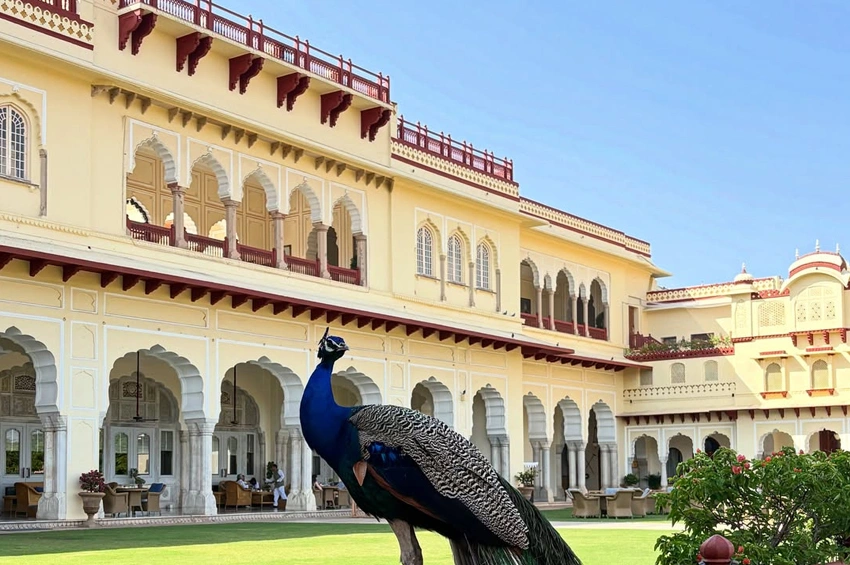
The palace’s history is the foundation of its appeal. Taj’s current fact sheet states that Rambagh was originally built in 1835 and passed through a series of royal transitions. The story often told through the property begins with a residence connected to the queen’s favourite handmaiden, followed by its use as a royal guesthouse and hunting lodge, and later as the home of Maharaja Sawai Man Singh II and Maharani Gayatri Devi.
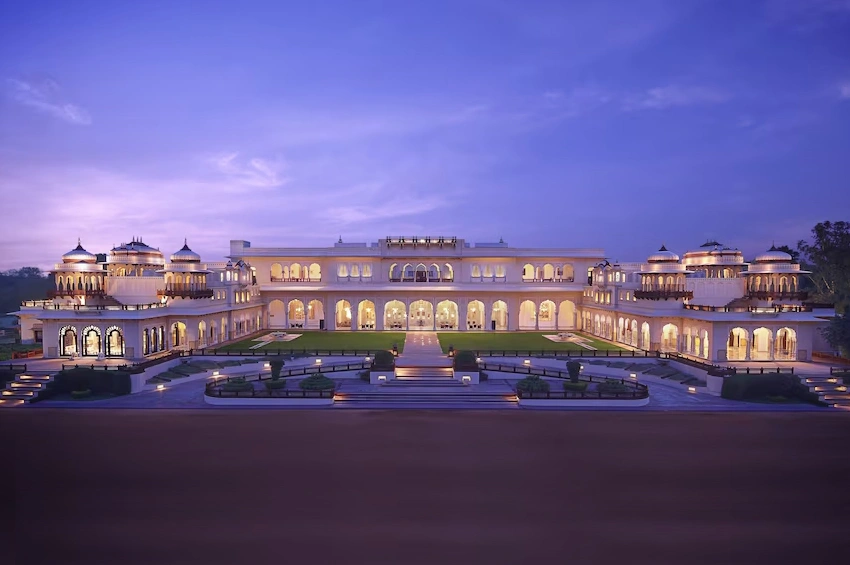
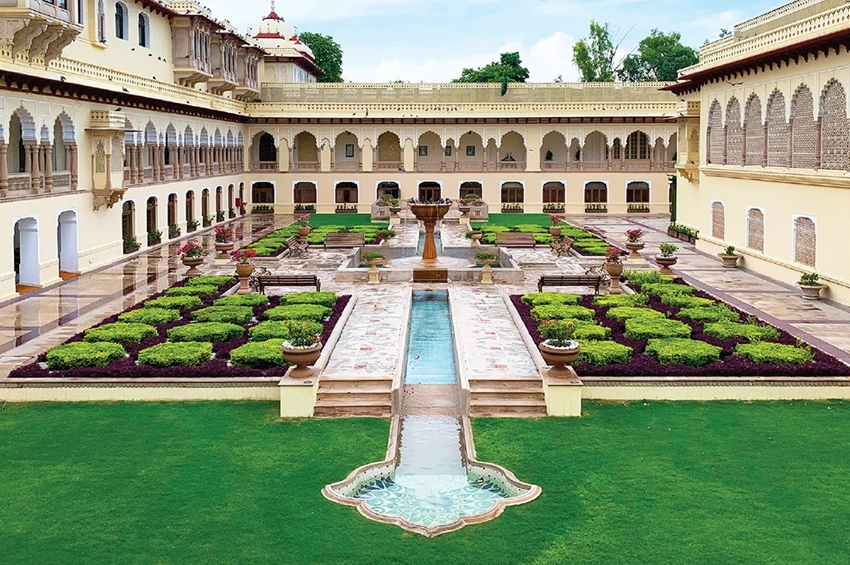
For visitors, the value of this history is visible in the building rather than confined to a plaque. The property retains hand-carved marble jalis, sandstone balustrades, cupolas, chhatris, long verandahs, symmetrical garden planning and elaborate landscaped grounds. Taj’s fact sheet describes the estate as spreading across 47 acres, giving the palace a scale that is unusual for a hotel so close to central Jaipur.
Architecture here rewards slow observation. Look at how hard Rajasthan sunlight is softened by carved screens, how verandahs mediate between indoor rooms and lawns, and how long sight lines give formal spaces a ceremonial quality. The palace is photogenic from a distance, but many of its best details are close up: stone carving, arches, old photographs, doors, textiles and the transitions between shaded corridors and bright gardens.
A heritage walk is one of the smartest experiences to schedule early in your stay. Taj currently lists a heritage walk among the hotel facilities and experiences. Taking it on the first afternoon gives context to the rooms and gardens you will pass repeatedly. Instead of seeing a series of beautiful spaces, you begin to understand which parts belonged to royal life and how the palace evolved.
Good heritage travel is not about pretending the past was a fairy tale. Jaipur’s royal history belongs to a complicated political and social era. You can appreciate craftsmanship, design, personalities and ceremony while remaining curious about the wider history. Rambagh is most interesting when treated as a living historical site that happens to provide luxury hospitality, not as a movie set.
Location: One of Rambagh Palace’s Biggest Advantages
Rambagh Palace is on Bhawani Singh Road, Jaipur, Rajasthan 302005. Taj’s current fact sheet places it about 11 kilometres from Jaipur Airport, while current hotel information generally describes the transfer as roughly half an hour in normal conditions. Traffic can change that quickly, so use driving time as an estimate rather than a promise.
The location is a major reason to choose Rambagh over a remote resort. You can reach the old city, museums, shopping districts and many of Jaipur’s principal sights without turning every outing into a half-day expedition. At the same time, the large palace grounds create enough separation from the street that the hotel can feel far calmer than its urban position suggests.
This is particularly useful for first-time visitors. Jaipur sightseeing is rewarding but physically tiring: early starts, traffic, walking on uneven surfaces, fort steps, heat and crowded markets can accumulate. Returning to Rambagh for lunch, a swim or a ninety-minute break can transform the quality of the day. You do not need to prove you have seen Jaipur by remaining outside from sunrise to bedtime.
For honeymooners and older travellers, this centrality is even more valuable. Couples can combine one substantial sightseeing block with an unhurried palace afternoon. Senior travellers can avoid long continuous days. Families can return when children are tired. Business or wedding guests can stay somewhere memorable without being isolated from the city.
For most sightseeing, use a private car and driver, a hotel-arranged vehicle or a reputable taxi. Jaipur is not a city where most foreign visitors will comfortably walk from the hotel to every attraction. Build generous buffers for evening traffic, festivals and wedding-season congestion, especially when you have a flight, restaurant reservation or timed tour.
Rooms and Suites: Which Category Should You Book?
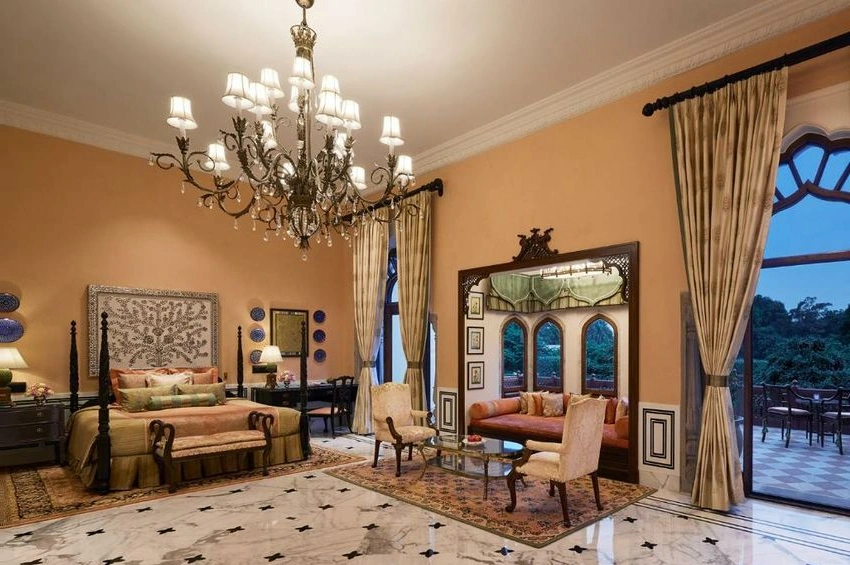
Current Taj information lists 78 rooms and suites at Rambagh Palace. The relatively small number of keys compared with the size of the estate is part of the experience: the public spaces and lawns can feel grand without the property operating like a huge modern convention hotel.
The accommodation hierarchy matters because a palace hotel is not standardized in the same way as a new tower. Room shape, outlook, historic details and proximity to public spaces can vary. Taj’s current room pages include Palace Rooms, Historical Suites, Royal Suites and larger Grand Royal categories. Some of the upper suites occupy spaces associated with the former royal household.
For many first-time couples, a well-positioned Palace Room is enough. You still get the palace address, service, gardens, dining and common spaces, while keeping more of the budget for a spa treatment, private guide or special dinner. If you are out sightseeing for six hours a day, an enormous living room may add less value than you expect.
A suite makes more sense when the room is part of the occasion. Honeymooners, anniversary travellers, families needing extra living space and guests staying three or four nights can genuinely use it. Taj’s current Grand Royal Suite listing, for example, describes approximately 139–144 square metres, separate bedroom, drawing and living areas, garden views and round-the-clock personal butler service.
Do not book only by category name. Before paying a premium, ask about the exact outlook, floor, bed configuration, bathroom style, distance from lifts or stairs and whether the room is close to event spaces. Heritage rooms can differ, and the “best” room is the one that matches your priorities.
If accessibility matters, communicate details before arrival. Ask for the route from the room to breakfast, lobby, spa, pool and vehicle pickup. If you need an interconnecting room, request it early. Historic buildings have fewer interchangeable room combinations than purpose-built hotels, so last-minute flexibility may be limited.
Also think about sleep. A room overlooking an active event lawn may be beautiful but less suitable for a very light sleeper during wedding season. Conversely, a guest who loves garden atmosphere may prefer a view and accept some activity. Specific requests are never guaranteed, but clear communication gives the hotel a better chance of assigning appropriately.
What the Rambagh Palace Arrival Actually Feels Like
Arrival is part of the theatre of a palace stay. The scale of the grounds, formal approach and transition from Jaipur traffic into landscaped space create a strong first impression. Traditional welcome elements can be part of the experience, although exact ceremonies may vary by day, occupancy and hotel operations.
Try to arrive in daylight. The first hour is worth protecting: check in, walk the immediate gardens, learn where breakfast and the spa are, and resist the urge to rush straight back into a car. If you have flown long-haul, the palace is a good place to recover from jet lag rather than adding another monument to an already long day.
Current Taj information lists check-in from 2:00 pm and check-out until noon. Early arrival and late departure should be requested rather than assumed. If guaranteed access after an overnight international flight is essential, booking the previous night can sometimes be more sensible than hoping a room is free at 7:00 am.
Likewise, do not waste a late flight day. Ask about luggage storage and whether you can use a restaurant, spa appointment or common areas after checkout. A slow final lunch can be a better ending than spending five unnecessary hours at the airport.
Dining at Rambagh Palace: Where to Eat and Why
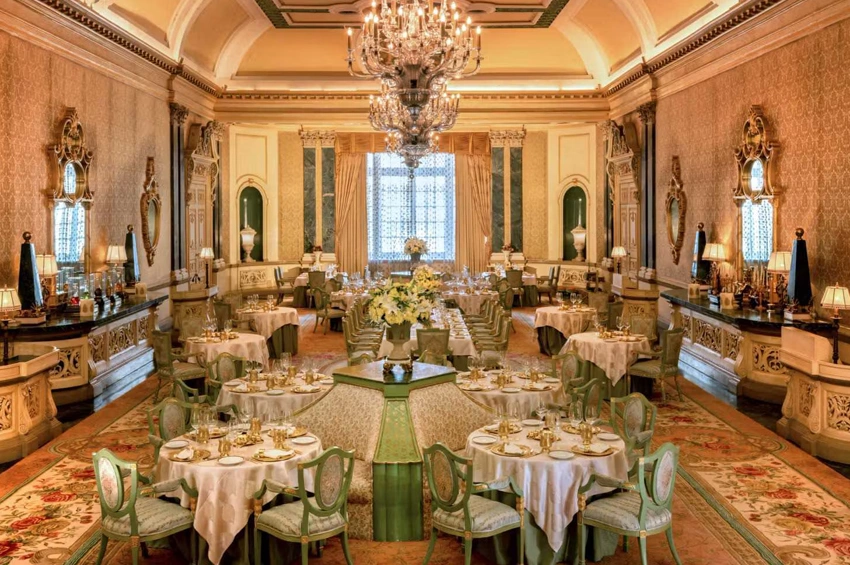
Dining is one of the reasons to stay rather than merely visit. Current Taj information describes four restaurants and one bar, with the palace’s best-known venues including Suvarna Mahal, Rajput Room, Verandah Café, Polo Bar and Steam. Each serves a different mood, so plan them around your itinerary instead of trying to rank them as if they do the same job.
Suvarna Mahal is the ceremonial choice. Taj describes it as a grand palace dining setting for Royal Indian cuisine. This is where to go when dinner itself is the evening’s main experience. Give yourself time to dress, arrive without rushing and ask the team to explain regional dishes if you are unfamiliar with Rajasthani cuisine. A guided selection is often more rewarding than ordering only names you already recognize.
Rajput Room is more relaxed and useful for an easy lunch or dinner after sightseeing. A traveller returning dusty and tired from Amber Fort may appreciate an elegant meal without the formality of a major occasion. It is also a practical place for families or guests who want flexibility.
Verandah Café is about pace as much as food. It works well for tea, a light meal or an afternoon pause overlooking palace life. If your itinerary has become too busy, an hour here can be the reset you need. Luxury hotels are often enjoyed most in these unscheduled gaps.
Polo Bar connects with Jaipur’s famous polo culture and works naturally for a pre-dinner drink or a quiet end to the evening. Even if you do not drink alcohol, the room’s character can be worth experiencing. Ask for a non-alcoholic option and enjoy the setting rather than treating the bar only as a place to order spirits.
Steam is the playful counterpoint to the palace’s formality. Taj describes the venue around a lovingly restored train car and steam engine. It suits travellers who want a more casual evening after a formal dinner elsewhere, and families often find the concept entertaining.
For celebrations, ask about private dining. A private dinner can be memorable, but the details matter: location, privacy, menu, décor, flowers, photographer access, weather backup and cancellation rules. Do not assume every photograph online represents a standard setup available every night.
If you have allergies or strict dietary requirements, communicate them before arrival and again when seated. “No spicy food” can mean different things; explain whether you want low chilli heat, fewer spices, no dairy, gluten avoidance or another specific requirement. Palace kitchens regularly serve international guests, but precise communication is still the safest approach.
J Wellness Circle: Spa, Pool and Recovery Time
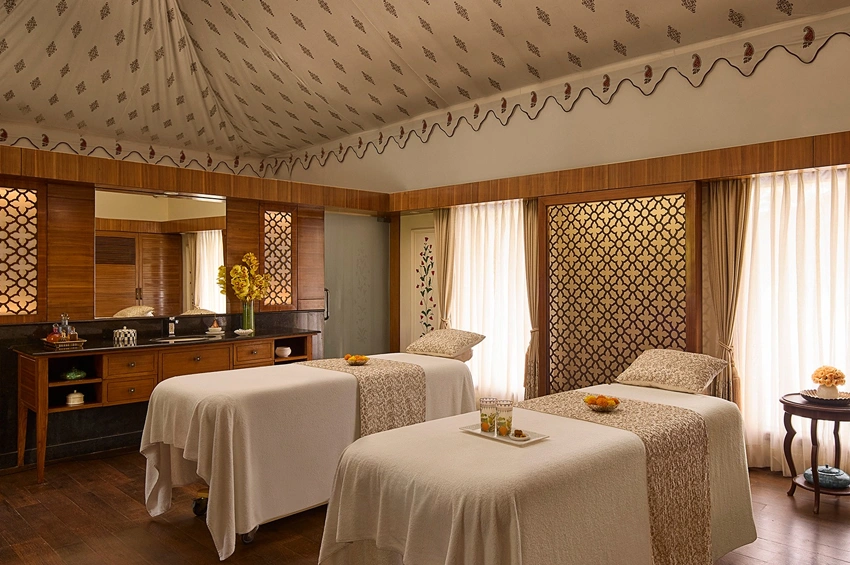
Rambagh’s J Wellness Circle gives the stay a restorative dimension. Taj currently describes the wellness offering around traditional Indian therapies, while the wider hotel facilities include fitness and swimming options. For travellers doing an active Jaipur itinerary, the spa is not an indulgence that has to be squeezed in after everything else; it can be part of smart trip planning.
Amber Fort, old-city walking, shopping and traffic are more tiring than they appear on a map. Schedule a treatment in the late afternoon after your biggest sightseeing morning. That timing lets you recover before dinner and prevents the common luxury-travel mistake of returning from a holiday more exhausted than when you arrived.
If a particular treatment is important, reserve it before travel. Peak winter weekends, holidays and wedding periods can be busy. Couples should ask about current couples treatments or romantic wellness options rather than relying on an old package description.
Pool time deserves space too. Even guests who normally ignore hotel pools may appreciate one quiet afternoon here because the setting changes the experience. In hotter months, early morning and late afternoon are usually more comfortable than the middle of the day.
Serious wellness travellers should set expectations correctly. Rambagh is a palace hotel with a strong spa and wellness component, not a clinical destination retreat built around diagnostics and a rigid multi-day health programme. It is excellent for recovery, relaxation and Indian-inspired therapies between cultural experiences.
Palace Experiences You Should Not Miss
The heritage walk is the first experience I would book. Do it early because it changes how you read the property. A corridor becomes more interesting when you know who used it; a formal room becomes more than décor when its function is explained.
Taj also curates local experiences and Jaipur excursions. One current example explores a mix of Jaigarh Fort, a temple, Anokhi Museum of Hand Printing, an elephant sanctuary and a local market. Exact routes, prices and availability can change, so use such experiences as inspiration and confirm the live itinerary before booking.
The advantage of a hotel-curated excursion is accountability and convenience. The disadvantage can be cost and a fixed structure. Independent private guides may offer more flexibility. Compare the actual route, guide credentials, transport, inclusions and your interests rather than assuming hotel-arranged automatically means better.
Leave room for unscheduled palace time. Walk the gardens early, notice the peacocks, sit under shade and photograph architecture when the light softens. The property’s 47-acre scale is part of what you are paying for. If every minute is booked, you miss it.
Families should ask what child-friendly activities are operating during their dates. Activities can change seasonally. The useful principle is to alternate adult heritage interests with something tactile or playful for children so that Jaipur does not become a sequence of lectures and photographs.
Best Jaipur Sightseeing Plan from Rambagh Palace
A good Rambagh itinerary does not attempt to conquer Jaipur in one day. Start the first full morning with Amber Fort. Leave early, both for cooler temperatures and a calmer arrival. Explore the fort properly rather than rushing through the courtyards solely for photographs. If your guide is strong, ask about water systems, defensive planning, royal apartments and the relationship between Amber and the later city of Jaipur.
On the return toward the centre, stop briefly at Jal Mahal for the lakeside view. Continue into the old city for City Palace and Jantar Mantar. These two attractions sit close together and make a logical pair. Hawa Mahal can follow, with time for both the famous street façade and the interior if it interests you.
Then stop. Return to Rambagh for a late lunch or rest. This is the point where many itineraries go wrong: travellers add Albert Hall, Nahargarh, shopping and a dinner reservation, then remember the day only as traffic. Jaipur deserves two days if you want to understand it.
On day two, choose according to interest. Design travellers can focus on textiles, block printing, jewellery and museums. Architecture lovers can add Jaigarh or Nahargarh. Photographers can start early at Patrika Gate or spend more time in the old city. Food-focused travellers can take a carefully selected culinary walk.
For shopping, be explicit with your guide. Say whether you want artisan workshops, traditional bazaars, contemporary boutiques, fixed-price stores or no shopping at all. Commission-driven showroom stops are one of the most common frustrations reported by visitors across India. A professional guide should respect your preference.
If you only have one sightseeing day, prioritize Amber Fort, City Palace, Jantar Mantar and Hawa Mahal. Jal Mahal is an easy photo stop between Amber and the city. Everything else is optional. Returning to Rambagh with enough energy to enjoy the palace is a better luxury itinerary than collecting seven monuments and remembering none of them.
Shopping from Rambagh Palace: Jewellery, Textiles and Crafts
Jaipur is one of India’s great shopping cities. Its reputation includes gemstones, jewellery, hand-block-printed textiles, blue pottery, carpets, miniature painting, leatherwork and home décor. Rambagh’s location allows you to shop in focused sessions rather than sacrificing an entire day.
Johari Bazaar is the classic place to understand Jaipur’s jewellery culture. For a serious purchase, however, atmosphere is not enough. Ask for a detailed invoice, understand what stone or metal you are buying, request appropriate certification for high-value items and read return terms. Do not treat a gemstone as an investment because someone you met that morning says it will double in value.
Textiles are more approachable but still reward questions. Ask whether a print is hand-blocked or screen-printed, what the fabric is, how colours should be washed and where the item was made. A genuine workshop visit can be fascinating because you see the labour behind patterns that look effortless in a shop.
Bapu Bazaar and old-city lanes are useful for lower-cost browsing, while Jaipur also has sophisticated boutiques for travellers who prefer contemporary design and fixed pricing. The “best” shopping experience depends on whether you want craft education, bargain hunting, luxury jewellery or easy purchasing.
Keep receipts and photograph expensive purchases before packing them. If an item must be shipped internationally, clarify insurance, customs responsibility and tracking. A beautiful purchase stops being enjoyable when delivery terms are vague.
Best Time to Visit Rambagh Palace and Jaipur
October through March is the easiest season for most first-time international visitors. Days are generally more comfortable for forts and markets, while mornings and evenings can be cool. December and January may require a jacket or warm layer, especially for outdoor breakfast, early departures and evening dining.
This is also peak season. Jaipur’s wedding calendar, festivals, Christmas and New Year demand can push hotel rates significantly higher and reduce room-category choice. If Rambagh is the centrepiece of your trip, book earlier than you would for a normal city hotel.
February and early March often offer a particularly attractive balance of pleasant weather and good outdoor conditions. Festival dates can add cultural interest but also affect traffic, opening hours and availability. Holi, for example, is memorable but changes the rhythm of the city.
April through June is hot. That does not make Rambagh a bad choice; in some ways the palace becomes more valuable because you have a comfortable retreat during the middle of the day. Sightsee early, return for lunch, spa and pool time, then go out again later if needed.
The monsoon months bring humidity and intermittent heavy rain, but gardens can look greener and the city has a softer visual character. Repeat visitors and travellers who prioritize the hotel itself may enjoy this quieter mood. Always check the forecast shortly before travel because seasonal patterns vary.
How Many Nights at Rambagh Palace?
Two nights is the practical minimum if the hotel matters to you. Arrive in the afternoon, explore the palace and have a memorable first dinner. Use the next morning and early afternoon for core Jaipur sightseeing, return to Rambagh, and enjoy a second evening. You then leave after breakfast or lunch with at least some sense of the property.
Three nights is the sweet spot for most luxury leisure travellers. It allows one substantial sightseeing day, one lighter shopping or museum day, a spa treatment, heritage walk, relaxed breakfasts and enough time to enjoy the gardens. Couples celebrating a honeymoon or anniversary benefit especially from the extra night because they can stop watching the clock.
Four nights works for slow travellers, families, wedding guests and repeat Jaipur visitors. It also makes sense if you plan to work remotely for part of the trip or if mobility needs require shorter sightseeing blocks.
One night can still be worthwhile if your schedule is fixed, but design it around the palace. Arrive as early as practical, do not disappear on a full-day tour, reserve dinner and leave after a relaxed breakfast. Otherwise, check-in and sleep consume most of an expensive experience.
A Perfect 3-Night Rambagh Palace Itinerary
Day one is arrival and orientation. Reach Rambagh in the afternoon, settle into your room and walk the gardens. Take the heritage walk if its timing fits. Have tea or a light snack, then make Suvarna Mahal your occasion dinner. If you have flown internationally, finish early rather than adding nightlife.
Day two is classic Jaipur. Leave early for Amber Fort, stop at Jal Mahal, then continue to City Palace, Jantar Mantar and Hawa Mahal. Return to Rambagh in the mid-afternoon. Rest, swim or book J Wellness Circle. In the evening choose Polo Bar and a relaxed dinner, or Steam if you want a completely different mood.
Day three is personal Jaipur. Shoppers can explore jewellery and textiles. Art lovers can visit Albert Hall Museum and a craft studio. Architecture enthusiasts can add Jaigarh or Nahargarh. Return to the palace for a slow afternoon. Couples can arrange a special dinner; families can keep the evening informal.
Day four should not begin with panic. Have breakfast, take final photographs in the morning light and check out by the current noon time unless another arrangement has been confirmed. Continue to the airport, Agra, Ranthambore, Udaipur or your next Rajasthan stop.
Rambagh Palace for Honeymoons, Proposals and Anniversaries
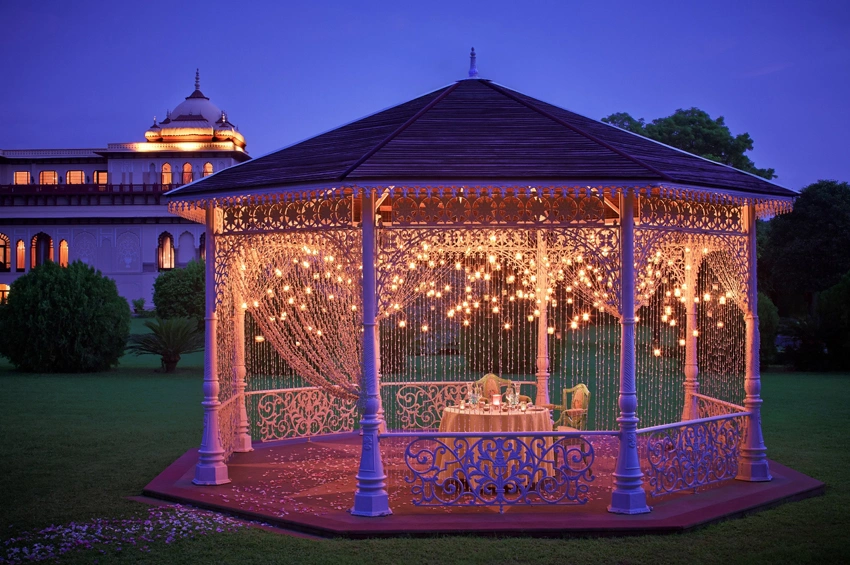
Rambagh is a natural honeymoon hotel because romance comes from the setting rather than from excessive decoration. Gardens, long verandahs, formal rooms, evening light and a sense of history create atmosphere without requiring every moment to be staged.
Taj currently promotes Royal Romantic Experiences among its palace offers, but package names and inclusions can change. Compare the live offer with a standard room rate. Sometimes the package adds genuine value through meals or experiences; sometimes you may prefer to book the room and design your own celebration.
For a proposal, communicate discreetly with the hotel. Decide whether you want privacy, flowers, live music, a photographer or none of those things. Ask exactly who can access the proposed location and what happens if weather changes. The most romantic plan is the one that matches your partner, not the most elaborate package.
For an anniversary, three nights can be more valuable than spending the same total budget on a higher suite for one night. Time is an underrated luxury. A slow breakfast, spa treatment and private dinner create a fuller memory than constantly packing and checking out.
Tell the hotel about an important occasion, but do not base expectations on complimentary upgrades seen in online reviews. Upgrades depend on availability. Book the category you will be happy to receive.
Families and Multi-Generational Travel
Rambagh can work surprisingly well for families. The grounds give children visual space, and the central location means you can return between activities. A midday reset is especially valuable for families travelling in warmer months.
Request connecting or nearby rooms as early as possible. Heritage hotels cannot always create the same room combinations as a modern resort. Confirm extra-bed policies, breakfast charges for children and which activities are suitable for your children’s ages.
With grandparents, think about walking before room category. Ask how far the proposed room is from restaurants and vehicle pickup, whether lifts serve the relevant floor and where steps occur. Jaipur’s forts already demand energy; the hotel should be the easy part of the day.
Build an alternating itinerary: one major monument, rest, one short activity. Children often remember peacocks, gardens, a train-themed restaurant or a hands-on craft more vividly than a fifth palace room. Give them space to form their own relationship with Jaipur.
Accessibility and Senior-Traveller Planning
Taj currently lists accessibility for differently-abled guests among Rambagh’s facilities. Even so, a historic palace deserves more specific planning than a new-build hotel. “Accessible” can refer to selected routes and rooms rather than every heritage corner.
Before booking, describe exactly what you need: wheelchair dimensions, step-free shower, grab bars, proximity to lift, minimal walking or vehicle assistance. Ask the hotel to confirm a suitable room category rather than relying only on a generic accessibility icon.
For sightseeing, use a comfortable private vehicle and a guide who understands mobility limitations. Amber Fort and old-city areas include uneven surfaces, slopes and crowds. A thoughtful guide can alter entry points, reduce walking and prioritize the most rewarding sections.
Schedule fewer attractions and longer breaks. Accessibility planning is not only about ramps; it is about energy, heat, bathrooms, seating and transfer time. Rambagh’s central location makes this easier because returning to the hotel is realistic.
What to Wear: Palace Style and Jaipur Practicality
Daytime dress can be smart but comfortable. Breathable fabrics, sun protection and good walking shoes matter more than looking formal at breakfast. Jaipur dust and fort steps are not friendly to delicate footwear.
For an occasion dinner, many guests enjoy dressing up. Indian formal wear can be beautiful in the palace setting, but it is not compulsory for foreign visitors. A smart dress, jacket, tailored trousers or polished resort wear can work well. Check the current restaurant dress guidance if you are unsure.
Temples require more cultural awareness. Carry a scarf or layer, cover appropriately and remove footwear when requested. Avoid clothing that makes religious-site visits uncomfortable for you or disrespectful to the setting.
Winter evenings can be colder than visitors expect after warm afternoons. Pack a light jacket, shawl or sweater. In summer, prioritize breathable fabrics and schedule outdoor photography away from the hottest hours.
Photography at Rambagh Palace
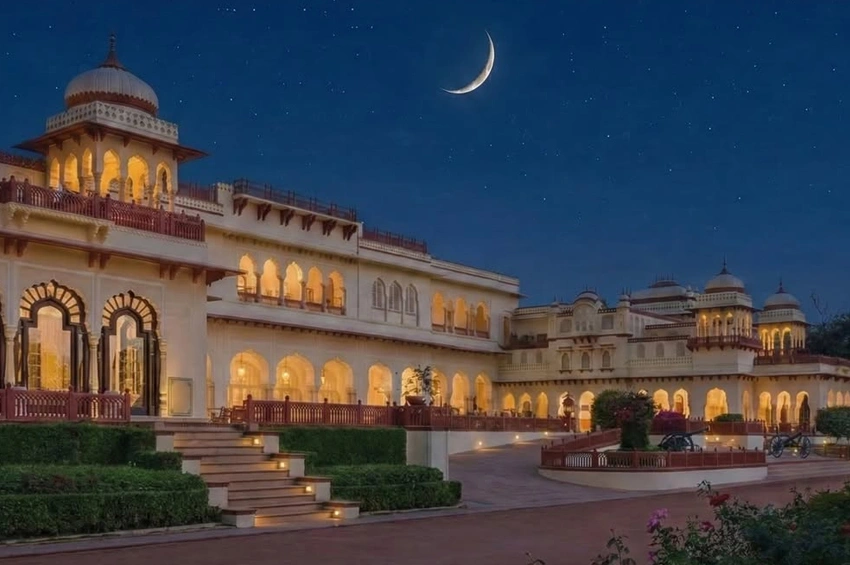
Rambagh is exceptionally photogenic, but the best photographs are not always the obvious front elevation. Early morning gives cleaner light, quieter lawns and fewer guests. Late afternoon adds warmth to sandstone and creates depth in arcades and verandahs.
Look for details: jali patterns, shadows, balustrades, old portraits, table settings, doors, garden axes and framed views through arches. These images communicate the palace’s character better than taking twenty nearly identical wide shots.
Respect other guests. A luxury hotel is not a public photo studio, and weddings or private events deserve privacy. Do not block corridors or restaurant service for a prolonged shoot. Ask before photographing staff closely.
Professional photography, commercial shoots and drones can require permission. Drone use is also subject to Indian aviation and local security rules. Get written approval rather than assuming a small drone is harmless.
If photography is a major reason for your stay, tell the hotel before arrival. They may be able to advise on permitted locations and quiet times. A planned thirty-minute session can produce better images while inconveniencing fewer people.
First-Time India Tips for International Guests
Rambagh makes arrival in India comfortable, but it does not remove the need for practical planning. Save the hotel address and contact information offline, keep copies of key travel documents, and allow more transfer time than a map suggests. Indian city traffic can be unpredictable.
Drink safe water and stay hydrated. Heat, jet lag and rich food can combine quickly. On your first day, eat sensibly, sleep properly and avoid an ambitious evening programme after a long-haul flight.
Carry some Indian rupees for small purchases and tips, while using cards where practical. Tell your bank you are travelling if necessary. Keep a second payment method separate from your main wallet.
In markets, friendly conversation is normal, but you are never required to enter a shop or buy something. A polite, firm refusal is enough. When bargaining is appropriate, keep it good-humoured. The goal is a fair transaction, not winning over a tiny amount.
India becomes much easier when you stop expecting every process to resemble home. Ask questions, leave buffer time and use experienced local help where it adds value. Rambagh can provide a calm base from which to engage with Jaipur confidently.
Food Allergies, Vegetarian Travel and Dietary Needs
Jaipur is excellent for vegetarian travellers, and a luxury palace kitchen is accustomed to international dietary requirements. Severe allergies, however, should be communicated in writing before arrival and repeated at the restaurant. Explain cross-contact concerns clearly.
If you want mild food, distinguish chilli heat from spice. Indian food can contain many aromatic spices without being hot. Ask the kitchen to reduce chilli rather than stripping the dish of its character.
Vegan, gluten-sensitive and other special diets should be discussed before a formal meal or private dinner so the kitchen has time to plan. If your restriction is medically serious, carry translated information and any prescribed emergency medication.
Do not spend a short Jaipur trip afraid of food. Choose reputable kitchens, eat freshly prepared dishes and use sensible hygiene precautions. One of the pleasures of a palace stay is being able to explore regional flavours with a team that can explain them.
Rambagh Palace During Jaipur Wedding Season
Jaipur is a major destination-wedding city, and Rambagh is an iconic event venue. For wedding guests, staying on property can be extraordinarily convenient: no late-night transfer after functions, easy access to changing clothes and the chance to enjoy the palace between events.
For ordinary leisure guests, a large private event can change the atmosphere. Certain lawns or spaces may be occupied, music may continue into the evening and photography access can be restricted. If quiet and unrestricted grounds are crucial, ask the hotel whether major events are expected during your stay. Privacy rules may limit what they can disclose, but they may still explain likely operational impact.
Couples planning their own wedding should not rely on viral “Rambagh wedding cost” numbers. A palace wedding budget depends on season, room block, venue selection, food, décor, entertainment, production, permissions, taxes and guest count. Request a current proposal for your dates.
If you are visiting specifically to inspect the property for an event, arrange an appointment. Event spaces can look very different when empty, set for dinner or occupied by another function. A professional site inspection should cover guest flow, weather backup, sound restrictions and accessibility, not only décor.
Rambagh Palace vs Other Luxury Hotels in Jaipur
Jaipur’s luxury market includes true heritage palaces, restored forts, modern city hotels and destination resorts outside the centre. Rambagh’s distinctive advantage is the combination of genuine royal history, large grounds and central location.
A remote fort resort can offer stronger seclusion and dramatic landscape, but every old-city visit may require more driving. A modern hotel may offer newer technology and standardized rooms, but it cannot recreate Rambagh’s residential history. A smaller boutique haveli may feel more intimate and cost less, but it will not offer the same scale of gardens, dining and service infrastructure.
For a first Golden Triangle journey, Rambagh is particularly logical. Delhi and Agra are usually sightseeing-heavy. Jaipur can become the place where you continue learning while also slowing down. That rhythm is often more satisfying than booking another hotel solely because it is closest to the next monument.
Repeat visitors may choose differently. If you have already experienced a palace hotel, a contemporary property or wilderness lodge can provide contrast. Luxury is personal; the most expensive or famous option is not automatically the right one.
Choose Rambagh when the hotel is part of the story you want to tell about the trip. Choose something else when the room is merely a base and your priorities lie elsewhere.
Best Trips to Combine with Rambagh Palace
The classic combination is the Golden Triangle: Delhi, Agra and Jaipur. Two or three nights at Rambagh make an elegant final chapter because Jaipur mixes major sightseeing with a palace stay that encourages a slower pace.
Ranthambore is another excellent pairing. After formal gardens and city heritage, move to the forest around Sawai Madhopur for tiger safaris. The contrast between palace hospitality and early-morning wildlife drives creates a more varied Rajasthan itinerary. If wildlife is important, stay near Ranthambore rather than attempting repeated safari day trips from Jaipur.
Udaipur adds lakes and romantic scenery; Jodhpur adds Mehrangarh Fort and a stronger desert character. Both work well after Jaipur, but resist the temptation to include every famous city in a short holiday. Travel time in Rajasthan is real.
For a ten- to twelve-night first trip, three major bases plus Delhi or Agra can be more rewarding than changing hotels every night. Fewer transfers mean more mornings when you wake up knowing where breakfast is and more afternoons when plans can change spontaneously.
If flying internationally after Jaipur, avoid a tight same-day road transfer to another city before your long-haul departure. Build margin for traffic and delays. Luxury travel feels luxurious because logistics are calm.
Responsible Luxury and Local Culture
A palace stay should deepen your relationship with Jaipur rather than isolate you from it. Use Rambagh for comfort, then meet the city: visit museums, learn about crafts, walk a market with a thoughtful guide and buy directly from makers when possible.
Taj currently lists EarthCheck certification and EV charging among Rambagh’s facilities. Those are useful signals, but responsible travel also depends on guest choices. Reduce unnecessary vehicle movements, avoid excessive laundry, respect water use and buy fewer, better souvenirs.
Ask permission before photographing artisans or religious ceremonies. Dress appropriately at temples. Listen when a guide explains local etiquette. These small behaviours matter more than performing sustainability for social media.
When bargaining in a market, remember the difference between negotiation and humiliation. A small saving for a wealthy international visitor may be meaningful income to a craft seller. Fairness and curiosity make shopping more enjoyable for everyone.
The palace represents one layer of Jaipur’s heritage. Contemporary Jaipur is also a living city of designers, students, entrepreneurs, craftspeople and families. Make room for both realities.
Booking Strategy: How to Get Better Value
Rambagh Palace rates are dynamic. They can move significantly with season, weekends, weddings, festivals, room category and demand. Publishing one permanent nightly price would be misleading, so compare the live total for your exact dates.
Look beyond the headline rate. Taj currently advertises several types of offers, including breakfast-inclusive rates, advance-purchase structures, suite offers and palace-focused holiday packages. Offer names and validity change. Compare what is actually included rather than assuming a package is automatically cheaper.
Breakfast can matter more than it seems. If you enjoy slow palace mornings, an inclusive rate may have real value. If you leave at dawn for sightseeing and prefer local restaurants, a different rate may suit you. The same logic applies to meal plans and spa packages.
Read cancellation terms carefully. A slightly higher flexible rate can be worthwhile on a multi-city India trip where flights, visas, weather or family circumstances might change. Non-refundable savings are only savings if your plans remain fixed.
After booking, contact the hotel with meaningful requests: celebration, dietary restriction, mobility requirement, room proximity for family or a specific bed. Do not send a list of twenty preferences that all claim to be essential. Prioritize what will actually affect your stay.
If you book through a travel advisor or tour operator, ask whether hotel benefits are guaranteed or subject to availability. Also confirm who handles changes. A good advisor can add value on a complex Rajasthan itinerary, but you should understand the booking chain.
Common Mistakes That Reduce the Value of a Rambagh Stay
The first mistake is staying one night while sightseeing all day. You pay for the palace but experience only the bed. If one night is unavoidable, make the palace the main event.
The second is booking the biggest suite because it sounds prestigious. Choose space you will use. Spending the difference on another night, private guide, spa and dinner can produce a richer trip.
The third is overplanning. A schedule with breakfast, heritage walk, full-day tour, spa, shopping and formal dinner leaves no room for delays or simple enjoyment. Luxury needs empty space.
The fourth is failing to reserve the experiences you genuinely care about. If Suvarna Mahal or a particular spa time is important, arrange it in advance. Do not assume every restaurant or treatment will be available at your preferred hour.
The fifth is treating Jaipur shopping as compulsory. Commission stops can consume hours. Tell your driver and guide exactly what you want.
The sixth is assuming every palace photograph can be recreated. Weddings, private functions, weather and hotel operations affect access. Enjoy the place you encounter rather than chasing someone else’s Instagram frame.
Finally, do not compare service minute by minute with a modern business hotel. Heritage hospitality has its own rhythm. Communicate clearly when something matters, then allow the palace to be itself.
Practical Checklist Before Arrival
Reconfirm your airport or railway transfer and share any flight changes. Save the hotel address offline. If an independent driver is collecting you, send the exact property location rather than relying on a similar hotel name.
Reserve your priority dinner, spa treatment and heritage walk. Ask for the current experience calendar. If a proposal, birthday or anniversary matters, put the plan in writing.
Confirm room configuration, especially for families. Ask about accessibility before arrival if needed. Share severe allergies with the hotel and carry your own emergency medication.
Pack comfortable walking shoes, sun protection, breathable clothing and one dressier evening outfit if that suits your style. In winter, add a warm layer for mornings and nights.
Carry travel insurance appropriate to your trip. Keep passport and visa copies securely accessible. Save booking confirmations offline in case mobile data is unreliable.
Most importantly, protect unplanned time. Rambagh is one of those hotels where sitting on a verandah while the light changes can become a stronger memory than an attraction you added only because it was on a list.
Rambagh Palace for First-Time International Visitors
For a first journey to India, Rambagh Palace can remove several small points of friction at once. You have a central Jaipur base, concierge support, familiar luxury-hotel systems and enough space to recover between intense sightseeing sessions. That matters more than it sounds. Jaipur is visually rich, noisy, warm for much of the year and full of places where a traveller can easily spend longer than planned.
The smartest approach is not to hide inside the hotel. Use the palace as a calm base from which to experience the city more confidently. Start early for Amber, walk the old city with a knowledgeable guide, eat outside the hotel at least once, browse a market without rushing and then return before fatigue turns curiosity into irritation. The palace works best as a bridge into Jaipur, not a substitute for Jaipur.
What Overseas Guests Should Confirm Before Arrival
- Airport transfer arrangement and the exact meeting point.
- Your booked room category, bed type and any accessibility requirement.
- Restaurant reservations for important evenings, especially Suvarna Mahal.
- Spa appointments if your dates fall on a busy weekend or wedding period.
- Whether a major private event is scheduled during your stay and which areas may be affected.
- Current cancellation, deposit and tax terms attached to your specific rate.
- Early check-in needs after an overnight flight; never assume a room will be ready in the morning.
Two Nights or Three Nights at Rambagh Palace?
| Stay Length | Works Best For | Suggested Rhythm |
|---|---|---|
| 1 night | A special palace stop with limited sightseeing | Arrival, heritage time, dinner, breakfast and one short city outing |
| 2 nights | Most first-time Jaipur visitors | One major sightseeing day plus one slower palace-focused half day |
| 3 nights | Honeymoons, luxury Golden Triangle trips and relaxed travellers | Amber and old city, palace/spa time, shopping or a second themed Jaipur day |
| 4+ nights | Slow travel, celebrations or travellers mixing leisure with events | Add craft visits, food experiences, photography, golf or unhurried downtime |
Rambagh Palace Booking Strategy: Spend on What You Will Actually Use
Luxury travel becomes expensive when every upgrade is treated as essential. At Rambagh, decide first what will create the memory. For one couple that may be a larger historic suite. For another it may be a Palace Room plus a private guide, spa treatment and a ceremonial dinner. Both can be excellent trips.
Compare rates on the same basis. A lower headline price can become less attractive after breakfast, taxes, cancellation restrictions or inclusions are considered. A flexible rate may be worth more on an international itinerary where flight schedules can change. Packages can be useful, but only when you genuinely want the included meals or experiences.
Where to Put Your Rambagh Palace Budget
Upgrade the Room When
- The stay is a honeymoon or major anniversary
- You plan long afternoons inside the room
- Extra living space materially improves the trip
- A particular outlook or historic character matters to you
Spend on Experiences When
- You will be sightseeing for much of the day
- You value dining and wellness over room size
- You want a private Jaipur guide or driver
- You prefer several memorable moments to one large upgrade
Staying at Rambagh Palace During Jaipur Wedding Season
Jaipur's cooler months overlap with its busiest celebration season. A palace can look spectacular during a wedding, but an event may also change how a leisure guest experiences lawns, music, traffic and restaurant availability. If peace is a priority, ask before booking whether large functions are expected on your dates and whether your requested room is near an event area.
If you are attending a wedding at Rambagh, the logic is different. Staying on site can be extremely convenient because outfit changes, late finishes and multiple functions become easier. Confirm the wedding room block, event access rules, transport for off-site functions, salon appointments and how breakfast works after late-night celebrations.
Rambagh Palace or a Resort Outside Jaipur?
Choose Rambagh when Jaipur itself is a major part of the trip. Its city location is valuable for forts, museums, bazaars, restaurants and short returns to the hotel. Choose an outlying resort when your priority is seclusion, large resort facilities and spending most of the day on property. Neither model is automatically more luxurious; they produce different holidays.
First-time visitors with only two or three nights in Jaipur usually benefit from reducing road time. Repeat visitors who have already seen the main monuments may enjoy a remote resort more because they are not trying to cross the city repeatedly. Your itinerary should decide the hotel, not the other way around.
12 Questions to Ask Before Booking Rambagh Palace
- What exactly is included in this rate?
- Is breakfast included for every guest in the room?
- What is the cancellation and deposit policy?
- Which room outlook or location does this category normally have?
- Can you note a quiet-room request?
- Are any major weddings or private events planned during my stay?
- Which restaurants should be reserved before arrival?
- Which palace experiences currently require advance booking?
- Can airport transfers be arranged and what is the current charge?
- What accessibility route is available if stairs are difficult?
- What can be arranged for a honeymoon, birthday or proposal?
- If I arrive before check-in, what facilities can I use while waiting?
Frequently Asked Questions About Rambagh Palace Jaipur
Is Rambagh Palace a real palace?
Yes. Taj traces Rambagh Palace to 1835 and describes its evolution through royal uses including a guesthouse and hunting lodge before its later role as a royal residence and palace hotel.
How many rooms and suites does Rambagh Palace have?
Current Taj information lists 78 rooms and suites.
Where is Rambagh Palace located?
Rambagh Palace is on Bhawani Singh Road, Jaipur, Rajasthan 302005, India.
How far is Rambagh Palace from Jaipur Airport?
Taj’s fact sheet places the palace about 11 km from Jaipur Airport. Driving time varies with traffic.
What time is check-in and check-out?
Current Taj information lists check-in from 2:00 pm and check-out until noon.
How many nights should I stay at Rambagh Palace?
Two nights is a useful minimum. Three nights is ideal for combining Jaipur sightseeing with spa, dining, heritage experiences and relaxed palace time.
Which is the most famous restaurant at Rambagh Palace?
Suvarna Mahal is the signature ceremonial dining experience, known for Royal Indian cuisine in a grand palace setting.
What other dining venues are at Rambagh Palace?
Current Taj information highlights Rajput Room, Verandah Café, Polo Bar and Steam in addition to Suvarna Mahal.
Does Rambagh Palace have a spa?
Yes. J Wellness Circle offers traditional Indian wellness therapies and spa experiences.
Does Rambagh Palace have a pool?
The hotel offers swimming and leisure facilities; confirm current operating details directly for your stay dates.
Is Rambagh Palace good for a honeymoon?
Yes. Its palace setting, gardens, dining and wellness make it particularly suitable for honeymoons and anniversaries.
Can I arrange a proposal at Rambagh Palace?
The hotel can assist with celebration planning, subject to availability and current policies. Discuss privacy, décor, photography and weather backup in advance.
Is Rambagh Palace suitable for families?
Yes. The large grounds and central location can work well for families, particularly when sightseeing is divided into shorter sessions.
Is Rambagh Palace suitable for senior travellers?
It can be, but guests with mobility requirements should confirm exact room access, walking distances and step-free routes before booking.
What is the best time to visit Rambagh Palace?
October through March is generally the easiest period for outdoor Jaipur sightseeing, while summer stays work best with early touring and long midday breaks.
Is Rambagh Palace close to Jaipur sightseeing?
Yes. Its central Jaipur location is one of its major advantages for visiting the old city, museums, bazaars and forts.
Can the hotel arrange Jaipur sightseeing?
Yes. Taj lists concierge services and curated local experiences. Compare the exact itinerary and inclusions before confirming.
Can non-residents dine at Rambagh Palace?
Access can depend on restaurant reservations, occupancy, security and private events. Contact the hotel before travelling specifically to dine.
What should I wear at Rambagh Palace?
Smart casual clothing is suitable for most daytime use. Many guests dress more formally for an occasion dinner; temples require modest clothing.
Are weddings held at Rambagh Palace?
Yes. Rambagh is a major luxury event and wedding venue with indoor and outdoor event spaces.
Should I choose a Palace Room or a suite?
Choose according to how much time you will spend in the room, your desired view, accessibility needs and the occasion. A room can be sufficient for active sightseers; a suite adds space and a stronger residential feel.
Is Rambagh Palace worth the price?
It offers the best value to travellers who actively use the palace—gardens, dining, heritage experiences, spa and relaxed time—not those who only sleep there between full sightseeing days.
Official Information to Recheck Before Booking
- Taj Hotels — Rambagh Palace Jaipur overview, current hotel information and facilities.
- Taj Hotels — Rambagh Palace rooms and suites.
- Taj Hotels — dining, wellness, experiences and current offers.
- Rambagh Palace official fact sheet — property history, architecture and estate overview.
Rates, offers, restaurant hours, experiences and policies change. Verify live details directly with Taj for your travel dates.
Final Verdict: Who Will Love Rambagh Palace?
Rambagh Palace is at its best for travellers who want their hotel to be part of Jaipur rather than a pause between attractions. Its value lies in the combination of history, architecture, gardens, service, dining, wellness and location. You can leave early for Amber Fort, return for a slow lunch, spend the afternoon at the palace and still be close enough to the old city for another short outing.
It is particularly compelling for a honeymoon, anniversary, milestone family trip or a first luxury Golden Triangle itinerary. Three nights is ideal if budget and time allow. Two nights still works. One night should be treated as a palace experience rather than a base for an exhausting sightseeing day.
Do not choose Rambagh simply because it appears on lists of famous hotels. Choose it because you want the rhythm it offers: Jaipur outside the gates and a quieter royal world inside them. When those two halves are balanced properly, Rambagh becomes more than accommodation. It becomes one of the memories around which the rest of Jaipur is organised.