What to Buy in Jaipur: 15 Authentic Souvenirs, Best Markets & Local Tips
The Short Answer
Buy the Jaipur pieces that still feel special once you are home: hand block-printed cotton, luminous blue pottery, a well-fitted pair of mojari, colourful lac bangles, a light razai, silver jewellery or carefully documented gemstones. The best souvenir is not necessarily the most expensive one. It is the piece whose material, workmanship and story you understand—and will genuinely use.
In Jaipur, shopping begins before you enter a shop. It starts on the pink-walled streets, with the sound of scooters moving through the old city, shop shutters opening and colour appearing everywhere at once: indigo cotton, mirrored embroidery, gleaming silver, saffron spice, glazed pottery and rows of bright bangles. A market stroll here can be wonderfully sensory. But Jaipur is at its most rewarding when you move slowly enough to notice what you are seeing.
This is a city where a small purchase can carry a real craft story. A tablecloth may have been printed with hand-carved wooden blocks. A bowl may reflect Jaipur’s famous blue-pottery tradition. A pair of mojari may be made for long evenings as much as for a photograph. Even a simple notebook can be made with textured handmade paper. The point is not to fill your suitcase. It is to find objects that bring a little of Rajasthan home with you.
This guide helps you shop with curiosity and confidence. It explains the crafts Jaipur is known for, the markets that make sense for each interest, how to compare quality, when bargaining is appropriate and which purchases need extra care. Prices change with material, workmanship, season and shop, so broad guidance is more useful than a pretend fixed rate. For gems, jewellery and valuable objects, slow down, ask questions and keep clear paperwork.
Use one simple Jaipur rule: see first, choose second, buy last. Walk through a market lane, feel the fabric, look at the finishing and let yourself compare. If an item still calls you back after you have seen a few alternatives, it is probably a better choice than the first colourful thing placed in your hands. That unhurried approach turns shopping from a tourist chore into one of the loveliest parts of a Jaipur journey.
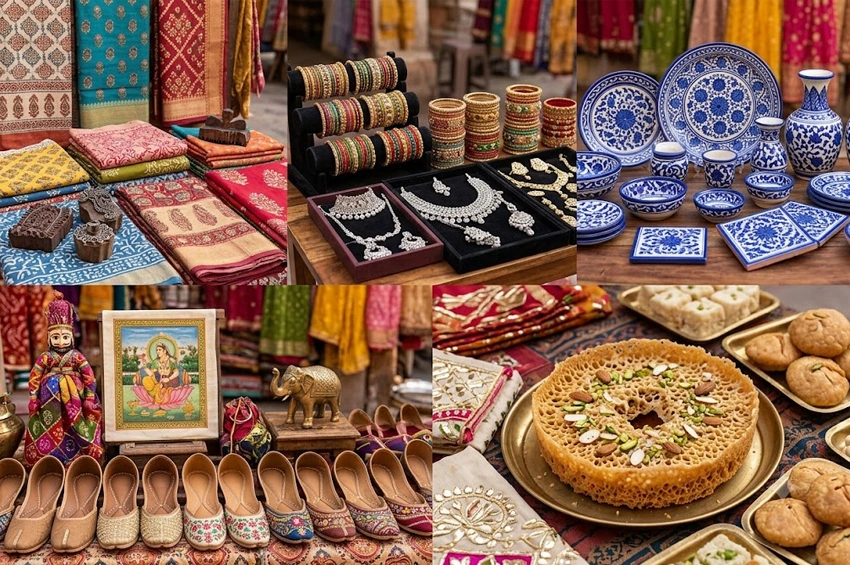
What’s in This Jaipur Shopping Guide
How to Shop in Jaipur Without Losing the Joy
Give shopping a purpose before you enter the first bazaar. Are you looking for gifts under a modest budget, a meaningful textile for your home, wedding clothes, or a single piece of jewellery? A short list keeps the day enjoyable. Jaipur has enough colour and choice to make every item look irresistible in the first ten minutes. A useful rule is to walk one complete lane before buying, notice the materials you prefer and return to the shop that felt most trustworthy.
Good shopping is not a race against the clock. Take water, wear comfortable shoes and allow time for a tea or lassi break. The old city markets can be busy, particularly at weekends and around festivals. Keep valuables close, do not block the roadway while examining goods, and be friendly but firm when you are not interested. A simple “No, thank you” works better than a long explanation. If you are travelling with a private driver, decide in advance whether you want a direct market drop or a guided shopping stop; you should always feel free to choose where you spend your time.
15 Best Things to Buy in Jaipur
1. Block-Printed Cotton and Home Textiles
Hand block printing is among Rajasthan’s most recognisable textile traditions. Artisans press carved wooden blocks into dye to build repeating flowers, vines and geometric patterns. Look for table runners, napkins, scarves, cushion covers, robes, shirts and light cotton yardage. Hand work usually has small, pleasing variations rather than machine-perfect repetition. Ask whether the colour is natural-dyed or chemical-dyed, how it should be washed and whether it may bleed on the first wash. A small block-printed tablecloth or a few napkins is easy to pack and makes a useful gift.
2. Jaipur Blue Pottery
Blue pottery is a signature Jaipur craft, recognised by its glazed surface and Persian-influenced floral motifs. The name can be misleading: many pieces include yellow, green, white or turquoise as well as cobalt blue. Choose a tile, trinket dish, small vase, coasters or a decorative bowl if you want something travel-friendly. Inspect the glaze in daylight, check for hairline cracks and ask for secure packing. Larger pieces can be wonderful, but only if you have checked baggage space and a realistic way to protect them.
3. Lac Bangles
Jaipur’s lac bangles are colourful, festive and closely associated with Rajasthan. Lac is a natural resin that is shaped and decorated with stones, glass work or painted details. They are best bought as cheerful fashion accessories rather than heirloom jewellery. Try them on gently, as sizes vary, and choose a set that is comfortable over the hand. If you are purchasing for someone else, a flexible cuff-style design can be easier than a closed bangle.
4. Mojari and Jutti Footwear
Traditional leather mojari, also called jutti, are pointed or rounded slip-on shoes often finished with embroidery, beads or leather tooling. They look excellent with jeans, linen trousers, dresses or Indian outfits. Try both shoes and walk a little; handmade leather can feel firm at first and may loosen slightly with wear. Check the sole, the stitching around the upper and whether any decoration catches uncomfortably. A plain leather pair often travels farther in everyday life than a heavily embellished pair saved for one special occasion.
5. Silver Jewellery
Jaipur has a long relationship with jewellery making, and silver pieces can offer a wearable souvenir at many budgets. You may see oxidised earrings, simple rings, tribal-inspired cuffs, pendants and anklets. Ask the seller about silver purity and request an itemised bill. A reputable shop will be comfortable explaining weight, metal content and stone type. Choose a design because you will wear it, not because someone insists it is a rare bargain.
6. Gemstones and Gemstone Jewellery
Jaipur is internationally associated with cutting and trading coloured stones. That does not mean every counter offers a good purchase. Fine stones deserve slow, expert buying. For a modest souvenir ring, an honest seller and a detailed receipt may be enough. For an expensive sapphire, emerald, ruby, diamond or untreated coloured stone, ask for a recognised laboratory report, exact stone description, treatment disclosure, return terms and a written invoice. If the value matters, independent appraisal is sensible. Pressure, extreme discounts and vague certificates are reasons to pause.
7. Hand-Quilted Razai and Bedcovers
A Jaipur razai is a light, hand-quilted cotton blanket that can feel surprisingly warm. Bedcovers and quilts are often made with printed cotton, stitched panels or traditional patterns. These make wonderful home purchases but take up more luggage space than a scarf or cushion cover. Ask about filling, dimensions, wash care and whether the fabric is colourfast. Vacuum packing may help, though it is worth checking airline baggage limits first.
8. Sanganeri and Bagru-Style Prints
Although craft production extends beyond the city centre, Jaipur shops frequently carry Sanganeri and Bagru-style printed textiles. Sanganeri designs are often fine, floral and detailed; Bagru work is known for earthy colour palettes and resist-print techniques. Do not worry about memorising every craft term. Instead, ask what process was used, whether the pattern is hand block printed and where it was made. A seller who knows the story of the piece usually makes the purchase more meaningful.
9. Jaipur Miniature-Style Art
Small paintings inspired by Rajasthan’s courtly miniature tradition can be lovely, especially subjects such as elephants, peacocks, palaces and processions. Quality ranges widely. Look closely at the fineness of lines, faces, background detail and the surface used. Buy framed work only if the frame can travel safely; unframed pieces, stored between rigid boards, are usually simpler to carry. Avoid claims that a new decorative piece is an antique unless its provenance is convincing and documented.
10. Marble and Stone Homeware
Marble boxes, coasters, small elephant figures, inlay trays and carved candle holders are common Jaipur souvenirs. A modest, solidly made piece can be an elegant reminder of the city’s palace architecture. Check the weight before deciding: stone is beautiful but heavy. Look at the underside for neat finishing and inspect inlay work closely. For a long-haul flight, small coasters or a tiny box are often a wiser choice than a large sculpture.
11. Brass, Copper and Metalware
Brass bowls, small lamps, wall hangings and serving pieces add warmth to a home. Some are handmade; others are factory-produced decorative goods. Neither is automatically wrong, but the price should match the work. Check edges, soldering, balance and any moving parts. Ask how the metal should be cleaned, because abrasive products may damage a finish. Be cautious with food-use claims and follow your own country’s product-safety rules.
12. Jaipuri Handbags and Textile Bags
Quilted tote bags, embroidered clutches and block-print pouches are practical gifts. They are light, easy to pack and available in many colours. Examine the zip, lining and handles, especially if the bag will carry a laptop or daily essentials. A well-made cosmetic pouch, small shoulder bag or laundry bag is often more useful than a large, over-decorated item you will never carry.
13. Spices, Tea and Edible Gifts
Jaipur markets and food shops offer masala blends, chilli, turmeric, chai mixes, fennel sweets and packaged snacks. Choose sealed, labelled products with a clear date and ingredients list. Customs rules vary widely, so check what your destination permits before purchasing loose spices, seeds or food. For many travellers, neatly packaged tea or spice blends are easier gifts than unlabelled food items.
14. Rajasthani Puppets and Small Folk Crafts
Colourful string puppets, hand-painted magnets, small wooden toys and fabric camels make light-hearted gifts for children and friends. Look for secure stitching and finishing, and take care around small detachable parts if buying for young children. These purchases support the visual fun of the bazaar, but as with every craft, buy from a seller whose work you enjoy rather than out of obligation.
15. Handmade Paper and Stationery
Handmade paper notebooks, journals, gift tags and photo albums are perhaps the easiest Jaipur purchase to carry home. They are useful, compact and usually reasonably priced. Check that pages are well bound and choose a cover that will not shed decoration in luggage. A journal paired with a small block-print pouch makes a thoughtful, uncomplicated gift set.
Famous Jaipur Markets: Where to Go and What to Look For
Johari Bazaar
Johari Bazaar, literally the jewellers’ market, is the natural starting point for silver, gold, gemstones and traditional jewellery styles. It is also close to major old-city sights, so it fits easily into a sightseeing day. This is the place to browse fashion jewellery and to identify reputable specialists for serious purchases. For high-value items, do not rush because you have a driver waiting. Ask questions, compare documentation and leave if you feel pushed.
Bapu Bazaar
Bapu Bazaar is popular for textiles, mojari footwear, bags, scarves, souvenirs and everyday Jaipur shopping. It is a good place to build an affordable gift list. The market is busy and colourful, so compare a few shops for fabric quality and finishing. This is also a reasonable area to find a last-minute kurta, stole or casual cotton garment.
Tripolia Bazaar
Tripolia Bazaar is associated with lac bangles, metalware and traditional household objects. It feels particularly rewarding if you want something that looks distinctly Rajasthani rather than a generic souvenir. Browse carefully for workmanship and remember that fragile bangles need careful packing. A shop may offer to wrap them; add your own padding later in the suitcase.
Chandpole Bazaar
Chandpole Bazaar has a more craft-focused feel, with marble, carved objects, textiles and artisan goods in the broader area. It can suit travellers searching for home decor or art rather than only clothes. Take your time and be realistic about luggage. A beautiful large lamp or carved table may require shipping, insurance and customs planning; never agree to ship an expensive item without clear paperwork and a verified process.
MI Road and Fixed-Price Stores
Mirza Ismail Road, often called MI Road, offers a mixed shopping experience including established stores, textiles, sweets and broader retail. It can be comfortable for travellers who prefer a more straightforward environment and fixed prices. A fixed price is not automatically high or low; it simply removes negotiation. Compare quality and service, and retain your invoice for every significant purchase.
Jaipur Shopping by Traveller Type
For first-time visitors: begin with block prints, blue pottery, mojari footwear and small handmade-paper gifts. These items are easy to understand, easy to pack and genuinely connected to Jaipur. Take a short circuit through Bapu Bazaar and the old city rather than trying to shop every market. You will learn what colours and styles appeal to you without committing too much money early in the day.
For couples and families: a few coordinated items for the home can feel more useful than many small souvenirs. Consider a tablecloth with napkins, a pair of cushion covers, a low-weight quilt or a small pottery bowl. Confirm care instructions because most gifts become more valuable when they are used, washed and enjoyed rather than left in a cupboard after the holiday.
For serious craft lovers: allow a slower day and ask intelligent questions. Who made the item? Is it hand block printed, hand painted, hand stitched or machine finished? What material was used? What makes this version different from the less expensive one? You do not need to be an expert to ask these questions. The answers help you judge whether you are paying for labour, material and skill or merely a shop display.
For international travellers: prioritise light, robust pieces. Soft textiles, jewellery bought with paperwork, coasters, notebooks, scarves and sealed edible gifts normally travel more easily than large marble objects and delicate ceramics. Keep future customs declarations in mind. A souvenir should remind you of Jaipur, not become a difficult airport problem.
How to Tell Handcrafted Jaipur Products from Mass-Produced Souvenirs
Handmade does not have to mean rough, and machine-made does not automatically mean poor. The question is whether the description and price are honest. On a block-printed textile, hand work may show gentle variations where the block meets the fabric; the pattern is lively rather than perfectly identical. On a blue-pottery item, hand-painted motifs may be slightly individual, while the glaze should still feel smooth and properly fired. A hand-quilted piece may show regular but human stitching, not a machine-sewn line every time.
Look at the reverse side, seams and edges. A bag with a beautiful front but weak handles may be designed mainly for display. A painted box should open and close well. A metal object should sit level on a surface. A textile should not have loose threads everywhere, though a single thread is not a sign of poor quality. Ask the seller to explain the material instead of accepting labels such as “pure” or “original” without details.
When a price difference seems large, ask for the reason. Better cotton, natural dyeing, heavier silver, handwork, a specialist glaze, a recognised workshop and careful finishing can all add real cost. You may decide the simpler option suits your budget, but you will be choosing consciously. This approach is more helpful than chasing an imaginary fixed price that applies to every shop and every object.
Best Jaipur Markets for Specific Purchases
| Looking for | Good area to begin | How to shop it well |
|---|---|---|
| Jewellery and gemstones | Johari Bazaar | Use established specialists for value purchases; request a complete invoice and documentation. |
| Mojari, cotton clothes and modest gifts | Bapu Bazaar | Try sizes, inspect stitching and compare two or three shops before buying. |
| Lac bangles and metal objects | Tripolia Bazaar | Check sizing and packing; choose metalwork with clean edges and stable construction. |
| Marble, art and decorative craft | Chandpole area | Consider weight and shipping before committing to larger objects. |
| Comfortable fixed-price browsing | MI Road and established stores | Use invoices, compare material quality and enjoy a lower-pressure purchase. |
Markets are not fixed categories. A good shop can appear outside its best-known lane, and a famous market can contain both excellent and ordinary goods. Use these areas as a starting point, not as a guarantee. The most useful local knowledge is knowing what you want, checking the practical details and being willing to continue walking.
Shopping Around Jaipur’s Main Sightseeing Places
Most visitors combine shopping with Amber Fort, Jal Mahal, City Palace, Hawa Mahal and Jantar Mantar. This works well if you protect time for each activity. Amber Fort is best enjoyed with patience, so avoid placing a major shopping decision immediately before or after it. The old city sights work naturally with Johari Bazaar, Bapu Bazaar and Tripolia Bazaar because they are close together. After visiting Hawa Mahal or City Palace, a short market walk can feel like a change of pace rather than another formal stop.
Tell your driver that shopping is optional and that you want independent browsing time. A private Jaipur sightseeing tour should create convenience, not direct every purchase. If you have a specific interest—such as genuine blue pottery, a well-made razai or silver jewellery—say so before the day starts. That lets the route include enough time without turning the whole tour into a rushed commercial stop.
For visitors travelling from Delhi, Agra, Udaipur or Jodhpur, remember that Jaipur’s old city can be a final shopping stop on a wider Rajasthan itinerary. Buy bulky textiles early only if your vehicle has room. Buy fragile items when you have a clear packing plan. Jewellery and small gifts are generally easier to carry between destinations than heavy decor.
What Not to Buy in Jaipur Without Extra Care
There is no need to be suspicious of every shop, but some categories deserve deliberate caution. Do not buy a costly gemstone because someone says the offer ends today. Do not accept an antique claim without provenance. Do not purchase a large item for international shipping until you understand total cost, insurance, delivery timing, customs duty and the procedure if it arrives damaged. Do not rely on verbal promises about returns, warranties or “free delivery”; ask for written terms.
Avoid goods made from protected animal materials, wildlife products or items that could be restricted by your destination country. If a product is labelled as ivory, coral, tortoiseshell or an exotic animal material, stop and check legal requirements before even considering it. The safest travel souvenir is one with a clear material, a clear invoice and no hidden customs issue.
Be careful with medical, cosmetic or food claims too. A spice blend may be delicious, but it is not a cure. Skin products should list ingredients and be sealed. For food allergies, ask clearly and choose products with information you can understand. In every case, the aim is informed travel rather than fear.
Buying Gifts in Jaipur: Easy Ideas by Budget
Small, easy-to-pack gifts
Handmade notebooks, painted magnets, fabric pouches, block-print napkins, small packets of tea, simple bangles and blue-pottery coasters are practical choices. They leave space in luggage and let you take home several varied gifts without making the shopping day expensive.
Meaningful gifts for close family
A block-print tablecloth, hand-quilted bedcover, quality scarf, carefully selected silver earrings or a small framed artwork can feel personal without being overwhelming. Think about the recipient’s home, clothing style and storage space. The best gift is usually one that fits naturally into their everyday life.
One special Jaipur purchase
If you want a single centrepiece item, choose it after you have seen the markets. It could be a fine textile, a carefully researched jewellery piece, an exceptional piece of pottery or a small work of art. Spend the extra time on information, quality checks and paperwork. One well-chosen purchase often carries more memory than a suitcase full of rushed objects.
Local Etiquette, Timing and Market Comfort
Jaipur markets are working places, not museum displays. Greet shopkeepers, ask before photographing a person or a detailed display and avoid touching delicate textiles with food or wet hands. If you try on footwear or jewellery, return it neatly. Keep the conversation courteous even when you decline. A respectful “I am only looking today” is clear and kind.
Market opening times and weekly closures can vary, as can traffic restrictions around the old city. Ask your hotel, driver or a local tourism source for current practical advice on the day. Mornings and late afternoons often feel more comfortable than the hottest part of the afternoon. During major festivals, markets may be especially vibrant but more crowded; allow extra travel time and guard your belongings carefully.
Use pedestrian crossings where available, watch for scooters and rickshaws, and set a reliable meeting point if you are travelling in a group. A photo of the shopfront is useful only with the seller’s consent. Keep your hotel address saved on your phone and carry a little water. These quiet habits let you enjoy a busy market with confidence.
Answering the Most Common Jaipur Shopping Questions Clearly
What is Jaipur best known for? Jaipur is widely known for jewellery and coloured gemstones, blue pottery, hand block prints, lac bangles, mojari shoes, quilts, marble craft and traditional Rajasthani decorative objects. These are the most useful categories for a traveller seeking a local souvenir.
Where should I shop in Jaipur? Start in the old city: Johari Bazaar for jewellery, Bapu Bazaar for textiles and footwear, Tripolia for bangles and metalware, and the Chandpole area for more decorative craft. MI Road is a comfortable option for a more mixed, often fixed-price experience.
Is Jaipur good for tourists who do not like bargaining? Yes. Browse established shops and fixed-price stores, focus on product information and choose fewer items. Bargaining is only one shopping style; it is not a test you must pass to enjoy Jaipur.
Can tourists take pottery and textiles abroad? Usually yes, subject to airline baggage and customs rules. Textiles are simple; pottery needs padding; valuable jewellery needs invoices and may need declaration. Check the rules for your own country before packing.
Detailed Jaipur Shopping Checklists
Before you buy a block-printed textile
Start with touch. Cotton should feel appropriate for the stated fabric weight, neither suspiciously stiff nor unusually slippery unless it is a blended material. Open a corner and view the print in daylight if possible. Hand printing can contain slight registration variations; this is not a defect when the colours and lines remain attractive. Ask if the item has been pre-washed, whether natural dyes were used and how it should be washed for the first few times. If you are buying by the metre, request a little extra length for shrinkage and tailoring.
Check hems, labels and the back of the fabric. A thoughtful textile seller will explain whether the item is a finished bedcover, a length intended for stitching, a hand-quilted product or a printed cotton that needs lining. This matters for international visitors who may not have access to a tailor after the trip. If you plan to make curtains or upholstery at home, photograph the pattern and note the width, repeat and care instructions before you leave the shop.
Before you buy blue pottery
Lift the piece and look closely at its rim, foot and glaze. A handmade decorative item may have tiny variations, but it should not have sharp edges, concealed chips or cracks that look structural. Ask whether it is decorative or food-safe; do not assume. For a vase, look inside. For coasters, check that all pieces sit level. Decide whether you are buying one beautiful object or a matched set, because replacement may not be simple once you are home.
For packing, ask the shop to use layers of paper and bubble wrap, then protect the parcel again with soft clothing in the middle of checked luggage. Do not place pottery against the suitcase shell. If the object is a valuable one, ask for the shop invoice and include the actual item description rather than a vague word such as “gift.”
Before you buy mojari footwear
Try both shoes while standing and walking. Traditional styles can sit close around the toes, and leather softens gradually, but shoes should not cause sharp pain. Ask whether the upper is leather, synthetic material or textile, and check whether the sole is stitched or glued. Look inside at the heel area and feel whether embroidery or beadwork rubs the foot. A pair that feels a little snug can improve; a pair that is actively uncomfortable at the shop is unlikely to become a favourite later.
For gifts, shoe size is difficult to estimate. A flat textile pouch or scarf is safer when you are unsure. If you still choose footwear, ask the seller how to exchange it locally, but do not rely on an international return once you have departed India.
Before you buy a quilt or razai
Confirm the exact dimensions, filling and wash instructions. A Jaipur razai is often light and compact compared with a heavy winter blanket, yet sizes and fillings vary considerably. Spread part of the quilt out so you can see the pattern and stitching. Check for a consistent finish around corners and edges. If the colour is saturated, ask about colour transfer and wash the item separately at first after you return home.
Measure your suitcase or luggage allowance realistically. A king-size bedcover or multiple quilts may cost less in the market than at home, but savings disappear if baggage becomes expensive. Ask about vacuum packing only when you know that the item will recover well after compression and that it suits your airline’s baggage allowance.
Before you buy metal or marble decor
Place the object on a level counter. It should not wobble. Check that metal edges are not dangerously sharp and that decorative stones or inlay are firmly attached. For marble, examine the corners and underside where chips can be easy to miss. Ask about maintenance: polished stone, brass and copper can require different care. A small tray or box is usually more travel-friendly than a large statue, and it is more likely to be displayed once you are home.
Jaipur Shopping for Clothes, Weddings and Festivals
Jaipur is a tempting city to buy Indian clothing because the colour, embroidery and cotton prints are plentiful. If you are purchasing an outfit for a wedding or special event, start early in the trip. Ready-made garments may need small alterations, and a stitched or made-to-measure outfit needs more time. Never promise to collect a tailored item on the morning you are leaving for the airport. Ask for a written delivery date, your measurements and a clear final price before work begins.
For women, light cotton kurtas, stoles, dupattas, skirts and printed shirts can be practical additions to a holiday wardrobe. For men, a cotton kurta or Nehru-style jacket may suit a dinner, festival or wedding-related event. Choose fabric based on weather and comfort rather than ceremony alone. Jaipur can be hot, so breathable cotton and soft layers are often easier to wear than heavy embellished clothing.
During festival periods, markets may stock additional bangles, decorative items and gifts. The atmosphere can be delightful but the best pieces may sell quickly. Shop with patience and allow room for crowds. If you purchase clothing with sequins, beads or heavy embroidery, pack it inside out in a protective bag so decorations do not catch on other fabrics.
A Thoughtful Way to Shop with a Driver or Guide
Many visitors book a private Jaipur car and driver to make travel around the city easier. The service should give you flexible transport, an agreed itinerary and a secure way to return to the hotel with purchases. It should never make you feel that a particular shop is compulsory. State your preference at the beginning: you would like independent shopping, you are only browsing, or you have a particular craft in mind. Clear expectations create a better day for everyone.
If a guide gives background on a craft, use it as a starting point for your own questions. The most meaningful purchase happens when the item, price and story make sense to you. Keep enough time for sightseeing. Jaipur’s forts, palaces and observatory deserve attention in their own right, and a thoughtful day balances culture, food, rest and shopping rather than treating every location as a sales stop.
For larger purchases, ask your driver to help confirm whether the package will fit safely in the vehicle, but keep payment, invoice and shipping decisions under your own control. Take a photo of the receipt and the shop exterior for your records. This is useful if you need to contact the seller later or explain the item at customs.
Shipping Jaipur Purchases Home: Questions to Ask First
Shipping can be helpful for a large bedcover, a heavy decorative item or a sizeable art piece, but it requires more attention than carrying an item with you. Obtain the seller’s full business name, address, phone number, invoice, itemised description, declared value, shipping price, insurance details, courier name and estimated delivery time. Ask who is responsible for customs charges, whether tracking is provided and what happens if the item arrives broken or does not arrive.
Do not accept a vague assurance that a package is “duty free everywhere.” Duties and declarations depend on the receiving country and the nature and value of the goods. Ask your own customs authority or a reliable courier for current advice. If the seller offers a certificate, make sure it describes the actual item and is not a generic paper. Take clear photos before the package is sealed, including any serial number, label or hallmark.
For very expensive items, consider whether it is wiser to arrange professional independent shipping and insurance rather than relying on a shop arrangement. An established artisan shop may provide excellent service, but the documentation must still be clear. Never let holiday enthusiasm replace the basic checks you would make at home.
Suggested Jaipur Shopping Itineraries
Two-hour old-city shopping walk
Begin near Hawa Mahal, browse a short stretch of Johari Bazaar for jewellery and traditional details, then move towards Bapu Bazaar for textiles and mojari. Choose one food or drink break, buy only portable items and set a clear pickup point. This works well after a morning City Palace visit.
Half-day craft and market plan
Spend the morning at Amber Fort, pause for lunch, then drive into the old city for blue pottery, block prints and a market walk. Add Tripolia if bangles or metalware are on your list. Keep the final hour open for returning to one shop rather than rushing through every lane.
Full-day serious shopping plan
Arrange a specialist jewellery appointment in the morning only if you have already researched the category. In the afternoon, browse textiles and homeware with a practical luggage list in hand. End with a relaxed review at the hotel: check invoices, photograph documents and protect fragile goods before the next day’s sightseeing.
Why This Guide Uses Practical Prices Rather Than Exact Rates
Exact prices in a market guide become unreliable quickly. Cotton prices change with material and season; jewellery depends on fluctuating metal and stone values; a handmade item depends on the maker’s time and the detail of the work. An honest guide should not pretend that every visitor will pay the same amount. Instead, it should explain how to evaluate value: identify the material, check workmanship, compare fairly, ask for documentation and buy only when the product feels right for your budget.
A useful Jaipur shopping guide should give you clear decisions, not a page of repeated keywords. You need to know which products feel genuinely local, which markets match your interest, which purchases are easy to take home and which categories need more care. That is the purpose of this guide: to help you enjoy the city’s markets, make confident choices and return home with things that hold their value as memories.
Jaipur Shopping Prices, Bargaining and Value
There is no single “correct” Jaipur price. A printed cotton scarf can vary because one is synthetic, another is hand printed and another uses natural dyes. A pair of mojari may vary because one has a glued sole while another has better leather and stitching. Jewellery prices depend on metal weight, stone quality, brand, certification and design labour. The best way to protect your budget is to decide what quality level you want before discussing price.
| Item | Broad planning range | What changes the price |
|---|---|---|
| Printed scarves and small textiles | Budget to mid-range | Fibre, hand work, dyes and finishing |
| Mojari footwear | Budget to mid-range | Leather quality, embroidery and sole construction |
| Blue pottery coasters or small bowls | Budget to mid-range | Size, glaze, hand painting and packing |
| Quilts and bedcovers | Mid-range upward | Dimensions, filling, fabric and hand stitching |
| Silver jewellery | Wide range | Purity, weight, stones and workmanship |
| Gemstone jewellery | Very wide range | Stone identity, treatment, cut, certification and metal |
In independent market shops, bargaining is often expected, but it should stay polite. Ask the first price without disbelief, inspect the item, make a reasonable counter-offer and thank the seller whether or not you agree. Do not bargain intensely over a small amount if the maker’s work is clearly good. Equally, do not feel embarrassed to leave. Genuine shopping is a choice, not a favour. Fixed-price stores, branded outlets and established jewellers may have a different policy.
Buying Jewellery and Gemstones Safely in Jaipur
Jaipur’s jewellery heritage is real, but it is exactly why visitors should be discerning. Treat an expensive purchase as a research task, not a tour activity. First decide whether you are buying an attractive piece to wear or an investment-grade stone. The second category requires far more evidence. Ask for the exact metal purity, stone species, carat weight, origin claim if made, known treatments, certificate issuer, invoice and return policy. Photograph the item and the paperwork before you leave.
A gem certificate should identify the stone and laboratory clearly; a generic card with a shop name is not the same as an independent report. If you cannot understand the document, do not let urgency make the decision for you. Payments should be traceable, and the invoice should correspond to what you bought. Avoid carrying undeclared high-value goods across borders. Your home country may require customs declarations or tax payments, so check the rules before travel.
Packing, Payment and Responsible Shopping Tips
Carry a reusable tote for non-fragile purchases and keep delicate goods in your hotel until packing. Ask a shop to wrap pottery or marble, then place it inside the centre of your suitcase surrounded by soft clothes. Keep receipts, gem reports and expensive jewellery in cabin baggage if airline rules allow. Avoid packing lithium battery items or restricted goods without checking airline guidance. International visitors should also notify their card provider before travelling and keep a second payment option available.
Responsible shopping means respecting the maker and your own needs. Ask where an item was made, but do not expect every shopkeeper to give a perfect craft lecture. Buy fewer items if that lets you choose better quality. Do not purchase wildlife products, protected materials or goods that may be illegal to import. For textiles and food, check care labels and ingredient lists. For any shipped item, use a written quotation showing the seller’s address, exact item description, total cost, insurance, shipping method and who pays duty.
A Relaxed Half-Day Jaipur Shopping Route
Begin in the old city after breakfast, when the streets are lively but not yet at their busiest. Pair a visit to Hawa Mahal or City Palace with Johari Bazaar, then walk or drive towards Bapu Bazaar for textiles and footwear. Pause for lunch or a lassi rather than pushing through the hottest part of the day. In the afternoon, choose either Tripolia for bangles and metalwork or a reputable fixed-price craft store for blue pottery and a final, calm look at what you have already seen.
Keep the route focused. One morning for the old-city markets and another for a specialist jewellery or textile appointment is more enjoyable than trying to see every market in a few hours. Ask your driver to set a clear meeting time and place. Independent browsing is part of the pleasure; you should never feel obliged to visit a particular shop. Good travel service gives you time, safety and local logistics, while the choice of purchase remains yours.
Common Jaipur Shopping Mistakes to Avoid
- Buying the first item you see without comparing quality or asking about its material.
- Choosing a large fragile object before checking baggage allowance and customs rules.
- Assuming a low price proves a bargain rather than questioning quality.
- Buying high-value gems without a detailed invoice and credible documentation.
- Letting a tight sightseeing schedule force an expensive decision.
- Confusing a shop recommendation with an obligation to buy.
- Forgetting that beautiful textiles may need separate washing or colour-care instructions.
Frequently Asked Questions About Jaipur Shopping
What is the best souvenir from Jaipur?
A small hand-block-printed textile, blue-pottery dish, pair of mojari or lac bangle set is an easy, recognisable Jaipur souvenir. The best choice is the one you will use and can pack safely.
What should I buy in Jaipur for gifts?
Textile pouches, scarves, handmade paper notebooks, packaged spices, coasters and small pottery pieces work well for gifts because they are light and available at different budgets.
Which market is best for Jaipur jewellery?
Johari Bazaar is strongly associated with jewellery. For a significant purchase, research specialist shops, compare documentation and allow enough time to make a considered choice.
Is it safe to use cards in Jaipur shops?
Many established shops accept cards, but payment options vary. Use a trusted card, keep receipts and check the amount before approving. Carry a modest amount of cash for small purchases, but avoid carrying all your travel funds at once.
How much time should I keep for shopping?
Allow at least half a day for relaxed market browsing. If you plan to buy jewellery, textiles in quantity or bespoke clothing, give yourself more time and avoid scheduling it immediately before departure.
Can I bargain in fixed-price shops?
Usually not, although policies differ. A fixed-price shop may offer convenience, clear receipts and consistent service. Compare the item rather than assuming bargaining is always necessary.
Can I buy Jaipur food items to take overseas?
Sealed, labelled products are easier to travel with, but every destination has different customs and biosecurity rules. Check the current rules before you buy or pack edible gifts.
Should I use a shopping guide in Jaipur?
A knowledgeable guide can explain craft history and help with navigation, but you should still choose shops independently and never feel pressured to purchase. Ask in advance how the service works.
Final Advice: Shop for a Story, Not a Suitcase
The most satisfying Jaipur purchases usually have a clear reason behind them: a cotton print you will use at home, a bowl that recalls the city’s blue-tiled craft, a pair of shoes chosen after trying several, or a small piece of jewellery bought with proper information. Let the markets be an experience, not a test of bargaining skill. Take your time, ask thoughtful questions, protect your budget and leave room in your luggage for the items that truly belong in your life.
Research and Editorial Note
This guide is for travel planning and reflects long-standing Jaipur craft traditions and practical market advice. Product availability, shop policies, prices, customs restrictions and transport conditions change. Verify current details directly with the seller, your airline and the relevant customs authority before spending or travelling.