Why Visit Rajasthan? 25 Reasons This Is One of India's Most Rewarding Journeys
Rajasthan in One Minute: Is It Right for You?
- Go for: forts, palaces, old cities, desert landscapes, wildlife, lakes, food, crafts, festivals and road trips.
- Best first-time cities: Jaipur + Jodhpur + Udaipur.
- Add Jaisalmer if: the Thar Desert is central to your trip.
- Add Ranthambore if: wildlife matters more than another palace.
- Add Pushkar/Bundi if: you want a smaller, slower place between major cities.
- Good first trip length: 7 days for highlights; 10–14 days for a more satisfying circuit.
- Easiest season: October–March.
- Biggest planning mistake: trying to cover the state by counting cities instead of road hours.
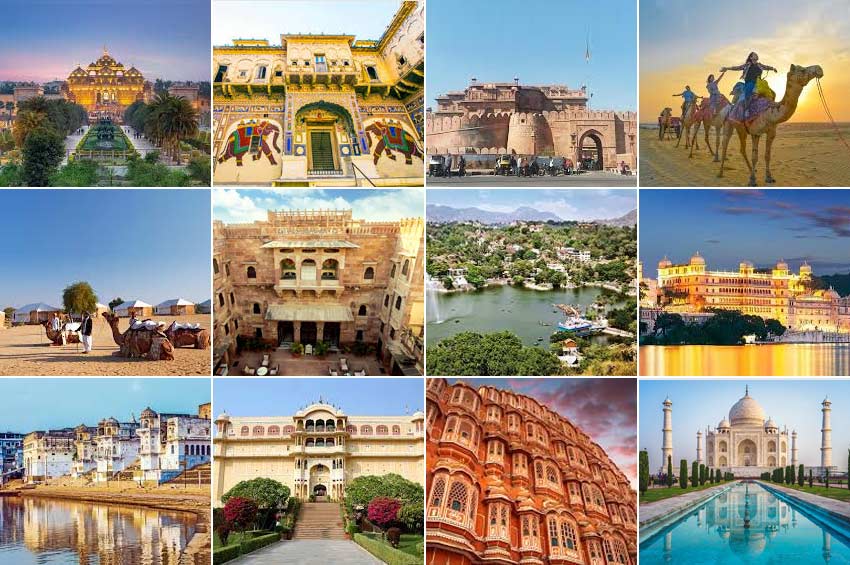
There is an easy way to sell Rajasthan: show a palace, a camel on a dune, a colourful turban and a sunset. It works—but it reduces one of India's most varied travel regions to four photographs.
The stronger reason to visit Rajasthan is the way places change as you move through the state. Jaipur is a planned mercantile city whose historic core is still a working market. Jodhpur grows outward from one of India's most imposing forts. Udaipur replaces desert expectations with water, hills and palaces. Jaisalmer seems to rise from the same colour as the landscape around it. Ranthambore changes the rhythm again: suddenly your morning is not about architecture at all, but about listening for alarm calls in a dry forest.
And between those headline destinations are places that often become the part travellers talk about later: a stepwell with nobody around, a roadside chai break, a small temple town, a family-run haveli, painted Shekhawati walls, blackbuck on open grassland, a village meal, a craftsman's workshop or a road through the Aravallis when the landscape turns unexpectedly green after rain.
So if your question is simply “Why should I visit Rajasthan?”, the short answer is this: because few parts of India combine monumental history, living cities, landscape, wildlife, food and everyday culture so naturally within one journey. Rajasthan Tourism itself describes the state through forts, palaces, diverse cultures, cuisine and contrasting landscapes, while UNESCO recognition in Jaipur and across Rajasthan confirms that much of this heritage has significance far beyond tourism. citeturn0search2turn0search1turn0search4
Why Visit Rajasthan? Complete Guide
- 25 Reasons to Visit
- Forts, Palaces & Living Heritage
- Which Rajasthan City Fits You?
- The Thar Desert
- Wildlife & Nature
- Culture Without the Clichés
- Food Worth Travelling For
- Shopping & Crafts
- Village & Rural Rajasthan
- Rajasthan for Foreign Visitors
- Families, Couples & Solo Travellers
- How Many Days?
- Best Time to Visit
- Best First-Trip Routes
- Mistakes to Avoid
- FAQs
25 Real Reasons to Visit Rajasthan
1. The Forts Are Landscapes, Not Just Buildings
Amber, Mehrangarh, Chittorgarh, Kumbhalgarh, Jaisalmer, Ranthambore and Gagron are not interchangeable stone monuments. Their locations explain them: ridge, desert, forest, plateau, water and trade route all shaped how each fort worked.
2. Jaipur Is a Living Heritage City
UNESCO recognises Jaipur's walled city not simply for individual monuments but for its eighteenth-century grid planning, chowkris, chaupars, markets, temples and commercial traditions that remain active today. That distinction matters: the heritage is in the street pattern and daily life as much as Hawa Mahal. citeturn0search1
3. Rajasthan Has Palaces You Can Experience in Different Ways
Some are museums, some remain royal residences, some became heritage hotels, and others survive as atmospheric ruins. A Rajasthan trip lets you move from ceremonial palace halls to intimate courtyards and lake-facing terraces rather than seeing the same architectural story repeatedly.
4. The Desert Is Real—but It Is Not All of Rajasthan
Jaisalmer and western Rajasthan give you the Thar: dunes, scrub, desert villages and vast horizons. Travel east and south, however, and the geography changes into Aravalli ridges, lakes, forest and agricultural land.
5. Udaipur Breaks the Rajasthan Stereotype
If your mental picture is only sand, Udaipur is the correction. Lakes, wooded hills, white palace architecture and winding old-city lanes create one of Rajasthan's most relaxed urban landscapes.
6. Jodhpur Has One of India's Great Fort-City Relationships
Mehrangarh does not merely sit beside Jodhpur; it visually dominates it. Looking from the fort over the blue-toned old neighbourhoods makes the geography of royal power immediately understandable.
7. Jaisalmer Feels Architecturally Different
Golden-yellow stone ties fort, havelis and city visually to the desert. The fort remains a living settlement, which also means travellers need to visit responsibly because tourism pressure affects a fragile historic environment.
8. You Can Build a Serious Wildlife Trip
Rajasthan is not a heritage-only destination. Ranthambore and Sariska offer tiger landscapes; Keoladeo is globally significant for birds; Desert National Park protects the Thar ecosystem; Tal Chhapar is known for grassland and blackbuck; Jaipur also has leopard-focused safari landscapes.
9. Keoladeo Changes the Meaning of “Rajasthan Wildlife”
Instead of a jeep chasing a tiger sighting, Bharatpur can mean cycling or moving slowly through wetlands full of birdlife. It is a completely different pace.
10. The Roads Themselves Become Part of the Trip
Rajasthan is excellent for overland travel because the transition between regions is visible. Jaipur to Jodhpur, Jodhpur to Udaipur via Ranakpur, and Jodhpur to Jaisalmer all tell geographic stories from the car window.
11. You Can Sleep in Heritage Buildings
From restored havelis to former palaces and forts, heritage accommodation can make the hotel part of the cultural experience rather than just somewhere to sleep.
12. The Food Has a Strong Sense of Place
Dal baati churma may be the famous introduction, but Rajasthan's food story includes gatte ki sabzi, ker sangri, pyaaz kachori, mirchi bada, laal maas, safed maas, regional sweets and city-specific snack traditions.
13. Vegetarian Travellers Have Extraordinary Choice
Rajasthan's historic climate and food traditions created a deep vegetarian repertoire. You can travel for days eating regional food without treating vegetarian meals as a compromise.
14. Shopping Can Be Cultural Research
Block printing, blue pottery, miniature painting, jewellery, leatherwork, carpets, textiles and embroidery are not merely souvenir categories. Visiting a good workshop helps you understand technique, labour and why genuine handmade work costs more than mass-produced copies.
15. The Bazaars Are Still Working Bazaars
UNESCO specifically notes Jaipur's continuing commercial and artisanal traditions. Johari Bazaar or Tripolia is not staged heritage scenery; people still shop, trade, worship and work there. citeturn0search1
16. Rajasthan Rewards Early Mornings
Temples wake up, vegetable and flower markets move, forts are quiet, old-city streets are cooler, birds are active and desert light is softer. Travellers who start every day at 10:30 miss an entire version of Rajasthan.
17. It Is One of India's Best Regions for Architecture Lovers
Rajput fortifications, Mughal influence, Jain temples, stepwells, havelis, cenotaphs, astronomical architecture and Indo-Saracenic public buildings can all appear within the same itinerary.
18. Jaipur Gives You Science as Heritage
Jantar Mantar is not decorative palace architecture. UNESCO describes it as the most significant, comprehensive and best-preserved collection of India's historic monumental astronomical instruments. citeturn0search4
19. Smaller Towns Reward Travellers Who Slow Down
Bundi, Mandawa, Nawalgarh, Bikaner, Chittorgarh and other secondary stops can be more memorable precisely because you are not moving through the same high-volume sightseeing circuit.
20. Stepwells Add Another Layer to the Landscape
Stepwells are architecture shaped by water scarcity and social life. Chand Baori near Abhaneri is the famous example, but smaller baoris across Rajasthan reveal how deeply water management influenced settlement design.
21. Religious Travel Is Part of Everyday Rajasthan
Pushkar, Ajmer, Nathdwara, Khatu Shyam Ji, Salasar Balaji, Ranakpur, Dilwara and Karni Mata show very different devotional traditions. Visit as a respectful observer, not as though a living temple were simply another museum.
22. Festivals Can Completely Change a Place
Pushkar Fair, desert festivals, Gangaur, Teej and local melas bring music, processions, livestock traditions, religious practice and crowds. They can be wonderful—but require more advance planning than an ordinary sightseeing week.
23. The State Works for Both First-Time and Repeat India Visitors
A first-time visitor can build a clear Jaipur–Jodhpur–Udaipur route. Someone on a fourth India trip can ignore those entirely and explore Hadoti, Shekhawati, rural Mewar or wildlife.
24. Luxury and Simple Travel Coexist
You can stay in a palace hotel and eat dinner overlooking a lake, or use modest guesthouses and local trains. Rajasthan does not require one travel style.
25. The Best Moments Often Happen Between the Famous Ones
A fort may bring you to Rajasthan. The memory might be the chai stall afterward, the person who explains a block-printing table, a quiet village road, or the first time the walls of Jaisalmer turn gold in late-afternoon light.
Rajasthan's Heritage Is More Than “Kings and Palaces”
Rajasthan's tourism identity is strongly associated with forts, palaces, heroism, royalty, arts and culture; that remains central to how the state itself presents the destination. citeturn0search2 But the interesting question is not how many forts you can tick off. It is how each place reflects a different political, geographic and economic world.
Amber shows a hill palace tied to the Kachwaha court before Jaipur. Jaipur shows a deliberately planned trade capital. Jodhpur's Mehrangarh is a defensive statement above a dense city. Jaisalmer reflects desert trade. Chittorgarh works at a vast citadel scale. Kumbhalgarh is inseparable from the Aravalli landscape.
That is why five fort visits do not necessarily feel repetitive—provided you understand what makes each one different.
Which Rajasthan Destination Is Right for You?
| Destination | Best For | Minimum Useful Stay |
|---|---|---|
| Jaipur | First-time heritage, bazaars, forts, food, crafts | 2–3 nights |
| Jodhpur | Mehrangarh, old-city atmosphere, food | 2 nights |
| Udaipur | Lakes, couples, slower travel, palace views | 2–3 nights |
| Jaisalmer | Desert, fort, havelis, western Rajasthan | 2–3 nights |
| Ranthambore | Tiger safari and wildlife | 2 nights |
| Pushkar | Sacred lake, small-town pace, cafés | 1–2 nights |
| Bundi | Quieter heritage, palace, stepwells | 1–2 nights |
| Shekhawati | Painted havelis, architecture, low-crowd travel | 1–2 nights |
| Bharatpur | Birdwatching / Keoladeo | 1–2 nights |
| Bikaner | Fort, food, less-touristed desert city | 1–2 nights |
Rajasthan Tourism itself presents destinations ranging from Udaipur's lakes and Pushkar's sacred setting to Sawai Madhopur's Ranthambore gateway and Bharatpur's eastern Rajasthan heritage, which is a useful reminder that there is no single “Rajasthan experience.” citeturn0search9
Why Visit the Thar Desert?
The desert is worth seeing, but choose the experience carefully. A loud one-hour dune package with a line of vehicles is not the only way to experience western Rajasthan.
Jaisalmer
Best if you want desert landscape plus a historic city, fort and havelis.
Khuri / Rural Desert Stays
Useful for travellers who value a quieter night and village-scale setting over a large entertainment camp.
Osian
Works naturally from Jodhpur and combines desert-edge scenery with important temples.
What Makes a Better Desert Experience?
- Smaller camp or thoughtful rural stay
- Enough time to walk rather than only ride
- Sunset away from the densest vehicle cluster
- Local food and music presented respectfully
- Clear pricing before activities
- No pressure to buy add-ons you did not request
Rajasthan for Wildlife Lovers
Rajasthan's landscapes make its wildlife unusually varied. A traveller can move from tiger habitat to wetland birds, leopard country, open grassland and desert ecology without leaving the state.
Ranthambore
The headline tiger destination, with dry forest, lakes, rocky ridges and Ranthambore Fort adding historical drama to the landscape.
Sariska
A useful wildlife extension from Jaipur/Delhi routes, set in the Aravallis.
Keoladeo, Bharatpur
For birdwatchers, this can be more important than another fort. It also combines naturally with Agra on a Golden Triangle route.
Jhalana, Jaipur
Useful for travellers who want a wildlife experience without adding another distant city to the itinerary.
Desert National Park
Go for the desert ecosystem rather than expecting a conventional forest safari.
Tal Chhapar
A specialist but rewarding stop for blackbuck, grassland landscapes and birdlife.
If wildlife is a major reason for your trip, read our Rajasthan Wildlife Sanctuaries & National Parks Guide.
What Does “Rajasthani Culture” Actually Mean?
It does not mean one dance, one costume or one folk song performed after dinner. Rajasthan is a large state with regional identities, dialects, food traditions, crafts, religious practices and landscapes.
The culture becomes more interesting when you ask specific questions: Why are certain textiles printed in one region? Why do houses change colour and material from Jaipur to Jaisalmer? Why do water structures matter so much? Why are particular foods built around ingredients that survive dry conditions? Why did merchant families in Shekhawati cover havelis with paintings?
Those questions turn “culture” from entertainment into context.
Rajasthan Is Worth Visiting for the Food Alone
Dal Baati Churma
The classic introduction. Do not judge it from a rushed buffet where the baati has been sitting under a heat lamp.
Laal Maas
A famous meat dish associated with chilli-rich gravy. Heat level varies greatly by kitchen, so ask rather than assuming every version is identical.
Ker Sangri
A strong example of how arid-land ingredients shaped regional cooking.
Gatte Ki Sabzi
Gram-flour dumplings in gravy—comforting, widely available and useful for vegetarian travellers.
Pyaaz Kachori
Especially associated with Jodhpur, though found widely. Eat it fresh.
Mirchi Bada
Another Jodhpur favourite and a good reminder that some of the most memorable Rajasthan food costs very little.
Ghevar
Closely associated with festive seasons such as Teej and Gangaur, but often available beyond them.
Do not spend an entire Rajasthan trip eating only hotel “multi-cuisine” menus. Even one carefully chosen local breakfast or market-food walk can teach you more about a city than another generic restaurant dinner.
Rajasthan Shopping: Buy Less, Understand More
Jaipur is especially important as a trade and craft city; UNESCO notes that its commercial and artisanal traditions remain active. citeturn0search1
Look For
- Hand block-printed textiles
- Blue pottery
- Miniature painting
- Silver and gemstone jewellery
- Leather juttis
- Carpets and dhurries
- Embroidery and appliqué
- Wood and metal craft
Before Buying
Ask what is handmade, where it was made, what material is used and whether the quoted gemstone/metal claim can be documented. “Government shop” is a phrase travellers hear frequently; verify rather than accepting a driver's or guide's description.
For Jaipur specifically, use our What to Buy in Jaipur Shopping Guide.
Why Add a Village or Rural Stop?
Most Rajasthan itineraries move from city hotel to monument to city hotel. That creates a distorted picture of the state.
A rural stay or village visit can show agricultural life, traditional houses, water use, crafts and the social rhythm outside major tourism centres. The key is choosing an experience where residents are participants and beneficiaries, not scenery.
Why Rajasthan Works So Well as a Road Trip
Distances are large enough to reveal changing geography but manageable enough to connect several major destinations by road. A private car is not mandatory, but it becomes especially useful when you want village stops, temples, stepwells or places between railway-connected cities.
Road Trips That Make Geographic Sense
- Jaipur → Pushkar → Jodhpur
- Jodhpur → Ranakpur → Udaipur
- Jodhpur → Jaisalmer
- Jaipur → Bundi → Udaipur
- Delhi → Mandawa/Shekhawati → Bikaner
- Agra → Bharatpur → Jaipur
Why Rajasthan Is Good for International Visitors
Rajasthan has long been one of India's major destinations for both domestic and international tourism, driven by heritage, forts, palaces, arts and culture. citeturn0search5
What Makes It Relatively Easy?
- Established tourism infrastructure in major cities
- Wide range of accommodation
- English-speaking tourism professionals are common on established routes
- Good rail connections between many major destinations
- Private road transport is easy to arrange
- Major attractions have structured visitor systems
What Still Surprises First-Time Visitors?
- Road distances take longer than the map suggests
- Old-city traffic can be intense
- Shopping commissions can influence some recommendations
- Monument ticket categories differ for Indian and foreign visitors
- Summer heat changes how much sightseeing is realistic
- Festival dates can dramatically change crowds and prices
Who Should Visit Rajasthan?
Families
Excellent if you mix forts with wildlife, hands-on crafts, food and slower days. Children tire quickly if every day is “another palace.”
Couples
Udaipur, heritage hotels, desert sunsets and slower road routes work particularly well. But a good Rajasthan couple trip does not need to be built entirely around expensive palace hotels.
Solo Travellers
Major cities are well established on the independent-travel circuit. Plan late-night transport and remote desert arrangements carefully rather than improvising everything.
Senior Travellers
Rajasthan is very workable with a private vehicle and realistic pacing. Hill forts involve slopes and steps, so build in rest and do not stack three major monuments into every day.
Photographers
Architecture, street life, desert light, wildlife, markets and festivals give enormous range. The ethical rule is simple: people are not props—ask before close portraits.
How Many Days Do You Need in Rajasthan?
| Trip Length | What It Realistically Allows |
|---|---|
| 4–5 days | One city deeply or two nearby destinations |
| 7 days | Jaipur + Jodhpur + Udaipur, or Jaipur + Ranthambore + Udaipur |
| 10 days | Strong first circuit with 4 destinations |
| 12–14 days | Best balance for major Rajasthan highlights |
| 3 weeks | Major cities + smaller towns + wildlife/rural stops |
Best Rajasthan Routes for a First Visit
7 Days: Classic Heritage
Jaipur 2 nights → Jodhpur 2 nights → Udaipur 2–3 nights.
8–9 Days: Heritage + Wildlife
Jaipur → Ranthambore → Bundi → Udaipur.
10 Days: Desert & Palaces
Jaipur → Jodhpur → Jaisalmer → Udaipur. This involves longer travel, so do not compress it further.
12–14 Days: Strong First Rajasthan Trip
Jaipur → Pushkar/Ajmer → Jodhpur → Jaisalmer → Udaipur, with Ranakpur or another en-route stop where practical.
Golden Triangle + Rajasthan
Delhi → Agra → Jaipur → Jodhpur/Udaipur. This is one of the cleanest ways for a first-time India visitor to extend beyond the Golden Triangle.
Best Time to Visit Rajasthan
Rajasthan Tourism identifies the state's contrasting Aravalli and Thar landscapes and presents destinations suitable to different kinds of travellers; for most conventional sightseeing, the cooler months remain the easiest. citeturn0search6
October to March
The easiest season for forts, city walking, desert travel and road trips. December–January mornings can be surprisingly cold, especially in desert areas.
April to June
Hot, sometimes extremely so. The advantage is lower seasonal demand in some places. Start sightseeing at opening time, rest at midday and choose hotels carefully.
July to September
Monsoon changes parts of Rajasthan dramatically. Aravalli regions and areas around Udaipur/Bundi can become greener. Rain can also disrupt roads or outdoor plans.
Is Rajasthan Expensive?
It can be one of India's most luxurious destinations, but it does not have to be expensive. Accommodation ranges from guesthouses to palace hotels; trains and buses keep transport costs down; monument tickets and safaris vary widely; local food can be inexpensive.
The biggest budget mistake is not choosing luxury—it is paying for things you did not actually want: unnecessary shopping stops, poorly explained transport extras, rushed private guides or an expensive desert camp selected only from photographs.
What Rajasthan Is Not
It is not a theme park frozen in a royal past. People live and work inside heritage neighbourhoods. Temples are active places of worship. Fort towns face conservation pressures. Water is a serious resource issue. Desert communities are not costumes. Wildlife reserves are ecosystems, not guaranteed tiger-viewing arenas.
Travel gets better when you remember those things.
20 Rajasthan Trip Mistakes to Avoid
- Trying to see Jaipur in one rushed afternoon.
- Assuming all Rajasthan is desert.
- Adding Jaisalmer without accounting for the travel time.
- Booking only one safari and expecting a guaranteed tiger.
- Visiting every fort at midday.
- Eating every meal in the hotel.
- Buying jewellery because a driver says a shop is “government approved.”
- Spending only one night in Udaipur.
- Skipping smaller places entirely.
- Doing a dune experience without checking what the package actually includes.
- Expecting a private car to eliminate old-city traffic.
- Not carrying layers for winter desert mornings.
- Ignoring heat in April–June.
- Treating active temples as photo sets.
- Photographing people closely without permission.
- Assuming every heritage hotel offers the same quality.
- Building the trip around social-media photo spots rather than interests.
- Using old ticket/safari prices without verifying current official information.
- Scheduling a new city every day.
- Leaving no unplanned time.
Who Might Not Enjoy Rajasthan?
If you dislike road travel, historic architecture, busy Indian cities and hot/dry landscapes, a long Rajasthan-only trip may not be your best first choice. If your priority is tropical beaches or high Himalayan trekking, other parts of India fit better.
But even travellers who think they “don't like history” often respond to Rajasthan because history here is physically connected to landscape, markets, food and living neighbourhoods rather than confined to museums.
Official Sources for Planning Rajasthan
- Rajasthan Tourism — Official State Tourism Website
- Rajasthan Tourism — Tourist Destinations
- Rajasthan Tourism — Best Time to Visit
- UNESCO — Jaipur City, Rajasthan
- UNESCO — Jantar Mantar, Jaipur
Related Rajasthan Travel Guides
- Jaipur Complete Travel Guide
- Jaipur Monument Tickets & Timings
- Rajasthan Wildlife Sanctuaries & National Parks
- Jaipur UNESCO World Heritage Sites
- Jaipur Shopping Guide
Why Visit Rajasthan? FAQs
Is Rajasthan worth visiting?
Yes. It offers unusually strong variety within one state: heritage cities, forts, palaces, desert, lakes, hills, wildlife, food, crafts and pilgrimage destinations.
What is Rajasthan famous for?
Forts and palaces are the headline, but Rajasthan is also known for the Thar Desert, Jaipur's historic city, Udaipur's lakes, wildlife, crafts, regional cuisine, music and festivals.
Which city should I visit first?
Jaipur is the easiest starting point for most first-time travellers because it combines forts, palaces, bazaars, food, crafts and good onward connections.
Which is better: Jaipur, Jodhpur or Udaipur?
They solve different travel needs. Jaipur has the broadest sightseeing mix, Jodhpur has a powerful fort/old-city experience, and Udaipur is best for lakes and a slower atmosphere.
Should I visit Jaisalmer?
Yes if the desert is important to you and you have enough days. Skip it on a very short itinerary rather than spending a large part of the trip travelling.
How many days are enough?
Seven days gives a useful introduction. Ten to fourteen days is much better for a first Rajasthan circuit.
What is the best month?
November through February is especially comfortable for conventional sightseeing, though October and March are also popular.
Is Rajasthan safe for foreign tourists?
Rajasthan has a mature international tourism industry. Use the same practical precautions you would elsewhere in India: arrange reliable late-night transport, protect valuables, verify prices and use established operators for remote trips.
Is Rajasthan good for solo women travellers?
Many women travel independently in Rajasthan. Sensible planning matters: choose well-reviewed accommodation, arrange late arrivals, share transport details when appropriate and avoid isolated situations you are uncomfortable with.
Is Rajasthan good with children?
Yes, particularly if you alternate forts with wildlife, crafts, markets and relaxed hotel time.
Is Rajasthan good for honeymoon/couples?
Yes. Udaipur, heritage stays, desert sunsets and slower scenic routes make it especially popular with couples.
Can vegetarians travel easily?
Very easily. Rajasthan has one of India's richest regional vegetarian food traditions.
Do I need a private car?
No. Major cities are connected by rail and bus. A private car becomes valuable for rural stops, en-route temples, wildlife transfers and flexible multi-city travel.
Can I combine Rajasthan with Agra?
Yes. Jaipur connects naturally with Agra and Delhi, making Rajasthan an easy extension of the Golden Triangle.
Is Rajasthan only forts?
No. Wildlife, desert ecology, lakes, markets, temples, villages, food, craft and festivals can fill an itinerary even if you limit fort visits.
Which place is best for wildlife?
Ranthambore is the best-known tiger destination. Bharatpur/Keoladeo is outstanding for birdlife, while Sariska, Jhalana, Tal Chhapar and Desert National Park suit different interests.
Which place is best for desert?
Jaisalmer is the classic choice. Jodhpur/Osian can work better when you want a shorter desert experience.
Which place is best for shopping?
Jaipur has the widest visitor-facing craft and jewellery market, while Jodhpur, Udaipur, Jaisalmer and regional craft centres each have their own strengths.
Is one week enough?
Yes for three well-chosen destinations. It is not enough for every famous Rajasthan city.
Should I book everything in advance?
Book key hotels, popular wildlife safaris, festival-period stays and long-distance trains in advance. Leave some flexibility for meals and local sightseeing.
Final Answer: Why Should You Visit Rajasthan?
Visit Rajasthan if you want a trip where history is not separated from daily life. A fort overlooks the neighbourhood that grew beneath it. A bazaar follows a street plan laid out centuries ago. A recipe tells you something about climate. A stepwell explains water. A desert town explains trade. A wildlife reserve reminds you that Rajasthan's story is not only human.
You do not need to see everything. In fact, Rajasthan is better when you do not try. Pick three or four places that answer different interests, travel between them slowly enough to notice the landscape, start some mornings early, eat outside your hotel, ask how things are made, and leave room for a place you did not know you would care about.
That is the reason Rajasthan keeps working for travellers: the famous sights get you here, but the connections between them are what make the journey feel complete.