Taj Mahal Sunset Tour from Delhi: Private Same Day Agra Trip
Tour Overview
Seeing the Taj Mahal at sunset is an experience that feels almost unreal. As the day cools and the light softens, the marble slowly changes colour from bright white to warm gold, rose and finally a gentle blue as evening arrives. Our same day Taj Mahal Sunset Tour from Delhi is built around this golden hour, giving you time to enjoy the monument when the gardens are calmer, the air is softer and the sky becomes part of the show.
Instead of a rushed checklist, this sunset tour offers a full day that balances history, photography and comfort. You travel in a private AC car from Delhi, explore Agra with a local expert guide, visit key sights such as the "Baby Taj" and Agra Fort, and then finish your day with unhurried moments at the Taj Mahal as the sun goes down. It is ideal for couples, families, solo travellers and anyone who wants to see the Taj in its most romantic light without having to stay overnight in Agra.
Duration & Tour Details
Duration: Approximately 12–14 hours
Tour type: Private same-day excursion from Delhi
Suggested start: Between 7:30–9:00 AM from Delhi
Route: Delhi – Baby Taj – Agra Fort – Lunch – Taj Mahal at Sunset – Delhi
Pickup: Hotel, home, airport or agreed Delhi/NCR point
Transport: Private air-conditioned vehicle via Yamuna Expressway
Guide: Local guide available when pre-booked
Best for: Couples, photographers, first-time visitors, business travellers and solo travellers
Price: Available on request. Final cost depends on group size, vehicle category, guide requirement, pickup location and monument inclusions.
Why Choose a Taj Mahal Sunset Tour?
The Taj Mahal is beautiful at any time of day, but sunset gives it a very special character. In the late afternoon the heat eases, the light becomes warmer and the monument appears to glow from within. Colours in the sky reflect in the long pools, the white marble picks up tones of orange and pink, and the shadows in the gardens grow longer and softer. For photography, this "golden hour" is one of the best windows you can ask for.
A sunset visit also fits perfectly into a same-day trip from Delhi. You can leave the city at a comfortable morning time, enjoy sightseeing and a relaxed lunch in Agra, then time your Taj Mahal entry for late afternoon. By the time you finish at the monument, the worst of the traffic has passed and the temperature has dropped, making the drive back more pleasant. For travellers who are not early-morning people, a sunset tour is often more realistic than a 3:00 AM start for sunrise.
Taj Mahal Sunset Tour Highlights
- Experience the Taj Mahal at golden hour when the marble glows in warm sunset tones and the sky fills with orange, pink and blue hues.
- Enjoy a comfortable later-morning departure from Delhi, avoiding a pre-dawn start while still reaching the Taj for the best evening light.
- Visit the Tomb of Itmad-ud-Daulah, the "Baby Taj", with its delicate marble inlay work and quiet riverside setting.
- Explore Agra Fort's red-sandstone palaces, audience halls and the Jasmine Tower balcony overlooking the distant Taj Mahal.
- Walk through the Taj Mahal at a calmer time of day when the main daytime rush has passed and the gardens feel more serene.
- Photograph golden-hour reflections in the long pool, silhouettes against the sunset sky and the "blue hour" as the light fades.
- Private AC car on the fast Yamuna Expressway with flexible stops and a professional driver.
- Optional visit to a genuine marble inlay workshop to see the same technique used to decorate the Taj Mahal.
- Door-to-door pickup and drop-off in Delhi/NCR for a seamless same-day experience.
Places Covered on the Tour
Tomb of Itmad-ud-Daulah (Baby Taj)
A beautiful riverside mausoleum often nicknamed the "Baby Taj", this was one of the first major Mughal buildings made entirely from white marble and decorated with delicate inlay work. In many ways it feels like a test or prototype for the Taj Mahal. Here the crowds are usually lighter and the atmosphere more intimate, with colourful inlay designs, geometric patterns and quiet river views that set the mood for the rest of the day.
Agra Fort
The great red sandstone complex that served as the capital and main residence for several Mughal emperors. Inside its thick walls are courtyards, palaces, audience halls and gardens that tell the story of the empire at its height. One of the most moving corners is the Jasmine Tower, a marble pavilion with a balcony overlooking the river and the Taj Mahal in the distance — the same view Shah Jahan is said to have had during his final years.
Taj Mahal at Sunset
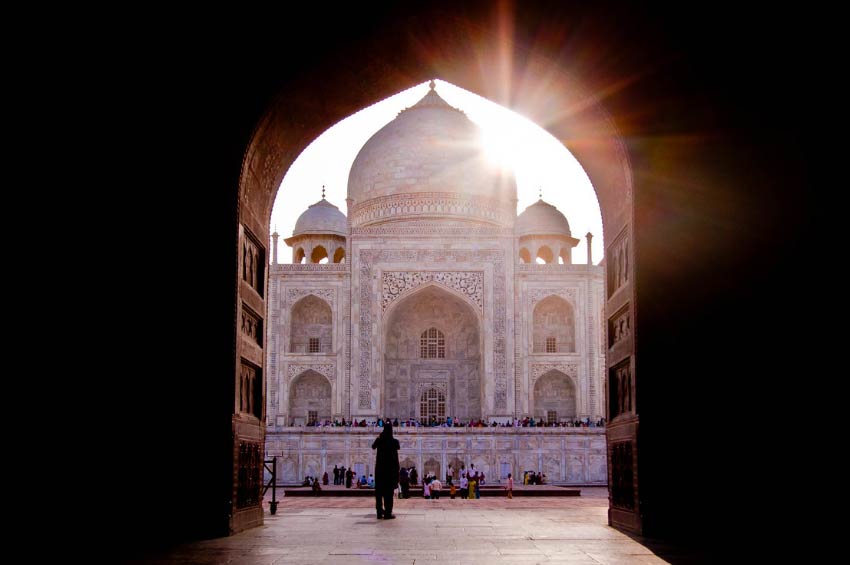
Walking through the main gate and seeing the Taj Mahal framed against the evening sky is a moment that never feels ordinary. In the late afternoon the monument stands out sharply against the sky, and as you walk closer the symmetry of the gardens, water channels and pathways becomes more obvious. Your guide points out details that are easy to miss at first glance — the way the calligraphy changes size to appear even, the optical illusions at the side arches, and the tiny stones used in the floral inlay work.
Marble Inlay Workshops (Optional)
If you are interested in local craftsmanship, the tour can include a short visit to a genuine marble inlay workshop where small pieces of coloured stone are hand-cut and fitted into marble slabs to create floral and geometric designs using the same technique that decorates the Taj Mahal itself.
Sample Taj Mahal Sunset Tour Itinerary
7:30–9:00 AM – Morning Pickup in Delhi & Drive to Agra
Your driver meets you at your hotel, home or the airport in Delhi, Noida or Gurgaon. Once seated in your private air-conditioned car you join the Yamuna Expressway for the three to three and a half hour drive to Agra. The road is smooth and modern with clean service areas where you can stop for tea, coffee or snacks if you like. During the journey your driver or guide can share basic background about Agra, the Mughals and how the Taj Mahal came to be built on the banks of the Yamuna River.
10:30–11:30 AM – Tomb of Itmad-ud-Daulah (Baby Taj)
On arriving in Agra, first visit the "Baby Taj" with its colourful marble inlay, geometric patterns and quiet riverside setting. Your guide explains how this tomb connects to the story of Nur Jahan and Shah Jahan's family, and why it is an important step in the architectural evolution that later led to the Taj Mahal.
12:00–1:00 PM – Agra Fort
Continue to Agra Fort and explore its courtyards, palaces, audience halls and gardens that tell the story of the Mughal empire at its height. Visit the Jasmine Tower balcony overlooking the river and the Taj Mahal in the distance, where Shah Jahan is said to have spent his final years looking at the tomb he built for Mumtaz Mahal.
1:00–2:00 PM – Lunch Break in Agra
Break for lunch at a recommended restaurant in Agra. Menus usually include North Indian, Mughlai and continental options with plenty of vegetarian choices. This is a good time to cool down, recharge your devices and look through the photos already captured. If you prefer a quick snack and more time at the Taj Mahal, you can keep the break short.
4:00–5:30 PM – Taj Mahal: Golden Hour
Arrive at the Taj Mahal as the sun moves lower and the marble begins to pick up deeper golden tones. The sky behind it turns from pale blue to shades of orange and pink, and the reflections in the long pool become richer. Your guide suggests where to stand for silhouettes, reflections or close-ups of inlay designs, while those who simply want to absorb the atmosphere can sit on a shaded bench and watch the light change minute by minute.
5:30–6:00 PM – Blue Hour & Exit
Just after sunset there is a short transition when the sky deepens to a soft blue and the last light catches the marble. Many visitors describe this "blue hour" as one of their favourite phases, because the monument appears more serene and the colours are cooler and more subtle. The Taj Mahal closes to regular visitors a little after sunset, so your guide keeps track of time and gently leads you back towards the exit.
6:00 PM – Return Drive to Delhi
Meet your driver again and start the journey back to Delhi along the Yamuna Expressway. The drive usually takes around three to four hours depending on traffic. By now the air is cooler and most guests relax, rest or scroll through their sunset photos as the city lights of Delhi slowly come into view.
9:30–10:00 PM – Drop-Off in Delhi
Arrive back in Delhi and get dropped at your hotel, residence or airport, bringing your Taj Mahal Sunset Tour to a smooth close.
Inclusions
- Private pickup and drop-off from your Delhi/NCR hotel, home or airport by private air-conditioned car.
- Full-day use of the vehicle for sightseeing in Agra as per the itinerary.
- Professional driver and driver allowance.
- Fuel, toll taxes, state taxes, parking charges and driver allowances.
- Basic bottled drinking water in the car.
- Local guide when specifically included in the package.
- All applicable government taxes and standard service charges.
Exclusions
- Entry tickets for the Taj Mahal, Agra Fort and Tomb of Itmad-ud-Daulah, paid directly at monuments or online.
- Meals, snacks and drinks during the day.
- Professional guide fees unless added as an extra at the time of booking.
- Camera or video charges at monuments, if applicable for professional equipment.
- Marble workshop visit fees, if charged.
- Personal insurance, shopping and any optional activities not mentioned in the basic plan.
- Optional gratuities for driver and guide.
- Anything not specifically mentioned under inclusions.
Important Notes & Photography Tips
- Wearing solid or bright colours such as blue, red, yellow or green looks fantastic in photos against the white marble and evening sky.
- Comfortable walking shoes, sunglasses and a light scarf or shawl are useful, especially during warmer months.
- Large bags, food, drones, selfie sticks and certain other items are not allowed inside the Taj Mahal complex; carry only essentials in a small day bag.
- Booking your sunset tour a few days in advance is strongly recommended during weekends, festivals and popular travel seasons, as evening slots and guides can be harder to secure.
- The Taj Mahal closes to regular visitors a little after sunset; special night viewings around the full moon are available with separate tickets but are limited and must be planned well in advance.
- In winter (December–January), sunset is earlier in the day, so your Agra Fort and lunch timings may need slight adjustment to ensure you reach the Taj by late afternoon.
- Photography rules vary inside the Taj complex; follow instructions from security staff at each section.
- The route order can be reversed to visit the Taj Mahal first if you prefer to experience sunset there and explore Agra Fort afterwards.
- Exact cancellation and refund terms should be confirmed before payment.
Frequently Asked Questions
How long does the Taj Mahal sunset tour take?
The full-day tour usually takes around twelve to fourteen hours including travel from Delhi, monument visits, lunch and the return drive.
What time should I leave Delhi for a sunset visit?
Most sunset tours leave Delhi between 7:30 AM and 9:00 AM. This allows a comfortable drive to Agra, time for Agra Fort and lunch before arriving at the Taj Mahal in the late afternoon.
Why is sunset the best time to see the Taj Mahal?
At sunset the marble picks up golden, orange and pink tones from the sky. The gardens are calmer, the light is softer and the reflections in the long pool become richer, making it ideal for photography and a more serene experience.
Are monument entry tickets included?
Entry tickets are included only when clearly stated in the confirmed package. Otherwise, travellers pay them directly at the monuments.
Is a guide included?
A local guide is included only when specified in the package and can be arranged separately on request for the Taj Mahal and Agra Fort.
What should I wear for sunset photography?
Wearing solid or bright colours like blue, red, yellow or green creates striking photos against the white marble and evening sky. Comfortable walking shoes and a light scarf are also recommended.
Is the Taj Mahal open at night?
The Taj Mahal closes to regular visitors a little after sunset. Special night viewings around the full moon are available with separate tickets but are limited and must be planned well in advance.
Is lunch included?
Lunch is normally not included unless specifically mentioned in the confirmed package. Restaurants in Agra offer North Indian, Mughlai and vegetarian options at your own expense.
Can I combine this with a sunrise visit?
Yes. If you have more time in Agra, you can visit the Taj Mahal at sunrise on a separate day. The sunset tour is designed for those who prefer a later start and evening focus.
Is the tour suitable for senior travellers?
Yes. A lighter pace focusing on main viewpoints at each monument can be arranged. Agra Fort and the Taj Mahal have some steps and uneven surfaces, but the overall day can be adjusted for comfort.
Can the itinerary be customized?
Yes. The route can be adjusted for more time at any monument, a marble workshop visit, a preferred lunch location, or a different departure time from Delhi.