Abhaneri Festival 2026 Rajasthan – Dates, Chand Baori & Complete Travel Guide
About Abhaneri Festival
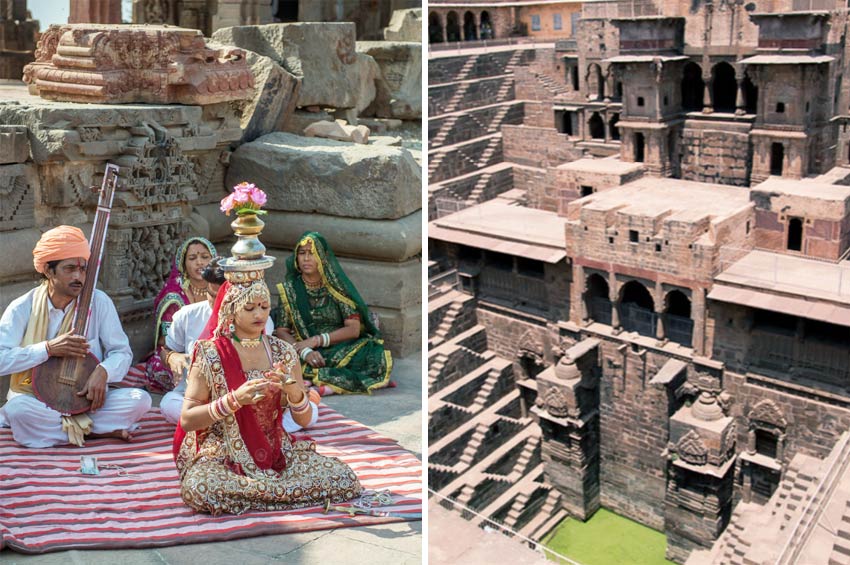
Abhaneri Festival is a two-day cultural celebration held in the historic village of Abhaneri in Dausa district, at one of Rajasthan's most photographed pieces of architecture: the Chand Baori stepwell. Where most of Rajasthan's big-ticket festivals happen inside forts and palaces, Abhaneri Festival unfolds inside a thousand-year-old geometric water tank, which gives it a visual character unlike anything else on the state's cultural calendar.
Rajasthan Tourism's dated 2026 event listing confirms the festival for 12 and 13 October 2026. As with several of the department's smaller regional festivals, some older descriptive pages on the same tourism website still carry leftover text from earlier editions with different dates, so this page treats the dated 2026 event card as the primary source and flags that inconsistency clearly below rather than quietly picking one. The event is associated with folk forms including Kachhi Ghodi, Kalbeliya, Ghoomar, Bhawai and Raas Leela.
Quick answer: Abhaneri Festival 2026, also searched as Abhaneri Mahotsav 2026, is confirmed for 12–13 October 2026 at Chand Baori, Abhaneri, Dausa district — about 90 km from Jaipur on the Agra road. It is a two-day folk-performance festival, not a livestock fair, and pairs naturally with a Chand Baori and Harshat Mata Temple visit.
Abhaneri Festival 2026 Quick Facts
Festival dates: 12–13 October 2026 (Monday–Tuesday)
Location: Chand Baori, Abhaneri village, Dausa district, Rajasthan
Known for: Folk dances, local culture and a unique stepwell setting
Main attraction: Chand Baori stepwell
Nearby landmark: Harshat Mata Temple
Organiser since: 2008, Rajasthan Tourism Department
Recommended visit: One full day (half-day if combined with a Jaipur–Agra journey)
Useful base: Jaipur, Dausa or Bandikui
Distance from Jaipur: Approximately 90 km on the Agra road
Entry information: Festival attendance is generally open; Chand Baori's own monument entry has historically carried a nominal fee. Recheck current charges before travel.
Why Visit Abhaneri Festival?
- Traditional performances: Watch Rajasthani and local folk forms presented inside and around a working heritage monument rather than a generic stage.
- Chand Baori: Combine the festival with one of Rajasthan's most striking examples of historic water architecture, said to date back roughly 1,200 years.
- Heritage atmosphere: The stepwell, old temple remains and rural surroundings create a setting few other Rajasthan festivals can match.
- Photography: Folk costumes, music, geometric stepwell architecture and village scenes offer unusually varied visual subjects in one compact location.
- Easy road excursion: Abhaneri can be added to a Jaipur–Agra journey or planned as a focused day trip from Jaipur.
- Smaller crowds than the big fairs: Compared to Pushkar or Nagaur, Abhaneri Festival stays modest in scale, which suits travellers who prefer a quieter cultural experience.
- Rural tourism angle: The event was created specifically to promote lesser-visited eastern Rajasthan, so it introduces visitors to performing traditions outside the usual Jaipur–Jodhpur–Udaipur circuit.
Abhaneri Festival 2026 Dates and Venue
Rajasthan Tourism's dated 2026 event page lists Abhaneri Festival for 12 and 13 October 2026 at the Chand Baori stepwell in Abhaneri, Dausa. This is the most specific, dated source currently available for the 2026 edition, and this page treats it as authoritative over older, undated descriptive text still circulating on other tourism pages.
Worth knowing: Abhaneri Festival has never had a truly fixed annual slot. Past editions have run anywhere from mid-September to mid-October, and the event has been described in different official sources as lasting two, three or even up to four days in a given year. If your travel dates are flexible, build in a buffer day either side of 12–13 October in case the final administrative notice shifts the programme slightly.
History and Cultural Importance
Rajasthan Tourism's current description credits the festival's founding to 2008, when the department began organising it specifically to bring visibility to Abhaneri and the wider Dausa region, which otherwise sits somewhat overshadowed by Jaipur, only ninety kilometres away. Since then it has grown from a low-key local event into a recognised entry on the state's cultural calendar, though it remains far smaller in scale than Pushkar or the Marwar Festival.
Abhaneri's deeper history predates the festival by over a thousand years. The village, once known as Abha Nagri or "city of brightness," is generally attributed to Raja Chand of the Nikumbha dynasty around the 8th–9th century CE, with the Gurjara-Pratihara rulers who followed adding further patronage of art and temple building in the region. Different sources place the exact founding century and ruling dynasty slightly differently — a common feature of very old monuments where inscriptional evidence is incomplete — so treat the century-level dating as the reliable part of the story rather than any single precise year.
Folk Dances and Cultural Performances
The official festival description highlights a mix of Rajasthani and local folk performances staged in and around the stepwell complex. The exact programme, artists and running order can change year to year, but visitors can reasonably expect the event to focus on traditional music, dance, puppetry and community culture.
| Performance | What Visitors May See |
|---|---|
| Kachhi Ghodi | A lively folk performance using decorative dummy-horse costumes, rhythmic movement and music, traditionally linked to the Shekhawati region. |
| Kalbeliya | Expressive, fluid dance associated with the Kalbeliya community, often described as evoking snake-like movement, set to traditional music. |
| Ghoomar | A graceful Rajasthani group dance known for circular movement and flowing traditional dress. |
| Bhawai | A balancing performance, often by women dancers balancing pots or performing atop swords or glass, demonstrating skill and control. |
| Raas Leela | A devotional performance depicting episodes from the lives of Radha and Krishna. |
| Puppetry and handicrafts | Traditional Rajasthani puppet shows alongside craft and art exhibitions run through both festival days. |
Programme note: Do not rely on old online schedules for exact performance times or line-ups. Use the latest programme released by Rajasthan Tourism or the local Dausa administration closer to 12–13 October.
Chand Baori: The Main Heritage Attraction
Chand Baori is the landmark most closely associated with Abhaneri and the reason most visitors make the trip even outside festival dates. Estimates place its age at roughly 1,200 to 1,300 years, with construction generally attributed to the Nikumbha or Gurjara-Pratihara period, and later additions — including upper pavilions and arcades — believed to date from later centuries. The stepwell is widely described as one of the largest and deepest in India, built around a deep rectangular tank lined on three sides by thousands of perfectly symmetrical steps arranged in a striking geometric pattern; the fourth side holds a multi-storeyed pavilion that was once used as a royal retreat.
The stepwell was built primarily to conserve water in Rajasthan's arid climate and to provide a cool retreat during the hottest months, but it also functioned as a community gathering space — which is part of why it makes such a fitting festival venue today. Descending into the stepwell itself is restricted for visitor safety and conservation; sightseeing and photography happen from the surrounding viewing areas and walkways.
| Chand Baori Visitor Detail | General Guidance |
|---|---|
| Typical opening hours | Roughly 8 a.m. to 6 p.m., subject to change and to festival-day adjustments |
| Monument entry fee | Historically a nominal fee for Indian nationals and a higher fee for foreign visitors; confirm current rates on arrival |
| Stepwell access | Descending the steps and entering the upper pavilion is restricted; view from designated walkways |
| Photography | Personal photography generally permitted; commercial shoots and drones may need prior permission |
Harshat Mata Temple
Harshat Mata Temple stands immediately next to Chand Baori and adds an important religious and architectural layer to any visit. Believed to date to around the 9th century and dedicated to the goddess of joy and happiness, the temple's surviving carvings and fragments help visitors understand the artistic history of Abhaneri beyond the stepwell alone, even though parts of the structure have been damaged over the centuries.
Dress respectfully, avoid disturbing worship or rituals, and ask before photographing people. Temple etiquette can differ from the more relaxed monument-viewing norms at the adjoining stepwell, so treat the two sites with slightly different expectations.
Festival Timings and Entry Information
A complete current programme with fixed daily performance timings for the 2026 edition is not clearly published this far in advance. Event sessions may run at different times across the two days, so confirm the programme before leaving Jaipur or Dausa.
| Visitor Information | Current Guidance |
|---|---|
| Festival dates | 12–13 October 2026, per the dated Rajasthan Tourism 2026 event listing |
| Daily programme | Confirm through the latest official event schedule closer to the dates |
| Festival entry fee | No separate festival tariff is clearly published; general attendance has typically been open |
| Chand Baori access | Subject to monument rules, safety controls and any separate ticket policy in force |
| Photography | Personal photography may be subject to site rules; professional filming and drones can require permission |
| Parking | Follow temporary traffic and parking instructions issued during the festival |
Best Time to Visit Abhaneri
During the Festival (12–13 October)
The festival dates are the best choice for travellers who want live folk performances and a more active cultural atmosphere at the stepwell. Expect more visitors and vehicles than on an ordinary sightseeing day, so arrive early.
October to March
These months are generally more comfortable for outdoor heritage visits than peak summer, with cooler daytime temperatures. Morning and late-afternoon light also work best for photographing the stepwell's geometric steps.
April to June
Daytime heat can be severe and the stepwell's open stone surfaces heat up quickly. Begin early, carry drinking water and avoid unnecessary exposure during the hottest part of the day.
Monsoon Period
Rain can make the rural landscape around Abhaneri greener and more scenic, but road conditions and walking surfaces near the stepwell may be affected. Check the local forecast and access conditions before travelling.
How to Reach Abhaneri Festival
From Jaipur
Abhaneri sits around 90 kilometres from Jaipur on the Agra road, roughly a 1.5 to 2-hour drive outside peak traffic. A private car or taxi is usually the simplest option because it allows flexible arrival and departure around the festival programme.
From Dausa
Dausa is a practical nearby base with road and rail connections, well under an hour from Abhaneri. Arrange onward transport in advance, particularly on festival days when local demand may increase.
From Bandikui
Bandikui, about 20 kilometres from Abhaneri, is one of the closest useful railheads with good rail connectivity. Last-mile taxis and local vehicles may be available, but pre-arrangement is more reliable for a fixed festival schedule.
From Agra / Fatehpur Sikri
Abhaneri can be added as a heritage stop while travelling between Agra and Jaipur — roughly a two-hour drive from Fatehpur Sikri and under three hours from Agra. Begin early and allow extra time for traffic, parking and festival access.
From Delhi
A direct same-day road trip from Delhi is tiring given the distance. A more comfortable plan is to stay in Jaipur, Dausa or along the Jaipur–Agra route the night before and visit Abhaneri fresh the next morning.
| From | Approx. Distance | Approx. Travel Time by Road |
|---|---|---|
| Dausa | 20–25 km | 30–45 minutes |
| Bandikui | ~20 km | 30–40 minutes |
| Jaipur | ~90 km | 1.5–2 hours |
| Fatehpur Sikri | ~120 km | ~2 hours |
| Agra | ~160 km | Under 3 hours |
Suggested One-Day Visit Plan
- Leave Jaipur or your nearby hotel early enough to avoid rushed travel and reach Abhaneri by mid-morning.
- Visit Chand Baori before the main crowd builds, subject to access and festival-day arrangements.
- Walk to Harshat Mata Temple and observe the surviving carvings respectfully.
- Check the official festival programme for the day's confirmed performances and time your visit around them.
- Allow buffer time for parking, security checks and any temporary traffic diversions during the festival.
- Return before late-night rural driving unless you have reliable transport and accommodation arranged along the route.
Places to Visit Near Abhaneri
- Chand Baori: The village's landmark stepwell and the main reason most travellers visit Abhaneri.
- Harshat Mata Temple: A historic temple site immediately associated with the stepwell complex.
- Dausa: A useful regional base with local markets, transport links and nearby heritage sites.
- Bhandarej: A historic settlement in Dausa district that can be combined with a regional road itinerary.
- Jaipur: Rajasthan's capital and the most convenient major tourism base for an Abhaneri excursion.
- Fatehpur Sikri: A major Mughal heritage site that can be included on a longer Jaipur–Agra journey.
Where to Stay
Jaipur offers the widest choice of hotels, heritage properties and transport services, and remains the most convenient base for visitors who want to combine Abhaneri with Amber Fort, Jaipur city attractions or an onward journey to Agra.
Dausa and Bandikui can reduce driving time and may suit travellers focused specifically on eastern Rajasthan. Accommodation close to Abhaneri itself is more limited, so confirm the exact location, meals, parking, check-in time and road access before booking, especially if you plan to attend evening festival performances.
How Abhaneri Festival Compares to Other Rajasthan Festivals
Travellers researching Rajasthan's festival calendar often want to know how a smaller regional event like Abhaneri stacks up against the state's bigger names.
| Festival | Typical Timing | Character |
|---|---|---|
| Abhaneri Festival | September–October (12–13 Oct in 2026) | Small, two-day folk-performance festival at a historic stepwell; low crowds, strong heritage backdrop |
| Pushkar Camel Fair | Kartik month, around November | A major camel-trading and pilgrimage event drawing very large domestic and international crowds |
| Marwar Festival | Around Sharad Purnima (September–October) | A cultural festival celebrating Rajputana valour and folklore, typically staged around Jodhpur's forts |
If you want a quiet, photogenic, half-day cultural experience without the scale of Pushkar, Abhaneri Festival is a good fit. If your priority is India's best-known camel-fair spectacle, Pushkar remains the bigger draw.
Common First-Time Visitor Mistakes
- Trusting an undated online schedule: Several pages about this festival still carry stale dates from earlier years — always check a dated 2026 source before booking travel.
- Treating it as a full-day destination: Abhaneri is a focused half-day to one-day visit; pairing it with Jaipur or an Agra journey makes far better use of the trip.
- Trying to walk down into the stepwell: Descending the steps is restricted; plan your photography from the designated viewing areas instead.
- Skipping Harshat Mata Temple: It sits right next to Chand Baori and is easy to miss if you rush straight back to the car.
- Arriving without cash for monument entry: Card acceptance at smaller heritage sites can be unreliable; carry small denominations.
- Underestimating festival-day traffic: The road from Jaipur can get busier than usual on the two festival days; leave earlier than you would for a normal sightseeing trip.
Practical Travel and Safety Tips
- Recheck the official 2026 event dates and daily programme before departure.
- Carry valid identification, drinking water, sun protection and essential medication.
- Wear comfortable footwear suitable for uneven stone and village paths.
- Stay behind all barriers around Chand Baori and do not enter restricted steps or the upper pavilion.
- Ask before photographing performers, worshippers, artisans or local residents at close range.
- Keep cash for small local purchases and monument entry, but avoid carrying unnecessary valuables.
- Do not fly a drone or conduct commercial filming without written permission.
- Use a reliable driver if returning after evening performances on unlit rural roads.
- Do not leave plastic waste around monuments, temples or village streets.
2026 Date & Accuracy Note
Last checked: 25 September 2026. The strongest current date evidence is Rajasthan Tourism's dated 2026 event listing, which shows 12–13 October 2026 at Chand Baori, Abhaneri. Some older, undated descriptive pages on Rajasthan Tourism's own site and elsewhere still show earlier-year dates (including September windows from past editions); these should not be used for 2026 planning. Recheck the final administrative notice shortly before travel, since a two-day regional festival like this can occasionally see minor date adjustments.
Frequently Asked Questions
When is the Abhaneri Festival held in 2026?
Rajasthan Tourism's dated 2026 event listing confirms 12 and 13 October 2026 at Chand Baori, Abhaneri. Recheck the final organiser programme before travel because event schedules can still be adjusted.
Why do some pages show different Abhaneri Festival dates?
The festival has no fixed annual slot and has run anywhere from mid-September to mid-October in past years. Several tourism pages still carry leftover text from earlier editions, so always use a dated 2026-specific source rather than a general description.
Where does the Abhaneri Festival take place?
It is held at the Chand Baori stepwell in Abhaneri village, Dausa district, about 90 km from Jaipur on the Agra road. Harshat Mata Temple sits within the same heritage setting.
What can visitors see at the festival?
Rajasthan Tourism highlights folk performances such as Kachhi Ghodi, Kalbeliya, Ghoomar and Bhawai, along with Raas Leela, puppetry and craft exhibitions. Additional cultural activities may be announced in the final programme.
Is there an entry fee for Abhaneri Festival?
A dependable, separate festival tariff is not clearly published. Chand Baori's own monument entry has historically carried a nominal fee for Indians and a higher fee for foreign visitors; confirm current charges before visiting.
Can Abhaneri be visited as a day trip from Jaipur?
Yes. Abhaneri is around 90 kilometres from Jaipur on the Agra road, roughly a 1.5 to 2-hour drive, making a private-car day trip straightforward.
What else can be seen in Abhaneri?
Visit Chand Baori and the adjoining Harshat Mata Temple. Follow monument safety rules, keep to designated viewing areas, and respect any restricted zones.