Braj Holi Festival Bharatpur
About Braj Holi Festival
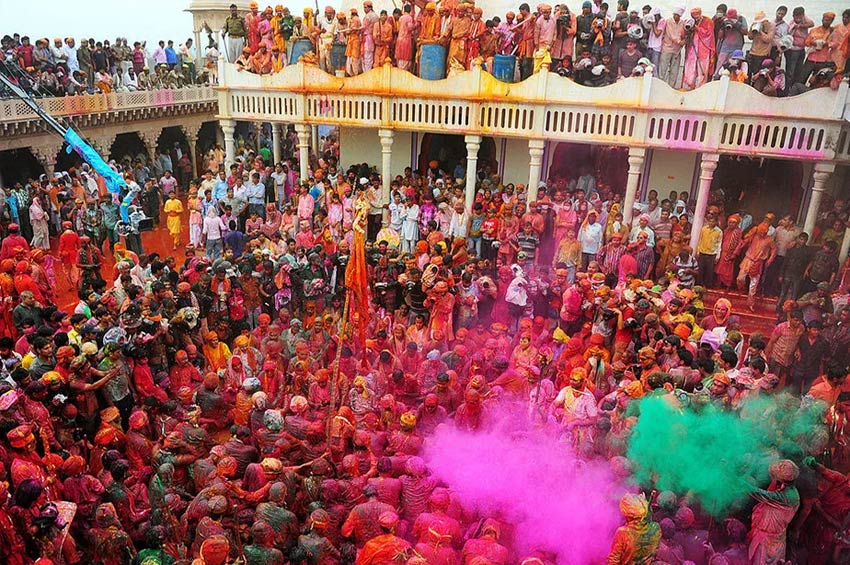
Braj Holi Festival is one of eastern Rajasthan’s most expressive celebrations of Krishna devotion, seasonal colour and performing arts. Rajasthan Tourism describes it as an annual festival held shortly before Holi and dedicated to Lord Krishna, whose stories are deeply connected with the wider Braj region.
The celebration is associated with Bharatpur, Deeg and Kaman. Its best-known feature is Raslila, a dance-drama that presents episodes from the lives of Radha, Krishna and the gopis through music, costume, movement and devotional storytelling.
Braj Holi Quick Facts
Region: Bharatpur district and the Rajasthan side of Braj
Main locations: Bharatpur, Deeg and Kaman
Festival period: Shortly before the main Holi celebration
Religious focus: Lord Krishna and the traditions of Radha-Krishna bhakti
Signature attraction: Raslila dance-drama
Typical experience: Folk performances, devotional music and colour-play
Recommended trip: Two to three days, depending on the announced programme
Useful base: Bharatpur or Deeg
Entry information: A single current fee is not consistently published for all venues. Confirm programme access and any ticketed performance locally.
Why Experience Braj Holi?
- Raslila performances: Watch devotional theatre inspired by Radha and Krishna.
- Braj culture: Experience a celebration shaped by local songs, greetings, costumes and temple traditions.
- Festival colours: Take part respectfully in community colour-play where it is officially permitted.
- Multiple heritage towns: Combine programmes in Bharatpur, Deeg and Kaman according to the official schedule.
- Folk arts: Tourism programmes may include Rajasthani music, dance and stage performances.
- Regional sightseeing: Add Keoladeo National Park, Lohagarh Fort or Deeg Palace to the trip.
Religious and Cultural Meaning
Braj Holi is not simply a public colour party. It belongs to a living devotional landscape where stories of Krishna, Radha and the gopis are remembered through song, performance, worship and seasonal ritual.
Rajasthan Tourism links the festival to the bright fortnight of the Phalgun month and notes that it takes place a few days before Holi. This timing connects the event with the spring festival season and with the wider Holi traditions of the Braj region.
Visitors should remember that temple worship and devotional performances are meaningful religious activities for local communities. Patient observation and respectful behaviour create a far better experience than treating every gathering as a staged tourist show.
Raslila: The Festival’s Signature Performance
Raslila is the central cultural image associated with Braj Holi. Performers present scenes based on Krishna’s life and his relationship with Radha and the gopis. Music, dialogue, gesture and costume work together to make the stories accessible even to visitors who do not understand every word.
Performance venues and timings differ from one festival edition to another. Check the official programme before deciding where to stay or how to divide your time between Bharatpur, Deeg and Kaman.
How to Watch Respectfully
- Reach early so you do not block aisles or disturb seated viewers.
- Keep phone flash and loud conversations switched off.
- Do not walk onto the stage or performance area for photographs.
- Ask before photographing performers backstage or children in costume.
- Follow any footwear, seating or temple-entry instructions.
Main Festival Locations
Official tourism information associates Braj Holi with several towns in Bharatpur district. The exact division of programmes can change, so use the final government schedule rather than relying on an old itinerary.
| Location | What It Offers | Planning Note |
|---|---|---|
| Bharatpur | Main city facilities, transport connections and possible cultural programmes | A convenient base for hotels, rail access and Keoladeo National Park |
| Deeg | Historic palace setting and festival events when included in the programme | Check the day and venue before travelling from Bharatpur |
| Kaman | Temple-town atmosphere and Braj devotional traditions | Expect narrower streets and greater crowding near religious sites |
| Kumher | May appear in selected district festival programmes | Do not assume an event is scheduled without checking the current announcement |
Festival Programme and Dates
Braj Holi follows the Holi calendar, so its Gregorian dates change each year. Government tourism sources describe it as taking place shortly before Holi, while individual editions may run for two or more days.
Do not plan the trip from an old poster or social media graphic. Confirm the latest dates, venue sequence and performance timings on Rajasthan Tourism or the official government event portal before booking non-refundable transport or accommodation.
| Information | Current Guidance |
|---|---|
| Festival dates | Change each year according to the Holi calendar; verify the official announcement |
| Daily timings | Depend on the programme and location; confirm before departure |
| Entry fee | No single dependable fee applies to every venue; confirm locally |
| Performance tickets | Some programmes may be open while others may use controlled seating or passes |
| Temple access | Subject to local customs, crowd controls and religious schedules |
What Visitors Can Expect
- Raslila and Krishna-themed devotional performances.
- Folk music, dance and stage programmes announced by organisers.
- Dry colour celebrations in designated community areas.
- Temple visits, bhajans and local religious customs.
- Busy streets, temporary traffic controls and large crowds.
- Local snacks, seasonal stalls and small markets around event areas.
Not every activity takes place every year or at every town. Treat the published programme as the final guide and allow extra travel time between locations.
How to Plan a Braj Holi Trip
Two or three days are useful when events are spread across different towns. Stay in Bharatpur for stronger rail access and a wider choice of hotels, or choose Deeg when the programme is centred there.
Suggested Planning Approach
- Check the official dates and town-wise schedule.
- Choose one main base instead of changing hotels every night.
- Pre-arrange a car if attending events outside Bharatpur.
- Keep one flexible half-day for delayed or rescheduled programmes.
- Add sightseeing only after allowing enough time for festival traffic.
How to Reach Bharatpur
By Train
Bharatpur Junction is the most practical rail gateway for many visitors. Rajasthan Tourism lists Bharatpur among the state’s major railway stations. Train availability and schedules should be checked directly with Indian Railways before travel.
By Road
Bharatpur is connected by road with Agra, Mathura, Delhi, Jaipur and other cities in northern India. State buses, private buses and taxis operate on regional routes, but festival traffic can increase travel time.
By Air
Visitors commonly continue by road or rail from airports serving Delhi, Jaipur or Agra, depending on flight availability. Compare the complete journey time rather than choosing an airport only by straight-line distance.
Local Transport
Auto-rickshaws and local taxis are useful within Bharatpur. For Deeg, Kaman or Kumher, a pre-booked vehicle is usually more practical, especially when returning after an evening programme.
Where to Stay
Bharatpur offers the broadest selection of budget hotels, mid-range properties, heritage stays and wildlife-oriented accommodation near Keoladeo National Park. Deeg has fewer options but may be convenient when major programmes are held there.
- Book early once official festival dates are announced.
- Confirm late check-in and parking if attending evening events.
- Ask whether the property can arrange transport to Deeg or Kaman.
- Do not assume every nature lodge is close to the festival venue.
- Keep the property phone number saved offline.
Nearby Places to Visit
| Place | Why Visit | Planning Advice |
|---|---|---|
| Keoladeo National Park | UNESCO-listed wetland and one of India’s best-known birding destinations | Early morning is usually best for birdwatching |
| Lohagarh Fort | Historic fort associated with Bharatpur’s Jat rulers | Check current museum and monument access locally |
| Deeg Palace | Palace gardens, pavilions and historic water architecture | Combine with a Deeg festival programme when practical |
| Kaman | Religious town connected with the wider Braj cultural landscape | Dress modestly and prepare for crowded temple streets |
| Mathura and Vrindavan | Major Krishna pilgrimage centres in the wider Braj region | Holi-season crowds can be extremely heavy |
Colour, Crowd and Photography Safety
- Use only skin-safe colours and never throw powder into someone’s eyes or mouth.
- Do not apply colour to strangers without consent.
- Keep phones, passports and cash inside sealed waterproof pouches.
- Wear closed, non-slip footwear suitable for wet or powder-covered streets.
- Agree on a meeting point in case your group becomes separated.
- Avoid carrying expensive camera equipment into dense colour-play areas.
- Ask before photographing worshippers, children, performers or local families.
- Follow police, organiser and temple instructions during crowd control.
Practical Visitor Tips
- Carry drinking water, tissues, sunscreen and a clean scarf.
- Wear simple clothes that can be permanently stained.
- Keep a clean change of clothing for temples and evening performances.
- Use cash carefully; digital networks can slow down in crowded areas.
- Do not rely on the last bus after a late programme.
- Respect queues, restricted areas and local worship practices.
- Recheck the programme on the morning of each event day.
Frequently Asked Questions
When is Braj Holi Festival held?
It is celebrated shortly before the main Holi festival, usually during the bright fortnight of Phalgun. Exact dates change each year, so check the official Rajasthan Tourism calendar.
Where does Braj Holi take place?
The festival is associated with Bharatpur, Deeg and Kaman. Some programmes may also involve nearby towns, depending on the official schedule.
What is special about Braj Holi?
It combines Radha-Krishna devotion, Raslila, folk performances and traditional Holi colour celebrations within the cultural landscape of Braj.
Is Raslila performed during the festival?
Yes. Rajasthan Tourism identifies Raslila as the festival’s main highlight, although performance times and venues vary.
Is there a confirmed entry fee?
A single standard fee is not consistently published for every venue. Confirm whether a particular programme, monument or seating area requires a ticket.
Can foreign tourists participate in the colours?
Visitors may join where colour-play is open to the public, but participation should always be consensual and respectful.
Is Braj Holi suitable for children?
Families can attend, but dense crowds and loud performances may be difficult for small children. Quieter daytime programmes are generally easier.
What clothes should I wear?
Choose modest, comfortable clothes that can be stained, along with closed footwear, sunglasses and a clean change of clothes.
Can I carry a camera?
Yes, but use protective covers and avoid crowded colour-play zones with expensive equipment. Always ask before taking close portraits.
How many days should I plan?
Two or three days are useful when the schedule includes events in multiple towns. Add another day for Bharatpur sightseeing or birdwatching.
Where should I stay?
Bharatpur is the most convenient base for transport and accommodation. Deeg can work well when important programmes are scheduled there.
Can Braj Holi be combined with Keoladeo National Park?
Yes. A morning birding visit can be combined with an afternoon or evening festival programme, provided travel times and the official schedule allow it.
Planning Note
Festival dates, stage locations, processions, traffic controls and entry arrangements can change. Verify the latest programme with Rajasthan Tourism or the official government event portal before making non-refundable bookings.
Explore more events in our Rajasthan fairs and festivals guide, or contact Rajasthan Tour Trip for a customised Bharatpur and Braj itinerary.