Camel Festival Bikaner 2027 – Dates, Events & Complete Travel Guide
About Camel Festival Bikaner
The Camel Festival in Bikaner is a vibrant multi-day winter celebration dedicated to the "ship of the desert." Organised by the Department of Tourism, Art and Culture, this annual festival brings the golden sands of Bikaner to life with decorated camel processions, thrilling races, traditional folk music and spectacular fire dances.
The festival traditionally falls on the second weekend of January, and 2027 dates have been circulated as 8 to 10 January 2027, marked tentative pending official confirmation from the Rajasthan Tourism department. This lines up with the 2026 edition, which ran 9–11 January 2026. Because the festival's own organisers describe next year's dates as provisional this far out, this page will be updated once a final notification is issued — always cross-check with Rajasthan Tourism or the Bikaner Tourist Reception Centre before booking non-refundable travel.
Unlike other livestock fairs in Rajasthan that focus heavily on trading, the Bikaner Camel Festival is purely a celebration of local desert culture and the historical bond between the people and their camels. From beautifully adorned animals performing complex footwork to local artisans displaying regional crafts, the festival provides an immersive and highly photogenic experience for travellers.
Camel Festival 2027 Quick Facts
Festival name: Camel Festival Bikaner
Location: Bikaner, Rajasthan
2027 dates: 8–10 January (tentative)
Usual pattern: Second weekend of January, three days
Region: Thar Desert / Jangaldesh
Main focus: Camel sports, desert culture and folk arts
Known highlights: Camel parade, dance and races, fire dance, cultural shows
Typical daily timings: Around 12:00 p.m. to 10:00 p.m.
Suggested stay: Two nights
Useful rail gateway: Bikaner Junction, about 1 km from the city centre
Nearest airport: Nal Airport, about 20 km away
Entry information: Festival events are free to attend. You pay separately only for monument tickets, camel rides and optional activities.
Camel Festival Highlights
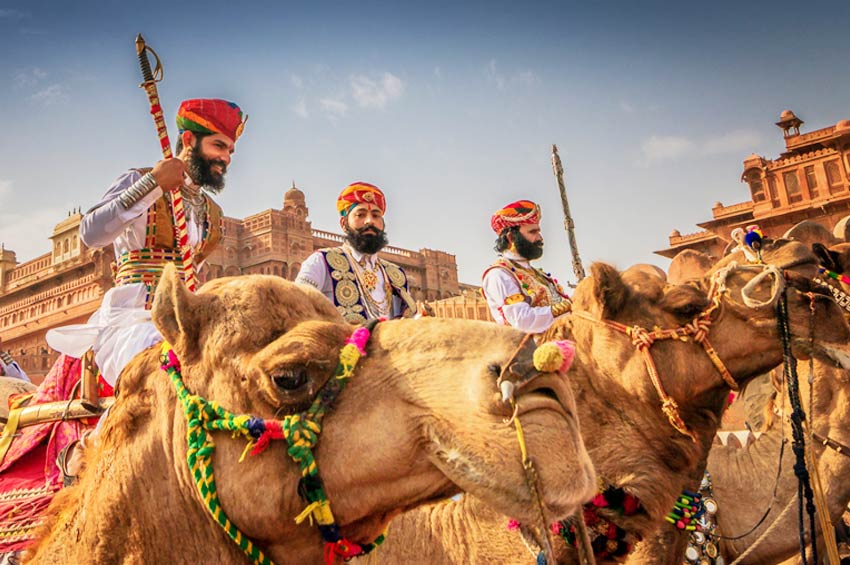
- Grand camel parade: A stunning opening procession featuring camels wearing vibrant bridles, heavy silver jewellery and colourful anklets.
- Camel dances and acrobatics: Trained camels stepping gracefully in sync with the beats of traditional dhol drums.
- Thrilling camel races: High-speed races across the sandy tracks that draw massive cheering crowds.
- Unique competitions: Contests for the best fur-cut pattern, best-decorated camel and milking competitions, alongside rural wrestling and tug-of-war events.
- Folk music and dance: Live performances of Ghoomar and Kalbeliya dances by renowned Rajasthani artists.
- Spectacular fire dance: The famous Agni dance performed by local Siddha ascetics on burning coals.
- Desert cuisine: Food stalls offering local delicacies, including unique camel milk tea and sweets.
- Bird watching and desert excursions: Past editions have paired the main events with birdwatching sessions and outings to the Raisar Sand Dunes.
Why the Festival Is Celebrated
Bikaner boasts a deep-rooted historical association with camels. Founded by Rao Bika Ji, the city sits in a rugged desert landscape where camels were essential for survival, trade and military campaigns. Bikaner is famously known for its "Ganga Risala," a celebrated camel corps that served with distinction in several historic wars, a heritage the festival still nods to today.
The Camel Festival was initiated to honour this vital desert companion and to preserve the unique customs surrounding camel rearing. Today it serves as a platform for local breeders to showcase their prized animals, while giving visitors a rare window into the living traditions, music and artistry of the Thar Desert.
Festival Dates and Programme
The 2027 edition is tentatively pencilled in for 8 to 10 January, matching the festival's usual second-weekend-of-January slot and following the pattern of the confirmed 9–11 January 2026 dates. Because specific dates and event sequencing can shift, travellers should verify the latest schedule via Rajasthan Tourism or the official camelfestival.com site before finalising hotel bookings.
| Programme Information | Planning Guidance |
|---|---|
| Opening ceremony & parade | Usually begins near Junagarh Fort in the morning and proceeds through the old city; arrive early for the best photography angles. |
| Camel competitions | Held at the main festival grounds, typically Dr Karni Singh Stadium. |
| Camel races | Usually scheduled for the afternoon when visibility on the tracks is best. |
| Cultural programmes | Evening events featuring folk music and regional dances on an open-air stage. |
| Fire dance & fireworks | Takes place late evening on the final day as a grand closing spectacle. |
| Crafts & food bazaar | Open throughout the festival days alongside the main performance areas. |
| Daily timings | Past editions have run roughly 12:00 p.m. to 10:00 p.m. across all three days. |
What to See During the Camel Festival
The Opening Parade
The festival kicks off with a majestic procession of beautifully decked camels marching against the backdrop of the red sandstone Junagarh Fort. The sight of proud owners in bright turbans leading their heavily ornamented animals is a defining image of Rajasthan.
Camel Sports and Acrobatics
The main arena hosts a variety of events demonstrating the agility and discipline of the camels. The camel dance is a crowd favourite, where the animals follow the subtle commands of their handlers to step perfectly in time with folk music. The fur-cutting competitions reveal intricate geometric and floral patterns carved directly into the camels' coats.
Cultural Evenings and Fire Dance
As the sun sets, the temperature drops and the festival shifts to a cultural stage. Enjoy soulful desert ballads, swirling skirt dances and the mesmerising fire dance, where performers dance bare-footed over glowing embers to the hypnotic rhythm of drums.
Handicrafts and Local Cuisine
The festival grounds are dotted with stalls selling regional handicrafts like leather bags, embroidered textiles and miniature paintings. Do not miss the opportunity to taste traditional Bikaneri snacks and sweet treats made from rich camel milk.
Festival Venues and Getting Around
The Camel Festival primarily uses public spaces and stadiums within Bikaner. The opening procession begins at Junagarh Fort, winding through the streets to the main venue — usually Dr Karni Singh Stadium — with additional activity at the Camel Research Farm and Raisar Sand Dunes.
During the festival, traffic is regulated and some roads may be cordoned off for the procession. It is best to use local auto-rickshaws to get close to the venue and then proceed on foot. Comfortable shoes are highly recommended, as you will be walking on sand and uneven terrain at the stadium.
About Bikaner
Located in the heart of the Thar Desert, Bikaner is celebrated for its imposing forts, grand palaces, intricately carved havelis and savoury snacks (the famous Bikaneri Bhujia). Unlike more commercialised cities, Bikaner retains a raw, relatively untouched desert charm.
The city's compact historic core makes it a joy to explore. Combining the lively energy of the Camel Festival with quiet walks through old alleyways offers a well-rounded Rajasthani cultural experience.
Places to Visit in Bikaner
| Attraction | Why Visit | Planning Note |
|---|---|---|
| Junagarh Fort | An unassailable 16th-century fort featuring stunning courtyards, balconies and painted interiors. | Allow at least 2 hours; often the starting point for the festival parade. |
| Rampuria Havelis | A cluster of magnificent aristocratic homes built with dull-red sandstone and exquisite lattice work. | Best explored on foot early morning to avoid traffic and catch the right light. |
| National Research Centre on Camel | A unique breeding and research facility dedicated entirely to camels. | Located outside the city; a great place to try camel milk ice cream. |
| Karni Mata Temple (Deshnoke) | The famous "Rat Temple" where thousands of holy rats are revered and protected. | Located about 30 km from Bikaner; an easy half-day excursion. |
| Bhandasar Jain Temple | Known for its beautiful leaf painting, frescoes and legends of being built with ghee instead of water. | Offers panoramic views of the old city from its upper floors. |
| Gajner Palace and Wildlife Sanctuary | A former royal hunting lodge turned heritage hotel beside a lake, with imperial sandgrouse birdwatching in season. | About 30 km from Bikaner; worth a half-day trip if you have time to spare. |
Weather During the Camel Festival
Early January is the coldest stretch of the Thar Desert's winter, and the festival's outdoor stadium and desert venues feel this sharply once the sun goes down.
| Time of Day | Approximate Temperature | What to Expect |
|---|---|---|
| Midday | Around 18–22°C | Pleasant, sunny; comfortable for daytime stadium events |
| Evening | Around 10–13°C | Cools fast once the sun sets; a warm layer is needed for evening cultural programmes |
| Night / early morning | Around 3–7°C, occasionally lower | Genuinely cold desert nights; a heavy jacket, gloves and a beanie are worth packing |
How to Reach Bikaner
By Train
Bikaner Junction is a major railway hub with excellent connectivity to Delhi, Jaipur, Jodhpur, Mumbai and Kolkata, and sits about a kilometre from the city centre. Travelling by train is one of the most comfortable ways to reach the city during the winter months.
By Road
The city is well connected by modern national highways. Driving or taking a bus from Jaipur (approx. 330 km) or Jodhpur (approx. 250 km) takes around 5 to 6 hours. State transport (RSRTC) and private sleeper buses run frequent overnight routes.
By Air
Bikaner's own Nal Airport is around 20 km from the city, though flight frequency can be limited; many travellers instead fly into Jodhpur or Jaipur (both roughly 250–330 km away) and complete the journey to Bikaner by train or road.
Local Transport
Auto-rickshaws and cycle-rickshaws are the lifeline of Bikaner's old city. Ride-hailing apps have limited presence, so negotiating fares with local autos before starting the ride is standard practice.
Where to Stay During the Camel Festival
Because the Camel Festival attracts domestic and international photographers and tourists, accommodation books up fast around the confirmed dates. Bikaner offers excellent options ranging from converted royal palaces and heritage havelis to mid-range modern hotels.
- Book your rooms well in advance, ideally as soon as the festival dates are officially confirmed.
- Staying near the Junagarh Fort area puts you close to both sightseeing spots and festival events.
- If staying in old-city havelis, check whether they have vehicle access, as narrow lanes may require short walks with luggage.
- Confirm whether your hotel can arrange local transport to the festival grounds, especially for late-evening cultural events.
Suggested Bikaner Festival Itinerary
| Day | Suggested Plan |
|---|---|
| Day 1 | Arrive in Bikaner. Visit Junagarh Fort in the morning. Head to the festival grounds by afternoon to witness the camel sports, races and evening cultural performances. |
| Day 2 | Take an early morning heritage walk around the Rampuria Havelis. Spend the rest of the day enjoying the festival's closing events, including the spectacular fire dance and fireworks. |
| Day 3 | Take a half-day trip to the Karni Mata Temple in Deshnoke or visit the National Research Centre on Camel before departing for your next destination. |
This is a flexible planning framework. Adjust your schedule once the final daily programme is published by local tourism authorities.
How Bikaner Compares to Pushkar's Camel Fair
Travellers researching Rajasthan's camel-themed events often ask how Bikaner's festival differs from the much larger Pushkar Camel Fair.
| Festival | Typical Timing | Character |
|---|---|---|
| Bikaner Camel Festival | Second weekend of January | A dedicated cultural and sporting celebration of camels — dances, races, competitions — with no livestock trading and far smaller crowds |
| Pushkar Camel Fair | Kartik month, around November | A major working livestock-trading market combined with Kartik Purnima pilgrimage traffic, drawing much larger domestic and international crowds |
If you want an authentic camel-trading and pilgrimage spectacle at scale, Pushkar is the bigger draw. If you'd rather see camels as trained performers in a smaller, more curated cultural setting against Bikaner's fort backdrop, this festival is the better fit.
Common First-Time Visitor Mistakes
- Booking travel around unconfirmed dates: 2027 dates are still tentative; avoid non-refundable bookings until Rajasthan Tourism confirms the final schedule.
- Underestimating the cold: Warm afternoons lull visitors into packing light; desert nights in early January are genuinely cold.
- Skipping the opening parade: It is one of the festival's most photogenic moments and easy to miss if you arrive at the stadium too late.
- Wearing the wrong footwear: Sandy, uneven stadium grounds are hard on sandals or dress shoes; closed walking shoes work much better.
- Assuming Nal Airport has frequent flights: Connectivity is limited; check current routes before relying on it, and have a Jodhpur or Jaipur backup plan.
- Not booking Bikaner accommodation early: Rooms near Junagarh Fort fill up quickly once dates are confirmed each year.
Practical Visitor Tips
- Pack for the cold: Desert temperatures drop sharply in January. Carry a heavy jacket, gloves and a beanie for morning events and evening shows.
- Sun protection: Despite the cold, the daytime sun is harsh. Sunglasses, sunscreen and a hat are essential during afternoon stadium events.
- Photography: Bring a zoom lens for camel races on the field, and ask politely before taking close-up portraits of camel handlers.
- Stay hydrated: Keep bottled water handy, as you will be outdoors for extended periods.
- Secure valuables: Crowds can get dense during the parade and evening shows; keep wallets and phones in secure front pockets.
- Save the Tourist Reception Centre number: Bikaner's TRC (0151-2226701) is a useful contact for last-minute schedule confirmations.
Frequently Asked Questions
When is Camel Festival Bikaner 2027?
Camel Festival Bikaner 2027 is tentatively scheduled for 8 to 10 January 2027, following the festival's usual second-weekend-of-January pattern. Confirm final dates closer to the event.
Where does the Camel Festival take place?
The festival is hosted in Bikaner, Rajasthan. Events are typically split between the Junagarh Fort area (for processions) and Dr Karni Singh Stadium for sports and evening performances, with additional activity at the Camel Research Farm and Raisar Sand Dunes.
Are camel rides available at the festival?
Yes, camel safaris and short rides are often available near the festival grounds or can be easily arranged by local tour operators and hotels during the event.
Is there an entry fee?
General admission to the public events, parades and open stadium seating is free. You pay separately for monument tickets, camel rides and other optional activities.
What makes Bikaner Camel Festival different from Pushkar?
While Pushkar is primarily a massive livestock-trading fair with religious significance, the Bikaner Camel Festival is a dedicated cultural event focused specifically on camel sports, breeding and desert entertainment, at a much smaller scale.
Is the festival safe for solo travellers?
Yes, Bikaner is a welcoming city and the festival is well-policed and family-friendly. Standard travel precautions regarding crowds and late-night transport apply.
How many days are enough for Bikaner?
Two to three days are sufficient to experience the Camel Festival thoroughly and explore the major historical sights of the city.
What should I buy in Bikaner?
Popular souvenirs include camel-leather items (bags, footwear), miniature paintings, Kundan jewellery and edible treats like Bikaneri Bhujia and Rasgullas.
2027 Date & Accuracy Note
Last checked: 25 September 2026. The 2027 dates of 8–10 January currently circulating from the festival's own channels are explicitly labelled tentative, consistent with how the 2026 dates (9–11 January 2026) were finalised only closer to the event. Confirm the official schedule via Rajasthan Tourism or the Bikaner Tourist Reception Centre before booking non-refundable travel or accommodation.
Important Planning Note
Festival programmes, venue locations, timings and traffic arrangements can change closer to the event dates. Verify the latest details with Rajasthan Tourism or the Bikaner Tourist Information Bureau before departure.
Browse our Rajasthan fairs and festivals or contact Rajasthan Tour Trip for a personalised Bikaner itinerary and transport planning.