Gangaur Festival Jaipur
About the Gangaur Festival
The Gangaur Festival is one of the most colourful, deeply rooted, and graceful celebrations in Rajasthan. Dedicated to Goddess Gauri (a manifestation of Parvati) and her divine union with Lord Shiva (Isar), the festival is an emotional and spiritual tribute to marital harmony, devotion, and the arrival of the spring harvest.
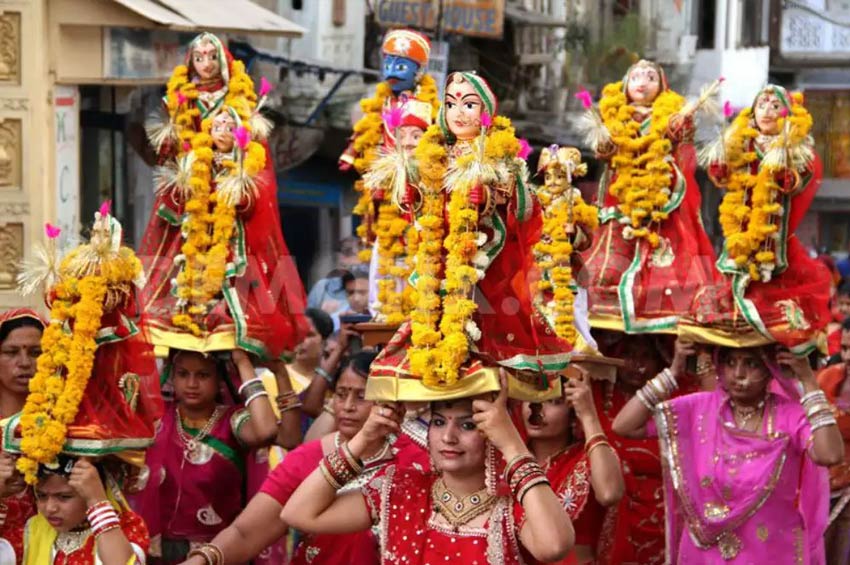
While celebrated throughout the state, the Gangaur experience in Jaipur is truly regal. The city blends domestic, intimate rituals performed by women in their courtyards with a spectacular, royal-style procession that flows through the iconic pink-hued streets. For travellers, witnessing the old city come alive with palanquins, folk music, decorated elephants, and thousands of devotees in traditional attire is an unforgettable cultural immersion.
Gangaur Festival Quick Facts
Festival name: Gangaur Festival
Location: Jaipur, Rajasthan
Published dates: Annually in March or April
Region: Dhundhar
Main focus: Women's devotion, marital fidelity, and spring
Known highlights: Royal procession from City Palace, traditional folk dances
Suggested stay: Two to three nights during the final days
Useful rail gateway: Jaipur Junction
Entry information: The street procession is free for all to watch. Tourist viewing galleries (if set up) may have a nominal fee.
Gangaur Festival Highlights
- The Royal Procession (Sawari): An elaborate parade starting from the City Palace, featuring vintage chariots, decorated horses, and royal palanquins carrying the idols of Isar and Gauri.
- Traditional Attire: Witness local women dressed in stunning, brightly coloured Lehariya and Bandhej (tie-dye) sarees, adorned with intricate Kundan jewellery.
- Sinjara Rituals: The day before the main festival where women apply beautiful henna (mehendi) designs to their hands and receive gifts of clothing and sweets from their families.
- Folk Performances: The procession is accompanied by rhythmic nagada drums, local bands, and dancers performing the traditional Kalbeliya and Ghoomar.
- The Immersion (Visarjan): The poignant conclusion of the festival where the idols are reverently immersed in the waters of Talkatora.
Why Gangaur Is Celebrated
The name "Gangaur" is derived from two words: 'Gan' representing Lord Shiva, and 'Gaur' representing Goddess Gauri (Parvati). According to legend, Gauri won Shiva's affection through deep devotion and penance. The festival commemorates their eternal bond.
For women across Rajasthan, Gangaur holds immense personal significance. Married women observe rigorous fasts and perform rituals praying for the long life, health, and prosperity of their husbands. Unmarried girls also participate with equal fervor, worshipping the Goddess for a loving and responsible life partner. It is a powerful celebration of womanhood, love, and community unity.
Festival Dates and Programme
The festival commences on the first day of the Chaitra month, exactly the day following Holi, and spans 18 days. The most visually stunning events—the public processions—take place on the final two days. Travellers should align their visit with these closing dates, usually falling in late March or April.
| Programme Information | Planning Guidance |
|---|---|
| Day 1 to 16: Daily Rituals | Women gather in courtyards daily to worship clay idols, sing traditional folk songs, and offer water and flowers. |
| Day 17: Sinjara | A day of preparation. Women apply intricate mehendi and enjoy special sweets like Ghewar. |
| Day 18: Main Procession (Gauri Tritiya) | The royal procession departs the City Palace in the late afternoon. Secure a viewing spot in Tripolia Bazar early. |
| Day 19: Final Immersion | The concluding rituals take place, culminating in the immersion of the idols at the historic Talkatora reservoir. |
What to See During Gangaur
The Royal Procession
The unquestionable highlight of Gangaur in Jaipur is the royal Sawari. It begins at the Zanani-Deodhi (the Queen's courtyard) inside the City Palace, where the erstwhile royal family offers their prayers. As the procession moves into the public streets, it becomes a moving spectacle of Rajasthan's heritage, featuring marching bands, folk artists, caparisoned elephants, and antique silver chariots.
The Artistic Idols
The idols of Isar and Gauri are masterpieces of local craftsmanship. Made of clay or wood, they are freshly painted each year and draped in exquisite, miniature traditional garments. Watching women carry these beautifully adorned idols on their heads in smaller, neighborhood processions is a deeply moving sight.
The Atmosphere at Talkatora
The procession eventually winds its way to Talkatora, a lake near the old city. The atmosphere here is electric as the sun sets. The ceremonial immersion (visarjan) of the idols signifies Gauri's return to Lord Shiva's heavenly abode, ending the festival on a note of emotional farewell.
Festival Venues and Getting Around
The primary route for the royal procession passes through the heart of the Walled City. It starts at the City Palace, moves through Tripolia Bazar, crosses Chhoti Chaupar, proceeds down Gangauri Bazar, passes the Chaugan Stadium, and concludes at Talkatora.
During the final days, these old city markets are heavily crowded, and traffic restrictions are put in place. The best way to navigate is to take an auto-rickshaw to the edge of the Walled City (like Ajmeri Gate or Chandpole) and walk to a good viewing spot. The Rajasthan Tourism Department occasionally erects a dedicated seating gallery for tourists opposite the Hindomahal in Tripolia Bazar.
About Jaipur
Jaipur, the capital of Rajasthan, is world-renowned for its terracotta-pink architecture, massive hill forts, and royal palaces. Beyond its monuments, it is a city that fiercely preserves its cultural traditions. Visiting during the Gangaur Festival provides a rare opportunity to see the city's historic avenues used exactly as they were centuries ago—as grand stages for royal and religious parades.
Places to Visit in Jaipur
| Attraction | Why Visit | Planning Note |
|---|---|---|
| City Palace | The starting point of the Gangaur procession and a stunning blend of Rajput and Mughal architecture. | Explore the museum in the morning before the festival crowds gather. |
| Hawa Mahal (Palace of Winds) | The iconic pink sandstone structure with 953 latticed windows, originally designed for royal women to watch street festivals. | Located right on the main procession route. |
| Jantar Mantar | A UNESCO World Heritage site featuring monumental 18th-century astronomical instruments. | Adjacent to the City Palace; best explored with a guide. |
| Amber Fort | A majestic hilltop fort located a short drive from the city center, known for its intricate mirror work. | Plan this for a morning excursion on a non-procession day. |
| Johari Bazar & Bapu Bazar | The city's famous markets for buying Bandhej sarees, lac bangles, and Kundan jewellery. | Excellent places to buy authentic traditional attire worn during Gangaur. |
How to Reach Jaipur
By Air
Jaipur International Airport (Sanganer) is well-connected with direct flights from Delhi, Mumbai, Bengaluru, and other major Indian cities. Taxis and app-based cabs are easily available at the airport.
By Train
Jaipur Junction is a highly connected railway hub. Fast and comfortable trains, including the Vande Bharat and Shatabdi Express, connect Jaipur to New Delhi in under 5 hours.
By Road
Located on National Highway 48, Jaipur is highly accessible by road. The drive from Delhi takes roughly 4 to 5 hours. Frequent luxury buses run between Delhi, Agra, Udaipur, and Jaipur.
Where to Stay During Gangaur
Jaipur offers accommodations for every budget, from grand palace hotels to charming heritage havelis.
- Staying in or near the Old City (or areas like Bani Park) makes it easier to reach the procession routes on foot, bypassing traffic diversions.
- Book well in advance, as the spring festival season is a popular time for domestic and international tourists.
- Heritage hotels often organize their own small cultural evenings during Gangaur, providing a more intimate experience of the festival's music and food.
Suggested Gangaur Festival Itinerary
| Day | Suggested Plan |
|---|---|
| Day 1 | Arrive in Jaipur. Spend the morning exploring Amber Fort and the Stepwell (Panna Meena ka Kund). In the evening, explore local bazaars to see the festival preparations and vibrant clothing. |
| Day 2 | Visit the City Palace and Jantar Mantar in the morning. By 4:00 PM, secure a viewing spot in Tripolia Bazar to witness the grand royal Gangaur procession. |
| Day 3 | Visit Hawa Mahal and the Albert Hall Museum. In the late afternoon, head towards Talkatora to witness the emotional idol immersion ceremony before departing. |
This framework should be adjusted based on the specific calendar dates of the procession for the year you are visiting.
Practical Visitor Tips
- Arrive Early: The streets of the Walled City get incredibly crowded. Arrive at least an hour before the procession starts to secure a good vantage point.
- Dress Comfortably: March and April afternoons in Jaipur can be quite warm. Wear light, breathable clothing, a hat, and comfortable walking shoes.
- Photography Etiquette: The festival is highly photogenic, but remember it is a deeply religious event for the participants. Always ask permission before taking close-up portraits of the women performing rituals.
- Hydration: Carry a water bottle with you, as navigating out of the crowds to find a shop can be difficult during the parade.
- Check Tourist Galleries: Inquire with your hotel or the local tourist office if special seating arrangements have been made for visitors near Tripolia Gate.
Frequently Asked Questions
When is the Gangaur Festival held?
The festival begins the day after Holi and continues for 18 days during the Hindu month of Chaitra (typically March or April). The main public processions occur on the final two days.
Where does the main Gangaur procession take place in Jaipur?
The grand royal procession starts from the Zanani-Deodhi inside the City Palace, moving through Tripolia Bazar, Chhoti Chaupar, and Gangauri Bazar, finally concluding at Talkatora.
What is the significance of the Gangaur Festival?
Gangaur is dedicated to Goddess Gauri (Parvati). Married women pray for the health and long life of their husbands, while unmarried women pray for a good life partner. It also marks the arrival of spring.
Is there an entry fee to watch the Gangaur procession?
Watching the public procession along the streets of Jaipur's Old City is completely free. However, the tourism department sometimes arranges special seated viewing galleries for tourists at a nominal cost.
How many days should I plan for the Gangaur Festival?
A two-night stay aligning with the final days of the festival is ideal to witness the grand procession and the idol immersion ceremony, while leaving time for sightseeing.
What should visitors wear?
Modest and comfortable clothing is advised. Since you will likely stand or walk in the sun to watch the procession, sunglasses, a hat, and comfortable walking shoes are essential.
Is it safe for tourists to attend the crowded procession?
Yes, it is generally safe and well-policed. However, as with any large crowd, tourists should be mindful of their belongings, keep valuables secure, and stay hydrated.
Important Planning Note
Procession timings, exact routes, and traffic diversions can occasionally change based on local administration decisions. Verify the latest details with Rajasthan Tourism or your hotel concierge upon arrival.
Browse our Rajasthan fairs and festivals or contact Rajasthan Tour Trip for a personalised Jaipur itinerary and transport planning.