Ajabgarh Rajasthan Travel Guide
About Ajabgarh Village
Tucked into a quiet valley within the ancient Aravalli hills, Ajabgarh is a peaceful village in Rajasthan's Alwar district, located just 100 kilometres northeast of Jaipur. Unlike the bustling tourist hubs of the state, Ajabgarh offers a pristine glimpse into rural North India, where daily life moves at an unhurried, rhythmic pace against a backdrop of historic ruins and rugged mountain ridges.
The settlement looks out toward the serene Jai Sagar Lake and expansive farmlands. Here, you will frequently spot farmers tending their crops, herders guiding livestock along dusty trails, and locals dressed in vibrant traditional Rajasthani attire. Beyond its rustic charm, Ajabgarh acts as the perfect strategic base for exploring a fascinating heritage circuit that includes ancient stepwells, hidden temples, and abandoned forts.
Ajabgarh Quick Facts
Location: Alwar district, Rajasthan (Approx. 100 km from Jaipur)
Known for: Rural tranquility, heritage ruins, and high-end luxury resorts
Main attraction: Ajabgarh Fort and Jai Sagar Lake
Luxury Stay: Amanbagh Resort
Nearby Landmarks: Bhangarh Fort, Neelkanth Temples, Sariska National Park
Recommended visit: 2 to 3 days for a relaxed retreat
Best accessible from: Jaipur or Delhi
Why Visit Ajabgarh?
- Off the Beaten Path: Escape the massive crowds of Jaipur and Agra to experience authentic rural Rajasthan.
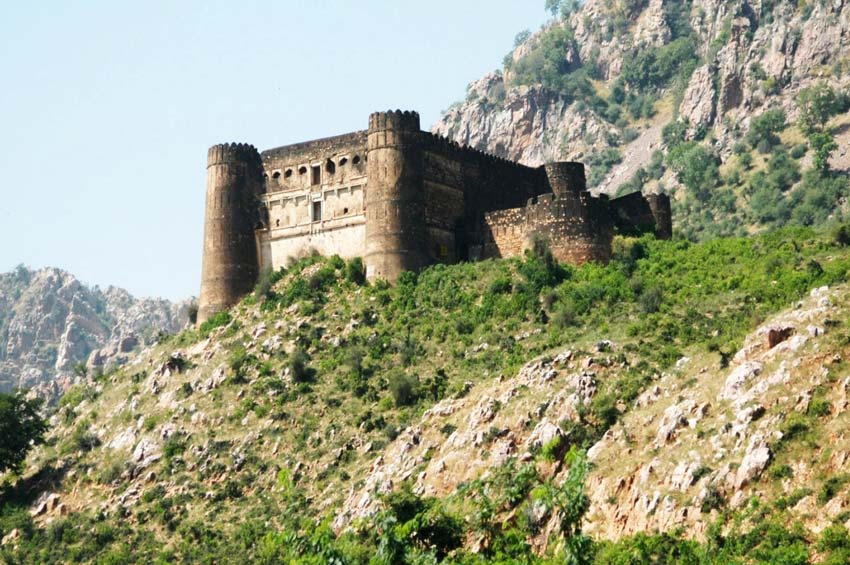
- Historical intrigue: Explore the 17th-century Ajabgarh Fort that still watches over the valley.
- Unmatched Luxury: Experience world-class hospitality at Amanbagh, a retreat built on a former royal hunting ground.
- Proximity to Legends: It is one of the closest and most comfortable bases for exploring the famous, supposedly haunted ruins of Bhangarh.
- Nature and Wildlife: Combine your heritage trip with a tiger safari at nearby Sariska National Park.
History and Royal Connections
Ajabgarh owes its name and foundation to Ajab Singh Rajawat, whose lineage is deeply intertwined with the rulers of the neighboring kingdom of Bhangarh. Established during the medieval era, the landscape here is still dotted with the physical echoes of that legacy—crumbling stone walls, hidden shrines, and intricate stepwells scattered among the rocky outcrops.
A short hike above the village reveals the 17th-century fort and temple complex. Despite the passage of centuries, the site features remarkably well-preserved carved pillars, open courtyards, and masonry that offers sweeping panoramic views of the valley, especially stunning during sunrise and sunset.
Amanbagh: A Luxury Hideaway in Ajabgarh
On the edge of the village, the landscape transforms from rustic farmland to unparalleled opulence. Amanbagh has reimagined an old royal hunting ground into one of Rajasthan’s most refined and exclusive retreats. Designed by renowned architect Ed Tuttle, the property is a masterclass in Mughal and Rajput design, featuring domed cupolas, sweeping arches, and shaded walkways built from local rose-colored sandstone.

The resort is structured as a series of grand pavilions and suites surrounding lush, manicured gardens and a stunning central pool. Inside, the spaces are incredibly generous and calm—purpose-built for travelers seeking serenity over the chaotic energy of city hotels.
| Amanbagh Highlights | Experience Details |
|---|---|
| Wellness & Spa | Comprehensive spa therapies, Ayurvedic treatments, and dedicated spaces for yoga and meditation. |
| Dining | Focus on fresh, locally sourced ingredients. Enjoy authentic Rajasthani thalis alongside international cuisine in a regal setting. |
| Curated Excursions | Private guided walks through the village, trips to the Bhangarh ruins, and customized Aravalli nature drives. |
For more details on booking, exclusive experiences, and current packages, visit the official website: Amanbagh Official Website.
Places to Explore Around Ajabgarh
- Bhangarh Fort: Just a short drive away, this 17th-century walled town was inexplicably abandoned shortly after its construction. It is globally famous for its dramatic, sprawling ruins and local ghost stories.
- Neelkanth Mahadev: Located deep within the hills and forests, this area features dozens of ancient, intricately carved Hindu and Jain temples dating back to the 6th-9th centuries.
- Sariska National Park: A premier wildlife destination offering guided jeep safaris. It provides an excellent chance to spot Bengal tigers, leopards, sambar deer, and a rich variety of birdlife.
- Jai Sagar Lake: A serene local water body perfect for quiet evening walks and birdwatching.
Best Time to Visit
October to March (Winter)
This is the prime season to visit Ajabgarh. The weather is cool, dry, and incredibly pleasant, making it perfect for hiking up to the fort, exploring village trails, or enjoying outdoor dining at Amanbagh. Daytime temperatures are comfortable, though evenings require warm layers.
July to September (Monsoon)
The monsoon transforms the stark, dry Aravalli hills into a lush, vibrant green. While heavy rains can occasionally disrupt travel or safari plans in nearby Sariska, it is a phenomenally beautiful time for nature lovers and photographers.
April to June (Summer)
Temperatures soar during these months, often making daytime exploration exhausting. However, this is when luxury properties like Amanbagh become quiet, exclusive sanctuaries perfect for spa retreats and lounging by the pool.
How to Reach Ajabgarh
Ajabgarh is well-connected by road, making it an easy addition to any Golden Triangle or Rajasthan itinerary.
- By Air: The nearest major airport is Jaipur International Airport (approx. 110 km). Indira Gandhi International Airport in New Delhi is roughly 220 km away.
- By Train: The closest practical railway stations are in Alwar (approx. 80 km) and Dausa (approx. 45 km).
- By Road: Driving is the best way to reach Ajabgarh. It is about a 2 to 2.5-hour drive from Jaipur and a 4 to 5-hour drive from Delhi. Private taxis or pre-arranged transfers via your hotel are highly recommended.
Practical Travel Tips
- Book Stays in Advance: Luxury accommodations like Amanbagh have limited inventory and fill up quickly during the peak winter months.
- Respect Village Privacy: When walking through Ajabgarh, remember it is a working village. Ask for permission before taking close-up photographs of locals.
- Footwear: Pack sturdy, comfortable walking shoes. The paths to the local fort and nearby ruins like Bhangarh are rocky and uneven.
- Combine Itineraries: Ajabgarh serves as the perfect 2-night "slow down" destination at the end of a busy Jaipur-Agra tour.
- Need Help Planning? Contact us for custom itineraries: enquiry@rajasthantourtrip.com or call +91-7976900625.
Frequently Asked Questions
Where is Ajabgarh located?
Ajabgarh is a small, historic village in the Alwar district of Rajasthan. It is situated in the Aravalli hills, approximately 100 kilometres northeast of the state capital, Jaipur.
What is the best place to stay in Ajabgarh?
The most renowned accommodation in the area is Amanbagh. It is an ultra-luxury resort featuring stunning Mughal-inspired architecture, spacious suites, private pools, and exceptional wellness facilities.
Is Bhangarh Fort close to Ajabgarh?
Yes, the famous ruins of Bhangarh are only about a 15 to 20-minute drive away. Staying in Ajabgarh allows you to visit Bhangarh early in the morning before the day-tripper crowds arrive.
Is Ajabgarh safe for tourists?
Absolutely. It is a quiet, rural farming community. The resorts in the area provide excellent security, and guided village walks are completely safe and welcoming.
Can I see tigers near Ajabgarh?
Yes, Sariska National Park is within a manageable driving distance from Ajabgarh. You can arrange morning or afternoon jeep safaris to spot Bengal tigers, leopards, and other wildlife.