Taj Mahal Sunrise vs Sunset 2026: Which Is the Best Time to Visit?
Quick Answer: Sunrise or Sunset?
If this is your first visit to the Taj Mahal, sunrise is usually the better choice. The light is gentle, temperatures are often cooler, and arriving before opening gives you the best chance of seeing the gardens before the busiest part of the day.
Sunset is better for warm color, slower travel days and romantic river views. However, there is one important detail many guides miss: the Taj Mahal itself closes before full sunset under the current official schedule. If your main goal is to watch the monument change color as the sun goes down, Mehtab Bagh across the Yamuna is the stronger sunset viewpoint.
Visitor information checked: 22 August 2026
Taj Mahal Sunrise vs Sunset at a Glance
- Best overall for first-time visitors: Sunrise
- Best chance of lighter crowds: Sunrise, especially if you queue before opening
- Best for cooler weather: Sunrise in most warm months
- Best warm evening color: Late afternoon / Mehtab Bagh sunset
- Best for couples: Sunrise inside the complex; sunset from Mehtab Bagh for a second viewpoint
- Best in winter fog: Often later morning or afternoon rather than very early sunrise
- Friday: Taj Mahal is closed to regular sightseeing
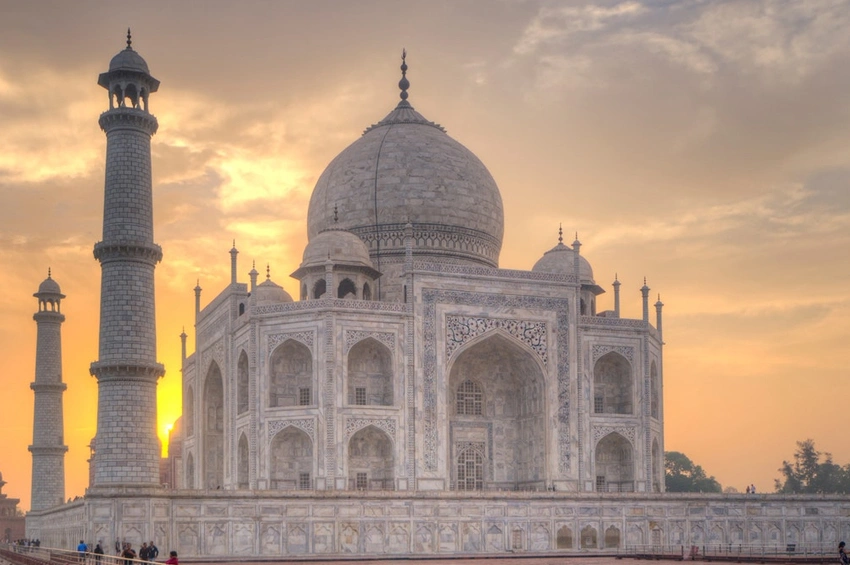
The Taj Mahal does not look the same throughout the day. Early morning can make the marble appear cool white, pearl-grey or softly pink. Later in the day the marble becomes brighter under direct light, while the final hours can introduce warmer cream and golden tones. That change is one reason travellers search for the best time to visit the Taj Mahal rather than simply asking when it opens.
The right choice depends on what you care about most: lower crowds, photography, temperature, sleep, winter fog, a same-day trip from Delhi, or a romantic evening. This guide compares sunrise and sunset point by point so you can choose the time that fits your trip instead of following one generic answer.
What This Sunrise vs Sunset Guide Covers
- Sunrise vs Sunset Comparison Table
- Current Taj Mahal Timings
- Why Visit at Sunrise?
- Why Visit Near Sunset?
- Best Time for Photography
- Which Time Has Fewer Crowds?
- Best Time by Season
- Best Time for Couples
- Best Time for Delhi Day Trips
- Mehtab Bagh Sunset View
- Common Planning Mistakes
- Frequently Asked Questions
Taj Mahal Sunrise vs Sunset: Quick Comparison
| Factor | Sunrise | Late Afternoon / Sunset |
|---|---|---|
| Crowds | Usually best chance of lighter crowds if you arrive before opening | Can remain busy, especially in peak season |
| Temperature | Cooler and more comfortable in hot months | Improves toward evening after a hot day |
| Light | Soft, delicate, often pink or cool-toned | Warm, golden and more dramatic |
| Inside-complex photos | Excellent | Good in late afternoon, but closing time matters |
| Full sunset view | Not applicable | Better from Mehtab Bagh than relying on staying inside |
| Winter risk | Fog/haze can reduce visibility | Often clearer after daytime warming |
| Best for first visit | Yes | Good if early mornings do not suit you |
| Best for couples | Quiet, soft-light portraits | Romantic warm light and river viewpoint |
Taj Mahal Opening and Closing Time in 2026
Current Agra district visitor information lists the Taj Mahal as open from 30 minutes before sunrise until 30 minutes before sunset. Regular tourist sightseeing is closed on Fridays, when access is reserved for prayers at the mosque.
Why Sunrise Is Often the Best Time to Visit the Taj Mahal
Sunrise is popular for a reason. The experience begins before the city becomes fully active. The air is usually cooler, traffic can be lighter, and the gardens feel calmer than they do once large day-tour groups start arriving.
1. Softer Light on the Marble
The Taj Mahal's white marble reacts beautifully to changing sky color. Near sunrise, the monument can move from grey-blue to pale pink and then bright white as the sun rises. The effect varies with haze, season and cloud cover, but the gradual change is often more subtle than harsh midday light.
2. Better Chance of Cleaner Photos
Sunrise does not mean an empty Taj Mahal. It is one of the monument's most famous visiting times. The advantage is that the first visitors are entering together rather than arriving after several hours of accumulated crowds. If photography matters, being near the front of the opening queue is more important than simply saying “I went at sunrise.”
3. Cooler Walking Conditions
The complex is large. You walk from transport drop-off to security, through the main gate, gardens and marble platform. In warmer months, doing that early can be significantly more comfortable than walking under stronger late-morning or afternoon sun.
For a true sunrise visit, reach the gate before opening rather than reaching your hotel lobby at sunrise. You need time for transport, the approach to the gate, ticket checks and security.
4. Easier Day Planning
A sunrise visit leaves the rest of your day open for Agra Fort, Itimad-ud-Daulah, local food and onward travel. It works particularly well if you are staying overnight in Agra.
Disadvantages of Visiting at Sunrise
- You have to wake very early, especially if your hotel is far from the gate.
- Winter mornings can be cold and foggy.
- Sunrise is popular with photographers, international travellers and tour groups, so it is not guaranteed to be quiet.
- In dense fog, the Taj Mahal can appear faint or partially hidden from the main gate.
- If you arrive late, you lose much of the crowd advantage.
Why Visit the Taj Mahal in Late Afternoon?
Late afternoon offers a different mood. The light becomes warmer, the marble can take on cream or golden tones, and the gardens feel less stark than under midday sun. For travellers who dislike very early starts, this can be the most enjoyable compromise.
1. Warm, Golden Light
As the sun lowers, the monument and surrounding red sandstone can gain warmer tones. This is especially attractive for couple portraits and wider garden photographs.
2. Better Chance of Clear Views in Foggy Months
Agra's winter mornings can suffer from fog or haze. There is no guarantee that afternoons will always be crystal clear, but visibility often improves after the day warms. If the forecast shows dense morning fog, a later visit can be the safer choice.
3. Easier for Same-Day Travellers
If you are arriving from another city in the morning, a late-afternoon Taj Mahal slot gives you more buffer for road or train delays. However, do not cut the timing too close because security queues and closing rules still apply.
Disadvantages of a Late-Afternoon Visit
- Crowds may still be heavy.
- You have less recovery time if traffic or ticketing delays you.
- The monument's closing time limits how late you can remain inside.
- Summer afternoons can stay very hot until quite late.
- You may feel rushed if you enter too close to closing.
Which One Should You Choose?
Choose Sunrise If...
- This is your first Taj Mahal visit
- You want cooler weather
- Photography is a major priority
- You can reach the gate before opening
- You want the rest of the day free
Choose Late Afternoon If...
- You dislike very early starts
- Winter fog is heavy
- You prefer warmer light
- You arrive in Agra later in the day
- You can continue to a sunset viewpoint
Sunrise vs Sunset for Taj Mahal Photography
Photographers often ask which light is “better,” but the answer depends on the photograph. Sunrise produces softer tonal transitions and cooler colors. Late afternoon produces stronger directional light and warmer tones. Both can work beautifully.
| Photo Type | Better Time | Reason |
|---|---|---|
| Main reflecting-pool symmetry | Sunrise | Better chance of fewer people early |
| Soft romantic portraits | Sunrise | Gentler light and calmer atmosphere |
| Warm couple photographs | Late afternoon | Golden tones and warmer skin light |
| Strong red gateway contrast | Morning or late afternoon | Avoids flatter midday look |
| Taj Mahal across Yamuna | Sunset | Mehtab Bagh gives a broad river-facing view |
| Winter clear-view priority | Later morning/afternoon | Fog may improve after sunrise |
If outfits matter for your photographs, read our Taj Mahal dress code and outfit guide for colors, footwear, seasonal clothing and couple-photo suggestions.
Which Is Less Crowded: Sunrise or Sunset?
Sunrise usually gives you the better chance of lower crowds, but only if you arrive early enough. By mid-morning, the advantage can disappear. Late afternoon may have fewer visitors than peak midday on some dates, but it can also attract travellers trying to catch warm light before closing.
How to Reduce Crowds at Sunrise
- Stay near your preferred gate the night before.
- Buy or prepare your ticket in advance where possible.
- Carry only permitted essentials so security is quicker.
- Reach before the published opening time.
- Move efficiently through the entrance before stopping for your first photographs.
How to Reduce Crowds in the Afternoon
- Avoid entering at the same time as large coach groups if possible.
- Allow enough time before closing so you are not trapped in the final rush.
- Visit other Agra monuments first, then enter the Taj with a realistic buffer.
Best Taj Mahal Time by Season
October to November
This is one of the strongest periods for sunrise. Mornings are generally more comfortable than summer and heavy winter fog is less persistent than in the coldest months. Both sunrise and late afternoon are attractive.
December to January
Sunrise can be atmospheric but unpredictable because of fog and haze. If visibility is your biggest concern, do not automatically assume the earliest possible time is best. Check conditions and consider a later visit when fog is dense.
February to March
Both sunrise and late afternoon work well. Temperatures are generally easier to manage than peak summer, making this a flexible period for first-time visitors.
April to June
Sunrise has a major comfort advantage. The heat can become intense later in the day, so an early visit reduces exposure to the strongest sun.
July to September
Cloud, humidity and rain can change the light quickly. Sunrise may be cooler, while dramatic clouds can make late-afternoon photography interesting. Use footwear with grip and keep plans flexible.
Sunrise or Sunset for Couples?
For couples who want photographs inside the Taj Mahal complex, sunrise is usually easier. The softer light is flattering, the temperature is more comfortable for formal or traditional outfits, and early arrival offers a better chance of cleaner backgrounds.
For a romantic evening, combine an earlier Taj Mahal visit with Mehtab Bagh near sunset. This gives you two completely different perspectives: the classic garden approach inside the complex and a river-facing silhouette from across the Yamuna.
Sunrise or Sunset for Families and Senior Travellers?
Comfort and pace matter more than photography. In hot months, sunrise is usually easier because of temperature. In winter, very early starts can be uncomfortable for children and seniors, especially during fog. A later morning visit may be the better family decision even if it is busier.
Sunrise vs Sunset for a Taj Mahal Day Trip from Delhi
A true sunrise visit from Delhi generally means leaving extremely early. It is possible by private car, but many travellers find it more comfortable to stay in Agra the night before. If you want to travel from Delhi and return the same day without a pre-dawn departure, a morning train or road journey followed by a late-morning or afternoon Taj Mahal visit can be more realistic.
Travellers who want transport arranged can compare our Taj Mahal day trip from Delhi. If sunrise is the priority, plan the departure around the actual seasonal sunrise time rather than using one fixed year-round pickup.
Sunrise vs Sunset for a Taj Mahal Day Trip from Jaipur
Jaipur is farther from Agra than most travellers expect for a sunrise visit. Reaching the Taj Mahal before opening generally requires a very early departure or an overnight stay in Agra. For a same-day Jaipur trip, a later Taj Mahal visit is usually more practical.
See our Taj Mahal day trip from Jaipur if you want to compare route and timing.
Mehtab Bagh: The Better Taj Mahal Sunset View?
Mehtab Bagh sits across the Yamuna from the Taj Mahal. Instead of looking toward the monument from the formal entrance gardens, you see the mausoleum across the river. This wider perspective is especially attractive in late-afternoon and sunset light.
Current Agra district visitor information lists Mehtab Bagh as open from sunrise to sunset and specifically highlights the late-afternoon period for photography. Because it is a separate attraction, you need to allow travel time from the Taj Mahal side of the river.
Visit the Taj Mahal at sunrise, return to your hotel for breakfast, explore Agra Fort during the day, then finish at Mehtab Bagh in late afternoon. This gives you both the classic front view and the river-side sunset perspective without trying to force both experiences into one Taj Mahal entry.
What About Taj Mahal Night Viewing?
Night viewing is a separate experience and should not be confused with an ordinary sunset visit. Current Agra district information lists limited night viewing around the full moon and the two nights before and after, subject to exclusions including Fridays and the month of Ramzan. Separate ASI arrangements apply.
If you are planning a trip specifically around full-moon night viewing, confirm the current date, ticket process and eligibility before booking hotels or transport.
Best Gate for Sunrise
There is no universal “best” gate for every traveller. The right gate is the one that minimizes your pre-opening travel time. Visitors staying around Taj East Gate Road and Shilpgram often find the East Gate convenient. Travellers staying toward central or western Agra may prefer the West Gate.
Remember that petrol and diesel vehicles are restricted within 500 metres of the Taj Mahal, so your driver cannot simply drop you at the monument door. Current Agra visitor information notes battery buses and paid golf carts from designated areas.
How Early Should You Arrive for Sunrise?
A practical target is to reach the gate before opening rather than at the moment the sun rises. Exact clock times change with the season, so avoid articles that give one fixed “sunrise opening time” for the whole year.
- Check the next day's sunrise time.
- Confirm the monument opening based on the official sunrise-linked rule.
- Add hotel-to-gate travel time.
- Add time for the vehicle-restricted zone or transfer.
- Add a security buffer.
- Carry only essential permitted items.
How Late Should You Enter for a Sunset Visit?
Do not aim for the last possible moment. You need enough time to clear security, walk through the gardens, enjoy the monument and move toward the exit before closing. A rushed 20-minute visit is not a good trade just to say you went “at sunset.”
Taj Mahal Sunrise & Sunset Mistakes to Avoid
- Arriving at sunrise instead of before opening.
- Expecting an empty monument. Sunrise is famous and popular.
- Assuming sunset means you can remain inside after the sun goes down.
- Ignoring winter fog. Very early is not always visually best in December or January.
- Planning a regular Friday visit. The Taj Mahal is closed to normal sightseeing.
- Carrying large bags or restricted items. Security delays can ruin your light window.
- Using a fixed sunrise time from an old blog. Sunrise changes throughout the year.
- Forgetting transport restrictions near the monument.
- Trying to visit Agra Fort, Taj Mahal and Mehtab Bagh with no travel buffer.
Suggested Sunrise Itinerary in Agra
- Before sunrise: Reach your Taj Mahal gate and clear security.
- Opening: Enter and walk toward the main garden axis.
- First hour: Photograph the reflecting pool, gateway and changing marble light.
- Next 60–90 minutes: Explore the platform and main mausoleum area.
- Breakfast: Return to the hotel or a nearby cafe.
- Late morning: Visit Agra Fort.
- Afternoon: Rest or visit Itimad-ud-Daulah.
- Late afternoon: Mehtab Bagh for a second Taj Mahal view.
Suggested Late-Afternoon Taj Mahal Plan
- Visit Agra Fort in the morning.
- Have lunch and avoid the hottest midday period when possible.
- Reach the Taj Mahal with a generous buffer before closing.
- Spend the best late-afternoon light inside the gardens and marble platform.
- Exit according to staff instructions.
- If timing permits, use a separate evening viewpoint rather than expecting post-sunset access inside.
Frequently Asked Questions About Taj Mahal Sunrise vs Sunset
Is sunrise or sunset better at the Taj Mahal?
For most first-time visitors, sunrise is the stronger all-round choice because it combines cooler weather, soft light and a better chance of lighter crowds. Sunset is excellent for warm color, especially from Mehtab Bagh.
What time does the Taj Mahal open?
Current Agra district information states that the Taj Mahal opens 30 minutes before sunrise. Because sunrise changes through the year, the exact clock time changes by season.
What time does the Taj Mahal close?
The current official schedule states that the Taj Mahal closes 30 minutes before sunset. Follow the current ticket and on-site instructions because operational timings can be revised.
Can I see the actual sunset from inside the Taj Mahal?
You can enjoy late-afternoon light inside, but the official closing rule means you should not plan on remaining inside through full sunset. Mehtab Bagh is a better-known location for watching the Taj Mahal during the evening transition.
Is Taj Mahal sunrise crowded?
Yes, it can be. Sunrise is one of the most popular visiting times. Arriving before opening gives you the best chance of staying ahead of later groups.
Is sunset less crowded?
Not necessarily. Late afternoon can also be busy, particularly in peak travel months. Crowd levels depend on season, weekday, holidays and group arrivals.
Which is better for photography?
Sunrise is better for soft light and cleaner early backgrounds. Late afternoon is better for warmer color. For a river-facing sunset image, Mehtab Bagh is especially useful.
Which is better for couples?
Sunrise works very well for portraits inside the complex. Couples with more time can add Mehtab Bagh later for a contrasting sunset view.
Is sunrise worth it in December?
It can be beautiful, but winter fog is a real possibility. If visibility is more important than early light, check conditions and consider visiting later in the day.
Is sunrise better in summer?
Yes for comfort. Early morning avoids much of the stronger daytime heat and makes walking through the complex easier.
Can I visit the Taj Mahal on Friday at sunrise?
No for normal sightseeing. Friday is the monument's regular weekly closure for tourists, with access reserved for prayers at the mosque.
Is Mehtab Bagh free?
No. Current Agra district information lists separate admission for Mehtab Bagh. Ticket rates can change, so check the current official page or counter.
Can I do Taj Mahal sunrise and Mehtab Bagh sunset on the same day?
Yes, and it is one of the best ways to experience both lighting conditions without rushing. Use the middle of the day for Agra Fort, lunch and rest.
What should I wear for sunrise?
Use layers in winter and breathable clothing in warm months. Comfortable footwear is essential. For outfit colors and photo advice, see our Taj Mahal dress code guide.
How much time should I allow inside?
Most visitors benefit from around two to three hours rather than rushing through in under an hour. Photography, security queues and main-mausoleum access can increase the total time.
Related Taj Mahal & Agra Guides
- Taj Mahal Dress Code Guide
- What Is Inside the Taj Mahal?
- Taj Mahal Day Trip from Delhi
- Taj Mahal Day Trip from Jaipur
- Golden Triangle Tour Packages
Final Verdict: Sunrise Wins for Most First-Time Visitors
If you only have one Taj Mahal visit, choose sunrise when your schedule and weather allow. You gain softer light, cooler temperatures and the best chance of seeing the gardens before the main daytime rush. It is the more complete experience for first-time travellers, photographers and couples who want classic front-view photographs.
Choose late afternoon when early starts are impractical, when winter fog makes sunrise uncertain, or when you prefer warmer light. For the strongest sunset experience, pair your Taj Mahal entry with Mehtab Bagh rather than assuming you can remain inside the monument complex through sunset.