City Palace Jaipur Complete Guide 2026: Indian & Foreign Tourist Tickets, Timings, Chandra Mahal Royal Tour & Museum
City Palace Jaipur: Latest Official Ticket Information
- Indian City Palace Museum Adult: ₹400.
- Indian Youth: ₹200 — student or child below 12.
- Indian Senior Citizen / Defence: ₹200.
- Indian Composite Adult: ₹500; includes City Palace courtyards + galleries + Jaigarh + Royal Cenotaphs.
- Indian Chandra Mahal Royal Tour: ₹4,000 Adult / ₹2,000 Youth on the currently fetched official Indian tab.
- International Resident Chandra Mahal Royal Tour: ₹5,000 Adult / ₹3,000 Youth according to the current International Resident information supplied from the official City Palace page.
- Museum Tour: 9:30 AM–6:30 PM; last tickets 6:00 PM.
- Royal Tour: 9:30 AM–6:30 PM; Royal Tour tickets are sold only at the ticket counter.
- Museum at Night: temporarily closed.
- Mubarak Mahal Textile Gallery: temporarily closed for restoration from 27 March 2026.
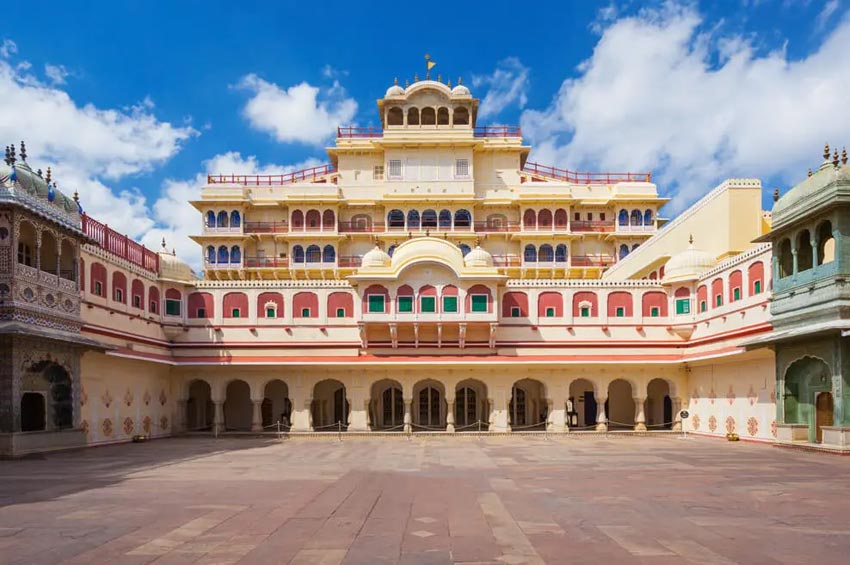
City Palace is the place where Jaipur stops feeling like a collection of old monuments and starts feeling like a royal city that never completely became a museum.
That difference matters. Amber is a former hill capital. Jantar Mantar is an observatory. Hawa Mahal was designed around processions and privacy. City Palace is all of those histories brought back into the centre of a living royal complex. Rajasthan Tourism's current page, updated in July 2026, still describes part of the palace as the home of Jaipur's former ruling royal family.
The confusing part for visitors is the ticket. There is no single “City Palace ticket” that always includes everything. A standard museum visit, special palace access and Chandra Mahal/private-room experiences are not the same product. That is why one traveller says they paid a few hundred rupees and another says they spent several thousand—both may be describing different experiences.
This guide explains what actually matters before you arrive: which areas are public, what premium access means, what to see first, how long to allow, when crowds peak, how City Palace fits with Jantar Mantar and Hawa Mahal, and how to avoid buying the wrong ticket.
City Palace Jaipur Guide Contents
City Palace Jaipur Ticket Price 2026 — Indian & International Visitors
City Palace Jaipur is independently managed by the Maharaja Sawai Man Singh II Museum. It does not use Rajasthan Government OBMS monument pricing. The palace's own official visitor page provides separate selectors for Indian National/Resident and International Resident.
Indian National / Resident — Official Current Rates
| Ticket | Adult | Youth Concession | Adult Concession | Includes |
|---|---|---|---|---|
| City Palace Museum | ₹400 | ₹200 | ₹200 | City Palace Courtyards + Galleries |
| Composite | ₹500 | ₹300 | ₹300 | City Palace Courtyards + Galleries + Jaigarh + Royal Cenotaphs |
| Museum at Night | ₹510 | ₹260 | ₹210 | Courtyards + Galleries + Light & Sound Show; currently temporarily closed |
| Chandra Mahal Royal Tour | ₹4,000 | ₹2,000 | — | Courtyards + Galleries + Sri Niwas + Chhavi Niwas + Shobha Niwas + Pritam Niwas + Personal Guide + Refreshments |
| Jaipur Centre for Art | ₹100 | ₹100 | — | Rotating contemporary-art exhibitions and programmes |
Youth Concession: student or child below 12. Adult Concession: senior citizen or Defence. The official website also says persons with disabilities can receive a concession with necessary identification/documentation; speak to the ticket desk.
International Resident / Foreign Tourist — Official Current Position
| Ticket | International Adult | International Youth | Status |
|---|---|---|---|
| City Palace Museum | Check live official International Resident tab | Check live official tab | Separate foreign/international category exists |
| Composite | Check live official International Resident tab | Check live official tab | Includes City Palace + Jaigarh + Royal Cenotaphs when selected under that product |
| Museum at Night | Check live official International Resident tab | Check live official tab | Currently temporarily closed |
| Chandra Mahal Royal Tour | ₹5,000 | ₹3,000 | International Resident rates supplied from current official page |
| Jaipur Centre for Art | Check live official International Resident tab | Check live official tab | Separate selector available |
Chandra Mahal Royal Tour — What ₹5,000 International / ₹4,000 Indian Gets You
The Royal Tour is more than a standard museum ticket. It includes:
- City Palace Courtyards;
- Galleries;
- Sri Niwas;
- Chhavi Niwas;
- Shobha Niwas;
- Pritam Niwas;
- Personal Guide;
- Refreshments.
The official website states that Royal Tour tickets are available only at the ticket counter. International Adult is ₹5,000 and International Youth ₹3,000 according to the current International Resident information supplied from the official page.
City Palace Composite Ticket — Important Difference
The City Palace Composite is its own palace-managed product. For Indian visitors it is currently ₹500 Adult / ₹300 concession and includes City Palace Courtyards, Galleries, Jaigarh and Royal Cenotaphs.
This is not the Rajasthan Government Jaipur Composite Ticket used for Amber, Hawa Mahal, Jantar Mantar, Nahargarh, Albert Hall and other state-managed monuments.
Museum at Night
The official page displays a Museum at Night product and timing, but clearly states that Museum at Night is temporarily closed. Do not plan an evening palace visit from an older blog merely because it lists a night ticket.
Guides
Guides are available for hire at an additional fee. The official City Palace visitor page asks visitors to speak to the ticketing desk for current guide charges.
City Palace Jaipur Timings 2026 — Official
| Experience | Official Timing | Important Note |
|---|---|---|
| City Palace Museum Tour | 9:30 AM–6:30 PM | Last tickets sold by 6:00 PM |
| Chandra Mahal Royal Tour | 9:30 AM–6:30 PM | Royal Tour ticket purchased at ticket counter |
| Museum at Night | 7:00 PM–7:30 PM listed | Currently temporarily closed |
The museum is closed on Dhulandi, the second day of Holi. For a normal daytime visit, arriving around opening remains the best choice if you want quieter courtyards and more comfortable photography.
Important 2026 Restoration Update
The official City Palace visitor page states that the Textile Gallery in Mubarak Mahal is temporarily closed from 27 March 2026 for restoration. This is important because many older Jaipur guides still recommend entering Mubarak Mahal specifically to see the textile collection without mentioning the closure.
City Palace History: The Version That Helps You Understand the Place
Rajasthan Tourism credits Maharaja Sawai Jai Singh II, founder of Jaipur, with conceiving and building most of the City Palace complex after the new city was founded in 1727. Later rulers expanded it.
The complex reflects both Rajput and Mughal architectural traditions. That mixture appears in the planning, courtyards, gateways, decorative surfaces and the way ceremonial spaces sit beside more intimate residential areas.
Unlike a fort abandoned by its court, City Palace retained a living royal connection. A private section continues to serve the Jaipur royal family, while museum areas preserve textiles, arms, paintings, photographs and objects associated with the Kachwaha rulers.
Mubarak Mahal: Start Here, But Don't Rush Through It
Mubarak Mahal is usually the first building that catches the eye because its light stone facade feels unusually delicate against Jaipur's stronger pink and ochre palette.
Rajasthan Tourism identifies it as the former Palace of Reception. Today it forms part of the Maharaja Sawai Man Singh II Museum and is especially known for royal textiles.
What to Look For
- royal costumes;
- Pashmina shawls;
- Benaras silk;
- Sanganeri prints;
- embroidered ceremonial clothing;
- the scale and weight of garments worn by Jaipur rulers.
This gallery is easy to underestimate because textiles do not look as dramatic as a mirror palace in photographs. In person, they tell you far more about court life, ceremony and status than another empty room.
Pritam Niwas Chowk: The Four Famous Gates
Pritam Niwas Chowk is the courtyard most visitors recognise from photographs. Its four richly painted gates are associated with seasons and deities.
The Four Gates
- Peacock Gate: linked with autumn and Lord Vishnu.
- Lotus Gate: associated with summer and Shiva-Parvati.
- Green / Leheriya Gate: connected with spring.
- Rose Gate: associated with winter and the goddess tradition.
The exact symbolic descriptions vary slightly between guidebooks, but the larger point is consistent: these are not four random Instagram backdrops. Their colours, motifs and deities form a seasonal visual programme.
Best Photography Strategy
Arrive early. Midday is when everyone wants the same symmetrical portrait directly in front of each gate. A wider frame showing the courtyard context often looks better than another close-up selfie.
Sarvato Bhadra & the Giant Silver Urns
Sarvato Bhadra is one of the ceremonial spaces that makes City Palace feel like a royal court rather than a collection of museum rooms.
Among its best-known objects are Jaipur's enormous silver vessels, commonly called Gangajalis. They are associated with Maharaja Sawai Madho Singh II's 1902 journey to England, when sacred Ganges water was carried for his use.
They are easy to photograph and even easier to walk past without understanding. Ask a guide or read the museum label—the story is more memorable than the size alone.
Sabha Niwas: The Formal Audience Hall
Sabha Niwas was used for public audiences and ceremonial court functions. Today it forms part of the museum route and displays objects connected with Jaipur's court culture.
Look beyond individual exhibits and notice the room itself: scale, seating arrangement, painted detail and the way an audience hall was designed to communicate hierarchy before anyone spoke.
Chandra Mahal: Why Premium Access Costs More
Chandra Mahal is the seven-storey palace structure that forms the most important residential section of the complex.
This is where ticket confusion becomes expensive. Normal museum admission does not automatically mean you can walk through every Chandra Mahal room. Premium/special products may include selected rooms such as Chhavi Niwas, Shobha Niwas and other richly decorated spaces, depending on the current product.
Is It Worth Paying More?
Yes if palace interiors, decorative arts, private royal rooms or architecture are a major reason you came to Jaipur.
Not necessarily if your main interest is simply seeing the famous courtyards and museum collections before continuing to Jantar Mantar and Hawa Mahal.
The wrong way to decide is “more expensive must be better.” The right way is to read the included-room list.
City Palace Museum Collections
Rajasthan Tourism specifically highlights several museum strengths:
Textiles
Royal garments, embroidery, Pashmina, silk and regional textiles provide a rare look at court dress.
Arms & Armour
The Maharani's Palace contains important Rajput weaponry, with some objects dating back centuries.
Painting & Photography
The wider museum collection includes historical painting, early photography and visual records connected with Jaipur's rulers and city.
Royal Transport
Carriages, howdahs and ceremonial transport help explain how royal movement itself became spectacle.
Do You Need a Guide?
City Palace is one of the Jaipur attractions where a good guide can improve the visit because the complex is layered and ticket products can be confusing.
A Guide Is Worth It If...
- you want royal-family history;
- you are paying for premium access;
- you want the meaning behind the gates and ceremonial spaces;
- you have limited time and do not want to miss key galleries.
You Can Visit Independently If...
You are comfortable reading museum labels, want to move slowly and have a standard museum ticket.
Photography at City Palace Jaipur
Photography policies can differ by gallery, room and ticket product. Public courtyards are widely photographed, while selected interiors may restrict photography or commercial equipment.
Best Photo Spots
- Pritam Niwas Chowk gates;
- Mubarak Mahal exterior;
- courtyard arches;
- Chandra Mahal facade;
- Sarvato Bhadra ceremonial space;
- selected premium-room interiors where photography is permitted.
Professional / Pre-Wedding Shoots
Do not assume a normal visitor ticket covers a professional shoot. Commercial photography, fashion crews and organised shoots may require separate permission and fees from palace management.
City Palace for Foreign Visitors
City Palace is one of Jaipur's easiest places for an international visitor to understand because the museum interpretation, architecture and location all work together.
The most important thing is ticket clarity. International products can differ from Indian-resident products, and premium access can multiply the price. Ask what is included before paying.
City Palace with Children
Families should not try to read every museum label. Focus on:
- the four gates;
- giant silver urns;
- weapons;
- royal clothes;
- carriages;
- one or two strong stories about Jaipur's rulers.
Two focused hours are better than dragging children through every gallery.
City Palace for Senior Citizens
The palace is generally easier than Amber or Nahargarh because there is no major hill climb, but premium palace access can involve stairs and longer walking.
If mobility is limited, ask the ticket desk exactly which areas require stairs before upgrading.
City Palace Jaipur for Foreign & International Tourists
For an international visitor, the most important thing is to choose the correct International Resident tab on the official ticket page. Do not pay the Indian-resident rate shown in a screenshot and do not rely on old foreigner rates from blogs.
Which Ticket Should a Foreign Tourist Choose?
- Standard Museum: best when you want the courtyards, galleries, Pritam Niwas Chowk and the main museum route.
- Composite: useful when the international product price makes sense for your itinerary and you also intend to visit Jaigarh and Royal Cenotaphs.
- Chandra Mahal Royal Tour: best for travellers specifically interested in private palace interiors. Current supplied official International Resident rate: ₹5,000 Adult / ₹3,000 Youth.
What to Carry
- passport or valid travel ID;
- student ID for an eligible youth/student concession;
- comfortable walking shoes;
- phone/camera while respecting room-specific photography rules;
- payment method plus small cash backup.
Foreign Visitor Time Planning
Allow 2–3 hours for a normal museum visit and longer if taking the Chandra Mahal Royal Tour. City Palace, Jantar Mantar and Hawa Mahal should normally be planned in the same old-city sightseeing block rather than on different days.
Official Facilities & Accessibility
- Parking: available only at Gate No. 2 near Jaleb Chowk.
- Nearest Metro: Badi Chaupar, Pink Line.
- Wheelchair access: available at all major entrances; accessible restrooms are provided.
- Wheelchairs: available for visitors who require them.
- Ramps: provided wherever possible.
- Nursing room: a dedicated room is available for nursing mothers.
- Golf cart: ₹150 per person; children below 5 do not require a golf-cart ticket. Sharing may be required depending on availability.
How to Reach City Palace Jaipur
The official City Palace website lists two visitor entrances: Gate 1 near the Jantar Mantar ticket counter and Gate 2 at Jaleb Chowk. Tickets can be purchased at both gates.
By Metro
Badi Chaupar is the useful Pink Line station for the old city. From there, continue on foot or by short auto depending weather and mobility.
By Auto / Taxi
Good from hotels outside the walled city. Traffic restrictions and pedestrian congestion can affect the exact drop point.
Walking from Hawa Mahal
Practical for most visitors. City Palace, Jantar Mantar and Hawa Mahal are one of Jaipur's best walking sightseeing clusters.
Places to Visit Near City Palace
Jantar Mantar
Directly beside the palace and a UNESCO World Heritage Site. It deserves 60–90 minutes if you want to understand the instruments.
Hawa Mahal
A short old-city walk away. Visit the facade in morning light or enter separately for the interior ramps and views.
Govind Dev Ji Temple
Part of Jaipur's living religious landscape near the palace complex. Time your visit around a darshan period rather than arriving between sessions.
Tripolia & Johari Bazaar
Useful for street life, shopping and food after the palace, but avoid turning the day into a forced commission-shopping route.
Best City Palace + Jantar Mantar + Hawa Mahal Itinerary
| Time | Plan |
|---|---|
| 8:30 AM | Hawa Mahal facade photography |
| 9:30 AM | City Palace entry |
| 12:00 PM | Jantar Mantar |
| 1:15 PM | Lunch in / near old city |
| Afternoon | Bazaar, Albert Hall or rest depending season |
This route is far better than driving Jaipur north-south all day. Keep the old-city monuments together.
15 City Palace Mistakes to Avoid
- Using Rajasthan OBMS rates for City Palace.
- Buying a premium ticket without checking included rooms.
- Assuming Chandra Mahal is included in standard entry.
- Arriving around noon in peak winter crowds.
- Spending the entire visit only at the four gates.
- Skipping the textile galleries.
- Ignoring the silver urn story.
- Trying to use Jaipur composite ticket at City Palace.
- Allowing an unofficial shopping stop to replace museum time.
- Assuming every interior allows photography.
- Bringing professional equipment without checking permission.
- Doing City Palace, Amber, Nahargarh and Jaigarh in one rushed day.
- Not carrying a valid ID for any concession/special product.
- Entering too close to last ticket time.
- Choosing a ticket from an old blog screenshot instead of the live product.
Official & Reliable Sources
- Rajasthan Tourism — City Palace Jaipur
- Rajasthan Tourism — Jaipur
- Maharaja Sawai Man Singh II Museum — Official Museum Website
- Incredible India — MSMS II Museum
Related Jaipur Guides
- Jantar Mantar Jaipur Complete Guide
- Hawa Mahal Jaipur Complete Guide
- Jaipur Monument Ticket Prices & Timings
- Jaipur Complete Travel Guide
- Amber Fort Jaipur Complete Guide
City Palace Jaipur FAQs
What is City Palace Jaipur ticket price?
A current August 2026 museum listing starts at ₹200, but City Palace sells multiple access products. Premium and Chandra Mahal/private-room tickets cost more. Check the live palace/museum ticket page for your exact category.
Is City Palace on Rajasthan OBMS?
No. It is separately managed and should not be priced using Rajasthan Government monument rates.
What time does City Palace open?
Current visitor listings commonly show around 9:30 AM.
What time does City Palace close?
Daytime museum closing is commonly listed around 5:00–5:30 PM. Check last-ticket timing on the live source.
How much time is enough?
About 2–3 hours for a standard first visit.
Is Chandra Mahal included in normal entry?
Not automatically. Check the exact access product before payment.
What is Pritam Niwas Chowk?
The famous internal courtyard with four richly decorated seasonal gates.
What is Mubarak Mahal?
A former reception palace that now houses important textile collections.
Does the royal family still live there?
Rajasthan Tourism says the former ruling family continues to live in a private section of the palace.
Is City Palace included in Jaipur composite ticket?
No.
Can I combine City Palace with Jantar Mantar?
Yes. They are directly beside each other and should usually be visited on the same old-city sightseeing block.
Can I combine it with Hawa Mahal?
Yes. Hawa Mahal is a short walk away.
Do I need a guide?
Not essential, but useful if you want royal history, premium access or deeper context.
Can I take photos?
Photography rules vary by area. Courtyards are widely photographed; selected galleries/private rooms may have restrictions.
Is City Palace good for children?
Yes if the visit is kept focused on gates, weapons, royal clothing, silver urns and carriages.
Is City Palace suitable for senior citizens?
Generally yes, but ask about stairs before purchasing premium Chandra Mahal access.
What is the nearest metro station?
Badi Chaupar is the most useful Pink Line station.
What is the best time to visit?
Arrive near opening, especially from October to March.
What should I see if I only have one hour?
Pritam Niwas Chowk, Mubarak Mahal and the main ceremonial/museum route. But 2–3 hours is much better.
Is the expensive ticket always worth it?
No. It is worth it only if the additional Chandra Mahal/private rooms are important to you.
Final Advice
City Palace is best when you stop treating it as one palace with one ticket.
Think of it as a living royal complex with several layers of access. The standard museum route is already strong: royal textiles, arms, ceremonial spaces, Pritam Niwas Chowk and the story of Jaipur's court. Premium access adds intimacy and decorative rooms, but only makes sense if those spaces matter to you.
Go early, keep two or three hours free, read the ticket inclusions before paying and combine the palace with Jantar Mantar and Hawa Mahal. That gives you a better Jaipur day than simply buying the most expensive ticket and racing through the rooms.