Govind Dev Ji Temple Jaipur Complete Guide: Darshan Timings, Seven Jhankis, Aarti, History & Visitor Tips
Govind Dev Ji Temple: Quick Answers
- Entry fee: free for normal darshan.
- OBMS ticket: not required; this is a living temple, not a ticketed state monument.
- Location: City Palace complex, between Badal Mahal and Chandra Mahal according to Rajasthan Tourism.
- Built: Rajasthan Tourism dates the temple to 1735 under Sawai Jai Singh II.
- Main deity: Govind Dev Ji, a form of Lord Krishna, with deep Kachhwaha royal association.
- Daily worship: seven jhankis/poojas.
- Common sequence: Mangla, Dhoop, Shringar, Rajbhog, Gwal, Sandhya and Shayan.
- Timing caution: jhanki hours shift seasonally and on Sunday, Ekadashi and festivals.
- Best planning rule: check the temple's current notice on the same day before making a special early-morning or evening trip.
- Major festival: Janmashtami is one of the temple's biggest celebrations.
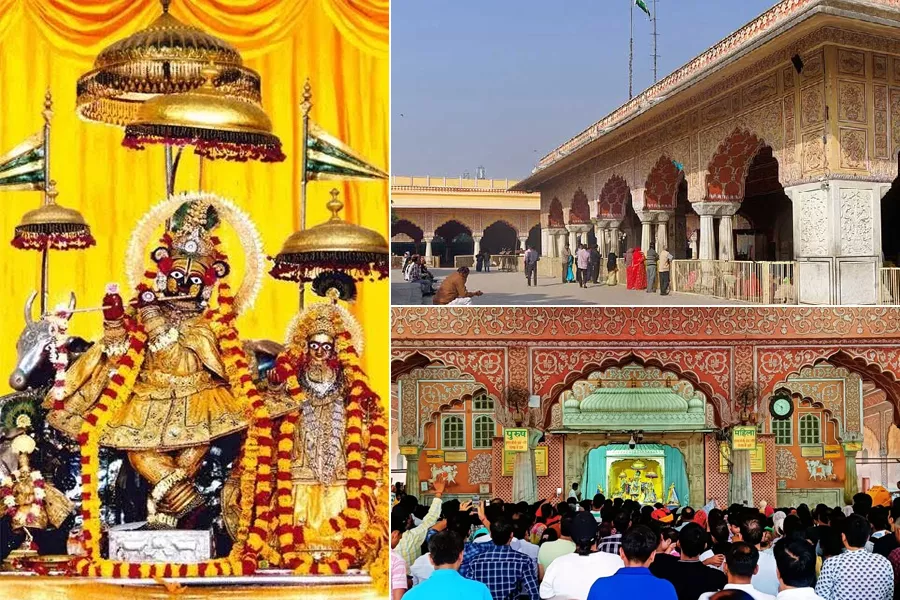
There are Jaipur places you visit because they are old, and places you visit because they are alive.
Govind Dev Ji Temple belongs firmly to the second group.
It sits inside Jaipur's historic royal core, closely associated with City Palace, yet the experience is completely different from entering a palace museum. Devotees do not come here to admire a room. They come to wait for a curtain to open.
That curtain matters because Govind Dev Ji's day is organised through seven jhankis—seven ritual darshan periods connected with Lord Krishna's daily life. Between them, the sanctum can close. If you arrive without checking the schedule, you may find yourself standing outside a closed darshan window wondering why a travel blog said the temple was “open all day”.
Rajasthan Tourism's current temple page, updated in the same 30 July 2026 tourism system, confirms the core facts: the temple is in the City Palace complex between Badal Mahal and Chandra Mahal, it was built in 1735 by Maharaja Sawai Jai Singh II, the Govind Dev Ji image came from Vrindavan, and worship is organised through seven daily poojas/aartis.
Complete Govind Dev Ji Guide
- Entry Fee & OBMS
- Latest Darshan Timing Guidance
- Seven Jhankis Explained
- History: Vrindavan to Jaipur
- Tradition of the Govind Dev Ji Idol
- Temple Architecture
- Janmashtami & Festivals
- Guide for Foreign Tourists
- Families & Senior Citizens
- Dress & Temple Etiquette
- How to Reach
- Nearby Places
- Best Old-City Route
- FAQs
Govind Dev Ji Temple Entry Fee: Free Darshan, No OBMS Ticket
Normal darshan at Govind Dev Ji Temple is free.
This distinction is important because Jaipur travel pages increasingly place every attraction into the same “ticket price” format. Govind Dev Ji should not be treated like Amber Palace, Jantar Mantar or Hawa Mahal.
| Visitor Item | Current Position |
|---|---|
| Temple Darshan | Free |
| Indian Visitor Entry | Free |
| Foreign Visitor Entry | Free for normal darshan |
| Rajasthan OBMS Ticket | Not required |
| Donation | Voluntary unless choosing a specific seva/service |
| Prasad / Seva | Separate from entry and subject to current temple arrangements |
Govind Dev Ji Darshan Timings: The Correct Way to Plan
Govind Dev Ji does not work like a museum with one continuous opening window. Darshan follows ritual periods, and exact times move with season and special dates.
Recent 2026 timing references agree on the broader pattern:
| Season | General Morning Window | General Evening Window | Important |
|---|---|---|---|
| Summer / warmer months | Roughly early morning to around noon | Late afternoon/evening to around 9:00–9:30 PM | Individual jhankis have their own start/end times |
| Winter / cooler months | Usually begins slightly later | Evening schedule often shifts earlier | Exact timing changes seasonally |
Why I Am Not Publishing One “Today” Table
A specific 2026 timetable widely republished online was valid from 5 March to 18 August 2026. It listed Mangla around 5:00 AM, Dhoop 7:45 AM, Shringar 9:30 AM, Rajbhog 10:45 AM, Gwal 5:00 PM, Sandhya 5:45 PM and Shayan 8:00 PM, with Sunday/Ekadashi adjustments.
That validity period ended four days before this article's 22 August 2026 review. Publishing it as “latest today” would be careless.
If you are visiting specifically for Mangla, Sandhya or Shayan, check the temple's current same-day notice/announcement before leaving your hotel. Seasonal patterns are useful for planning; the current temple schedule is final.
The Seven Jhankis of Govind Dev Ji
Rajasthan Tourism says poojas and aartis are performed seven times a day. The daily cycle is commonly understood through these seven jhankis:
1. Mangla Jhanki
The earliest darshan, associated with awakening the Lord. It is one of the most devotional visits for serious devotees and requires an early start.
2. Dhoop Jhanki
Morning worship with incense and devotional offerings. This can be a practical option for travellers who do not want to wake before dawn.
3. Shringar Jhanki
One of the visually richest periods, connected with the deity's adornment and dress.
4. Rajbhog Jhanki
The major food-offering period before the longer midday closure.
5. Gwal Jhanki
An evening-cycle darshan associated with Krishna's pastoral life and return from grazing cows.
6. Sandhya Jhanki
Evening worship and one of the most atmospheric times for visitors, especially when lamps, chanting and a larger congregation come together.
7. Shayan Jhanki
The final darshan, associated with putting the deity to rest before the day's worship concludes.
Which Jhanki Is Best for a First-Time Visitor?
| Your Priority | Best Choice |
|---|---|
| Deep devotional experience | Mangla |
| Visual decoration | Shringar |
| Morning visit without very early wake-up | Dhoop / Shringar |
| Evening atmosphere | Sandhya |
| Final quiet ritual of the day | Shayan |
Exact times should be checked for the day you visit.
Govind Dev Ji History: Vrindavan, the Kachhwahas & Jaipur
Rajasthan Tourism's current dedicated temple page dates Govind Dev Ji Temple in Jaipur to 1735 and attributes its construction to Maharaja Sawai Jai Singh II.
The deity was deeply important to the Kachhwaha rulers of Amber and Jaipur. Rajasthan Tourism says Jai Singh brought the Govind Dev Ji idol from Vrindavan and installed it in Jaipur with great honour.
Jaipur's official tourism heritage-walk material also explains the broader city context: when Sawai Jai Singh II moved the capital from Amber to Jaipur, the royal precinct, temples and civic plan were integrated into the new walled city.
Why Is the Temple So Close to City Palace?
This was not an accidental placement. Govind Dev Ji was the royal family's revered deity. The temple's position inside the royal-city landscape made devotion part of daily court life rather than something separated from the palace.
The Govind Dev Ji Idol Tradition
Rajasthan Tourism records the traditional belief that the colourful Govind Dev Ji image is known as Bajrakrit and was made by Vajranabh / Brajranabh, described in the tradition as Lord Krishna's great-grandson.
The story says he created the image based on descriptions passed down by Krishna's family.
Govind Dev Ji Temple Architecture & Interior
Rajasthan Tourism's Jaipur page describes Govind Dev Ji as a rare spire-less Krishna temple. Its dedicated temple page also highlights:
- a ceiling with gold casing;
- delicate chandeliers;
- portraits and Indian art;
- garden surroundings;
- a spacious congregation-oriented interior.
Architecturally, the temple feels different from a compact stone shrine. It was designed to allow a large number of devotees to see the deity during the short jhanki windows.
Why the Wide Darshan Hall Matters
When the curtain opens, hundreds or thousands of people may be looking toward the same sanctum. The open hall and broad visual axis support collective darshan.
Janmashtami & Major Festival Days
Rajasthan Tourism specifically identifies Janmashtami as one of Govind Dev Ji's biggest celebrations, drawing thousands of devotees.
What Changes on Festival Days?
- darshan timings can change;
- special jhankis may be added;
- security and queue arrangements become stricter;
- roads around the old city can become congested;
- parking becomes difficult;
- you may need to arrive much earlier than normal.
Other Busy Religious Dates
Sunday, Ekadashi and major Krishna festivals can produce modified timing and larger crowds. The expired March–August 2026 schedule specifically carried separate Sunday/Ekadashi adjustments, which shows why same-day checking matters.
Light & Sound Show at Jainiwas Udyan
Rajasthan Tourism's current Jaipur page also lists a 3-D projection-mapping Light & Sound Show at Jainiwas Udyan telling the story of Govind Dev Ji: the idol tradition, Vrindavan, protection from invaders, movement toward Jaipur and installation in Jainiwas.
This is a separate tourism experience from temple darshan. If the show interests you, verify its current operating day, timing and ticket before making an evening plan.
Govind Dev Ji for Foreign & International Tourists
International visitors are welcome, but Govind Dev Ji should be approached as an active place of worship, not as a museum photo stop.
Entry
Normal darshan is free. There is no foreigner monument ticket.
What to Expect
- large devotional crowds during jhanki openings;
- chanting and collective prayer;
- brief darshan windows;
- people moving quickly when curtains open/close;
- temple-specific photography instructions.
Best First Visit for Foreign Travellers
Shringar or Sandhya can be easier to understand than Mangla for a visitor who is not accustomed to very early temple schedules. Arrive before the announced jhanki and stand respectfully without blocking devotees.
Families, Children & Senior Citizens
Families
Children can visit, but large festival crowds may be overwhelming. Keep small children close when the crowd moves at curtain opening.
Senior Citizens
The temple is easier physically than Jaipur's hill forts, but waiting in a dense standing crowd can be tiring. Choose a less crowded weekday/non-festival slot where possible.
Wheelchair / Limited Mobility
Because this is a living religious complex and crowd-control arrangements can change, ask security or temple volunteers for the easiest accessible route on arrival.
Dress Code, Shoes & Temple Etiquette
Dress
Wear modest clothing covering shoulders and knees. Traditional Indian clothing is welcome but not compulsory for ordinary visitors.
Shoes
Follow the temple's footwear instructions and use the designated shoe area before entering sacred zones.
Photography
Do not assume photography of the deity is always permitted simply because phones are visible in the crowd. Follow current signs and instructions.
During Darshan
- do not push forward through devotees;
- keep phone calls silent;
- avoid turning your back to the sanctum solely for repeated selfies during worship;
- do not block sight lines for long periods;
- follow volunteer/security movement instructions.
Prasad, Donations & Seva
Prasad and devotional services can be available, but arrangements change. Use authorised counters where provided.
How to Reach Govind Dev Ji Temple Jaipur
Rajasthan Tourism places Govind Dev Ji inside the City Palace complex between Badal Mahal and Chandra Mahal, within Jaipur's walled city.
By Metro
Badi Chaupar on Jaipur Metro's Pink Line is the most useful station for this old-city cluster. Continue on foot or by short local transport depending weather and mobility.
From City Palace
The temple is part of the same broader royal precinct, but ticketed City Palace museum access and free temple darshan are different experiences. Ask for the current pedestrian approach to Govind Dev Ji rather than assuming you must purchase a palace museum ticket.
From Hawa Mahal
The temple fits naturally into the old-city walking/short-auto circuit with Hawa Mahal, Jantar Mantar and City Palace.
From Jaipur Railway Station
Metro, taxi or auto-rickshaw are practical. During festivals, get dropped outside the most congested old-city zone and walk the final section if traffic controls are in place.
From Jaipur Airport
Taxi/app cab is simplest. Allow extra time during evening peak traffic and major festival dates.
Parking
Parking in Jaipur's old royal-city area can be difficult, particularly on Sundays, Ekadashi and festival days. Do not build your visit around the assumption that you will park immediately outside the temple.
Metro + walking/auto is often easier for visitors staying near a Pink Line station.
Places to Visit Near Govind Dev Ji
| Attraction | Why Combine It | Planning Note |
|---|---|---|
| City Palace | Same royal-city precinct | Separate paid museum ticket |
| Jantar Mantar | Immediately beside City Palace area | Government ticketed monument |
| Hawa Mahal | Short old-city walk | Facade + paid interior |
| Isarlat / Sargasuli | Old-city viewpoint | Short monument visit |
| Tripolia / Johari Bazaar | Old-city shopping and street life | Free public markets |
Best Govind Dev Ji + Old Jaipur Itinerary
Morning Option
Early: Govind Dev Ji at the current Mangla/Dhoop/Shringar jhanki → breakfast → Jantar Mantar → City Palace → Hawa Mahal/old-city bazaar.
Evening Option
City Palace/Jantar Mantar in daytime → rest/lunch → return for current Sandhya jhanki at Govind Dev Ji after verifying the day's schedule.
Why Not Fix an Exact Clock Itinerary?
Because the temple's darshan schedule shifts. Build the day around the current jhanki notice, not the other way around.
Is Govind Dev Ji a Tourist Attraction or a Temple?
It is first and foremost a temple.
Rajasthan Tourism lists it as one of Jaipur's important places to visit, but the site's value comes from living worship. Visitors get more from the experience when they participate respectfully rather than treating the crowd as scenery.
12 Mistakes to Avoid
- Looking for an OBMS entry ticket.
- Calling a donation an “entry fee”.
- Using an expired 2026 jhanki timetable as today's schedule.
- Assuming the temple remains continuously open between morning and night.
- Arriving during the midday closure without checking.
- Ignoring Sunday/Ekadashi timing changes.
- Going on Janmashtami expecting normal crowd levels.
- Blocking devotees for photographs.
- Wearing inappropriate clothing inside a living temple.
- Paying an unofficial person for promised “special darshan” without verification.
- Buying a City Palace ticket because you think it is required for temple darshan.
- Trying to park at the gate during a major festival.
Official & Useful Sources
- Rajasthan Tourism — Govind Dev Ji Temple
- Rajasthan Tourism — Jaipur
- Rajasthan Tourism — Devasthan / Dev Darshan
- Rajasthan OBMS — for ticketed monuments, not normal Govind Dev Ji darshan
Related Jaipur Guides
- City Palace Jaipur Complete Guide
- Jantar Mantar Jaipur Complete Guide
- Hawa Mahal Jaipur Complete Guide
- Isarlat Sargasuli Jaipur Guide
- Jaipur Complete Travel Guide
Govind Dev Ji Temple Jaipur FAQs
Is Govind Dev Ji Temple free?
Yes. Normal darshan is free.
Do I need an OBMS ticket?
No. Govind Dev Ji is a living temple, not a normal Rajasthan Government ticketed monument.
How many jhankis are there every day?
Rajasthan Tourism states that there are seven daily pooja/aarti darshan periods.
What are the seven jhankis?
Mangla, Dhoop, Shringar, Rajbhog, Gwal, Sandhya and Shayan.
What is today's exact darshan timing?
Check the temple's current same-day notice. Timings change by season and special dates. A commonly circulated March–18 August 2026 table has already expired as of this article's 22 August 2026 review.
What is the general summer timing?
Recent 2026 sources generally show early-morning-to-midday darshan and a separate late-afternoon/evening window extending toward 9:00–9:30 PM, but exact jhanki times must be checked live.
What is the general winter timing?
Recent sources show the morning beginning slightly later and the evening schedule shifting earlier than summer. Use the current seasonal temple timetable.
Who built Govind Dev Ji Temple?
Rajasthan Tourism states that Maharaja Sawai Jai Singh II built it in 1735.
Where did the idol come from?
Rajasthan Tourism says Sawai Jai Singh brought the Govind Dev Ji idol from Vrindavan to Jaipur.
Where is the temple?
Inside the City Palace complex between Badal Mahal and Chandra Mahal according to Rajasthan Tourism.
Do I need a City Palace museum ticket to visit the temple?
Normal Govind Dev Ji darshan is a separate religious visit. Do not assume the paid City Palace museum ticket is the temple's entry fee.
What is the best jhanki?
It depends on your interest: Mangla for early devotion, Shringar for adornment and Sandhya for evening atmosphere.
Is Janmashtami crowded?
Yes. Rajasthan Tourism describes Janmashtami as a major celebration drawing thousands of devotees.
Can foreign tourists enter?
Yes. Normal darshan is free for international visitors too; dress and behave respectfully.
Is photography allowed?
Follow current temple signs and instructions, especially around the sanctum and during jhanki.
Can senior citizens visit?
Yes, but choose a lower-crowd slot if standing in a dense congregation is difficult.
What is the nearest metro station?
Badi Chaupar is the most useful Jaipur Metro Pink Line station for the old-city/City Palace area.
Can I combine Govind Dev Ji with City Palace?
Yes. They are in the same broader royal precinct, but one is a living temple and the other a separately ticketed museum complex.
Can I combine it with Jantar Mantar?
Yes. Jantar Mantar is beside the City Palace area and fits naturally into the same visit.
Is there a light and sound show?
Rajasthan Tourism currently lists a 3-D projection-mapping Light & Sound Show at Jainiwas Udyan depicting the Govind Dev Ji story. Verify current show operation and ticket before attending.
Final Advice
Govind Dev Ji is one of the places where an “opening time” table is less useful than understanding the rhythm of the temple.
There are seven jhankis. The curtain opens, devotees receive darshan, worship proceeds, and the sanctum closes again between parts of the day. That is the experience.
In 2026, timing pages are especially easy to misuse. A detailed schedule valid through 18 August is still being indexed even though its stated period has ended. So use that kind of table only to understand the pattern—not to decide today's exact departure time.
Normal darshan remains free, there is no OBMS monument ticket, and Rajasthan Tourism's current official information confirms the temple's 1735 Sawai Jai Singh II history, Vrindavan connection and seven daily jhankis.