Hawa Mahal Ticket Price 2026 – Entry Fee, Timings & Visitor Guide
Hawa Mahal Ticket Price 2026
| Visitor Category | 2026 Entry Fee |
|---|---|
| Indian Adult | ₹100 |
| Indian Student | ₹50 |
| Foreign Adult | ₹600 |
| Foreign Student | ₹300 |
Hawa Mahal opening time: around 9:00 AM
Hawa Mahal closing time: generally around 5:00 PM
Best time to visit: early morning
Recommended time inside: 45–60 minutes
Location: Hawa Mahal Road, Badi Chaupar, Pink City, Jaipur, Rajasthan
Ticket rates checked: 21 August 2026
Hawa Mahal Entry Fee & Timings – Quick Answer
- Indian adult ticket: ₹100
- Indian student ticket: ₹50
- Foreign tourist ticket: ₹600
- Foreign student ticket: ₹300
- Exterior view: Free from the public street
- Opening time: Around 9:00 AM
- Closing time: Around 5:00 PM
- Best exterior photo time: Early morning
- Time needed inside: 45–60 minutes
- Nearest metro: Badi Chaupar
- Famous for: Five storeys and 953 jharokhas
If you are searching for the Hawa Mahal ticket price, the most important thing to know is that many older Jaipur guides still show the previous ₹50 Indian and ₹200–₹300 foreign-tourist rates. Those figures should not be used for a 2026 trip.
From the Rajasthan monument fee revision effective in 2026, Hawa Mahal entry costs ₹100 for an Indian adult and ₹600 for a foreign adult. Student rates are lower when valid identification requirements are met.
The second thing visitors often misunderstand is that you do not need a ticket simply to see or photograph the famous façade. That view is from the public road outside. The entry ticket is for going inside the palace and exploring its courtyard, ramps, jharokhas and upper levels.
So whether the ticket is worth buying depends on what you want. If you only want the classic Jaipur photograph, the exterior may be enough. If you want to understand why Hawa Mahal is called the Palace of Winds and see the old city through the royal windows, go inside.
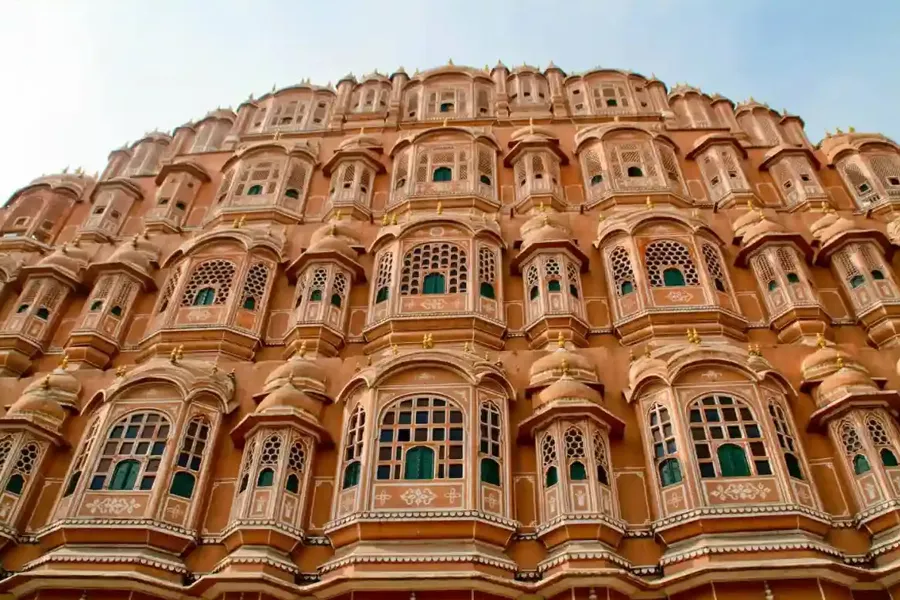
Hawa Mahal Jaipur at a Glance
| Monument | Hawa Mahal / Palace of Winds |
| City | Jaipur, Rajasthan |
| Built | 1799 |
| Built By | Maharaja Sawai Pratap Singh |
| Architect | Lal Chand Ustad |
| Floors | Five |
| Jharokhas | 953 |
| Indian Ticket | ₹100 |
| Foreign Ticket | ₹600 |
| Time Required | 45–60 minutes |
| Best Photo Time | Early morning |
| Nearest Metro | Badi Chaupar |
| Nearby | City Palace, Jantar Mantar and Johari Bazaar |
Hawa Mahal Ticket & Visitor Guide
- Hawa Mahal Ticket Price 2026
- Hawa Mahal Ticket Price for Indians
- Hawa Mahal Ticket Price for Foreigners
- Student Ticket Price
- Hawa Mahal Timings
- Hawa Mahal Online Ticket Booking
- Can You See Hawa Mahal for Free?
- Is Going Inside Worth It?
- What to See Inside Hawa Mahal
- How Much Time Is Required?
- Best Time to Visit
- Best Hawa Mahal Photography Spot
- Hawa Mahal Rooftop Views
- How to Reach Hawa Mahal
- Nearest Metro Station
- Parking Near Hawa Mahal
- Places to Visit Near Hawa Mahal
- Hawa Mahal History
- 953 Windows & Architecture
- Visitor Tips
- Frequently Asked Questions
Hawa Mahal Ticket Price 2026 – Latest Entry Fee
The revised Hawa Mahal ticket prices applicable from 2026 are:
| Category | Ticket Price | What to Carry |
|---|---|---|
| Indian Adult | ₹100 | Valid ID if requested |
| Indian Student | ₹50 | Valid student ID |
| Foreign Adult | ₹600 | Passport / accepted identification |
| Foreign Student | ₹300 | Passport + valid student ID |
Hawa Mahal Ticket Price for Indian Tourists
The current 2026 entry fee for an Indian adult is ₹100 per person.
This ticket is for entry into the Hawa Mahal complex. You do not have to buy it merely to stand across the road and photograph the famous five-storey façade.
Is ₹100 Worth Paying?
Yes if this is your first visit. The street façade is Hawa Mahal's most famous view, but going inside lets you understand how the building actually worked. You can walk through the internal courtyard, follow the ramps to the upper levels and look through the jharokhas toward Jaipur's old city.
Hawa Mahal Ticket Price for Foreigners
The revised 2026 Hawa Mahal entry fee for a foreign adult visitor is ₹600 per person.
International visitors should keep their passport or accepted identification available while visiting government-managed monuments in Rajasthan.
Why Is the Foreign Ticket More Expensive?
Different entry rates for domestic and international visitors are common at government-managed heritage attractions in India. The correct comparison for deciding whether to enter should therefore be the experience you receive, not the Indian ticket price.
For architecture and history travellers, going inside is worthwhile. If your only objective is a photograph of the façade, you can view it from the opposite side of Hawa Mahal Road without paying an entry fee.
Hawa Mahal Student Ticket Price 2026
| Student Category | 2026 Ticket |
|---|---|
| Indian Student | ₹50 |
| Foreign Student | ₹300 |
Student concessions generally require valid student identification. Do not assume age alone automatically qualifies you for a student ticket.
Hawa Mahal Timings 2026
| Opening Time | Around 9:00 AM |
| Closing Time | Generally around 5:00 PM |
| Best Entry Time | 9:00–10:00 AM |
| Best Exterior Photography | Before or around opening time |
| Time Required | 45–60 minutes |
Hawa Mahal Online Ticket Booking
Ticketing arrangements for Rajasthan monuments can change, so avoid clicking the first website that appears in a search result simply because it says “official Hawa Mahal ticket.”
Before Paying Online
- Confirm that the page belongs to an authorised Rajasthan government or approved ticketing system.
- Check the visitor category.
- Confirm the date.
- Check whether the ticket is for Hawa Mahal only or a multi-monument pass.
- Read cancellation and refund conditions.
- Do not pay an unexplained “priority entry” surcharge to an unknown seller.
Can You Buy a Ticket at Hawa Mahal?
Yes, normal monument ticketing is available at the attraction. For a straightforward individual visit, purchasing through the authorised system or official counter is sufficient.
Is There a Jaipur Composite Ticket?
Rajasthan introduced revised combined-ticket options alongside the 2026 monument fee changes. These can make sense when you intend to visit several government-managed monuments rather than only Hawa Mahal.
Before buying any composite ticket, check:
- Current price.
- Validity period.
- Exactly which monuments are included.
- Whether each attraction can be entered once.
- Student eligibility.
- Whether privately managed attractions such as City Palace are included.
Do the maths using your actual Jaipur itinerary. A multi-site ticket is useful only when you will genuinely visit enough included monuments during its validity period.
Can You See Hawa Mahal Without Buying a Ticket?
Yes. This is one of the most useful things for first-time Jaipur visitors to understand.
The famous honeycomb façade faces the busy road. You can stand on the opposite side of the street and view or photograph it without buying an entry ticket.
Free Exterior View vs Paid Interior
Which Experience Do You Want?
Outside – Free
- Classic full-façade photo
- No monument ticket needed
- Best morning light
- Easy short stop
- Rooftop cafés opposite
Inside – Ticket Required
- Explore palace interior
- Walk through ramps
- See jharokhas closely
- Old Jaipur views
- Understand the architecture
Is It Worth Going Inside Hawa Mahal?
For a first visit to Jaipur, yes. But the reason is not that the interior is more visually dramatic than the façade. It is not.
The value of going inside is understanding how an apparently thin decorative wall functions as a five-storey palace extension. You see the ramps, internal courtyard, latticed openings and the relationship between the building and the street below.
You Should Go Inside If:
- You enjoy architecture.
- You are interested in Jaipur's royal history.
- You want views through the jharokhas.
- You have at least 45 minutes.
- This may be your only visit to Jaipur.
You Can Skip the Interior If:
- You have only a few hours in Jaipur.
- Your priority is the famous exterior photograph.
- You have significant mobility limitations.
- You are already running late for City Palace or Jantar Mantar.
What Is Inside Hawa Mahal?
Hawa Mahal is quite different from a conventional palace filled with large royal halls and furniture. Its architectural purpose revolved around movement, observation, privacy and ventilation.
Entrance Courtyard
The monument is entered from the rear rather than directly through the famous street façade. The inner courtyard helps explain how Hawa Mahal connected to Jaipur's royal palace environment.
Ramps
One of Hawa Mahal's distinctive features is the use of sloping ramps between levels rather than relying entirely on conventional staircases. The passages become narrower as you move higher.
Jharokha Windows
The small openings are the building's defining feature. From inside, visitors can see how the latticework provided street views while maintaining privacy.
Upper Floors
The upper levels provide some of the most interesting perspectives over Jaipur's old city. They also give a better sense of why airflow became such an important part of Hawa Mahal's identity.
How Much Time Is Required to Visit Hawa Mahal?
| Type of Visit | Time Needed |
|---|---|
| Exterior photo only | 15–30 minutes |
| Quick interior visit | 30–45 minutes |
| Normal first visit | 45–60 minutes |
| Architecture + photography | 60–90 minutes |
| Hawa Mahal + rooftop café | 1.5–2 hours |
For most travellers, one hour inside is enough. You do not need to reserve half a day for Hawa Mahal.
Best Time to Visit Hawa Mahal
Best Time for Exterior Photos: Early Morning
The famous façade looks strongest in morning light. The road also becomes busier as the day progresses, so an early start gives you a cleaner view and a less hectic photography experience.
Best Time to Go Inside: Around Opening
If you want to explore the interior, arrive around opening time. You can photograph the exterior first and then enter when the monument opens.
Best Months: October to March
Jaipur's cooler season is generally the most comfortable for old-city walking and monument visits. Winter mornings can be cool, while December and January can occasionally have haze.
April to June
Jaipur can become extremely hot. Visit Hawa Mahal early rather than making it a midday stop.
July to September
Monsoon weather can bring humidity and rain but occasionally creates dramatic skies over the Pink City.
Best Place to Photograph Hawa Mahal
The most famous Hawa Mahal photograph is actually taken from outside the monument.
1. Street-Level View
Stand on the opposite side of Hawa Mahal Road and frame the full façade. Morning is usually better because of both light and traffic.
2. Rooftop View
Several cafés and rooftops across the road provide a higher direct perspective of the façade. This can be easier than trying to photograph the entire monument from street level.
3. Inside the Jharokhas
Once inside, photograph outward through the latticework rather than trying to reproduce the same façade image. This gives you a completely different perspective.
Photography Tips
- Use a wide-angle lens for the full façade.
- Arrive early for fewer vehicles and pedestrians.
- Do not stand unsafely in moving traffic for a photograph.
- Protect phones and cameras in the crowded market area.
- Follow current restrictions for tripods and professional equipment.
- Do not fly a drone without required permissions.
Hawa Mahal Rooftop Café View – Is It Worth It?
Yes, particularly if photography is one of the main reasons you came to Hawa Mahal. The cafés opposite the monument provide a more comfortable direct view of the façade than the busy roadside.
Before Choosing a Rooftop
- Ask whether rooftop seating is currently open.
- Check menu prices before ordering.
- Ask about any minimum-order requirement.
- Do not pay someone on the street simply to “show” you the rooftop.
- Choose a table only after confirming the actual Hawa Mahal view.
Photograph Hawa Mahal from street level first, then move to a rooftop for breakfast or coffee. After that, enter the monument. This gives you three different Hawa Mahal perspectives without returning later.
How to Reach Hawa Mahal
Hawa Mahal is located in Jaipur's old Pink City around Badi Chaupar. Because the surrounding streets are busy, the final part of the journey may be faster by walking, metro or auto-rickshaw than by trying to take a car directly to the façade.
| Starting Point | Practical Option |
|---|---|
| Jaipur Railway Station | Taxi, app cab, auto-rickshaw |
| Jaipur Airport | Taxi or pre-arranged car |
| Central Jaipur | Metro, auto or cab |
| City Palace | Walk |
| Jantar Mantar | Walk |
| Amer Fort | Car / taxi via Jal Mahal side |
Nearest Metro Station to Hawa Mahal
Badi Chaupar is the most convenient Jaipur Metro stop for Hawa Mahal and the surrounding old-city area.
The metro can be particularly useful when road traffic is heavy because the old city can become congested during daytime shopping hours, festivals and weekends.
Parking Near Hawa Mahal
Hawa Mahal sits on a busy commercial street, so you should not plan on parking directly in front of the façade.
If you have a private driver, the easiest system is:
- Get dropped near the monument.
- Explore Hawa Mahal and the old city on foot.
- Visit City Palace and Jantar Mantar if planned.
- Meet the driver at a pre-agreed pickup point afterward.
Places to Visit Near Hawa Mahal
| Attraction | Why Combine It |
|---|---|
| City Palace | Major royal palace complex nearby |
| Jantar Mantar | UNESCO-listed astronomical observatory |
| Johari Bazaar | Jewellery and old-city shopping |
| Bapu Bazaar | Textiles, footwear and souvenirs |
| Isarlat / Sargasuli | Alternative elevated old-city view |
| Govind Dev Ji Temple | Important Jaipur temple near City Palace |
Best Half-Day Old Jaipur Route
- Hawa Mahal exterior photo.
- Hawa Mahal interior.
- Jantar Mantar.
- City Palace.
- Johari Bazaar.
Because these attractions sit relatively close together, do not repeatedly call a taxi between them. Walking is often part of the experience.
Hawa Mahal History – Why Was It Built?
Hawa Mahal was built in 1799 by Maharaja Sawai Pratap Singh and designed by architect Lal Chand Ustad.
It formed part of Jaipur's royal palace environment and allowed women of the royal household to observe processions, markets and everyday street life while remaining screened from public view.
This explains the unusual façade: the hundreds of small openings were not created merely as decoration. They allowed views toward the street while the latticework provided privacy.
Why Is It Called the Palace of Winds?
The many openings help air move through the structure. This natural ventilation is central to the building's identity and explains the name Hawa Mahal, usually translated as Palace of Winds.
Why Does Hawa Mahal Have 953 Windows?
Hawa Mahal's façade contains 953 small jharokhas, giving it the honeycomb appearance that made the building famous around the world.
The openings served several purposes:
- Royal women could observe the street.
- Latticework helped maintain privacy.
- Air could circulate through the building.
- Direct sunlight was reduced.
- The façade gained its extraordinary visual pattern.
How Many Floors Does Hawa Mahal Have?
Hawa Mahal has five storeys. Its tall but relatively shallow structure is quite different from the deep palace complexes many visitors expect before arriving.
Is Hawa Mahal Good for Families?
Yes. Children often find the small windows, ramps and city views more interesting than conventional museum displays. However, keep young children close on narrow passages and crowded upper levels.
Is Hawa Mahal Suitable for Senior Travellers?
The exterior is easy to view. The interior requires walking through ramps and several levels, so visitors with reduced mobility should decide how far they are comfortable climbing.
You do not need to reach every floor to make the ticket worthwhile.
Is Hawa Mahal Good for Couples?
Yes, particularly for photography. The strongest couple-photo combination is the morning façade followed by a rooftop view.
For more ideas, read: Best Places to Visit in Jaipur for Couples .
How to Add Hawa Mahal to a 1-Day Jaipur Itinerary
Morning – Old Jaipur
- 8:00–8:30 AM: Hawa Mahal exterior photography.
- 9:00 AM: Hawa Mahal interior.
- 10:00 AM: Jantar Mantar.
- 11:00 AM: City Palace.
Afternoon – Amer Side
- Lunch.
- Jal Mahal photo stop.
- Amer Fort.
Evening
- Nahargarh sunset if timings allow.
- Or relaxed Jaipur dinner.
For a complete route, see our Jaipur sightseeing tour .
Hawa Mahal Visitor Tips
- Photograph the façade before entering. Morning light is usually better.
- Remember that the main entrance is not through the façade. Follow signs toward the monument entrance.
- Carry a valid student ID if claiming a student rate.
- Keep some payment backup. Do not rely on only one card or digital wallet.
- Travel light. The old-city area is busy and crowded.
- Wear comfortable shoes. You will walk through ramps and surrounding streets.
- Carry water. Jaipur becomes hot even outside peak summer.
- Protect valuables. The surrounding bazaars can be crowded.
- Ignore unsolicited “special ticket” sellers. Use authorised channels.
- Combine nearby monuments. City Palace and Jantar Mantar are close enough to visit in the same half-day.
Common Hawa Mahal Mistakes to Avoid
- Using old ₹50 / ₹200 ticket information for a 2026 trip.
- Thinking a ticket is required just to see the exterior.
- Arriving in the afternoon specifically for the classic façade photograph.
- Planning two or three hours when you only need about one hour inside.
- Missing nearby City Palace and Jantar Mantar.
- Taking a car between attractions that are easily walkable.
- Buying an unofficial “fast-track” ticket.
- Standing in moving traffic for the perfect photograph.
- Expecting a furnished royal palace interior.
- Not checking current timings before an end-of-day visit.
Frequently Asked Questions About Hawa Mahal Ticket Price
What is the Hawa Mahal ticket price in 2026?
The revised 2026 Hawa Mahal entry fee is ₹100 for an Indian adult, ₹50 for an Indian student, ₹600 for a foreign adult and ₹300 for a foreign student.
What is Hawa Mahal ticket price for Indian tourists?
The 2026 Hawa Mahal ticket price for an Indian adult is ₹100 per person.
What is Hawa Mahal ticket price for foreigners?
The current 2026 entry fee for a foreign adult tourist is ₹600 per person.
What is the Hawa Mahal student ticket price?
Indian students currently pay ₹50 and foreign students ₹300 under the revised 2026 pricing. Carry valid student identification.
Has the Hawa Mahal ticket price increased?
Yes. Rajasthan revised monument entry charges from January 2026. This is why older online guides showing ₹50 for Indian adults or the previous foreign-tourist price are now outdated.
Is Hawa Mahal free to visit?
Seeing the famous façade from the public street is free. You need a ticket only when you want to enter the monument.
Can we go inside Hawa Mahal?
Yes. Visitors can enter Hawa Mahal and explore its courtyard, ramps, jharokhas and upper levels.
Is going inside Hawa Mahal worth it?
Yes for first-time visitors, architecture enthusiasts and anyone interested in Jaipur's history. If your only goal is the famous exterior photo, the free street view may be sufficient.
What are Hawa Mahal timings?
Hawa Mahal is generally open during daytime hours, commonly around 9:00 AM to 5:00 PM. Confirm the current opening and last-entry times on your exact travel date.
What time does Hawa Mahal open?
The monument generally opens around 9:00 AM.
What time does Hawa Mahal close?
Hawa Mahal generally closes around 5:00 PM, but current last-entry timings should be checked before a late-afternoon visit.
Is Hawa Mahal open on Sunday?
Hawa Mahal is generally open throughout the week, including Sunday, except when government orders, maintenance or special circumstances affect access.
Is Hawa Mahal open on Monday?
It is normally open on Monday as well. Check current monument information before travelling because temporary closures can occur.
How much time is enough for Hawa Mahal?
Around 45–60 minutes is enough for most visitors. Allow 60–90 minutes if you enjoy architecture and photography.
What is the best time to visit Hawa Mahal?
Early morning is best, especially for exterior photography. The façade receives attractive morning light and the road is usually less congested than later in the day.
Which side of Hawa Mahal is best for photos?
The classic photograph is taken from across Hawa Mahal Road looking toward the famous façade.
Which rooftop café gives a Hawa Mahal view?
Several rooftops opposite the monument offer façade views. Businesses, rooftop access and seating policies can change, so check the current view and menu before ordering.
Do you need a Hawa Mahal ticket for rooftop photos?
No. A café or rooftop across the road is separate from monument entry. Any food, drink or rooftop charges are paid to that business.
Is photography allowed inside Hawa Mahal?
Normal personal photography is generally allowed. Rules may differ for drones, commercial shoots, large tripods and professional equipment.
Are drones allowed at Hawa Mahal?
Do not assume drone use is permitted. Heritage, security and aviation restrictions can apply, and professional aerial photography requires appropriate permission.
How many windows are there in Hawa Mahal?
Hawa Mahal is famous for its 953 small windows or jharokhas.
How many floors are there in Hawa Mahal?
Hawa Mahal is a five-storey structure.
Who built Hawa Mahal?
Maharaja Sawai Pratap Singh commissioned Hawa Mahal in 1799. Architect Lal Chand Ustad designed the monument.
Why was Hawa Mahal built?
One important purpose was to allow royal women to observe processions and everyday street activity while remaining screened from public view.
Why is it called Hawa Mahal?
Its many windows and openings encourage airflow through the structure, giving rise to the name Palace of Winds.
Which metro station is nearest to Hawa Mahal?
Badi Chaupar is the most convenient Jaipur Metro station for Hawa Mahal.
How far is Hawa Mahal from Jaipur Railway Station?
Jaipur Railway Station and Hawa Mahal are in different parts of central Jaipur. A taxi, auto-rickshaw or app cab is generally the easiest direct option.
How far is Hawa Mahal from Jaipur Airport?
Jaipur Airport is on the southern side of the city, so travel time depends significantly on traffic. A taxi or pre-arranged car is the simplest option for visitors arriving with luggage.
Is City Palace near Hawa Mahal?
Yes. City Palace and Jantar Mantar are both close enough to combine with Hawa Mahal in the same old-city sightseeing block.
Can I visit Hawa Mahal, City Palace and Jantar Mantar together?
Yes. This is one of Jaipur's easiest monument combinations and can comfortably fit into a morning or half-day itinerary.
Is Hawa Mahal included in Jaipur sightseeing tours?
Yes. Hawa Mahal is normally one of the major stops or viewpoints included in Jaipur sightseeing itineraries.
Should I visit Hawa Mahal before Amer Fort?
For photography, this can be a good idea because Hawa Mahal's façade looks excellent in the morning. Another practical option is Amer early morning followed by Jal Mahal and Hawa Mahal depending on your route.
Is Hawa Mahal good for children?
Yes. Children often enjoy the windows, ramps and city views, but adults should supervise them carefully on narrow passages and upper levels.
Is Hawa Mahal accessible for senior citizens?
The exterior view is straightforward, but exploring the upper levels requires walking through ramps and passages. Seniors with limited mobility can visit only the lower areas if preferred.
Final Advice: Should You Buy a Hawa Mahal Ticket?
If this is your first Jaipur visit, yes, buy the ticket and go inside once. The façade is the visual highlight, but the interior explains why Hawa Mahal was built the way it was.
The most efficient visit is: photograph the façade early in the morning → enjoy a rooftop view if you want one → enter Hawa Mahal around opening time → walk to Jantar Mantar and City Palace afterward.
For 2026 budgeting, use ₹100 for an Indian adult and ₹600 for a foreign adult rather than old prices still circulating online. Students should carry valid identification to use the applicable concession.