Ranthambore Safari Price 2026: Latest Entry Fees, Gypsy & Canter Booking, Zones, Timings & Tiger Guide
Ranthambore Safari 2026 – Quick Answers
- Official booking: Rajasthan Forest Department Aaranyak / Forest & Wildlife permit system
- 2026 core-zone entry fee: ₹215 Indian citizen, ₹1,575 non-Indian citizen, ₹65 Indian student per person per visit
- 2026 buffer entry fee: ₹165 Indian citizen, ₹610 non-Indian citizen, ₹65 Indian student per person per visit
- 2026 core vehicle-entry component: ₹695 for Jeep/Car/Mini-Bus/Canter; ₹1,455 for a motorized tourism-registered vehicle, per vehicle per visit
- Safari vehicles: 6-passenger gypsy and 20-passenger canter
- Safaris recommended: 2–4 for most wildlife-focused visitors
- Ideal stay: 2–3 nights
- Tourism zones: Multiple designated safari zones; live availability varies
- Best vehicle for photographers: Gypsy
- Best value for solo travellers: Often canter, depending on live availability
- Best season for comfortable weather: October–March
- Hot-season wildlife: March–June can produce excellent wildlife viewing but temperatures become severe
- Latest reported 2026 tiger population: 72 tigers, tigresses and cubs in the Ranthambore landscape
- Bird diversity: 315 species recorded by NTCA material
- Nearest railway station: Sawai Madhopur Junction (SWM)
- Best airport gateway: Jaipur International Airport for most itineraries
- Tiger guarantee: None – these are wild animals
How Should You Plan a Ranthambore Safari in 2026?
For most first-time visitors, the best plan is 2–3 nights in Sawai Madhopur with 2–4 safari drives. Book through the official Rajasthan Forest Department system or a genuinely verified operator, use exactly the same identification details that you will carry on safari day, and do not build the entire trip around one supposedly “best” zone.
If seeing a tiger is important, multiple drives are much more sensible than paying a premium for one safari based on an internet zone ranking. Tiger territories, cub movements, kills and water use change constantly.
For serious wildlife photographers, a gypsy is normally the more attractive option because there are fewer passengers and more workable shooting positions. For birders, families and budget-conscious solo travellers, a canter can still provide a rewarding safari.
And if you are coming from Europe, North America, Australia, Southeast Asia or elsewhere specifically for wildlife, do not treat Ranthambore as a one-night “tiger tick-box.” The landscape also contains leopards, sloth bears, deer, crocodiles, smaller mammals and more than 300 recorded bird species.
Official fee notification & booking information checked: 21 August 2026. The current entry-fee notification is effective from 1 April 2026 to 31 March 2028.
Most people first discover Ranthambore through a tiger photograph. A Bengal tiger walks past an ancient stone ruin, crosses a dusty forest track or appears beside a lake—and suddenly a trip to India has a new purpose.
Then the research starts: Which zone should I book? How much does a safari cost? Is a jeep worth it? Can a foreign tourist book directly? How many safaris do I need? Is April better than January? What if I am more interested in birds than tigers?
That is where Ranthambore becomes confusing. There is no shortage of information online, but much of it mixes old prices, old tiger territories, unofficial booking websites and absolute statements such as “Zone 3 guarantees a tiger.”
This guide takes a different approach. Instead of promising wildlife that nobody can guarantee, it helps you make the decisions that actually affect the quality of your trip: when to go, how many drives to book, what vehicle suits you, how to choose a hotel, how much time to allow, how international visitors should prepare and what else to watch when the tiger does not appear.
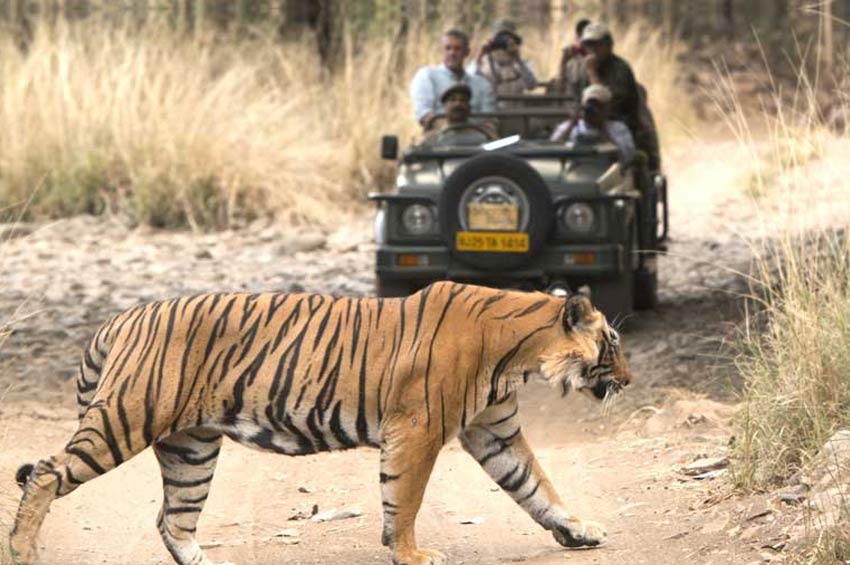
Ranthambore Tiger Reserve at a Glance
| Destination | Ranthambore Tiger Reserve, Rajasthan, India |
| Gateway Town | Sawai Madhopur |
| Reserve Area | 1,411.29 sq km notified tiger-reserve landscape |
| Latest 2026 Tiger Figure | 72 tigers, tigresses and cubs reported in July 2026 |
| Recorded Bird Diversity | 315 species in NTCA material |
| Other Recorded Fauna | 38 mammal species and 11 reptile species in NTCA material |
| Safari Vehicles | Gypsy: up to 6 passengers; Canter: up to 20 |
| Recommended First Trip | 2–3 nights / 2–4 safari drives |
| Nearest Railway Station | Sawai Madhopur Junction (SWM) |
| Useful Airport | Jaipur International Airport (JAI) |
| Best for | Tigers, wildlife, birding, photography, families and nature travel |
Complete Ranthambore Safari Guide
- How to Book a Ranthambore Safari
- Ranthambore Safari Price 2026
- Gypsy vs Canter
- Ranthambore Safari Zones Explained
- Which Zone Is Best?
- Safari Timings
- How Many Safaris to Book
- Morning vs Evening Safari
- Best Time for Ranthambore
- Ranthambore Tigers in 2026
- Wildlife Beyond Tigers
- Birdwatching in Ranthambore
- Wildlife Photography Guide
- Guide for International Visitors
- Ranthambore With Children
- Solo Travel
- Where to Stay
- Luxury Safari Experience
- How to Reach Ranthambore
- Ranthambore From Jaipur
- Ranthambore From Delhi
- Ranthambore From Agra
- Ranthambore Fort
- Best 2–4 Day Itineraries
- Packing List
- Mistakes & Scams to Avoid
- Responsible Wildlife Tourism
- Frequently Asked Questions
How to Book a Ranthambore Safari Online in 2026
The safest starting point is the Rajasthan Forest Department's official wildlife permit system. The current booking workflow uses Rajasthan's Forest & Wildlife/Aaranyak system.
Official Booking Process
- Open the Rajasthan Forest Department's official safari booking service.
- Sign in through the Rajasthan SSO system or follow the current registration option shown by the portal.
- Open the Forest & Wildlife service.
- Go to Wildlife Tourism Permission / Advance Wildlife Permit.
- Select Ranthambhore National Park – Sawai Madhopur.
- Choose your travel date.
- Check the live morning/evening availability.
- Select the available vehicle/booking category.
- Enter every passenger's name and identification details exactly.
- Foreign visitors should enter passport information exactly as shown in the passport.
- Review the live charges shown before payment.
- Complete payment and save the permit.
- Carry the same identification used during booking.
The current official system states that a gypsy can be booked for up to 6 passengers and a canter for up to 20 passengers.
Official Booking Links
Rajasthan Forest Department: Online Safari / Zoo Ticket Booking
Aaranyak wildlife permit system: Rajasthan Forest Department Aaranyak
Should Foreign Travellers Book Directly or Through Their Hotel?
Both can work. Direct booking gives you more control and helps you understand the actual government booking. A reputable wildlife lodge or specialist operator can be useful when you want someone to coordinate permits, transfers, naturalists and several safari drives.
If using an operator, ask for a written breakdown showing:
- Safari date.
- Morning or afternoon shift.
- Vehicle type.
- Number of seats or private vehicle arrangement.
- Permit component.
- Vehicle and guide components.
- Taxes/service charges.
- Cancellation conditions.
Ranthambore Safari Price 2026 – Latest Official Entry Fees & Charges
The Rajasthan Forest Department revised protected-area entry charges from 1 April 2026. The notification states that these rates remain effective through 31 March 2028. The figures below are the official government entry and eco-development components; they are not automatically the same as the final amount shown at checkout for a safari seat or full vehicle.
Ranthambore Critical Tiger Habitat Entry Fee 2026
| Visitor Category | Entrance Fee | Eco-Development Surcharge | Official Total Per Person / Visit |
|---|---|---|---|
| Indian Citizen | ₹90 | ₹125 | ₹215 |
| Non-Indian Citizen | ₹690 | ₹885 | ₹1,575 |
| Indian Student | ₹40 | ₹25 | ₹65 |
Ranthambore Buffer Area Entry Fee 2026
For protected areas including the buffer of tiger reserves, the same 2026 notification lists the following per-person charges. If a route passes through both Critical Tiger Habitat and buffer, the notification says the Critical Tiger Habitat fee applies.
| Visitor Category | Entrance Fee | Eco-Development Surcharge | Official Total Per Person / Visit |
|---|---|---|---|
| Indian Citizen | ₹75 | ₹90 | ₹165 |
| Non-Indian Citizen | ₹245 | ₹365 | ₹610 |
| Indian Student | ₹40 | ₹25 | ₹65 |
Official Vehicle Entry Charges for Ranthambore Critical Tiger Habitat
| Vehicle Type | Additional Entrance Fee | Eco-Development Surcharge | Total Per Vehicle / Visit |
|---|---|---|---|
| Bus | ₹280 | ₹815 | ₹1,095 |
| Jeep / Car / Mini-Bus / Canter | ₹150 | ₹545 | ₹695 |
| Motorized Vehicle Registered for Tourism | ₹365 | ₹1,090 | ₹1,455 |
| Two / Three Wheeler / e-Rickshaw | ₹40 | ₹75 | ₹115 |
What Makes Up the Final Safari Price?
| Cost Component | What It Means | How to Verify |
|---|---|---|
| Visitor entry + eco surcharge | Government charge based on visitor category and route type | 2026–2028 Forest Department notification |
| Vehicle-entry component | Government charge per vehicle per visit | 2026–2028 Forest Department notification |
| Gypsy / Canter arrangement | Seat or vehicle component shown for the selected safari booking | Live official permit checkout |
| Guide / naturalist component | Authorised safari interpretation/guide component where applicable | Live official booking/payment breakdown |
| Taxes / portal charges | Any applicable current transaction or statutory charges | Final official payment screen |
| Hotel/operator service fee | Extra coordination fee only when booking through a third party | Ask for written itemised quotation |
Indian vs Foreign Tourist Price Difference
The government entry component is significantly different by nationality. For Critical Tiger Habitat, the 2026 notification lists ₹215 per Indian citizen and ₹1,575 per non-Indian citizen per visit. This is only the visitor-entry component; the final safari amount can be higher after the authorised vehicle and other booking components are added.
Indian Student Ticket
The notification lists ₹65 per Indian student per visit for both Critical Tiger Habitat and other protected areas/buffer categories shown in the order. Carry valid student identification and use only the category available in the live booking system.
Professional Filming & Camera Charges
Ordinary tourist photography should not be confused with professional commercial filming. The 2026 notification lists substantial daily camera/filming fees for professional documentary, feature-film, advertising and television work inside Ranthambore Critical Tiger Habitat.
| Professional Filming Category | Official Total Fee / Day |
|---|---|
| Wildlife documentary / non-feature filming by Indian company, agency or national | ₹15,980 |
| Wildlife documentary / non-feature filming by foreign company, agency or national | ₹24,200 |
| Feature film / advertisement / TV serial by Indian company, agency or national | ₹1,06,480 |
| Feature film / advertisement / TV serial by foreign company, agency or national | ₹1,57,300 |
The same notification also specifies security deposits for professional filming. These commercial filming charges are not the same thing as taking normal holiday photographs on a safari.
Ranthambore Booking Cancellation & Refund Rules
| When You Cancel | Refund of Covered Government Fees |
|---|---|
| 30 days before the visit date | 75% |
| Between 72 hours and 30 days before visit | 50% |
| Within 72 hours of visit date | 0% |
For a booking that is not confirmed or remains on a waiting list when cancelled, the notification says ₹100 plus applicable tax is retained and the remaining deposited amount is refunded. Always read the live booking conditions because operational rules can also be updated.
Ranthambore Gypsy vs Canter – Which Should You Book?
Gypsy or Canter?
Gypsy
- Up to 6 passengers
- Smaller vehicle
- Fewer people sharing viewing space
- Better for long camera lenses
- Popular with couples and serious wildlife visitors
- Higher cost in many booking combinations
Canter
- Up to 20 passengers
- Higher seating position
- Lower per-person commitment in many cases
- Useful for solo travellers
- Good for groups
- Less control over your shooting position
Which Is Better for Tiger Sightings?
A tiger does not care whether you are sitting in a gypsy or canter. The biggest advantages of a gypsy are fewer passengers, manoeuvrability and photography space, not a magical tiger guarantee.
Which Is Better for Birdwatchers?
Both can work. The elevated canter position can occasionally be useful for scanning open habitat, while a gypsy gives a serious birder more ability to listen, photograph and communicate with the naturalist.
Which Is Better for Families?
A private gypsy is usually easier if budget permits because your family shares the vehicle only with its assigned safari staff.
Ranthambore Safari Zones Explained
Ranthambore tourism is divided into designated safari zones. The zone shown on your permit controls which tourism route your vehicle follows.
The Forest Department's Ranthambore Tiger Conservation Plan identifies five established tourism zones within the Ranthambore National Park critical habitat, while tourism access in the wider landscape includes additional designated zones/routes.
Zone 1
A varied route with dry forest, rocky terrain and wildlife movement corridors. Do not dismiss it because an old blog ranked another zone higher.
Zone 2
Known for attractive forest-and-ruin scenery and historically important tiger habitat. The actual wildlife on your date depends on current territorial movement.
Zone 3
One of Ranthambore's most visually recognisable landscapes because of the lakes and ruins around the historic core. It is popular with photographers, which also means demand can be strong.
Zone 4
Includes another mix of water, woodland and dry forest habitat. Like every zone, its wildlife value changes with season and animal movement.
Zone 5
A forested route with its own terrain and wildlife corridors. A quieter sighting in Zone 5 can be far better than a crowded tiger sighting in a more famous route.
Zones 6–10
These wider tourism routes provide a different Ranthambore experience with open landscapes, scrub, forest and less iconic lake scenery in some sections. They should not automatically be treated as “bad zones.” Tiger and leopard activity can shift into these parts of the landscape.
Which Is the Best Ranthambore Zone for Tiger Sightings?
The most useful answer is: there is no permanently best zone.
A ranking published six months ago can become irrelevant when:
- A tigress moves her cubs.
- A young male establishes a new territory.
- A dominant male changes range.
- A kill keeps a tiger in one area for several days.
- Seasonal water availability changes movement.
- A route becomes temporarily unavailable.
If you are booking several safaris, use more than one available route or shift when possible. The goal is to increase time in the landscape, not to gamble the entire trip on a famous zone number.
Can a Zone Guarantee a Tiger?
No. Anyone selling a “100% tiger guarantee” is selling certainty that wildlife tourism cannot provide.
Ranthambore Safari Timings 2026
Ranthambore operates morning and afternoon safari shifts, but the exact entry and exit times change with season and daylight.
For that reason, do not build your airport transfer, train connection or hotel checkout around an old timing table without checking your permit.
| Season | Morning | Afternoon | Planning Advice |
|---|---|---|---|
| October | Early morning shift | Mid-afternoon to sunset | Post-monsoon greenery and warm days |
| November–January | Later winter start | Earlier afternoon finish | Cold open-vehicle mornings |
| February–March | Earlier with increasing daylight | Later than mid-winter | Comfortable wildlife season |
| April–June | Very early | Later afternoon | Extreme heat possible |
How Many Ranthambore Safaris Should You Book?
| Number of Safaris | Who It Suits | Recommendation |
|---|---|---|
| 1 safari | Very short visitor | Too much depends on one drive |
| 2 safaris | Normal first-time trip | Good minimum |
| 3–4 safaris | Wildlife enthusiast | Best balance for many visitors |
| 5+ safaris | Photographer / dedicated tiger watcher | Useful when wildlife is the main purpose of the trip |
If you have travelled internationally mainly to see Indian wildlife, three safaris are far more sensible than one. Each drive gives you different light, weather, animal movement and guide observations.
Morning vs Evening Safari in Ranthambore
Morning Safari
Morning starts can be cold in winter but provide beautiful light, bird activity and a completely different forest atmosphere. Predator movement can occur, but no shift guarantees a tiger.
Afternoon Safari
The afternoon becomes particularly attractive for photography as the light softens toward sunset. In warmer months, animals may begin moving again as temperatures drop.
Which Should You Choose?
If you are booking only two safaris, book one morning and one afternoon when availability permits. You experience the forest under two very different conditions.
Best Time to Visit Ranthambore for Tigers, Weather & Photography
October – Green Ranthambore
After the monsoon, the landscape can look dramatically greener. This is excellent for scenery and environmental photography, although dense vegetation can sometimes make animal spotting more challenging.
November to February – Best for Comfortable Weather
This is the easiest season for many international visitors. Days are pleasant, while early safari drives—particularly in December and January—can feel surprisingly cold in an open vehicle.
March to April – Excellent Wildlife Balance
Temperatures rise, vegetation becomes drier and water starts becoming more important to wildlife. For many wildlife travellers, this offers a useful balance between visibility and tolerable heat.
May to June – For Heat-Tolerant Wildlife Enthusiasts
Rajasthan can become brutally hot. Wildlife may concentrate around remaining water, creating interesting observation opportunities, but the experience is physically demanding.
Do not choose May or June simply because somebody says it “guarantees tigers.” It does not.
Monsoon Period
Tourism access and available routes can change substantially during the monsoon. Always use current Forest Department availability rather than assuming the same zones and routes operate year-round.
How Many Tigers Are in Ranthambore in 2026?
The latest publicly reported figure from Rajasthan's Chief Wildlife Warden in July 2026 put the Ranthambore Tiger Reserve landscape at 72 tigers, tigresses and cubs.
That figure matters for conservation, but it should not be interpreted as 72 animals living beside tourism roads. Ranthambore Tiger Reserve covers a much larger landscape than the area a tourist sees during one safari.
Why Famous-Tiger Lists Become Outdated Quickly
Tiger pages often age badly because individual animals die, disperse, shift territory or are moved. For example, the famous tigress Arrowhead (T-84) died in 2025. So an article still describing her as a tiger you are likely to see in 2026 is outdated.
Should You Ask Your Guide About Current Tigers?
Yes. Rather than memorising old tiger names before arrival, ask your naturalist:
- Which tigers currently use this route?
- Have cubs been seen recently?
- Which alarm calls are you listening for?
- Where are the active water sources?
- What tracks or scent marks are fresh?
That conversation teaches you far more about tiger ecology than simply asking, “Where is the tiger?”
Wildlife in Ranthambore Beyond Tigers
A tiger is the headline species, but treating every non-tiger minute as wasted time is one of the easiest ways to ruin a safari.
NTCA material records a broad fauna including mammals, reptiles and hundreds of bird species. Animals you may encounter include:
- Leopard: shyer than tigers and generally harder to observe.
- Sloth bear: an exciting but unpredictable sighting.
- Sambar deer: one of the key prey species and an important source of alarm calls.
- Chital: spotted deer seen throughout suitable habitats.
- Nilgai: India's largest antelope.
- Wild boar: widely distributed across the landscape.
- Langurs: their behaviour and alarm calls can alert guides to predators.
- Jackal: a smaller carnivore that is easy to overlook.
- Marsh crocodile: associated with lakes and water bodies.
- Smaller cats and carnivores: present but considerably more difficult to see.
How to Enjoy a Safari Without a Tiger Sighting
Watch how the forest works. A sambar suddenly staring into cover, langurs calling from the canopy, deer becoming tense near a waterhole or birds mobbing a predator are all parts of the same ecosystem.
A great naturalist can turn a tigerless safari into one of the most educational wildlife drives of your trip.
Birdwatching in Ranthambore – A Guide for Bird Lovers
Ranthambore deserves much more attention from birders. NTCA material records 315 bird species in the tiger-reserve landscape.
That diversity comes from the combination of dry deciduous forest, scrub, rocky hills, lakes, wetlands and open country.
Birds to Watch For
- Crested Serpent Eagle
- Painted Spurfowl
- Indian Peafowl
- White-throated Kingfisher
- Rose-ringed Parakeet
- Plum-headed Parakeet
- Greater Coucal
- Jungle Babbler
- Spotted Dove
- Little Cormorant
- Owls and other nocturnal/crepuscular species in suitable habitat
- Seasonal waterbirds and winter visitors around wetlands
Best Season for Birdwatching
For an international birder, November to February is especially attractive because comfortable weather overlaps with winter migrant activity.
Should a Birdwatcher Book a Tiger Safari?
Yes, but tell the naturalist from the beginning that birds matter to you. A tiger-only vehicle may drive past a perched raptor or mixed flock while chasing fresh tiger news.
Best Birding Strategy
- Carry binoculars.
- Use a field guide or birding app offline.
- Tell your naturalist your target groups.
- Spend time around lakes and open habitat.
- Add birding outside the national-park safari route when available.
- If continuing toward Agra, consider adding Bharatpur/Keoladeo to a specialist birding itinerary.
Ranthambore + Keoladeo National Park creates a far stronger Rajasthan wildlife trip than focusing only on tigers. Ranthambore gives you dry forest predators and woodland birds; Bharatpur adds one of India's most important wetland-bird experiences.
Ranthambore Wildlife Photography Guide
Ranthambore is unusually attractive to photographers because wildlife can appear against lakes, dry forest, grassland and historic ruins rather than only dense woodland.
Best Vehicle for Photography
A gypsy is generally preferable because fewer passengers share the vehicle and it is easier to work around a long lens.
Useful Wildlife Lens Range
A 100–400mm, 100–500mm or similar telephoto zoom is extremely versatile. Longer lenses such as 200–600mm can be valuable for birds and distant wildlife, while a second shorter lens helps with landscapes and animals approaching close to the vehicle.
Do You Need a 600mm Lens?
No. Sometimes a tiger can be very close, and an extremely long fixed focal length becomes a disadvantage. A flexible zoom is often more useful for a first safari.
Photography Checklist
- Camera body with reliable autofocus.
- Telephoto zoom.
- Spare batteries.
- Multiple memory cards.
- Lens cloth and blower for dust.
- Beanbag if suitable for your setup.
- Rain protection in uncertain weather.
- Binoculars even if carrying a camera.
Protecting Equipment From Dust
Ranthambore tracks become dusty. Avoid changing lenses unnecessarily while the vehicle is moving, keep bags closed and clean exposed glass carefully after the safari.
Wildlife Photography Etiquette
Do not pressure a driver or guide to crowd an animal for a photograph. A clean image is not worth changing the behaviour of a wild tiger.
Ranthambore Safari for International & Foreign Travellers
Ranthambore is one of the easiest Indian tiger destinations to combine with a first trip to Delhi, Agra and Jaipur, which explains its popularity with travellers from the UK, Europe, North America, Australia and Southeast Asia.
What International Visitors Should Prepare Before Booking
- Passport details for each traveller.
- Exact spelling as shown in passport.
- Travel dates that allow multiple safari drives.
- Flexible expectations about zone allocation.
- Hotel near the appropriate pickup/gate area.
- Travel insurance suitable for your trip.
- Train or road connections with enough buffer.
Carry Your Original Passport
Use the same identification document connected to your permit and keep it accessible for the safari check-in process.
Should Foreign Travellers Use a Safari Specialist?
It can be worthwhile when you are booking several safaris, expensive international flights and a multi-city India itinerary. The service is useful when it removes logistical risk—not when somebody simply resells the same permit at an unexplained markup.
Language
If natural-history interpretation is important to you, ask your hotel or operator whether an experienced English-speaking naturalist can accompany or brief you. The quality of interpretation can make a much bigger difference than a luxury vehicle transfer.
Cash & Payments
Keep more than one payment method. International cards can fail unexpectedly on Indian payment gateways, while smaller local expenses may still be easier with cash or local digital payments.
Is Ranthambore Good for Families With Children?
Yes—especially when children genuinely enjoy animals. But a safari involves early wake-ups, dust, cold or heat, open vehicles and long periods where nothing dramatic happens.
Family Safari Tips
- Choose a private gypsy when budget permits.
- Explain that tiger sightings are not guaranteed.
- Give children binoculars.
- Turn deer, birds and tracks into a wildlife search.
- Choose a hotel with space to relax between safaris.
- Carry warm layers for winter mornings.
- Do not overload children with morning + afternoon safari every day.
Ranthambore for Solo Travellers
Ranthambore can work very well solo because safari vehicles naturally bring travellers together. The main issue is cost.
A canter may make more financial sense for one person, while a private gypsy becomes much more attractive when several travellers share the cost.
Solo Traveller Tips
- Stay at a property accustomed to wildlife travellers.
- Ask about legitimate shared-vehicle availability.
- Book your permit before arriving in Sawai Madhopur.
- Do not buy an “official safari” from somebody approaching you at the railway station.
- Arrange a station transfer with the hotel when arriving late.
Where to Stay in Ranthambore
For a safari trip, location and safari logistics matter more than being in the centre of Sawai Madhopur.
| Stay Type | Best For | What to Check |
|---|---|---|
| Budget guesthouse | Backpackers and solo travellers | Early safari transfer and clean room |
| Mid-range wildlife hotel | Most couples and families | Safari coordination, meals and pool |
| Luxury wildlife lodge | Honeymoon and premium wildlife trips | Naturalists, transfers and safari arrangements |
| Sawai Madhopur town hotel | Train convenience | Distance from your safari reporting point |
What Matters More Than Star Rating?
- Can the hotel handle a 5:00–6:00 AM safari departure?
- Will breakfast be packed or available afterward?
- Do they understand the permit process?
- Can they arrange reliable station transfers?
- Do they employ or work with knowledgeable naturalists?
- Is the hotel quiet enough to sleep between early safaris?
Luxury Ranthambore Safari – What Are You Paying For?
Luxury here is most valuable when it improves the wildlife experience and recovery between drives, not simply because the room has expensive furniture.
Useful Luxury Features
- Experienced resident naturalists.
- Safari planning support.
- High-quality binoculars where offered.
- Excellent early breakfast / post-safari meals.
- Comfortable private transfers.
- Pool and spa between drives.
- Quiet accommodation.
- Photography or birding expertise.
Properties frequently considered at the high end of Ranthambore include well-known wildlife lodges and luxury resorts around Sawai Madhopur. Always compare the actual experience included in the rate rather than assuming an expensive room automatically includes safari permits.
How to Reach Ranthambore National Park
You are really travelling to Sawai Madhopur, the gateway town for Ranthambore.
By Train
Sawai Madhopur Junction (SWM) is a major railway station and can be convenient from Delhi, Jaipur and other cities. Always check the current Indian Railways timetable for your travel date.
By Air
Jaipur International Airport is the most useful major airport for many itineraries. From Jaipur, continue by road or train.
By Private Car
A private car is convenient when combining Ranthambore with Jaipur, Agra or a wider Rajasthan itinerary, especially if you have luggage or are travelling as a family.
Jaipur to Ranthambore
Jaipur and Ranthambore make an excellent combination because Jaipur supplies palaces and old-city culture while Ranthambore adds wildlife.
Depending on current road conditions and exact hotel locations, allow a substantial part of the day for a private road transfer rather than planning a safari immediately after a tight arrival.
For Jaipur planning, see: Complete Jaipur Travel Guide .
Delhi to Ranthambore
For many international visitors, train travel to Sawai Madhopur is more attractive than spending most of a day driving from Delhi.
If arriving into Delhi on an international flight, avoid booking a tight same-day train or safari connection. Immigration, baggage and Delhi traffic can all add unpredictable time.
If you need a pre-safari Delhi stay, see: Where to Stay in Delhi .
Agra to Ranthambore
Ranthambore fits naturally after the Taj Mahal when building a Delhi → Agra → Ranthambore → Jaipur or reverse itinerary.
Do not schedule an evening safari on a day with a long road transfer unless you have a generous time buffer. Missing a safari because the highway was slow is far more expensive than arriving one night earlier.
For current Taj Mahal planning: Taj Mahal Ticket Price & Visitor Guide .
Ranthambore Fort – Do Not Ignore the History
Ranthambore is unusual because wildlife and medieval Rajasthan occupy the same landscape. Ranthambore Fort forms part of UNESCO's Hill Forts of Rajasthan World Heritage property.
Its elevated position looks over parts of the forest and lakes, giving visitors a completely different sense of the landscape from a safari jeep.
Should You Visit the Fort?
Yes if you have at least two nights. Put it between safari drives or on a non-safari morning instead of trying to squeeze it between check-in and your departure.
Best Ranthambore Itineraries – 2, 3 & 4 Days
2 Nights / 3 Days – Best First Trip
Day 1
- Arrive Sawai Madhopur.
- Check into hotel.
- Afternoon safari if arrival allows comfortably.
- Early dinner and sleep.
Day 2
- Morning safari.
- Breakfast and rest.
- Ranthambore Fort or relaxed hotel afternoon.
- Optional afternoon safari.
Day 3
- Morning safari if wildlife is the priority.
- Breakfast.
- Continue to Jaipur, Agra or Delhi.
3 Nights / 4 Days – Wildlife Lover Plan
- Arrival day without a rushed safari.
- Two morning safaris.
- One or two afternoon safaris.
- Ranthambore Fort.
- Birding / naturalist walk outside restricted safari areas where legitimately available.
- Enough rest between drives.
Best for: International wildlife travellers and photographers.
4 Nights – Photographer / Birder Plan
- Multiple gypsy safaris.
- Different available routes where possible.
- Dedicated birding session.
- Fort and landscape photography.
- Buffer for weather or disappointing first drives.
What to Pack for a Ranthambore Safari
Year-Round Essentials
- Original passport or permitted government ID.
- Safari permit saved offline.
- Binoculars.
- Camera and spare batteries.
- Power bank.
- Sunscreen.
- Sunglasses.
- Hat.
- Closed comfortable shoes.
- Dust scarf or buff.
- Personal medication.
- Reusable water bottle where current rules permit.
Winter Safari
- Warm jacket.
- Layers.
- Beanie or warm hat.
- Gloves for very cold mornings.
An open vehicle in January can feel much colder than the temperature shown by your hotel thermometer because of the wind.
Summer Safari
- Light full-sleeve clothing.
- Strong sun protection.
- Hat that will not blow away.
- Extra water.
- Cooling towel if useful.
Ranthambore Safari Mistakes & Scams to Avoid
- Booking through an official-looking fake website. Start from Rajasthan Forest Department.
- Believing in a guaranteed tiger sighting. Nobody can promise a wild animal.
- Choosing a zone only from a years-old ranking. Tiger territories change.
- Booking only one safari. One drive leaves the entire trip to chance.
- Entering the wrong passport/ID number. Use the document exactly.
- Arriving late at the reporting point. Build in a buffer.
- Paying a stranger at Sawai Madhopur station for a “special zone.” Verify every permit.
- Overpacking camera equipment. Safari vehicles have limited comfortable working space.
- Expecting the hotel room rate to include safari permits. Check inclusions.
- Driving from another city directly into a tightly timed safari. Arrive the previous night where possible.
- Ignoring birds and other wildlife while chasing tiger rumours. You miss most of the ecosystem.
- Pressuring the driver to approach too closely. Responsible wildlife behaviour matters.
Responsible Tiger Tourism in Ranthambore
The best safari is one where the animal decides how close the encounter becomes.
Good Wildlife Behaviour
- Keep voices low near wildlife.
- Never leave the vehicle unless specifically permitted in an authorised area.
- Never feed animals.
- Do not ask guides to chase or block a tiger.
- Do not play calls or sounds to attract birds.
- Respect speed limits and route restrictions.
- Keep rubbish with you.
- Follow current camera, phone and equipment rules.
- Choose guides who interpret ecology rather than only racing toward tiger reports.
Ranthambore's value is not that tigers perform for tourists. Its value is that a functioning wild landscape still exists where travellers occasionally get the privilege of seeing them.
Is Ranthambore Worth Visiting If You Are Not Obsessed With Tigers?
Yes—if you enjoy nature. A traveller interested in birds, landscapes, photography, conservation, history or Indian wildlife can have an excellent trip without receiving the classic tiger-on-the-road encounter.
Ranthambore Is Especially Good For:
- First-time India wildlife travellers.
- Tiger enthusiasts.
- Wildlife photographers.
- Birdwatchers.
- Families interested in nature.
- Couples adding wildlife to Rajasthan.
- Travellers combining Delhi, Agra and Jaipur.
- Visitors interested in conservation and natural history.
Who May Not Enjoy It?
A traveller who expects a zoo-style guaranteed tiger encounter or dislikes early mornings, dust, heat and waiting may find the safari frustrating. Wildlife watching requires patience.
Best Rajasthan Wildlife Route for International Visitors
For a visitor who wants both iconic India and serious wildlife, a strong route is:
Delhi → Agra → Bharatpur / Keoladeo → Ranthambore → Jaipur
That route combines:
- Delhi's history and food.
- The Taj Mahal.
- World-class wetland birding around Bharatpur.
- Tiger and dry-forest wildlife in Ranthambore.
- Jaipur's forts and palaces.
It is considerably more varied than treating Ranthambore as a rushed side trip from Jaipur.
Frequently Asked Questions About Ranthambore Safari
How do I book a Ranthambore safari online?
Start with the Rajasthan Forest Department's official safari booking service. Follow the Forest & Wildlife permit process, select Ranthambhore National Park – Sawai Madhopur, enter passenger details accurately and pay through the authorised system.
What is the official website for Ranthambore safari booking?
Use the Rajasthan Forest Department website and its linked Aaranyak wildlife permit system. Avoid assuming a commercial website is official simply because “Ranthambore” appears in its domain name.
What is the Ranthambore safari price in 2026?
For Ranthambore Critical Tiger Habitat, the current government entry-plus-eco-development charge is ₹215 for an Indian citizen, ₹1,575 for a non-Indian citizen and ₹65 for an Indian student per visit. The Forest Department also levies vehicle-entry charges; the final gypsy/canter checkout amount can include additional authorised components, so verify the live official portal before payment.
What is the 2026 Ranthambore entry fee for foreign tourists?
The official 2026–2028 notification lists ₹1,575 per non-Indian citizen per visit for Ranthambore Critical Tiger Habitat and ₹610 for the protected-area/buffer category. If a route passes through Critical Tiger Habitat and buffer, the Critical Tiger Habitat fee applies.
What is the 2026 Ranthambore entry fee for Indian tourists?
The official Critical Tiger Habitat visitor charge is ₹215 per Indian citizen per visit. For the protected-area/buffer category, the notified visitor charge is ₹165.
What are the Ranthambore cancellation charges?
The 2026 notification provides a 75% refund when cancellation is made 30 days before the visit, 50% between 72 hours and 30 days, and no refund within 72 hours for the covered government fee components. Waiting-list/unconfirmed cancellation has a separate ₹100 plus tax retention rule.
Is a gypsy or canter better in Ranthambore?
A gypsy is usually the better choice for wildlife photography, couples and travellers who prefer fewer passengers. A canter can make more sense for solo travellers, larger groups and lower budgets.
How many people fit in a Ranthambore gypsy?
The current Rajasthan Forest Department booking system lists a gypsy for up to six passengers.
How many people fit in a Ranthambore canter?
The current official booking information lists canters for up to twenty passengers.
Which Ranthambore zone is best for tiger sightings?
No zone permanently provides the highest chance. Tiger movement changes continually, so recent activity is more meaningful than an old zone ranking.
Is Zone 3 the best zone in Ranthambore?
Zone 3 is famous for lakes, historic scenery and many celebrated tiger photographs, but it cannot guarantee a tiger. Other routes can provide equally memorable wildlife encounters.
Are Zones 6–10 worth booking?
Yes. Wider tourism zones can produce tiger, leopard, bird and general wildlife sightings and may provide a different landscape from the famous lake areas.
Can I choose my Ranthambore safari zone?
The booking system and current permit availability determine the choices available. Always follow the zone printed on your final permit rather than relying on a requested preference.
Can a guide guarantee a tiger sighting?
No. Tigers are free-ranging wild animals. A reputable naturalist will explain recent activity but will not promise a sighting.
How many safaris should I book?
Two is a useful minimum for many first-time visitors. Three to four drives are better when tigers, wildlife or photography are an important reason for the trip.
Is one safari enough in Ranthambore?
One safari can be enjoyable, but it leaves your experience heavily dependent on weather and wildlife movement during one short window.
Is morning or evening safari better?
Both are worthwhile. Morning gives you cooler conditions and early wildlife activity; afternoon provides different animal movement and attractive late-day light. If possible, experience both.
What is the best month to see tigers in Ranthambore?
There is no guaranteed month. Late dry-season heat can concentrate wildlife around water, while winter is more comfortable for visitors. Choose based on the experience you want rather than a promised tiger percentage.
Is Ranthambore good in December?
Yes. December has comfortable daytime weather, but an open jeep around sunrise can feel very cold. Carry proper layers.
Is Ranthambore good in April?
Yes for wildlife enthusiasts who tolerate heat. Vegetation is drier than in winter and water becomes increasingly important to animals.
Is Ranthambore worth visiting in May?
It can be excellent for dedicated wildlife watchers, but temperatures can become extreme. Do not choose May unless you are comfortable spending several hours in an open vehicle in intense heat.
How many tigers are in Ranthambore in 2026?
Figures released by Rajasthan's Chief Wildlife Warden in July 2026 reported 72 tigers, tigresses and cubs in the Ranthambore Tiger Reserve landscape.
Is Arrowhead still alive in Ranthambore?
No. The famous tigress Arrowhead, T-84, died in 2025. Articles describing her as a current 2026 tiger are outdated.
What animals can I see besides tigers?
The Ranthambore landscape supports leopards, sloth bears, sambar, chital, nilgai, wild boar, langurs, jackals, crocodiles and many other species.
Is Ranthambore good for birdwatching?
Yes. NTCA material records 315 bird species in the Ranthambore Tiger Reserve landscape, making it much more than a tiger-only destination.
What birds can I see in Ranthambore?
Birdlife includes raptors, kingfishers, parakeets, spurfowl, peafowl, doves, babblers, waterbirds and seasonal migrants. The exact species vary by habitat and season.
When is the best time for birdwatching?
November through February is particularly attractive because comfortable winter conditions overlap with migrant bird activity.
Is Ranthambore good for wildlife photography?
Yes. Dry forest, lakes, ruins and open terrain provide varied backgrounds for tigers, deer, birds and other wildlife.
Which lens is best for Ranthambore?
A flexible telephoto zoom such as 100–400mm or a similar range is useful for most safari situations. Longer lenses help with birds and distant animals.
Can I use a mobile phone for wildlife photography?
A phone can record landscapes and close wildlife, but camera and mobile-use rules can change. Follow current Forest Department instructions on your safari date.
Can foreign tourists book Ranthambore safari online?
Yes. International visitors can use the authorised booking process and should enter passport details exactly and carry the original document used for the permit.
Do foreign tourists pay more for Ranthambore safari?
Visitor-category charges can differ. Check the current fee shown by the official booking system for your nationality and booking type.
Do I need my passport on safari?
If your permit was booked using your passport, carry the original document or whatever identification the current booking rules require for verification.
How many nights should I stay in Ranthambore?
Two to three nights is ideal for many first-time travellers. Wildlife photographers may prefer three or four nights with additional safari drives.
Where should I stay in Ranthambore?
Choose accommodation based on safari logistics, naturalist quality, early meal arrangements and transfers rather than simply choosing the closest hotel to Sawai Madhopur town centre.
Is Ranthambore good for honeymoon couples?
Yes. A luxury wildlife lodge combined with several private gypsy safaris can add a very different experience to a Rajasthan honeymoon.
Can children go on Ranthambore safari?
Families regularly visit, but children should be comfortable sitting quietly for several hours in an open vehicle and must follow all current Forest Department rules.
Is Ranthambore safe for solo female travellers?
Solo travellers regularly visit Sawai Madhopur. Use a reputable hotel, verified transfers and official safari bookings, particularly for early-morning departures and late train arrivals.
How far is Ranthambore from Jaipur?
Sawai Madhopur is the gateway for Ranthambore and can be reached from Jaipur by road or train. Actual travel time changes with route, traffic and current train schedules.
How do I get from Delhi to Ranthambore?
Train to Sawai Madhopur is practical for many travellers. Private road transfer is possible but makes for a long travel day.
Can I travel from Agra to Ranthambore?
Yes. Agra and Ranthambore are commonly combined in Golden Triangle-plus-wildlife itineraries.
Can I visit Ranthambore from Jaipur in one day?
A rushed day trip is possible in some circumstances but is not the best wildlife plan. Safari timings, road travel and permit requirements make an overnight stay far more sensible.
Is Ranthambore Fort worth visiting?
Yes. The fort is part of UNESCO's Hill Forts of Rajasthan World Heritage property and provides important historical context for the wildlife landscape below.
Should I combine Ranthambore with Bharatpur?
Yes if you love birds. Ranthambore provides dry-forest and predator-focused wildlife, while the Bharatpur/Keoladeo landscape adds a major wetland birding experience.
Can I combine Ranthambore with the Golden Triangle?
Yes. Delhi, Agra, Ranthambore and Jaipur make one of the most logical first-time India routes for travellers who want both cultural landmarks and wildlife.
What should I wear on a Ranthambore safari?
Wear practical neutral-coloured clothing, comfortable closed shoes and season-appropriate layers. Winter mornings need warm clothes, while late spring and summer require serious sun protection.
Should I tip the safari guide and driver?
A tip is optional and should reflect the quality of service. Do not confuse a voluntary tip with an unofficial payment for a promised tiger sighting or restricted access.
Is a tiger sighting guaranteed in Ranthambore?
No. That uncertainty is part of genuine wildlife tourism. Multiple safaris improve your opportunities to experience the reserve but can never guarantee a tiger.
Final Advice: How to Get the Best Ranthambore Safari Experience
The biggest mistake is trying to optimise Ranthambore around one number: the cheapest safari, the highest-ranked zone or the claimed tiger-sighting percentage. Wildlife does not work that way.
For most first-time visitors, the strongest plan is: stay 2–3 nights, book at least two safari drives, experience both morning and afternoon if possible, choose a gypsy if photography and privacy justify the extra cost, and arrive with enough curiosity to enjoy the forest even if the tiger stays hidden.
For international wildlife enthusiasts, three or four drives are even better. Add birdwatching, learn the alarm calls, photograph the landscape, visit Ranthambore Fort and consider pairing the reserve with Bharatpur if birds matter to you.
That approach gives you something more valuable than a rushed tiger photograph: an understanding of one of India's most distinctive wildlife landscapes.