Things to Know Before Visiting India for the First Time: 25 Practical Travel Tips for 2026
First Trip to India: What Matters Most
- Check your visa or e-Visa before booking non-refundable travel.
- The current official system allows foreigners and OCI cardholders to submit an e-Arrival Card within 72 hours before arrival.
- For Delhi, Agra and Rajasthan, October to March is usually the most comfortable sightseeing season.
- Do not try to see the whole country in one trip. India is much larger than it appears on a route map.
- Carry at least two payment methods plus some Indian Rupees.
- Drink sealed bottled water or properly filtered water rather than untreated tap water.
- A 7–10 day Delhi–Agra–Jaipur trip is a practical first introduction.
- For a slower Rajasthan extension, allow around 12–15 days.
- India's national emergency number is 112; the tourist helpline is currently 1363.
Visiting India for the First Time? Start With These 5 Decisions
Before worrying about restaurants, souvenirs or Instagram locations, get five things right: entry documents, season, route, transport and realistic travel time. These decisions have a much bigger effect on your trip than trying to plan every meal and attraction months in advance.
For many first-time visitors, Delhi → Agra → Jaipur is the easiest starting route. The cities are close enough to combine by road or rail, but different enough to introduce you to old-city neighbourhoods, Mughal architecture, the Taj Mahal, forts, palaces, bazaars and modern Indian city life.
Entry information checked: 21 August 2026
India can feel intense on the first day and completely addictive by the end of the trip. One hour you may be walking through a quiet palace courtyard; the next you are crossing a busy market street filled with auto-rickshaws, food stalls, motorcycles, temple bells and vendors. That contrast is part of travelling here.
The biggest mistake first-time visitors make is assuming that India needs to be “mastered” before arrival. It does not. What helps is knowing a few practical things in advance: how immigration works, how much travel time to allow, where cash is still useful, what not to drink, how transport operates, what scams actually look like and when to simply slow the itinerary down.
This guide is written for travellers who are genuinely preparing a first trip to India, especially those visiting Delhi, Agra, Jaipur and Rajasthan. It focuses on decisions that make a real difference once you land rather than repeating generic advice such as “keep an open mind.”
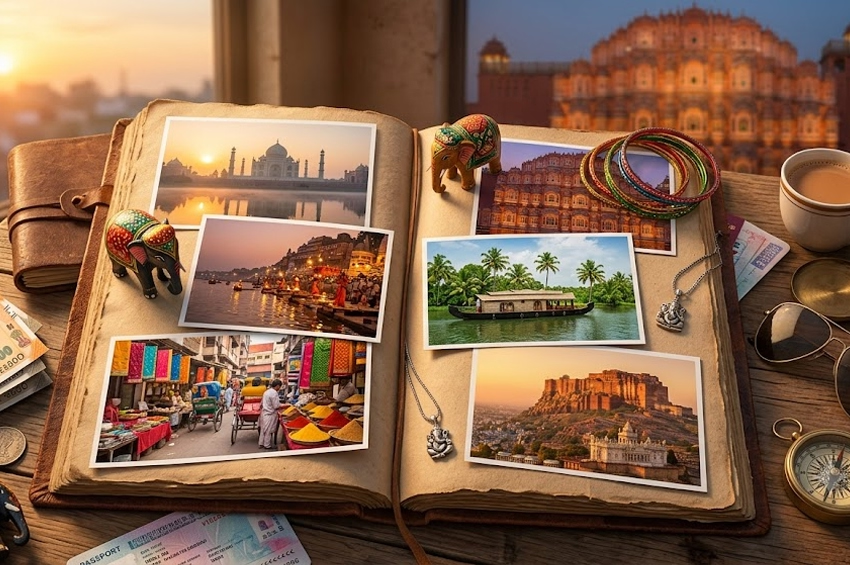
What First-Time India Travellers Need to Know
- Before You Go: Quick Checklist
- 1. Visa & Passport Requirements
- 2. India's e-Arrival Card
- 3. Best Time to Visit India
- 4. India Is Bigger Than You Think
- 5. Don't Overpack Your Itinerary
- 6. Cash, Cards & Payments
- 7. Drinking Water
- 8. Eating Safely Without Missing Indian Food
- 9. What to Wear
- 10. Temple & Religious Etiquette
- 11. Transport Options
- 12. Indian Trains
- 13. Private Driver or Train?
- 14. SIM Card & eSIM
- 15. English & Useful Hindi
- 16. Practical Safety
- 17. Tips for Women Travellers
- 18. Common Tourist Scams
- 19. Bargaining
- 20. Tipping
- 21. Heat, Dust & Long Days
- 22. Travel Insurance
- 23. Plugs & Electricity
- 24. Culture Shock
- 25. Leave Space in Your Schedule
- Best First-Time India Routes
- Mistakes First-Time Visitors Make
- First-Time India Travel FAQs
First Trip to India: Quick Planning Table
| Question | Practical Answer |
|---|---|
| Best easy first route | Delhi – Agra – Jaipur |
| Good trip length | 7–10 days for Golden Triangle; 12–15 days with Rajasthan |
| Comfortable North India season | October–March |
| Currency | Indian Rupee (INR) |
| Language | English is common in tourism; Hindi is useful |
| Water | Use sealed bottled or properly filtered water |
| Long-distance transport | Train, domestic flight or private car depending on route |
| Power | 230V / 50Hz; Type C, D and M sockets |
| National emergency | 112 |
| Tourist helpline | 1363 |
1. Check Your India Visa Before Anything Else
Do not build a non-refundable itinerary before confirming your entry requirements. Most foreign visitors need a valid passport plus an appropriate Indian visa or e-Visa, although exact eligibility depends on nationality and travel circumstances.
The Government of India provides an online e-Visa system for eligible nationalities. The official portal allows applicants to check eligibility, required documents, permitted immigration points and current application rules.
Before Applying for an India e-Visa
- Confirm that your nationality is currently eligible.
- Check passport-validity requirements.
- Use the exact name shown in your passport.
- Upload a clear passport bio page.
- Upload a compliant recent photograph.
- Choose the correct visa category.
- Check approved entry airports, seaports or immigration points.
- Pay only through the official process.
- Save your Electronic Travel Authorization offline.
- Check your visa status again before travelling.
2. Understand India's e-Arrival Card
This is one of the newer practical details that older India guides may not mention. The Government of India's current visa portal states that foreigners and OCI cardholders can complete the e-Arrival Card online within 72 hours before arrival in India.
The important distinction is that the e-Arrival Card is an arrival-information declaration. It does not replace an Indian visa or e-Visa when one is required.
Check the official visa/immigration portal again 48–72 hours before departure. Entry formalities can change more quickly than long-form travel articles.
3. Choose the Best Season for Your Actual Route
There is no one “best time to visit India” because the country includes deserts, tropical coasts, Himalayan regions, humid plains and high-altitude areas.
For a classic first trip through Delhi, Agra, Jaipur and Rajasthan, October through March is usually the easiest period for sightseeing.
| Season | North India Conditions | What First-Time Visitors Should Know |
|---|---|---|
| October–November | Pleasant days; popular season | Excellent for Delhi, Agra and Rajasthan |
| December–January | Cool mornings; fog possible | Carry layers and allow for train/flight delays |
| February–March | Generally comfortable | Excellent sightseeing weather |
| April–June | Very hot | Start sightseeing early and rest at midday |
| July–September | Monsoon in many areas | Expect humidity and possible heavy rain |
4. India Is Much Bigger Than It Looks on Google Maps
This is one of the most useful things to understand before a first trip. A route that looks reasonable on a map can involve half a day of actual travel.
A one-hour domestic flight may require a hotel checkout, airport transfer, early check-in, security, boarding, baggage collection and another hotel transfer. That “one-hour flight” can consume five or six hours of the day.
Similarly, trains should be measured from hotel door to hotel door, not only by their scheduled railway time.
5. Do Not Try to See All of India in Two Weeks
The fastest way to make India exhausting is to treat the trip like a checklist. Delhi, Agra, Jaipur, Jodhpur, Udaipur, Jaisalmer, Varanasi, Mumbai, Goa, Kerala and the Himalayas may all look tempting, but combining them in one short holiday creates an airport-and-hotel tour.
Fast Trip vs Better First India Trip
Overloaded Route
- Change hotel almost every night
- Several domestic flights
- Early checkouts and late arrivals
- Little time for markets or food
- No buffer for delays
Focused Route
- 2–3 nights in important cities
- Logical road or rail sectors
- Time for local neighbourhoods
- Flexible evenings
- Room for unexpected delays
6. Bring Cash, Cards and a Backup Payment Method
India has a highly digital payment economy, but international visitors should not rely on one system. Large hotels, established restaurants and modern shops usually accept cards, while smaller businesses, local markets, tips and rural stops may still be easier with cash.
A Practical Money Setup
- Carry two cards from different banks or networks.
- Keep one backup card separately.
- Withdraw cash from reputable bank ATMs.
- Keep small rupee notes for small purchases and tips.
- Do not carry all cash in one wallet.
- Check your bank's foreign transaction and ATM fees.
UPI is everywhere in India, but foreign-traveller access can depend on participating providers and current onboarding rules. Treat it as a useful extra if available, not your only way to pay.
7. Don't Drink Untreated Tap Water
You do not need to be frightened of eating or drinking in India, but water handling matters. For a first trip, use sealed bottled water or properly filtered water supplied by a reliable hotel, restaurant or tour provider.
Also Think About
- Ice when you are unsure how it was made
- Raw salads washed in uncertain water
- Pre-cut fruit sitting in the heat
- Fresh chutneys at places with poor hygiene
- Water bottle seals that appear damaged
8. Eat Indian Food — Just Don't Make Day One a Challenge
Food should be one of the highlights of the trip, not something you avoid. Start with busy restaurants serving freshly cooked food, then become more adventurous as you understand what suits you.
“Spicy” and “spiced” are not the same thing. Indian food can contain many aromatic spices without being extremely hot with chilli. If you prefer mild food, say “less chilli” rather than asking for no spices at all.
Good First-Week Food Habits
- Choose busy restaurants with good turnover.
- Eat food cooked fresh and served hot.
- Wash or sanitise hands before meals.
- Keep oral rehydration salts in your travel kit.
- Explain allergies clearly and specifically.
- Do not suddenly eat much richer food than you normally eat at home.
9. Pack for Weather and Context, Not Just Photographs
Loose, breathable clothes are practical in heat and dust. For most sightseeing, clothing that covers the shoulders and knees works well and avoids problems at religious sites.
A lightweight scarf is surprisingly useful: sun protection, dust, strong air-conditioning and religious visits can all make it useful on the same day.
10. Learn Basic Religious-Site Etiquette
India has Hindu temples, Sikh gurudwaras, mosques, Jain temples, churches and many other sacred spaces. Customs differ between places, so watch what local visitors are doing and follow signs.
- Remove shoes when requested.
- Cover your head where required.
- Ask before taking photographs.
- Do not interrupt prayers or ceremonies.
- Avoid touching religious objects without permission.
- Respect restricted areas.
11. Choose Transport Based on Distance — Not Habit
| Transport | Best For | What to Know |
|---|---|---|
| Domestic flight | Very long sectors | Add airport transfers and check-in time |
| Train | Major intercity routes | Popular services can sell out |
| Private car | Golden Triangle and Rajasthan | Door-to-door and flexible |
| Metro | Urban travel | Excellent where available |
| App taxi | City transfers | Check registration before boarding |
| Auto-rickshaw | Short local trips | Confirm price or app/meter arrangement |
12. Book Popular Indian Trains Early
Indian rail travel can be excellent, especially between cities such as Delhi and Agra, but popular trains and comfortable classes can fill quickly.
Large cities often have multiple railway stations, so check the station name, station code, train number, date, coach and seat status carefully.
13. A Private Driver Can Make North India Much Easier
For Delhi, Agra, Jaipur and Rajasthan, a private car with a professional driver is one of the most practical transport options for travellers who want flexibility.
A Driver Is Useful When You Want:
- Hotel-to-hotel transfers
- No luggage handling between stations
- Flexible food and photo stops
- Remote forts or heritage hotels
- Fewer transport negotiations
- A logical multi-city road route
14. Arrange Mobile Data Early
Mobile internet makes India much easier. You will use it for maps, train information, hotel contact, translation, ride-hailing, payments and communication with drivers.
An international eSIM can be convenient before landing. A local Indian SIM may offer better value for longer trips, but registration and activation requirements apply.
Download Before You Leave Home
- Offline Google Maps areas
- Hotel addresses
- Train or flight confirmations
- Passport and visa copies
- Travel insurance documents
- Important phone numbers
15. You Can Travel With English — But Learn Five Hindi Phrases
English is widely used in airports, hotels and established tourism businesses. In smaller markets or towns, a few Hindi words can make everyday interactions smoother.
| Phrase | Meaning |
|---|---|
| Namaste | Hello / respectful greeting |
| Dhanyavaad / Shukriya | Thank you |
| Kitna hai? | How much? |
| Nahi chahiye | I don't want it |
| Theek hai | Okay |
| Dheere | Slowly |
16. Use Normal Safety Habits — Consistently
Safety is less about being afraid of India and more about avoiding unnecessary risk. Crowded tourist areas require the same basic awareness you would use in any large international city.
- Keep bags closed in crowded places.
- Do not display large amounts of cash.
- Use registered or pre-arranged transport.
- Confirm unexpected booking changes directly.
- Avoid isolated areas late at night.
- Share major travel plans with someone you trust.
- Keep your hotel address accessible offline.
Emergency Numbers Worth Saving
- 112: National emergency number
- 1363: Tourist helpline
- 100: Police
- 101: Fire
- 102: Ambulance
17. Practical Advice for Women Travelling in India
Women travel throughout India independently, with friends and on organised trips. Planning transport and late arrivals carefully can make the experience much more comfortable.
- Use well-reviewed accommodation.
- Prefer verified cabs or pre-arranged transport late at night.
- Confirm vehicle registration before getting in.
- Keep someone informed about long journeys.
- Choose clothing with the local setting in mind.
- If an interaction feels uncomfortable, end it rather than worrying about appearing rude.
18. Know the Tourist Scams Before You See Them
The most useful scam advice is learning the pattern rather than memorising every possible variation.
Be Suspicious When a Stranger Suddenly Says:
- “Your hotel is closed.”
- “The road is closed.”
- “That monument is closed today.”
- “The official ticket office moved.”
- “Your train was cancelled.”
- “You need to visit the government tourist office first.”
Before changing your plan, verify unexpected information directly with your hotel, railway source, tour operator, monument staff or official booking channel.
19. Bargaining Is Normal — But Not Everywhere
Bargaining is common in bazaars and with some independent sellers. It is usually not appropriate at official monument counters, supermarkets, branded stores, pharmacies or clearly fixed-price businesses.
Keep bargaining relaxed. Ask the price, make a reasonable counteroffer and leave politely if the price does not work for you.
20. Tipping Exists, but There Is No Single Rule
Tipping is common in tourism and hospitality, but the appropriate amount depends on the service, trip length, group size and quality.
Before leaving a restaurant tip, check whether a service charge has already been added. Drivers, guides, porters and housekeeping are often handled separately.
21. Sightseeing Days Are More Physical Than They Look
Large forts, palace complexes, markets and monuments can involve several kilometres of walking. Heat, dust, stairs and uneven surfaces make that walking more tiring than the distance suggests.
Carry:
- Water
- Sunscreen
- Sunglasses
- Hat
- Hand sanitiser
- Tissues
- Personal medicines
- Oral rehydration salts
22. Travel Insurance Is Worth Considering Seriously
A suitable travel-insurance policy can help with medical treatment, cancellations, delays, missed connections, lost luggage and theft depending on the terms of the policy.
If your trip includes trekking, motorbike riding, wildlife safaris or other activities, read the exclusions carefully rather than assuming every activity is automatically covered.
23. Bring a Universal Travel Adapter
India generally uses 230V electricity at 50Hz with Type C, D and M sockets. Many modern phone and laptop chargers support 100–240V, but check the label on your device.
A plug adapter changes the shape of the plug. It does not convert voltage.
24. Some Things Will Feel Different — Give Them Time
Personal space, road traffic, queuing, bargaining, service pace and social curiosity can feel different from what you are used to. What seems chaotic during the first two days often starts to make more sense once you understand the rhythm.
Stay patient without becoming passive. You can be respectful while still saying a clear no to unwanted shopping, photographs, guides or detours.
25. Leave Empty Space in the Itinerary
Winter fog can delay trains, traffic can change driving times and festivals can unexpectedly close roads. Sometimes the delay is not even a problem—you may simply enjoy a monument or market longer than expected.
An itinerary with every hour booked has nowhere to absorb those changes. Keep major bookings organised, but leave some flexibility between them.
Best First-Time India Routes
7 Days: Golden Triangle
- Delhi
- Agra
- Jaipur
Best for: First-time visitors with one week who want India's most recognisable North India route without domestic flights.
10–13 Days: Golden Triangle + Rajasthan
- Delhi
- Agra
- Jaipur
- Jodhpur
- Udaipur
- Pushkar or Mandawa
Best for: Travellers who want major highlights plus lakes, forts, old cities and heritage hotels.
15–20 Days: Deeper Rajasthan
- Golden Triangle
- Jodhpur
- Udaipur
- Jaisalmer
- Ranthambore
- Bundi, Bikaner or rural heritage stays
Best for: Travellers who prefer a slower journey and do not want to fly between unrelated regions.
10 Mistakes First-Time Visitors to India Often Make
- Planning too many cities: you spend more time checking in and out than exploring.
- Looking only at map distance: road and station time changes the real journey.
- Booking flights too tightly: leave space for transfers and delays.
- Relying on one bank card: always have a backup.
- Drinking untreated water: use sealed or properly filtered water.
- Arriving without mobile data: maps and transport become unnecessarily difficult.
- Accepting unexpected “closed” information: verify it independently.
- Changing hotels every night: slower travel usually feels better.
- Underestimating heat: an afternoon fort visit in May is very different from January.
- Expecting everything to work exactly like home: flexibility makes the trip far easier.
Before-You-Go India Checklist
- Check passport validity.
- Confirm visa or e-Visa approval.
- Check current e-Arrival Card requirements.
- Buy suitable travel insurance.
- Book important trains, flights and hotels.
- Save all major documents offline.
- Carry two payment cards.
- Arrange some Indian Rupees.
- Set up a SIM, eSIM or roaming option.
- Download offline maps.
- Pack breathable clothing and comfortable footwear.
- Bring sunscreen and personal medication.
- Pack a universal adapter.
- Confirm airport or station pickup.
- Share your itinerary with a trusted person.
- Keep 112 and 1363 saved in your phone.
Frequently Asked Questions About Visiting India for the First Time
What should I know before visiting India for the first time?
Get your visa and arrival documents organised first, choose a realistic route, allow extra travel time, carry both cash and cards, use sealed or filtered water, arrange reliable transport and mobile data, and avoid trying to see too many regions in one short trip.
Is India difficult for first-time travellers?
India can feel intense at first because of traffic, crowds, unfamiliar transport systems and cultural differences. A focused route, reliable accommodation and pre-arranged transport for the first few days make the adjustment much easier.
What is the best route for a first trip to India?
Delhi, Agra and Jaipur are one of the easiest introductions to North India. The route combines historical Delhi, the Taj Mahal and Jaipur's forts and palaces without requiring domestic flights.
How many days do I need for my first trip to India?
Seven to ten days works well for Delhi, Agra and Jaipur. Around twelve to fifteen days is better if you also want to include several Rajasthan destinations.
What is the best time to visit Delhi, Agra and Jaipur?
October through March is generally the most comfortable period. December and January can have cold mornings and fog, while April through June can be extremely hot.
Do I need a visa before travelling to India?
Most foreign travellers require an appropriate visa or e-Visa before travel. Check the Government of India visa portal because eligibility and conditions depend on nationality.
What is India's e-Arrival Card?
The current Government of India system allows foreigners and OCI cardholders to submit arrival information online within 72 hours before arrival. It is an arrival declaration and does not replace a required visa.
Can foreign tourists drink tap water in India?
First-time international visitors should generally avoid untreated tap water. Use sealed bottled water or properly filtered water from a trusted source.
Can I eat street food in India?
Many travellers enjoy street food without problems, but choose busy stalls with high turnover and food cooked fresh in front of you. If you have just arrived, begin with reputable restaurants before becoming more adventurous.
Do I need cash in India?
Yes. Cards work at many established businesses, but cash remains useful for small markets, tips, local shops, toilets and places where international cards or digital payments fail.
Can foreign tourists use UPI in India?
Some foreign travellers may be able to access UPI through participating services, but availability and onboarding rules can vary. Carry cards and cash as backups rather than relying only on UPI.
Should I get a SIM card in India?
Yes, reliable mobile data is extremely useful for maps, transport, hotel contact and communication. An eSIM can be convenient before arrival, while a physical Indian SIM may suit longer stays.
Is English widely spoken in India?
English is widely used in airports, hotels, established tourism businesses and many major cities. A translation app and a few Hindi phrases can help in smaller towns.
Should I use trains or a private driver?
Trains are excellent on selected major routes, while a private driver can be more convenient for Delhi, Agra, Jaipur and Rajasthan road trips. Many first-time visitors use a combination of both.
Is a private driver expensive in India?
The cost depends on vehicle type, distance, trip length, tolls, parking and what the package includes. Compare the full trip cost rather than only the daily vehicle rate.
What clothes should tourists wear in India?
Loose, breathable clothing covering the shoulders and knees works well for most sightseeing. Religious places may require footwear removal, head covering or additional modesty.
Is India safe for tourists?
Millions of international travellers visit India, but sensible precautions are important. Use reliable transport, protect valuables, avoid isolated areas late at night and verify unexpected changes to bookings or travel plans.
What is India's emergency number?
The national emergency number is 112. Incredible India currently also lists 1363 as the tourist helpline.
What scams should first-time visitors watch for?
Be cautious when an unsolicited person claims your hotel, road, train, monument or official booking office is closed. Verify the information directly before changing your plans.
Do I need to tip in India?
Tipping is appreciated in tourism and hospitality but varies by service. Check restaurant bills for an existing service charge and ask your operator for current local guidance for guides and drivers.
Is India suitable for solo travellers?
Yes, but first-time solo travellers benefit from careful hotel selection, reliable transport, mobile data and a realistic route rather than frequent late-night arrivals in unfamiliar places.
Is India good for a first international trip?
India rewards travellers who are comfortable with cultural differences and busy cities. A well-planned Golden Triangle route can make the first visit much easier than trying to travel across several distant regions.
How much should I plan each day?
Two major sightseeing experiences plus meals and local travel are often enough. Trying to fit five or six major attractions into every day can quickly become tiring.
What is one thing first-time travellers underestimate most?
Travel time. Distances, traffic, railway stations, airports and hotel transfers often take longer than expected, so leave buffer time between major bookings.
Final Advice for Your First Trip to India
You do not need to understand everything about India before you arrive. You need a valid entry plan, realistic route, reliable transport for the important journeys and enough flexibility to deal with the unexpected.
For a first visit, fewer places usually create better memories. Spend time walking through a neighbourhood, sit down for a proper meal, stay long enough to see a city after the sightseeing crowds leave and allow the trip to include something you did not plan.
If you remember only five things, remember these: do not overpack the itinerary, verify unexpected information, protect your important documents, drink safe water and leave more travel time than the map suggests.