India Travel Guide 2026 for First-Time Visitors: Visa, Safety, Money, SIM, Trains, Packing & Itinerary
First Trip to India? Start With These 7 Decisions
If you are visiting India for the first time, do not begin by collecting a list of 30 cities. Begin with visa, season, route, trip length, transport, money and travel pace. Get those seven decisions right and most of the trip becomes easier.
For a first North India journey, Delhi → Agra → Jaipur remains one of the easiest routes to understand. Give it around 7–10 days if you want time to enjoy the cities rather than simply photograph the headline monuments. With 12–14 days, add only one meaningful extension—Rajasthan, Varanasi or wildlife—instead of trying to cross the whole country.
Entry and travel information checked: 22 August 2026
India Travel Essentials at a Glance
- Best first route: Delhi – Agra – Jaipur (Golden Triangle)
- Comfortable first-trip length: 7–10 days; 12–14 days with one extension
- North India comfort season: broadly October to March, with winter fog possible in Delhi/Agra
- Currency: Indian Rupee (INR)
- Payments: cards + cash; UPI can be an extra where foreign access is supported
- Water: sealed bottled or reliably filtered water
- Power: 230V / 50Hz; Type C, D and M sockets are encountered
- National emergency: 112
- Biggest planning mistake: trying to see too much too quickly
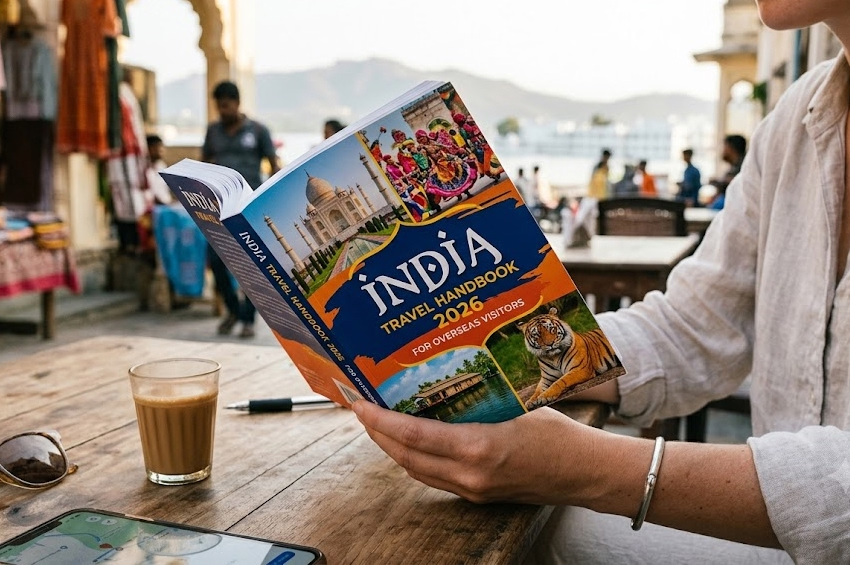
India is a difficult country to summarize because almost every useful travel sentence needs a second sentence beginning with “it depends.” Goa in January and Rajasthan in May are different trips. A night train and a private car solve different problems. A traveller who loves old cities may want Delhi, Agra and Jaipur; someone chasing beaches, wildlife or Himalayan landscapes needs a completely different first route.
That is why this is not another “50 things to do in India” article. It is a planning handbook for overseas visitors: the decisions you need before you fly, the systems that confuse first-time travellers after landing, and the small mistakes that cost time, money or energy.
Use it in stages. Read the visa, season and itinerary chapters before booking flights. Return to the money, SIM, train, food and packing sections a week before departure. Save the scams, tipping, transport and emergency sections on your phone for the trip itself.
India Travel Guide: Quick Navigation
- Before You Book
- Visa & Entry
- Arrival & Immigration
- Best Time to Visit
- How Many Days?
- Best First-Time Routes
- Golden Triangle
- Money, Cards & UPI
- SIM, eSIM & Internet
- Transport
- Indian Trains
- Private Driver vs Train
- Hotels
- Food & Water
- What to Wear
- Practical Safety
- Women Travellers
- Common Scams
- Tipping & Bargaining
- Packing
- 7, 10 & 14-Day Plans
- Common Mistakes
- India Travel FAQs
Before You Book a Trip to India
Do not let cheap flights decide the whole itinerary. Before paying for non-refundable travel, answer these questions:
- Can you legally enter India on the visa or e-Visa category you plan to use?
- Does your route match the season?
- How many full sightseeing days do you actually have after flights?
- Are you comfortable with trains, or would a private driver reduce stress?
- Do any regions on your route have special permit requirements or current travel-advisory warnings?
- Does your insurance cover your activities and destinations?
India Tourist Visa & e-Visa: What Foreign Visitors Need to Know
India's entry requirements depend on nationality, passport, purpose of travel and visa type. Many eligible tourists use the Government of India's e-Visa system, but do not assume that advice written for a US, UK, Australian or Canadian passport applies to every nationality.
Use the Official Visa Portal
Check eligibility, document requirements, permitted ports of entry, visa duration and application timing on the official Government of India visa website. Be careful with commercial sites designed to look official; they may charge additional service fees.
US Passport Holders
Current Indian consular information in the United States confirms that valid regular tourist visas and e-Visas are available under the applicable rules. It also notes limits on total stay and entry conditions. Always verify the exact rule for your visa before travel rather than relying on an old forum post.
Passport & Document Backups
- Carry your passport and required visa/ETA documentation.
- Keep a secure digital copy of passport and visa pages.
- Keep your travel-insurance policy and emergency number offline.
- Store a second copy separately from your main wallet or passport pouch.
India Arrival: What to Prepare Before Your Flight
India has introduced digital arrival and health-related processes that can change. Current 2026 travel advisories from countries including Australia and the UK reference online arrival/self-declaration requirements for international passengers. Check the live requirements close to departure rather than filling an old form weeks in advance.
Save screenshots or offline PDFs of important approvals. Airport Wi-Fi, roaming or mobile data may not work exactly when you need to show a document.
Best Time to Visit India: There Is No Single India Season
“Best time to visit India” is too broad unless you name a region. India spans deserts, tropical coasts, Himalayan mountains, central forests and huge plains. For the classic Delhi–Agra–Rajasthan circuit, October to March is generally the most comfortable period for sightseeing, but December and January can bring cold mornings and fog.
| Period | North India / Rajasthan | What to Expect |
|---|---|---|
| October–November | Excellent | Generally pleasant sightseeing; popular season begins |
| December–January | Good, cooler | Cold mornings; fog can affect Delhi/Agra visibility and transport |
| February–March | Excellent | Comfortable days; temperatures rise toward late March |
| April–June | Very hot | Early sightseeing essential; Rajasthan can be intensely hot |
| July–September | Monsoon influence | Humidity, rain and greener landscapes; conditions vary |
How Many Days Do You Need in India?
India punishes rushed itineraries more than many destinations because road distances, station transfers, airport time and city traffic consume real hours. Three cities in seven days can feel comfortable; seven cities in ten days usually means too much packing and transit.
| Trip Length | Realistic First-Trip Scope | Best For |
|---|---|---|
| 5–7 days | Delhi + Agra + Jaipur | Focused Golden Triangle |
| 8–10 days | Slower Golden Triangle + one nearby experience | Most first-time visitors |
| 12–14 days | Golden Triangle + Rajasthan / Varanasi / wildlife | Deeper cultural trip |
| 3 weeks | Two carefully connected regions | Travellers who want variety without constant transit |
Best India Routes for First-Time International Visitors
Route 1: Golden Triangle — Easiest Cultural Introduction
Delhi → Agra → Jaipur gives you Mughal and Rajput architecture, the Taj Mahal, major forts, old-city markets, modern urban India and manageable road/rail connections in one route.
Route 2: Golden Triangle + Rajasthan
Add Udaipur, Jodhpur or another Rajasthan city when you have 12–14 days. Do not add every famous Rajasthan stop just because it appears on a map.
Route 3: Golden Triangle + Varanasi
This route adds a completely different spiritual and river-city experience. Use a domestic flight or carefully chosen train rather than wasting multiple days in unnecessary road transfers.
Route 4: Golden Triangle + Ranthambore
A wildlife extension works well for travellers who want a break from forts and cities. Safari availability should be checked early because popular zones and dates can fill.
Why Delhi, Agra & Jaipur Work So Well for a First Trip
Search results across major travel publishers and specialist India operators repeatedly recommend the Golden Triangle for first-time visitors. The reason is not that it is India's only good route; it is that the logistics are relatively understandable while the experiences are dramatically different.
What Each Golden Triangle City Adds
Delhi & Agra
- Old Delhi markets and Mughal history
- Major monuments and urban contrast
- Taj Mahal and Agra Fort
- Strong rail and road connections
Jaipur
- Amber Fort and royal architecture
- Hawa Mahal and old-city streets
- Markets, crafts and Rajasthan culture
- Easy gateway deeper into Rajasthan
For deeper planning, see our Golden Triangle tour packages.
Money in India: Cash, Cards, ATMs & UPI
India is highly digital in many cities, but a foreign visitor should not plan a completely cashless trip. Large hotels, established restaurants and many shops accept cards. Small vendors, markets, tips, local transport and rural stops can still be easier with cash.
A Reliable Payment Setup
- Bring two cards from different banks or networks.
- Tell your bank you are travelling if required.
- Keep one backup card away from your everyday wallet.
- Withdraw from reputable bank ATMs in secure locations.
- Keep smaller rupee notes for tips and small purchases.
- Do not exchange your entire travel budget into cash at once.
Can Foreign Tourists Use UPI?
UPI is everywhere in India, but international-visitor access depends on participating services, onboarding rules and where you arrive. If it works for you, it is extremely convenient. Still carry a card and cash backup.
Bringing Foreign Currency Into India
Currency declaration rules apply above certain thresholds. For example, current UK travel advice notes declaration requirements when foreign-currency notes exceed USD 5,000 or when notes plus travellers cheques exceed USD 10,000 equivalent. Verify current Indian customs rules for your own situation before travelling with large amounts of cash.
SIM Card, eSIM & Internet in India
Mobile data makes India much easier. Maps, hotel messages, ride-hailing, train updates and translation all become simpler when your phone works.
Physical SIM
Tourist SIM availability and activation procedures can vary. Passport and visa documentation may be required. Airport counters can be convenient, while city stores may offer more options.
eSIM
An international eSIM can give you data immediately after landing, but some plans are data-only and do not provide an Indian phone number. Check whether you need a local number for the apps and services you plan to use.
Download offline Google Maps for your first cities and save hotel addresses before flying. Your first airport transfer should not depend on mobile data activating perfectly.
Getting Around India: Which Transport Should You Use?
| Transport | Best For | Main Trade-Off |
|---|---|---|
| Private car + driver | Golden Triangle, Rajasthan, families | More expensive than trains but very flexible |
| Train | Major city pairs | Booking classes/stations can confuse first-timers |
| Domestic flight | Long distances | Airport time and baggage rules |
| Metro | Delhi and other major cities | Does not reach every tourist sight directly |
| Auto-rickshaw | Short local trips | Fare negotiation or app availability varies |
| Ride-hailing/taxi | Urban transfers | Traffic still determines journey time |
Indian Train Travel for Foreign Tourists
Train travel can be one of the best parts of India, but the booking vocabulary is not intuitive on day one. Train number, station code, class, berth, waitlist status and boarding station all matter.
Train Classes: Keep It Simple
For many first-time international visitors, air-conditioned classes are the easiest place to start. On premium daytime trains, chair-car style seating can be very comfortable. On overnight routes, choose a class that matches your privacy and comfort expectations rather than automatically buying the cheapest available berth.
Station Strategy
- Confirm the exact station; large cities have multiple major stations.
- Arrive with a time buffer.
- Keep your train number and coach/seat details offline.
- Use official information screens and railway staff rather than random helpers.
- Do not hand your phone or passport to someone who claims your train is cancelled.
Private Driver vs Train: Which Is Better?
Train or Private Driver?
Choose Train If...
- You enjoy independent travel
- Your cities have convenient direct trains
- You are comfortable managing stations and luggage
- You want an iconic India travel experience
Choose a Driver If...
- You want door-to-door transfers
- You are travelling as a couple/family/group
- You have several stops between cities
- You want simpler luggage and hotel logistics
Where to Stay in India
Location often matters more than an extra hotel star. A beautiful hotel an hour from your sightseeing route can cost you more energy than a simpler property in the right neighbourhood.
Before Booking a Hotel
- Check recent reviews, not only the average score.
- Look at the map and actual road access.
- Confirm airport/train transfer options if arriving late.
- Ask about breakfast time if you have sunrise sightseeing.
- For heritage hotels, check lifts and stairs if mobility matters.
- Confirm whether taxes are included in the displayed rate.
Food & Water: Enjoy India Without Making Every Meal a Risk Calculation
Indian food should be one of the reasons you travel, not something you spend the trip avoiding. The useful rule is not “never eat street food.” It is to understand freshness, turnover, water and your own tolerance.
Drinking Water
Use sealed bottled water or properly filtered water from a reliable hotel or restaurant. Check seals. When uncertain about water quality, also think about ice, raw salads, chutneys and pre-cut fruit.
Eating Well in the First Few Days
- Choose busy places with good food turnover.
- Prefer freshly cooked, hot food.
- Wash or sanitise your hands before eating.
- Explain allergies clearly.
- If you dislike chilli, ask for “less chilli” rather than “no spices.”
- Give your body time to adjust instead of making your first dinner a food challenge.
What to Wear in India
India does not have one tourist dress code. Climate and setting matter. Lightweight cotton or linen works well in warm weather; modest layers are useful at temples, mosques and conservative areas; winter in North India can require a jacket or shawl in the morning.
Comfortable walking shoes matter because forts, old cities and monuments involve uneven surfaces and more walking than photographs suggest. For a detailed seasonal list, read our India packing guide.
Is India Safe for Tourists?
Safety cannot be reduced to a yes/no sentence for a country this large. Most tourist trips are completed without serious problems, but crime, harassment, transport risks, regional tensions and civil unrest can vary by place and time. Your own government's current India travel advisory should be part of route planning.
Practical Habits That Reduce Problems
- Use reputable accommodation and transport.
- Avoid displaying large amounts of cash.
- Keep your phone secure in crowded streets and stations.
- Do not accept unplanned detours to shops or “tourist offices.”
- Use well-reviewed transport for late-night arrivals.
- Share important route details with someone you trust.
- Keep passport copies and insurance information accessible.
- Do not travel into an advisory-restricted region because an old blog says it is fine.
India Travel Tips for Women
Women travel independently across India every day, but first-time visitors may prefer additional structure around late arrivals, isolated areas and transport. Book the first hotel and airport transfer before landing, choose central accommodation with strong recent reviews, and avoid arriving alone at an unfamiliar station in the middle of the night when a daytime option exists.
Clothing does not prevent harassment, and responsibility always lies with the person behaving badly. From a practical travel perspective, many visitors still prefer lightweight clothing that covers shoulders and knees because it works across religious sites, markets and conservative areas without requiring outfit changes.
Common Tourist Scams in India
The most useful scam advice is to learn the pattern, not memorize every story. The pattern is usually urgency + authority + a reason your original plan suddenly “cannot” happen.
| Claim | What to Do |
|---|---|
| “Your hotel is closed/full/burned down.” | Contact the hotel directly using the number in your confirmed booking. |
| “The monument/train is closed; come to this office.” | Check official information yourself. |
| “This is the government tourist office.” | Verify before entering or paying; private agencies can use official-looking language. |
| “Buy gems/carpets and resell them abroad for profit.” | Walk away. |
| “Your ticket is invalid; I can fix it.” | Ask uniformed staff or the official counter. |
| Unrequested shop stop during a tour | Tell your guide/driver clearly that you do not want commission shopping. |
Tipping & Bargaining in India
There is no single national tipping formula. Upscale hotels, guides, drivers and restaurants operate differently from local cafes and street stalls. Check whether a service charge is already included, then tip for genuinely helpful service rather than treating every interaction as mandatory.
Bargaining
Bargaining is common in some markets but not in fixed-price stores, malls, restaurants or ticket counters. Keep it friendly. Decide what the item is worth to you and walk away politely if you cannot agree.
Language: Do You Need Hindi?
No. English is widely used in hotels, airports, tourism businesses and many urban services, though fluency varies. A few Hindi phrases make daily interactions warmer and can help outside major tourism areas.
| Phrase | Meaning |
|---|---|
| Namaste | Hello / respectful greeting |
| Dhanyavaad / Shukriya | Thank you |
| Kitna? | How much? |
| Nahi chahiye | I don't need/want it |
| Thoda kam | A little less |
Electricity, Plugs & Charging
India uses 230V / 50Hz electricity. Type C, D and M plugs are encountered. A universal travel adapter is useful. Visitors from countries using 110–120V should check whether hair tools and other appliances are dual voltage before plugging them in.
Travel Insurance
Choose insurance for the trip you are actually taking. If you plan trekking, motorbikes, wildlife activities or remote travel, check those activities specifically. Read exclusions relating to government travel advisories; some policies can be affected if you travel against official advice.
What to Pack for India
- Passport, visa/entry documents and secure copies
- Two payment methods + some cash
- Universal adapter and charging cables
- Breathable clothing and modest layers
- Comfortable broken-in walking shoes
- Light scarf/shawl
- Sun protection
- Personal medication in appropriate packaging
- Basic first-aid/travel-health supplies
- Compact day bag
- Reusable bottle only when you have a reliable safe refill source
- Rain layer in monsoon season
- Warm layer for North India winter mornings
For a complete seasonal checklist, use our What to Pack for India Tour 2026 guide.
First-Time India Itineraries That Actually Leave Time to Travel
7-Day Golden Triangle
- Day 1: Arrive Delhi; light sightseeing only.
- Day 2: Old Delhi + New Delhi.
- Day 3: Delhi to Agra; Agra Fort and local area.
- Day 4: Taj Mahal; continue to Jaipur.
- Day 5: Amber Fort + Jaipur old city.
- Day 6: Jaipur local experiences and markets.
- Day 7: Return/continue onward.
10-Day First India Trip
- 2–3 nights Delhi
- 1–2 nights Agra
- 3 nights Jaipur
- 2 nights Ranthambore, Pushkar or another nearby extension
14-Day India & Rajasthan Introduction
- Delhi – 2 nights
- Agra – 1 night
- Jaipur – 3 nights
- Jodhpur – 2 nights
- Udaipur – 3 nights
- Travel/buffer – remaining nights
Do not count a five-hour road transfer as a sightseeing day. A slower route with one fewer city usually produces more memories and fewer photographs taken through a car window.
India Travel Budget: What Changes the Cost Most?
Your total cost is shaped less by monument tickets than by hotel category, private transport, domestic flights, guides and how often you change cities.
| Travel Style | Where the Money Goes | Best Saving Strategy |
|---|---|---|
| Budget | Hostels/guesthouses, trains, local food | Travel slower and book major trains early |
| Mid-range | 3–4 star hotels, private transfers, guides | Use a driver only where it adds real value |
| Luxury | Heritage hotels, premium rooms, private touring | Spend on location and experiences, not constant hotel changes |
India Customs & Baggage: Do Not Assume Old Allowances
India updated baggage rules in 2026. Current official customs material distinguishes tourists of foreign origin from residents and other passenger categories and sets specific duty-free allowances and prohibited items. If you are bringing expensive equipment, large quantities of goods, jewellery, restricted products or substantial currency, read current customs rules before flying.
20 Mistakes First-Time Visitors Make in India
- Trying to visit too many cities.
- Booking the cheapest flight without checking arrival time.
- Using a third-party visa site without realizing it is not official.
- Assuming every “government tourist office” is government-run.
- Drinking untreated tap water.
- Carrying only one bank card.
- Expecting every shop to accept an international card.
- Assuming UPI will automatically work for every foreign phone/account.
- Booking overnight trains without understanding the class.
- Going to the wrong station in a multi-station city.
- Underestimating road travel time.
- Planning sightseeing immediately after a long-haul arrival.
- Choosing hotels only by star rating, not location.
- Overpacking.
- Wearing new shoes on a fort-and-market sightseeing day.
- Planning Rajasthan midday sightseeing in peak summer.
- Assuming December sunrise always means clear Taj Mahal views.
- Accepting unrequested shopping stops.
- Ignoring current regional travel advisories.
- Leaving no free time for delays, rest or spontaneous discoveries.
Frequently Asked Questions About Traveling to India
Is India good for first-time international travellers?
Yes, if the route is planned realistically. The Golden Triangle is a common starting point because Delhi, Agra and Jaipur have strong tourism infrastructure and connect major cultural sights without requiring cross-country travel.
How many days should my first India trip be?
Seven to ten days is a useful minimum for a comfortable Delhi–Agra–Jaipur trip. Twelve to fourteen days gives you room for one additional region or experience.
What is the best month to visit India?
There is no single best month for the whole country. For Delhi, Agra and Rajasthan, October through March is broadly the most comfortable sightseeing period, with colder and sometimes foggy conditions in mid-winter.
Do I need a visa?
Visa requirements depend on nationality and travel purpose. Check the Government of India's official visa/e-Visa portal for your passport before booking non-refundable travel.
Do I need an e-Arrival Card?
India's arrival processes have changed in 2026 and current government travel advisories reference online arrival requirements for international passengers. Check the current official rule shortly before departure.
Is India safe for tourists?
Most tourist trips are completed safely, but risk varies by region. Use reputable transport, protect valuables, avoid isolated areas late at night and follow your government's current India travel advisory.
Is India safe for solo women?
Women travel independently throughout India, but careful transport and accommodation planning is particularly useful. Avoid unnecessary late-night arrivals, use reputable drivers and hotels, and trust your instincts when an interaction feels wrong.
Can I use my credit card?
International cards are accepted at many hotels, restaurants and larger shops, but cash remains useful. Carry more than one payment method.
Can foreigners use UPI?
Some foreign visitors can access UPI through participating services, but availability and onboarding can vary. Do not make UPI your only payment plan.
Should I exchange money before arriving?
You do not need to carry your whole budget in rupees. Many travellers use a combination of cards, ATMs and a modest amount of cash. Check your bank's fees first.
Can I drink tap water?
First-time visitors should use sealed bottled water or reliably filtered/treated water rather than untreated tap water.
Is street food safe?
No food type is automatically safe or unsafe. Choose busy stalls with high turnover, freshly cooked hot food and good hygiene. Be more cautious with raw ingredients and uncertain water.
Do I need vaccines?
Health recommendations depend on your medical history, route, season and activities. Consult an appropriate travel-health professional and official health guidance before departure.
What plugs are used in India?
India uses 230V / 50Hz electricity and Type C, D and M plugs are encountered. A universal adapter is useful.
Should I take trains in India?
Yes if the route and timing are convenient. Trains can be efficient and memorable, but first-time visitors should understand the station, class, coach and booking status before travel.
Is a private driver worth it?
For couples, families and Golden Triangle/Rajasthan routes, a private driver can simplify luggage, hotel transfers and sightseeing stops. Trains may be better for fast direct city-to-city journeys.
How much should I tip?
There is no universal rule. Check for included service charges and tip guides, drivers and hospitality staff according to service level and trip style rather than following one percentage everywhere.
What should tourists wear?
Wear breathable clothing suited to the weather, comfortable shoes and carry modest layers for religious sites. North India needs warmer layers on winter mornings.
What is India's emergency number?
The national emergency response number is 112. Also keep your embassy/consulate and travel insurer's emergency contacts saved offline.
Is the Golden Triangle worth it?
For most first-time visitors interested in history, architecture and culture, yes. It is popular because Delhi, Agra and Jaipur offer very different experiences in a relatively manageable circuit.
Can I see India in two weeks?
You can see one or two regions well. You cannot meaningfully see the whole country. A focused two-week itinerary is far more enjoyable than trying to collect distant destinations.
Related India Planning Guides
- 25 Things to Know Before Visiting India
- What to Pack for India Tour
- Taj Mahal Dress Code Guide
- Taj Mahal Sunrise vs Sunset
- Golden Triangle Tour Packages
- Heritage Rajasthan Tour Packages
Final Advice for Your First Trip to India
The travellers who enjoy India most are rarely the ones with the longest itinerary. They are the ones who leave enough time to understand where they are. Give Delhi a real day instead of an airport transfer. Give the Taj Mahal a morning instead of a photograph between two highways. Give Jaipur time after Amber Fort to walk through the old city. Leave one afternoon unplanned.
India becomes easier when you stop treating every unknown as a problem to solve in advance. Prepare the things that matter—documents, route, season, transport, money, insurance and safe arrival—then leave room for the country to surprise you.