Albert Hall Museum Jaipur Complete Guide: Ticket Price 2026, Timings, Mummy & Visitor Tips
Albert Hall Museum Jaipur: Quick Information
- Indian adult ticket: ₹100
- Indian student ticket: ₹50
- Foreigner adult ticket: ₹600
- Foreigner student ticket: ₹300
- Composite ticket – Indian adult: ₹550
- Composite ticket – Indian student: ₹180
- Composite ticket – foreign adult: ₹1,700
- Composite ticket – foreign student: ₹800
- Children: Free entry below 7 years
- Location: Ram Niwas Garden, Jaipur
- Famous exhibit: Egyptian mummy
- Recommended visit duration: 1.5–2 hours
Albert Hall Museum Ticket Price 2026
Planning a visit to Albert Hall Museum in Jaipur? The most important thing to know before arriving is that older travel websites may still show outdated admission prices. The Rajasthan Government OBMS listing for Government Central Museum, Albert Hall Jaipur currently displays the following general and composite ticket rates.
| Visitor Category | General Ticket | Composite Ticket |
|---|---|---|
| Indian Adult | ₹100 | ₹550 |
| Indian Student | ₹50 | ₹180 |
| Foreigner Adult | ₹600 | ₹1,700 |
| Foreigner Student | ₹300 | ₹800 |
| Children Below 7 Years | Free | Check current government conditions |
Official ticket note: These prices are based on the Rajasthan Government OBMS Albert Hall listing checked for this guide. Government tariffs can be revised, so the amount shown on the official government booking system or ticket counter on your travel date should always be treated as final.
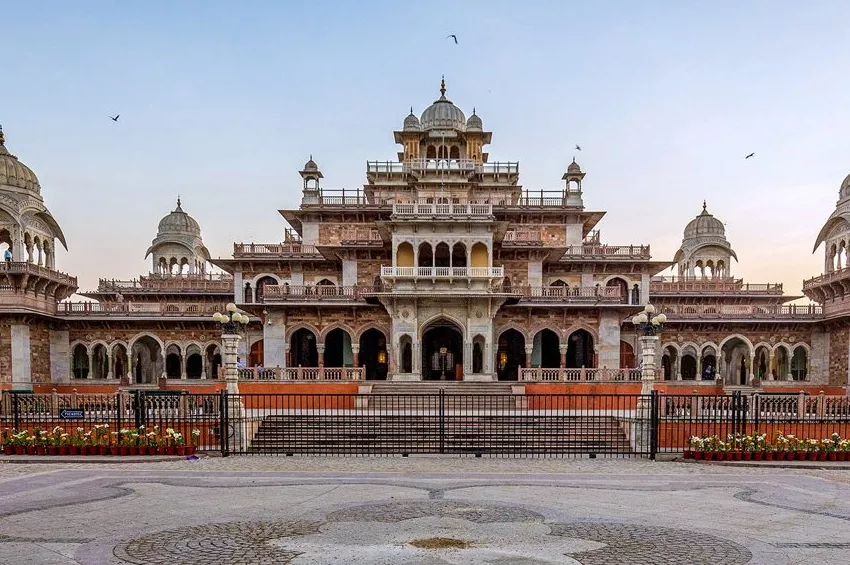
Albert Hall Museum is easy to recognise but surprisingly easy to underestimate. Many travellers first notice the grand building while driving through central Jaipur, while others arrive because they have heard about the Egyptian mummy kept inside. Once you enter, however, the museum turns out to be much broader than either of those impressions.
Its galleries introduce visitors to paintings, arms, textiles, carpets, pottery, sculpture, decorative objects and artistic traditions connected with Rajasthan and beyond. The museum building is also an attraction in its own right, with arches, domes, chhatris and elaborate architectural details that look completely different in daylight and after illumination.
This guide is designed for travellers who want practical answers before arriving: How much is the Albert Hall ticket? What is the foreigner entry fee? Is there a student discount? What is the composite ticket? Is the mummy really inside? How much time is required? What attractions can be combined with Albert Hall?
Albert Hall Museum Jaipur Visitor Guide
Albert Hall Museum Jaipur Entry Fee 2026
The current general ticket prices displayed on the Rajasthan Government OBMS Albert Hall page are ₹100 for an Indian adult, ₹50 for an Indian student, ₹600 for a foreign adult and ₹300 for a foreign student.
| Ticket Category | Price in INR | What to Carry |
|---|---|---|
| Indian Adult | ₹100 | Government ID if requested |
| Indian Student | ₹50 | Valid student ID |
| Foreigner Adult | ₹600 | Passport or accepted travel ID |
| Foreigner Student | ₹300 | Valid student ID and passport/travel ID |
Albert Hall Museum Ticket for Indian Tourists
For Indian travellers, the general adult admission is ₹100. Eligible students are shown at ₹50. Students should keep their valid student identity card ready instead of assuming the concession will automatically be applied.
Albert Hall Museum Ticket for Foreign Tourists
The government listing displays a general admission fee of ₹600 for foreign adults and ₹300 for foreign students. Foreign students should carry both appropriate student identification and their passport or accepted travel document.
Albert Hall Museum Jaipur Composite Ticket Price
The government OBMS listing also displays a separate composite-ticket category. This is relevant for travellers planning multiple state-managed heritage attractions rather than Albert Hall alone.
| Visitor Type | Composite Ticket Price |
|---|---|
| Indian Adult | ₹550 |
| Indian Student | ₹180 |
| Foreigner Adult | ₹1,700 |
| Foreigner Student | ₹800 |
Should You Buy the Composite Ticket?
Do not automatically buy a composite ticket just because you see it offered. First decide which attractions you genuinely intend to visit, then compare their individual admission costs with the live composite-ticket price.
The composite option is generally more relevant when your Jaipur sightseeing plan includes several participating government monuments. If Albert Hall is your only paid government attraction that day, an individual admission ticket is usually the simpler choice.
Before buying any combined monument ticket, check the current government list of included attractions and its validity. Included sites and ticket conditions can change.
Who Gets Free Entry at Albert Hall Museum?
Children Below 7 Years
The Rajasthan Government OBMS information states that children below seven years receive free entry.
Recommended Student Groups
The government information also states that entry for student groups can be free every day between 10:00 AM and 5:00 PM when the group visits on the recommendation of its respective institute.
This is different from simply arriving as an individual student. Schools, colleges and other educational groups should organise the appropriate institutional recommendation before travelling.
Free Entry Days
The official information displayed for Albert Hall mentions special free-entry occasions including:
- Rajasthan Diwas
- 18 April – World Heritage Day
- 18 May – World Museum Day
Special-day policies can be updated by the department, so check the government portal before planning a visit specifically around free entry.
Albert Hall Museum Jaipur Timings
Albert Hall operating hours can be revised by the museum or Rajasthan Government, particularly around events, maintenance, public holidays and special programmes. For this reason, travellers should check the Timings tab on the official OBMS listing shortly before travelling rather than relying entirely on an old blog timetable.
If seeing the museum collection is important to you, arrive with enough time to explore without rushing the final galleries. Around 1.5 to 2 hours works well for most first-time visitors.
Best Time to Visit Albert Hall Museum
Morning
Morning is a good choice if you want a quieter museum experience and softer exterior light for photography. It also leaves the rest of your day free for Hawa Mahal, Jantar Mantar and City Palace.
Afternoon
Albert Hall is useful during a hot Jaipur afternoon because a substantial part of the experience is indoors. It can be a practical break between outdoor monuments.
Evening
The building becomes especially photogenic when illuminated. Even travellers who visit the galleries earlier in the day often return or pass Albert Hall after dark to see its architectural lighting.
Egyptian Mummy at Albert Hall Museum Jaipur
Yes, there really is an Egyptian mummy inside Albert Hall Museum, and it remains one of the exhibits most visitors ask about before arriving.
For many families and first-time visitors, the mummy becomes the starting point of the museum experience. It is worth seeing, but treating Albert Hall as a one-object museum means missing much of what makes the collection interesting.
The broader museum contains material connected with paintings, textiles, weapons, carpets, pottery, sculpture and decorative arts. These galleries help place Rajasthan's artistic traditions in a wider historical context.
What to See Inside Albert Hall Museum
1. Egyptian Collection
The mummy is the headline attraction for many visitors. Take time to see the surrounding collection rather than simply photographing or viewing the mummy and immediately leaving.
2. Rajasthani Miniature Paintings
Look for differences between regional painting traditions. Rajasthan's miniature schools vary in palette, figures, landscape, court scenes and devotional imagery.
3. Arms and Weapons
Historic weapons are popular with families, but the craftsmanship deserves as much attention as the objects themselves. Look closely at metalwork, handles and decoration.
4. Textiles and Costumes
This section is particularly useful if you plan to shop for textiles later in Jaipur. Museum pieces provide historical context for the patterns, embroidery and fabric traditions seen in modern bazaars.
5. Historic Carpets
Large carpets are easy to walk past quickly, but their scale, pattern density and workmanship reward a closer look.
6. Pottery
Jaipur is closely associated with decorative craft traditions, making historic pottery an especially relevant part of the museum experience.
7. Sculpture
Stone and metal sculpture expands the museum beyond royal objects and introduces a wider range of religious, artistic and historical material.
8. Decorative Arts
Smaller metal, craft and decorative objects often reveal details that are missed when visitors concentrate only on large exhibits.
How Much Time Is Needed for Albert Hall Museum?
| Available Time | Suggested Visit |
|---|---|
| 45 Minutes | Egyptian mummy plus a few selected highlights |
| 1 Hour | Good highlights visit |
| 1.5–2 Hours | Recommended for most first-time visitors |
| 2.5+ Hours | Best for art, museum and history enthusiasts |
If You Have Only One Hour
- Spend a few minutes looking at the building and central architecture.
- Visit the Egyptian mummy.
- Choose one miniature painting section.
- See the arms and weapons.
- Visit either textiles or carpets.
- Finish with pottery or decorative art.
- Save a few minutes for exterior photographs.
Albert Hall Museum History
Albert Hall belongs to Jaipur's important late nineteenth-century architectural period. Its foundation stone was laid in 1876 during the visit of the Prince of Wales.
The building was designed by Sir Swinton Jacob, whose architectural work became closely associated with Jaipur during this period.
Albert Hall developed as a public museum rather than simply a ceremonial palace building. Its broad collection reflects a larger educational purpose: visitors, artists and craftspeople could study objects, techniques and styles from Rajasthan as well as material from other regions.
Albert Hall Museum Architecture
Albert Hall is one of Jaipur's best-known examples of Indo-Saracenic architecture, a style that combines Indian architectural elements with design influences associated with the colonial period.
The museum's arches, domes, chhatris, balconies, carved details and layered façade make it visually impressive even for visitors who do not normally spend much time studying architecture.
Why Albert Hall Looks Different at Night
The building is not a flat façade. Its arches, columns, recesses and domes create layers of depth. When illuminated, different architectural surfaces catch the light at different levels, which is why Albert Hall photographs so dramatically after sunset.
Albert Hall Museum Guide for Foreign Tourists
The Rajasthan Government OBMS listing currently displays ₹600 for a foreign adult and ₹300 for a foreign student.
- Keep your passport or travel identification accessible.
- Foreign students should carry valid student proof.
- Ticket prices are displayed in Indian rupees.
- Allow around 1.5–2 hours for a first visit.
- Do not use old foreigner prices from outdated travel blogs.
- Check the live government tariff before payment.
Albert Hall works particularly well for international visitors who want more context for Rajasthan's crafts, paintings, textiles and decorative traditions before exploring Jaipur's markets.
Albert Hall Museum with Children
Albert Hall is one of Jaipur's easier museum experiences for families because children can focus on visually memorable exhibits rather than having to understand every historical label.
A useful strategy is to turn the visit into a small challenge: find the mummy, choose the most unusual weapon, pick a favourite textile pattern and identify an object they would most like to learn about.
Children Below Seven
The current government information states that children below seven years receive free entry.
Albert Hall Museum for Senior Citizens
Compared with Jaipur's hill forts, Albert Hall is generally easier for senior travellers because there is no major uphill climb. The main consideration is the amount of standing and walking required inside the galleries.
- Use a taxi or auto for direct drop-off.
- Avoid rushing the galleries.
- Allow regular rest breaks.
- Do not combine too many walking-heavy attractions without breaks.
- Ask museum staff about current accessibility arrangements if required.
Photography at Albert Hall Museum
Exterior Photography
The exterior is among Jaipur's most photographed public buildings. Early morning gives softer light, while the illuminated façade becomes the main attraction after dark.
Photography Inside
Always follow the current signage inside the museum. Rules regarding flash, tripods, particular galleries and sensitive objects can change.
Professional Photography
Do not assume a normal museum admission ticket includes professional, commercial, fashion, pre-wedding or filming permissions. Such activities can be subject to separate departmental rules and charges.
Best Albert Hall Museum Photo Ideas
- Full front façade
- Symmetrical central view
- Domes against the evening sky
- Arches and layered balconies
- Architectural detail shots
- Illuminated exterior after sunset
How to Reach Albert Hall Museum Jaipur
Albert Hall Museum stands inside Ram Niwas Garden in central Jaipur, just outside the historic walled Pink City. Its central location makes it one of the easiest major Jaipur attractions to combine with other sightseeing.
From Hawa Mahal
Albert Hall is a short drive from the Hawa Mahal and Johari Bazaar area. Auto-rickshaw, taxi or sightseeing car are the easiest options.
From Bapu Bazaar
Bapu Bazaar and New Gate are relatively close. Walking may be comfortable in pleasant weather, although Jaipur heat and traffic make a short auto ride easier for many visitors.
From Jaipur Railway Station
A taxi or auto-rickshaw is the simplest direct option. Allow extra time during busy Jaipur traffic periods.
From Jaipur Airport
Taxi is the most comfortable choice, especially with luggage. Albert Hall can also be included as one stop in a wider sightseeing itinerary after hotel check-in.
By Jaipur Sightseeing Car
A private sightseeing car becomes useful when Albert Hall is combined with Amber Fort, Jal Mahal, Hawa Mahal, City Palace and Jantar Mantar on the same day.
Parking at Albert Hall Museum
Albert Hall is located in a busy central Jaipur area. Parking and traffic arrangements can change during events or peak periods. Drivers should follow current designated parking and traffic signage around Ram Niwas Garden.
Places to Visit Near Albert Hall Museum
Ram Niwas Garden
You are already inside the historic garden complex when visiting Albert Hall.
Masala Chowk
A convenient food stop if you want to sample several Jaipur snacks and local dishes in one place.
Bapu Bazaar
A popular shopping area for textiles, juttis, souvenirs and traditional Jaipur products.
Before shopping, see our Jaipur Shopping Guide.
Hawa Mahal
One of Jaipur's signature landmarks and a natural next stop while moving deeper into the Pink City.
Jantar Mantar
The historic astronomical observatory sits close to City Palace and works well in the same sightseeing sequence.
City Palace Jaipur
City Palace can easily be combined with Hawa Mahal and Jantar Mantar after Albert Hall.
Birla Mandir
A useful later-day stop if your route continues towards the JLN Marg side of Jaipur.
Best Half-Day Jaipur Route with Albert Hall
Start: Albert Hall Museum
Next: Hawa Mahal
Then: Jantar Mantar
Next: City Palace
Finish: Bapu Bazaar, Johari Bazaar or lunch in the Pink City
Best Full-Day Jaipur Sightseeing Route
Amber Fort → Jal Mahal → Hawa Mahal → Jantar Mantar → City Palace → Albert Hall Museum → Jaipur market or illuminated Albert Hall exterior.
Visiting Amber earlier in the day generally makes sense because it involves more outdoor walking and hill-side exposure, while Albert Hall can work well as a later indoor museum stop.
Albert Hall Museum in Summer
Albert Hall is particularly useful during hot Jaipur weather because much of your visit takes place indoors. Use sun protection for the approach and exterior areas.
Albert Hall Museum in Monsoon
Cloudy skies can make the museum's architecture especially photogenic. Carry rain protection and take care on wet outdoor surfaces.
Albert Hall Museum in Winter
Winter is one of the best periods for combining Albert Hall with walking through Jaipur's old city. Morning and evening temperatures are also more comfortable for exterior photography.
What Not to Miss at Albert Hall Museum
- Egyptian mummy
- Indo-Saracenic architecture
- Miniature paintings
- Historic textiles
- Arms and weapons
- Carpets
- Pottery
- Metalwork and decorative objects
- Exterior architectural details
- Illuminated building if your schedule permits
Common Mistakes to Avoid
- Using old ticket prices from outdated blogs.
- Arriving without student ID when claiming a concession.
- Coming only for the mummy and ignoring the rest of the collection.
- Rushing the museum in 20–30 minutes.
- Assuming the composite ticket is automatically cheaper for your itinerary.
- Buying a composite ticket without checking included attractions.
- Ignoring current government timings.
- Using flash where museum signage does not allow it.
- Trying to photograph the building from unsafe traffic areas.
- Skipping the exterior architecture entirely.
Official Albert Hall Museum Ticket Source
For final ticket prices, concessions, available booking products and current visitor information, check the Rajasthan Government OBMS listing:
Rajasthan Government OBMS – Government Central Museum Albert Hall Jaipur
Related Jaipur Travel Guides
- Jaipur Monument Ticket Prices & Timings Guide
- Amber Fort Jaipur Complete Guide
- Jaipur Complete Travel Guide
- Jaipur UNESCO World Heritage Sites
- What to Buy in Jaipur
- Jaipur Airport Taxi Guide
Albert Hall Museum Jaipur FAQs
What is Albert Hall Museum ticket price for Indians?
The Rajasthan Government OBMS listing currently displays ₹100 for an Indian adult.
What is Albert Hall Museum ticket price for Indian students?
The current government listing displays ₹50 for Indian students. Carry valid student identification.
What is Albert Hall Museum ticket price for foreigners?
The Rajasthan Government OBMS Albert Hall listing displays ₹600 for a foreign adult.
What is the Albert Hall foreign student ticket?
The government listing displays ₹300 for a foreign student.
What is the Albert Hall composite ticket price for Indian adults?
The current Rajasthan Government OBMS listing displays ₹550.
What is the composite ticket price for Indian students?
The government listing displays ₹180.
What is the Jaipur composite ticket price for foreign adults?
The government Albert Hall listing displays ₹1,700 for the foreign adult composite-ticket category.
What is the composite ticket price for foreign students?
The government listing displays ₹800 for foreign students.
Is Albert Hall Museum free for children?
Yes. The government information states that children below seven years receive free entry.
Are student groups allowed free entry?
The government information states that recommended student groups can receive free entry every day from 10:00 AM to 5:00 PM on the recommendation of their respective institute.
Does Albert Hall Museum really have an Egyptian mummy?
Yes. The Egyptian mummy is one of the museum's most famous exhibits.
Where is Albert Hall Museum?
Albert Hall Museum is located in Ram Niwas Garden, Jaipur, Rajasthan.
How much time is needed to see Albert Hall Museum?
Around 1.5 to 2 hours is comfortable for most first-time visitors.
Can Albert Hall Museum be visited in one hour?
Yes. In one hour, prioritise the Egyptian mummy, miniature paintings, arms, textiles or carpets and the building's architecture.
Can I buy Albert Hall Museum tickets online?
Check the Rajasthan Government OBMS portal for current online ticket availability and booking products.
What should I visit after Albert Hall Museum?
Hawa Mahal, Jantar Mantar and City Palace form one of the easiest sightseeing routes after Albert Hall.
Can Albert Hall be combined with Amber Fort?
Yes. A practical route is Amber Fort first, followed by Jal Mahal, the Pink City attractions and Albert Hall later in the day.
Is Albert Hall Museum worth visiting?
Yes. The attraction combines a historic museum collection, Rajasthan art and crafts, an Egyptian mummy and one of Jaipur's most distinctive heritage buildings.
Final Advice for Visiting Albert Hall Museum Jaipur
Albert Hall deserves more than a quick photo from the road. Give yourself enough time to see the Egyptian mummy, but do not let that become the entire museum visit. The paintings, textiles, weapons, pottery, decorative art and architecture provide a much fuller understanding of Jaipur's artistic heritage.
The biggest practical change for travellers is the ticket tariff. Many older pages still display outdated admission prices. For planning purposes, use the current Rajasthan Government OBMS rates shown in this guide, then check the official portal one more time before payment.