Jaipur UNESCO World Heritage Sites: 3 Places, History, Tickets & Best Route
Jaipur UNESCO Heritage at a Glance
- Jaipur City, Rajasthan: UNESCO World Heritage property since 2019
- Jantar Mantar: separate UNESCO World Heritage Site since 2010
- Amber Fort: one of six components of the Hill Forts of Rajasthan, inscribed in 2013
- Best one-day order: Amber Fort → Jantar Mantar → walled city walk
- Best season: October to March for comfortable walking
- Best for photography: Amber early morning, Hawa Mahal street in morning light, old city late afternoon
- Important: Hawa Mahal and City Palace are not separate UNESCO listings, though both belong to Jaipur's historic heritage context
So, How Many UNESCO Sites Does Jaipur Actually Have?
The cleanest answer is: three UNESCO World Heritage recognitions that a visitor can meaningfully experience in Jaipur.
Jaipur City is itself an inscribed World Heritage property. Jantar Mantar is separately inscribed. Amber Fort is not an individual listing by itself, but it is the Jaipur component of the serial UNESCO property Hill Forts of Rajasthan.
This distinction matters because many travel articles incorrectly count Hawa Mahal, City Palace and Amber as three separate Jaipur UNESCO sites. Hawa Mahal and City Palace are major heritage landmarks, but neither is separately inscribed as its own World Heritage property.
UNESCO and visitor information checked: 22 August 2026
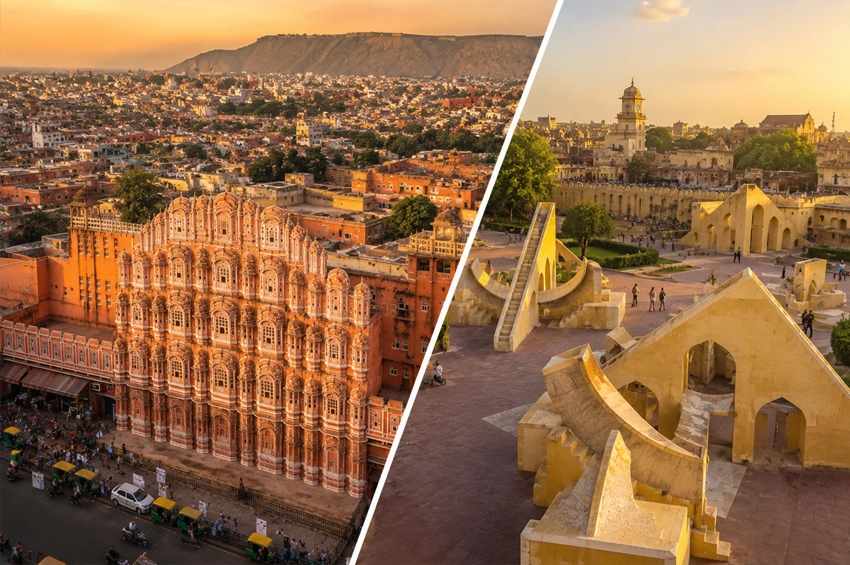
Jaipur is one of those cities where visitors can accidentally spend a day looking at famous buildings without understanding why the city itself matters. Hawa Mahal is photogenic, Amber Fort is dramatic and Jantar Mantar looks almost futuristic, but UNESCO recognition is not awarded simply because a place is old or beautiful.
Jaipur's World Heritage value comes from three different ideas: urban planning and craft-based city life, astronomical science, and Rajput hill-fort architecture. Once you understand those three layers, the old city stops feeling like a collection of photo stops and starts making sense as a connected historical landscape.
What This Jaipur UNESCO Guide Covers
Jaipur UNESCO World Heritage Sites: Quick Table
| UNESCO Property | Inscribed | UNESCO Criteria | What You Visit |
|---|---|---|---|
| Jaipur City, Rajasthan | 2019 | (ii), (iv), (vi) | Walled city, historic urban plan, bazaars, gates and heritage streets |
| The Jantar Mantar, Jaipur | 2010 | (iii), (iv) | Astronomical instruments and monumental observatory |
| Hill Forts of Rajasthan — Amber component | 2013 | (ii), (iii) | Amber Fort/Palace and its hill-fort heritage landscape |
1. Jaipur City, Rajasthan — The UNESCO World Heritage City
Jaipur City was inscribed on the UNESCO World Heritage List in 2019. UNESCO records the property at about 710 hectares with a buffer zone of approximately 2,205 hectares.
The important point is that UNESCO did not inscribe only a single palace or one street. The significance lies in the planned historic city: its grid, major market streets, public squares, craft traditions and the relationship between architecture, commerce and urban life.
Why Jaipur City Is Different from Other Historic Indian Cities
Many old Indian cities grew gradually through centuries of changing streets and neighbourhoods. Jaipur was established as a deliberately planned capital under Sawai Jai Singh II. The broad avenues, market axes and organised urban structure are part of why the walled city has such a distinctive character.
What to Notice While Walking the UNESCO City
- Long market streets with repeated shopfront rhythms
- Major gates leading into the historic urban area
- Chaupars and urban squares
- Craft and trading streets
- The relationship between City Palace, Jantar Mantar and the commercial city
- The consistent visual character of the old-city facades
Is Hawa Mahal Part of the UNESCO World Heritage City?
Hawa Mahal sits within the historic Jaipur urban context and is one of the city's most recognisable landmarks. It is not separately inscribed as its own UNESCO World Heritage property.
Is City Palace a UNESCO Site?
City Palace is historically central to Jaipur's royal and urban story, but it is not individually inscribed as a separate UNESCO property. It is best understood as part of the wider heritage landscape of the historic capital.
The easiest way to miss Jaipur's UNESCO value is to travel only by car from one monument entrance to another. Walk at least one old-city stretch between Badi Chaupar, Hawa Mahal, Johari Bazaar or Tripolia. The city plan becomes much easier to understand at street level.
2. Jantar Mantar, Jaipur — UNESCO Astronomy in Stone
Jantar Mantar was inscribed on the UNESCO World Heritage List in 2010. UNESCO describes it as the most significant, comprehensive and best-preserved collection of India's historic monumental observatories.
The site contains around twenty major fixed astronomical instruments created for naked-eye observation. They were not decorative sculptures. They were tools for observing celestial positions, measuring time and working with astronomical calculations.
Why It Can Look Confusing Without a Guide
From a distance, Jantar Mantar looks like a collection of ramps, curves and strange geometric walls. Without an explanation, many visitors walk around for twenty minutes, photograph the shapes and leave. With a good guide or audio explanation, the same site becomes one of Jaipur's most intellectually interesting attractions.
Important Instruments to Look For
- Vrihat Samrat Yantra: monumental sundial structure
- Jai Prakash Yantra: bowl-shaped astronomical instrument
- Ram Yantra: used for measuring altitude and azimuth
- Chakra Yantra: astronomical coordinate measurement
- Nadivalaya: paired circular instruments representing hemispheric observation
UNESCO Criteria
Jantar Mantar is inscribed under criteria (iii) and (iv), reflecting its testimony to scientific and cosmological traditions and its outstanding monumental astronomical instruments.
3. Amber Fort — Jaipur's Component of the Hill Forts of Rajasthan
Amber Fort is part of the UNESCO World Heritage property Hill Forts of Rajasthan, inscribed in 2013. The serial property includes six forts: Chittorgarh, Kumbhalgarh, Ranthambore, Gagron, Amber and Jaisalmer.
UNESCO identifies Amber as an important example of a seventeenth-century Rajput-Mughal court style. Its position in the Aravalli hills, palace spaces, fortifications, gardens, water systems and relationship with the wider Amber settlement make it much more than a hilltop viewpoint.
What to See Inside Amber
- Jaleb Chowk
- Ganesh Pol
- Diwan-i-Aam
- Sheesh Mahal
- Sukh Niwas
- Man Singh Palace
- Courtyards and zenana sections
- Views toward Maota Lake and Kesar Kyari
Why Amber Is Better Early
Amber is approximately 11 km from central Jaipur. Going early gives you cooler weather, easier parking/arrival and better light on the palace and Maota Lake. It also lets you return to the old city before lunch.
Amber Fort or Amer Fort?
Both spellings are widely used. Rajasthan Tourism commonly uses Amber Palace/Amber Fort, while many visitors and local references use Amer. They refer to the same historic complex.
Famous Jaipur Places That Are NOT Separate UNESCO World Heritage Sites
| Place | Separate UNESCO Property? | How to Understand It |
|---|---|---|
| Hawa Mahal | No | Major landmark within Jaipur's historic urban context |
| City Palace | No | Royal complex central to Jaipur history, but not a separate UNESCO listing |
| Jal Mahal | No | Historic palace landscape, not separately inscribed |
| Nahargarh Fort | No | Important Jaipur fort, but not part of the UNESCO Hill Forts serial property |
| Jaigarh Fort | No | Historic defensive fort near Amber, but not separately UNESCO-listed |
Jaipur UNESCO Sites: Tickets & Timings
| Site | Indian Visitor | Foreign Visitor | Current Timing / Note |
|---|---|---|---|
| Jantar Mantar | ₹50 | ₹200 | Rajasthan Tourism currently lists 9:00 AM–7:00 PM; last ticket 6:30 PM |
| Amber Fort | ₹100 | ₹500 | Recent Rajasthan Tourism material lists 8:00 AM–5:30 PM |
| Jaipur City | Free to walk public streets | Free to walk public streets | Individual monuments/museums inside the historic city may charge separately |
For a full current Jaipur ticket guide covering Amber, Jantar Mantar, Hawa Mahal, Nahargarh, Albert Hall and the composite ticket, see our Jaipur Monument Ticket Prices & Timings Guide.
Can You Buy a Composite Ticket?
Jaipur offers government monument packages/composite products that can be useful if you are visiting several state-managed attractions. But do not assume every famous Jaipur site is included. City Palace, for example, is separately managed.
Before buying a package, compare your actual itinerary with the included monument list.
Best One-Day Jaipur UNESCO Heritage Route
7:30–8:00 AM — Amber Fort
Start at Amber while the weather is cooler. Allow around two to three hours if you enjoy architecture rather than simply photographing the courtyard.
11:00 AM — Jal Mahal Photo Stop
Pause briefly on the return toward Jaipur. Jal Mahal is not a UNESCO site, but it fits naturally on the route.
11:45 AM — Hawa Mahal Exterior
See the famous facade and then continue into the old city.
12:30 PM — Jantar Mantar
Allow roughly 45–75 minutes. Hire a guide or use an audio explanation if astronomy is unfamiliar.
1:45 PM — Lunch
Choose somewhere close to the old city rather than losing time crossing Jaipur.
3:00 PM — City Palace / Old-City Walk
Visit City Palace if it interests you, then walk through the historic market streets.
5:00 PM — Johari Bazaar / Badi Chaupar
End by seeing the UNESCO city as a living commercial place rather than only a monument district.
You can “see” all three UNESCO recognitions in one day, but the Jaipur City component is not something you finish at one ticket counter. Leave walking time for the urban fabric itself.
Better Two-Day UNESCO Jaipur Itinerary
Day 1 — Amber & Northern Jaipur
- Amber Fort
- Jaigarh Fort if interested
- Jal Mahal
- Gaitore cenotaphs or local stop
- Nahargarh sunset if desired
Day 2 — UNESCO Walled City
- Hawa Mahal morning view
- Jantar Mantar
- City Palace
- Tripolia / Johari / Bapu Bazaar walk
- Craft and food stops
Why Two Days Are Better Than One
Jaipur heritage is more interesting when you stop moving like a checklist. Amber deserves time for courtyards and details. Jantar Mantar needs explanation. The old city is best understood while walking slowly enough to notice shopfronts, gates, street geometry and everyday commerce.
Best Jaipur UNESCO Heritage Walk
A useful old-city walking route is:
- Hawa Mahal
- Badi Chaupar
- Jantar Mantar
- City Palace surroundings
- Tripolia Bazaar
- Johari Bazaar
- Return toward Badi Chaupar
This route does not require you to treat every shop or facade as a protected monument. The point is to experience how Jaipur's urban heritage still functions as a working commercial city.
Jaipur UNESCO Architecture: What Makes the City Special?
Jaipur's architecture is not one style repeated everywhere. It mixes royal planning, commercial streets, regional building traditions, Mughal influences and later interventions. UNESCO's recognition of Jaipur City includes the relationship between its planned urban form and its continuing artisanal and commercial traditions.
Look for Repetition
Repeated bays, facades, shop units and street proportions create rhythm along the historic market streets.
Look for Axes
Broad roads and intersections were part of a deliberate city plan rather than an accidental medieval street network.
Look for Living Heritage
Jewellery, textiles, lac work and market culture are not museum displays. They are part of why the historic city still feels active.
Photography Tips for Jaipur UNESCO Sites
Amber Fort
Morning light is best for the fort, courtyards and Maota Lake. Wide lenses work well in the large courtyard spaces, while details around Ganesh Pol and Sheesh Mahal benefit from tighter framing.
Jantar Mantar
Strong sunlight actually helps explain the site because shadow is part of how the instruments work. For clean geometric photographs, mid-morning or later afternoon can create strong contrast.
Jaipur City
Walk rather than shoot everything from a moving vehicle. Hawa Mahal is strongest in morning light from the opposite side of the road. Market streets become more atmospheric later in the day.
Best Time of Year for Jaipur UNESCO Sightseeing
| Season | Experience | Planning Tip |
|---|---|---|
| October–November | Excellent weather | Strong all-day sightseeing period |
| December–January | Cool mornings | Carry a light warm layer early |
| February–March | Very comfortable | Excellent walking weather |
| April–June | Hot | Start Amber early; reduce midday walking |
| July–September | Humid/monsoon | Carry rain protection; hills can look beautifully green |
Jaipur UNESCO Sites for International Visitors
Jaipur is one of India's easiest cities for foreign visitors to understand because the major heritage areas are relatively concentrated. However, there are two common mistakes: trying to fit Amber, old Jaipur, City Palace, museums and sunset forts into one rushed day, and assuming every guide or shop stop is essential.
International Visitor Tips
- Carry the ID required for ticket categories where applicable.
- Use a licensed/knowledgeable guide at Jantar Mantar if astronomy interests you.
- Agree guide and transport prices before starting.
- Do not let shopping commissions replace heritage time.
- Carry water and sun protection.
- Leave enough time for security and ticket queues.
- Keep footwear comfortable—Jaipur UNESCO sightseeing involves more walking than many itineraries suggest.
Jaipur UNESCO Tour for Families
Families should reduce the number of monuments and increase explanation. Children may enjoy Jantar Mantar more than another palace if someone demonstrates what the instruments do.
Family-Friendly Order
- Amber Fort early
- Jal Mahal stop
- Lunch
- Jantar Mantar
- Short old-city walk
Jaipur UNESCO Tour for History Lovers
If history is the main reason you travel, spend less time at rooftop cafes and more time with context. Amber explains the older Kachwaha court before Jaipur became the capital. Jantar Mantar reveals Sawai Jai Singh II's scientific ambitions. The walled city shows how royal planning became a working commercial capital.
Jaipur UNESCO Tour for Architecture Students
Do not study the three UNESCO layers separately. Compare them:
- Amber: terrain + fortification + palace
- Jantar Mantar: architecture functioning as scientific instrument
- Jaipur City: urban planning + market architecture + civic form
That comparison is more useful than collecting facade photographs.
Can You Visit Amber, Jantar Mantar and Hawa Mahal Without a Guide?
Yes. Amber and the old city are visually understandable without a guide. Jantar Mantar is the one place where explanation dramatically improves the visit.
If hiring a guide, ask whether the guide covers architecture/history or only a standard short tour. Agree the total fee and duration before starting.
Official UNESCO Links
Related Jaipur Travel Guides
- Jaipur Monument Ticket Prices & Timings
- Complete Jaipur Travel Guide
- Hawa Mahal Jaipur Guide
- What to Buy in Jaipur
- Best Places to Visit in Jaipur for Couples
- Jaipur Full-Day Sightseeing Tour
- Heritage Rajasthan Tour Packages
Frequently Asked Questions About Jaipur UNESCO World Heritage Sites
How many UNESCO World Heritage Sites are in Jaipur?
Visitors can experience three major UNESCO recognitions in Jaipur: Jaipur City itself, Jantar Mantar as an individual World Heritage property, and Amber Fort as one component of the Hill Forts of Rajasthan serial property.
When was Jaipur City declared a UNESCO World Heritage Site?
Jaipur City, Rajasthan was inscribed in 2019.
When did Jantar Mantar become UNESCO-listed?
Jantar Mantar was inscribed in 2010.
When did Amber Fort become UNESCO-listed?
Amber Fort became part of the UNESCO-listed Hill Forts of Rajasthan serial property in 2013.
Is Hawa Mahal a UNESCO World Heritage Site?
Not as a separate property. It stands within Jaipur's historic urban heritage context.
Is City Palace a UNESCO site?
No, not as a separate UNESCO World Heritage property.
Is Nahargarh Fort UNESCO-listed?
No. Nahargarh is historically important but is not one of the six components of the UNESCO Hill Forts of Rajasthan property.
Is Jaigarh Fort UNESCO-listed?
No. Amber Fort is the Jaipur component of the Hill Forts UNESCO inscription.
What is the Jantar Mantar ticket price?
Rajasthan Tourism currently lists ₹50 for Indian visitors and ₹200 for foreign visitors.
What is Amber Fort ticket price?
Recent Rajasthan Tourism material lists ₹100 for Indian nationals and ₹500 for foreign visitors. Verify the current rate before travelling.
Can I visit all UNESCO places in Jaipur in one day?
Yes, but start with Amber early and dedicate the afternoon to Jantar Mantar and the walled city. Two days are better if architecture and history are priorities.
Which Jaipur UNESCO site is best?
Amber is the most visually dramatic, Jantar Mantar is the most intellectually unusual and Jaipur City is the most immersive because it is a living urban heritage landscape.
How long should I spend at Amber Fort?
Allow around two to three hours for a meaningful visit.
How long should I spend at Jantar Mantar?
About 45–75 minutes is enough for most visitors, especially with a guide or audio explanation.
Do I need a guide?
Not everywhere. A guide is especially useful at Jantar Mantar because the instruments are difficult to understand visually.
What is the best month for a Jaipur heritage tour?
October to March is generally the most comfortable period for walking and monument sightseeing.
What should I wear?
Wear comfortable walking clothes and footwear suited to the season. Jaipur's UNESCO sites do not require one special tourist uniform.
Can foreign tourists buy tickets online?
Many Rajasthan government monument tickets can be purchased online through official tourism/booking systems. Check the live official option before travel.
Is Amber Fort the same as Amer Fort?
Yes. Both spellings refer to the same palace-fort complex outside central Jaipur.
What is the best route from central Jaipur to Amber?
Taxi, private car, auto-rickshaw or public bus can be used. Rajasthan Tourism notes that buses from central Jaipur take around 40 minutes depending on traffic.
Final Advice
Jaipur's UNESCO status makes the most sense when you stop counting monuments and start connecting them. Amber tells the story of the earlier hill capital. Jantar Mantar shows the scientific ambition of Sawai Jai Singh II. The planned walled city shows what happened when that court created a new capital built around trade, streets, institutions and everyday urban life.
If you have one day, see all three. If you have two days, understand them. The second approach is the one that makes Jaipur feel like a World Heritage city rather than just another famous stop on a Rajasthan itinerary.