Jaigarh Fort Jaipur Complete Guide 2026: Official Ticket Price, Timings, Jaivana Cannon, Museum & Route
Jaigarh Fort: Latest Official Visitor Information
- Indian Adult: ₹200 on Jaigarh's official visitor page.
- Children 5–12: ₹100.
- Student with valid ID: ₹100.
- International visitors: Jaigarh provides a separate International Resident selector; use the live official tab for the exact current rate.
- Video camera with tripod: ₹200.
- Ticket includes: fort entry, museum access, cannon viewing and Sculpture Park.
- Official timing: 9:00 AM–6:30 PM daily.
- Last entry: 6:00 PM.
- Official guides: ₹400 for 1–4, ₹500 for 5–10, ₹600 for 10–15 visitors.
- Parking: available outside the fort.
Amber shows you how Jaipur's rulers lived. Jaigarh shows you how they protected what they had.
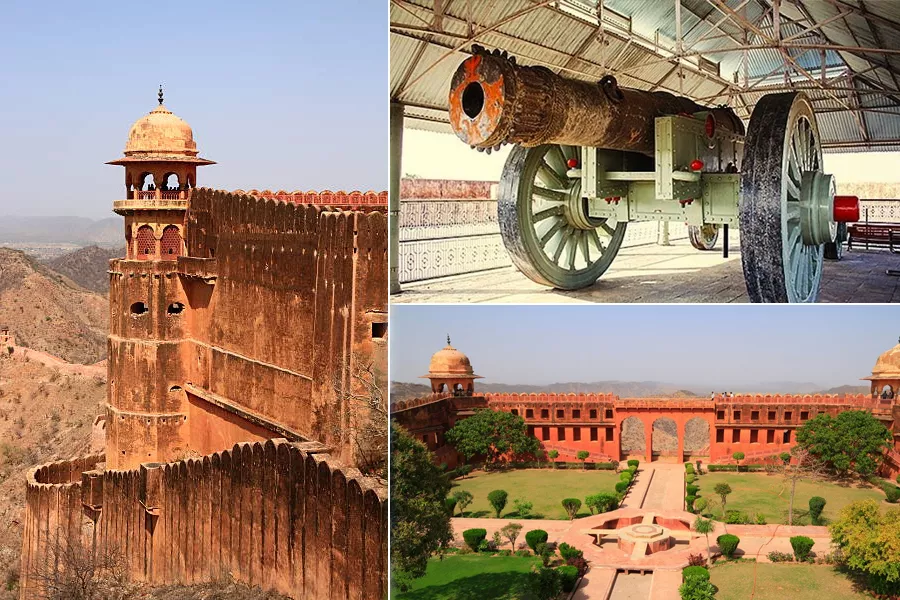
That difference is the reason the two forts should not be treated as duplicates. Amber is full of courtyards, audience halls, mirror work and palace architecture. Jaigarh is harder, wider and more military in character: thick walls, watch points, armouries, cannon production, reservoirs and the famous Jaivana cannon.
Rajasthan Tourism currently places Jaigarh about 15 kilometres from Jaipur and identifies Sawai Jai Singh II as the ruler who built the main fort in the early eighteenth century. Rajasthan Government planning material dates the fort's major construction to 1726 AD and describes its role as the defensive stronghold protecting Amer.
Jaigarh's own official site adds something important that older history summaries miss: the hill had strategic fortification before Jai Singh II. It says the earlier Kachhwaha ruler Kakil Dev recognised the hill's defensive importance and that an earlier fortification known as Kakilgarh formed part of Jaigarh's longer story. So it is more accurate to say Jaigarh has earlier roots, while the major fort associated with Sawai Jai Singh II took shape in the eighteenth century.
Jaigarh Fort Guide Contents
- Official 2026 Ticket Price
- International / Foreign Visitor Ticket
- Official Timings & Last Entry
- History & Why Jaigarh Was Built
- Jaivana Cannon
- Cannon Foundry
- Water Harvesting System
- Museum & Armoury
- Sculpture Park
- What to See Inside
- Official Guide Charges
- Accessibility & Concessions
- How to Reach
- Amber + Jaigarh Itinerary
- Photography
- FAQs
Jaigarh Fort Ticket Price 2026 — Official Current Rates
The strongest current source is Jaigarh's own official visitor page. It currently publishes the following Indian National / Resident admission:
| Ticket Category | Official Current Rate | Notes |
|---|---|---|
| Indian Adult | ₹200 | Fort admission |
| Child 5–12 years | ₹100 | Age category shown by official site |
| Student | ₹100 | Valid student ID required |
| Video Camera with Tripod | ₹200 | Separate equipment charge |
What Does the Ticket Include?
The official website currently lists four inclusions:
- Fort Entry
- Museum Access
- Cannon Viewing
- The Sculpture Park
This is useful because older articles sometimes describe the museum or cannon as though they require completely separate tourist tickets.
Jaigarh Fort Ticket for Foreign / International Tourists
Jaigarh's official ticket page has separate tabs for Indian National/Resident and International Resident. The currently fetched public text exposes the Indian prices, but not the international amounts from the interactive selector.
What Foreign Visitors Should Carry
- passport or accepted travel identification;
- valid student ID if claiming any available student category;
- comfortable shoes;
- water, especially in warmer months;
- sun protection.
Jaigarh Fort Timings 2026 — Official
Jaigarh's official visitor page is very clear:
| Visitor Information | Official Time |
|---|---|
| Opening Time | 9:00 AM |
| Closing Time | 6:30 PM |
| Last Entry | 6:00 PM |
| Days | Open daily |
How Much Time Is Enough?
Rajasthan Government's Nahargarh eco-sensitive-zone tourism masterplan records a typical Jaigarh visitor stay of around 2–3 hours. That is realistic if you want more than a photo with Jaivana.
| Time Available | What You Can See |
|---|---|
| 60 minutes | Jaivana + main fort route + viewpoints |
| 90 minutes | Add museum/armoury |
| 2 hours | Comfortable first visit |
| 2.5–3 hours | Full military history, water system, foundry, Sculpture Park and photography |
Jaigarh Fort History: More Than a 1726 Date
Rajasthan Tourism says Jaigarh Fort was built by Sawai Jai Singh II in the early eighteenth century, while Rajasthan Government planning material gives 1726 AD for the major fort associated with him.
Jaigarh's official history adds an earlier layer. It traces the strategic use of the Amer hills back to the early Kachhwaha period, when Kakil Dev recognised the military value of the ridge and developed an earlier fortification known as Kakilgarh.
That explains why Jaigarh does not feel like a palace suddenly placed on an empty hill. The ridge had military logic long before the fort reached the form visitors recognise today.
Why Was It Built?
Its main purpose was defence. Jaigarh protected Amer Fort and palace below, stored military equipment, supported arms production and provided a secure stronghold above the old capital.
Rajasthan Tourism also notes the historic connection between Amer and Jaigarh through protected passages, reinforcing the idea that the two sites functioned as parts of one larger defensive system.
Jaivana Cannon: The Famous Reason Many People Come
Jaivana is the object most associated with Jaigarh. Rajasthan Tourism describes it as the world's largest cannon on wheels, while the Government's tourism masterplan also identifies it as the fort's major military attraction.
The more interesting story is not only the cannon's size. Jaivana makes more sense when you see it alongside the foundry and engineering systems that made large-scale cannon production possible at Jaigarh.
Was Jaivana Used in Battle?
Popular retellings often make dramatic claims about how far one test shot travelled. Those numbers vary widely online. The useful fact is simpler: Jaivana represents the technical capability of Jaigarh's cannon works and the Kachhwaha military establishment. Treat exaggerated range stories as folklore unless the current museum interpretation supports a specific figure.
Jaigarh Cannon Foundry
Rajasthan Government planning material describes Jaigarh as one of the major cannon-foundry centres of its time. During the Mughal period, the fort developed an efficient foundry system that used the hill's natural conditions and mechanical equipment to cast and finish large cannons.
The government report describes a powerful air system feeding the furnace and a mechanical boring device driven by oxen for hollowing cannon barrels.
Why This Matters for a Visitor
If you see only Jaivana, Jaigarh can look like a fort with one oversized weapon. Once you understand the foundry, the fort becomes an industrial-military site—an unusually sophisticated one for its period.
Jaigarh's Water Harvesting System
This may be the most underrated part of the fort.
Jaigarh's official website says the fort developed an extensive network of canals, aqueducts and tanks extending more than 4 km beyond the fort walls. The system collected rainwater from the surrounding hills and directed it toward storage.
The official site identifies Nathawaton ka Tanka as the largest open reservoir and explains that smaller tanks filtered stones, sand and debris before water reached the main storage areas.
It also states that there are five main storage tanks inside the fort, some covered with arched roofs to reduce evaporation.
Why Water Was a Military Issue
A hill fort could survive an attack only as long as its water lasted. Jaigarh's ability to collect and store rainwater was therefore part of its defence just as much as walls and cannons were.
Museum, Armoury & War History
The official Jaigarh site currently highlights both a War & Peace Gallery and an Armoury Gallery. The fort museum tradition is also documented by the Government of India's museum directory, which records collections connected with weapons, cannon manufacture, paintings, maps, coins, royal household objects and military history.
For most travellers, the armoury becomes far more interesting after seeing the foundry. One shows the finished weapons; the other explains the production capability behind them.
The Sculpture Park at Vijaygarhi
Jaigarh is not only presenting military history anymore. Its current official site lists The Sculpture Park at Vijaygarhi among its major attractions, and the standard fort ticket currently includes Sculpture Park access.
This contemporary layer can surprise visitors who arrive expecting only cannons and battlements. Give it time if art interests you; otherwise prioritise the historic route first.
What to See Inside Jaigarh Fort
1. Jaivana Cannon
The headline attraction, but not the whole fort.
2. Cannon Foundry
One of the strongest reasons to choose Jaigarh over another palace-style attraction.
3. Water Harvesting System
Look for the relationship between channels, tanks and the hill slopes.
4. War & Peace Gallery
Military history interpreted through the fort's collections.
5. Armoury Gallery
Weapons and objects connected with the fort's defensive role.
6. Sculpture Park at Vijaygarhi
Contemporary art within a historic fort setting.
7. Diya Burj
A strong point for understanding the fort's high defensive setting.
8. Char Bagh
A quieter architectural contrast to military sections.
9. Laxmi Vilas
Part of Jaigarh's palace/residential architecture.
10. Hammam
A reminder that even a military fort needed spaces for everyday royal and garrison life.
11. Kal Bhairav Temple & Surya Mandir
Religious spaces form part of the fort's broader cultural landscape.
Official Jaigarh Guide Charges 2026
Jaigarh's official website states that only guides licensed by the Jaigarh Public Charitable Trust may conduct tours inside the fort.
| Group Size | Official Guide Rate |
|---|---|
| 1–4 visitors | ₹400 |
| 5–10 visitors | ₹500 |
| 10–15 visitors | ₹600 |
Is a Guide Worth It?
For Jaigarh, more than at many simple viewpoints, yes—especially if cannon technology, water systems and military history interest you. Without interpretation, visitors often see Jaivana, take photographs and leave before understanding why the fort mattered.
Concessions & Accessibility
The official Jaigarh visitor page currently states:
- Senior Citizens and Indian Defence Personnel with valid ID receive discounted tickets.
- Wheelchair users receive the student rate.
- Visually impaired visitors receive the student rate.
- One accompanying carer receives complimentary admission for eligible wheelchair/visually impaired visitors.
That does not mean every historic section of a hill fort is step-free. The concession policy and physical access are separate questions. Visitors with limited mobility should ask staff which routes are practically accessible before setting out across the complex.
Facilities at Jaigarh
Rajasthan Government planning material records:
- parking;
- tourist information;
- tourist guides;
- toilets;
- drinking water;
- food-court facilities.
The same government report notes that there is no cloakroom. Jaigarh's own current visitor page confirms that parking is available outside the fort.
How to Reach Jaigarh Fort
Jaigarh sits above Amer on the Aravalli ridge. Rajasthan Tourism places it about 15 km from Jaipur.
By Private Car / Taxi
The simplest choice for most visitors. It also makes an Amber + Jaigarh combination much easier.
From Amber Fort
The forts are historically connected and visually close, but do not assume the tourist entrance is a two-minute walk from Amber's main courtyard. Ask staff for the current access route or use a vehicle depending your itinerary and mobility.
By Auto-Rickshaw
Possible, but agree waiting/return terms before heading uphill. Finding a return vehicle can be less convenient than in central Jaipur.
By Metro
Jaipur Metro does not reach Amber/Jaigarh directly. Use the metro for part of your city journey only, then continue by road.
Parking
The official Jaigarh page states that parking is available outside the fort.
Best Amber + Jaigarh Fort Itinerary
This is one of Jaipur's most logical combinations.
| Time | Plan |
|---|---|
| 8:00 AM | Amber Fort |
| 10:30–11:00 AM | Travel to Jaigarh |
| 11:00 AM–1:00 PM | Jaigarh: cannon, museum, foundry, water system |
| 1:15 PM | Lunch / rest |
| Afternoon | Jal Mahal / old Jaipur or Nahargarh depending energy and current timing |
Should You Add Nahargarh Too?
Yes if you have a full day and enjoy forts. No if you are already tired after Amber + Jaigarh. Three hill forts in one day can become repetitive for travellers who are not deeply interested in architecture or history.
Jaigarh vs Amber: Which One Should You Choose?
| Amber Fort | Jaigarh Fort |
|---|---|
| Palaces and decorative interiors | Military architecture and engineering |
| UNESCO Hill Fort component | Not one of the six UNESCO Hill Fort components |
| Sheesh Mahal | Jaivana Cannon |
| Courtyards and royal residence | Armoury, foundry and reservoirs |
| Much busier | Often feels less crowded |
If you only have time for one on a first Jaipur trip, Amber is usually the stronger all-round choice. If military history, engineering or panoramic fortifications interest you, Jaigarh adds something Amber cannot.
Photography at Jaigarh Fort
Best Subjects
- Jaivana cannon;
- long defensive walls;
- views toward Amber and surrounding hills;
- foundry details;
- reservoirs and water channels;
- watchtowers and gates;
- courtyards and Char Bagh;
- contemporary sculpture installations.
Video Camera with Tripod
The official Jaigarh page currently lists a ₹200 charge for video camera with tripod.
Professional / Commercial Shoots
Do not assume the ₹200 tripod-video charge covers a commercial film, fashion or pre-wedding production. Large crews and professional production may require separate permission from management.
Best Time to Visit Jaigarh
October–March
Best overall for comfortable walking.
April–June
Very hot and exposed. Go at opening or later in the day, but leave enough time before the 6:00 PM last entry.
July–September
The hills become greener and the views can be excellent after rain. Stone surfaces may be slippery.
Jaigarh for Families
Children often enjoy Jaigarh more than another palace because cannons, tunnels/passages, walls and military stories are easy to visualise. The official ₹100 child category covers ages 5–12.
Do not let children climb walls or lean over exposed edges for photographs.
Jaigarh for Senior Citizens
The official site provides senior concessions for Indian visitors with valid ID. Physically, however, Jaigarh is still a large hill fort. A senior traveller who walks comfortably may manage it well; someone with limited stamina should focus on Jaivana, museum areas and the most accessible viewpoints.
Jaigarh for Foreign Tourists
The fort is especially worthwhile for international visitors who have already seen decorative palaces elsewhere in Rajasthan. Cannon-making, military infrastructure and water conservation make Jaigarh a different kind of heritage experience.
Use the International Resident selector on Jaigarh's official ticket page for the current foreign admission rate rather than relying on an old tourism blog.
City Palace Composite & Jaigarh: A Useful 2026 Detail
City Palace Jaipur's official ticket page currently sells its own Composite product that includes City Palace courtyards, galleries, Jaigarh and Royal Cenotaphs.
This is important because travellers often hear “Jaigarh is in a composite ticket” and assume that means the Rajasthan Government Jaipur OBMS composite pass. It does not necessarily mean the same product.
20 Jaigarh Fort Mistakes to Avoid
- Using an old ₹50/₹100/₹150 admission price.
- Using an old 4:30 PM closing time.
- Assuming Rajasthan Government OBMS controls Jaigarh's ticket.
- Assuming Amber ticket automatically includes Jaigarh.
- Seeing Jaivana and immediately leaving.
- Skipping the cannon foundry.
- Ignoring the water-harvesting system.
- Not carrying student ID for the ₹100 student category.
- Bringing a tripod video camera without budgeting the official ₹200 charge.
- Hiring an unlicensed guide inside the fort.
- Arriving after 6:00 PM and expecting entry.
- Visiting at 1:00 PM in May without water.
- Wearing poor footwear.
- Assuming every section is wheelchair accessible because concessions exist.
- Trying Amber + Jaigarh + Nahargarh in a rushed half-day.
- Believing every dramatic Jaivana range story online.
- Ignoring the Sculpture Park if contemporary art interests you.
- Expecting a cloakroom.
- Leaving valuables visible in a parked vehicle.
- Using a third-party foreign rate instead of the official International Resident tab.
Official & Reliable Sources
- Jaigarh — Official Tickets, Hours, Guides & Parking
- Jaigarh — Official Fort Website
- Jaigarh — Official Water Conservation System
- Rajasthan Tourism — Jaipur / Jaigarh Fort
- Rajasthan Tourism — Forts of Rajasthan
- Incredible India — Jaigarh Fort
Related Jaipur Guides
- Amber Fort Jaipur Complete Guide
- Nahargarh Fort Jaipur Complete Guide
- City Palace Jaipur Complete Guide
- Jaipur Monument Ticket Prices & Timings
- Jaipur Complete Travel Guide
- Royal Gaitor Cenotaphs Guide
Jaigarh Fort Jaipur FAQs
What is Jaigarh Fort ticket price for Indians?
The official Jaigarh visitor page currently lists ₹200 for Indian National/Resident adults.
What is Jaigarh ticket for children?
₹100 for children aged 5–12 according to the official site.
What is the student ticket?
₹100 with valid student ID.
What is Jaigarh Fort ticket for foreigners?
The official Jaigarh page has a separate International Resident selector. Use the live official international tab for the exact current amount because old third-party foreign rates conflict.
What time does Jaigarh Fort open?
9:00 AM daily.
What time does Jaigarh Fort close?
6:30 PM, with last entry at 6:00 PM.
Is Jaigarh open every day?
Yes, the official website currently says seven days a week.
What is included in the ticket?
Fort entry, museum access, cannon viewing and Sculpture Park.
How much is a guide?
₹400 for 1–4 visitors, ₹500 for 5–10 and ₹600 for 10–15 visitors.
Can any guide conduct a tour?
The official site states that only guides licensed by the Jaigarh Public Charitable Trust are permitted to conduct tours inside.
Is parking available?
Yes. The official visitor page says parking is available outside the fort.
Who built Jaigarh?
The major eighteenth-century fort is associated with Sawai Jai Singh II and dated to 1726 in Rajasthan Government planning material, although fortifications on the hill have earlier Kachhwaha roots.
Why is Jaigarh called Victory Fort?
“Jai” is associated with victory and the fort's military character led to the common “Fort of Victory” description.
What is Jaivana?
The famous large wheeled cannon displayed at Jaigarh and produced in the context of the fort's cannon-making tradition.
Is Jaivana the only thing to see?
No. The foundry, water system, museum, armoury, galleries, Sculpture Park, temples and fort views are also important.
How much time do I need?
Two hours is a good first visit; 2–3 hours is better for a deeper visit.
Can I visit Amber and Jaigarh together?
Yes. They are one of Jaipur's most logical same-day combinations.
Is Jaigarh included in Amber ticket?
Do not assume so. Jaigarh uses its own admission arrangement.
Is Jaigarh included in City Palace composite?
City Palace's official current Composite product includes Jaigarh and Royal Cenotaphs along with City Palace courtyards and galleries.
Is that the same as Rajasthan Government Jaipur composite?
No. They are different ticket products managed by different systems.
Is Jaigarh wheelchair friendly?
The official site offers concessions for wheelchair users and a complimentary carer, but the historic hill-fort terrain means not every section should be assumed step-free.
What is the video-camera charge?
The official Jaigarh site lists ₹200 for a video camera with tripod.
What is the best season?
October–March is most comfortable. Monsoon gives greener scenery; summer requires early or late scheduling.
Is Jaigarh UNESCO listed?
Do not confuse it with Amber. Amber is one of the six UNESCO-listed Hill Forts of Rajasthan components; Jaigarh itself is not one of those six components.
Final Advice
Jaigarh becomes much more interesting when you stop treating it as “the fort with the big cannon.” Jaivana is impressive, but it is the combination of cannon production, armouries, water conservation and the hill's defensive relationship with Amer that gives the site its character.
Use the current official Jaigarh ticket—not an old blog rate. The official Indian adult ticket is ₹200, the fort is currently open 9:00 AM–6:30 PM with last entry at 6:00 PM, and a two-hour visit is far more rewarding than a quick cannon photograph.
If you are visiting Amber on the same day, keep the two forts together. Amber explains royal life below; Jaigarh explains the military system that protected it from above.